First View of the Yosemite Valley from the Mariposa Trail
SEE IT IN PERSON
Not currently on view
In the collection of Art Institute of Chicago, Chicago · as of July 2026
Discussion
FROM THE ART INSTITUTE OF CHICAGO’S CATALOG
In the 1860s, Carleton Watkins was the first to document the untouched wilderness that would become Yosemite National Park. Transporting his fragile equipment on mule or carriage through difficult terrain, Watkins used a "mammoth-plate" camera whose glass negatives measured up to 18 by 22 inches and yielded remarkably detailed prints of the same size. He favored spectacular compositions with dramatic spatial depth. In this photograph, Watkins depicted Yosemite Valley's immense span through the receding planes of mountains and the giant Sequoia trees that frame them. Watkins printed more than 1,100 mammoth-plate photographs over the course of his career. Unfortunately, the majority of his glass negatives and prints were destroyed in the San Francisco earthquake and fire of 1906.
Be the first to share your thoughts.
Sign in to join the discussion.
More by Carleton Watkins
 Untitled (Warehouse on Wharf)
 First View of Yosemite Valley from the Mariposa Trail
 Untitled (Mining Town)
 Untitled (Miners and Log Cabin)
 San Francisco Bay
 The Vernal Fall, 300 ft., Yosemite, from the series "Watkins
 Section of the Grizzly Giant with Galen Clark, Mariposa Grov
 Big River, from the Rancherie, Mendocino, California
More like this
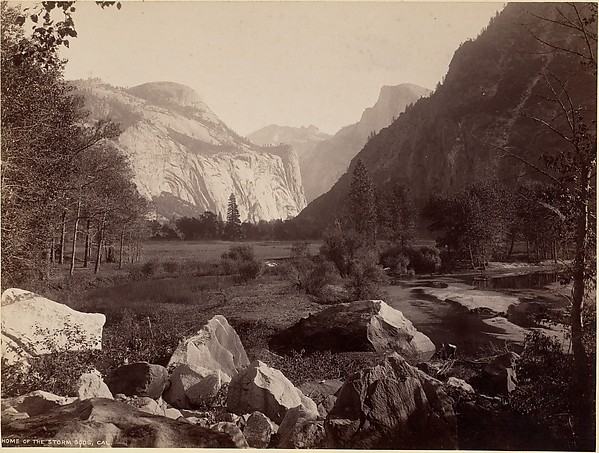 Unknown — Home of the Storm Gods, California
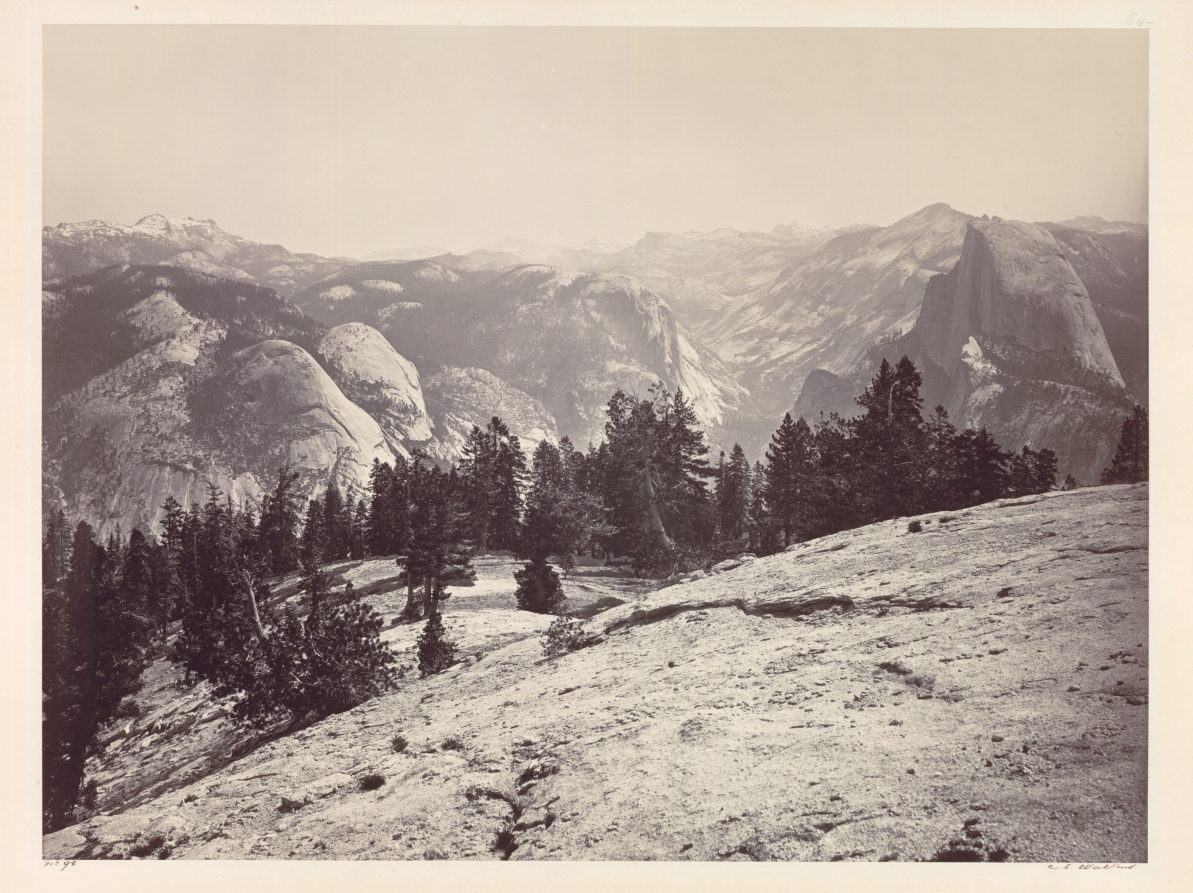 Carleton E. Watkins (American, 1829–1916) — The Domes, from
 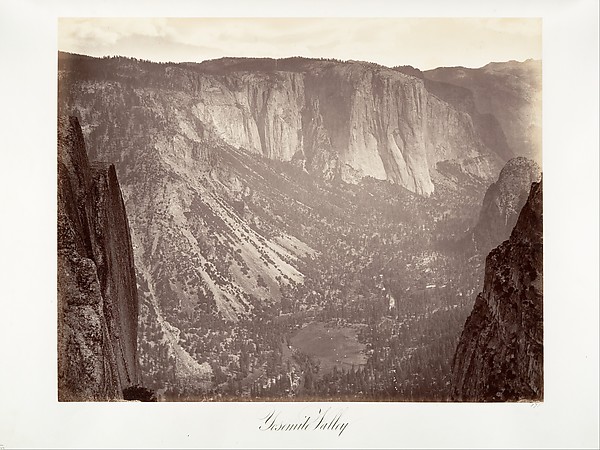 Carleton E. Watkins — Yosemite Valley
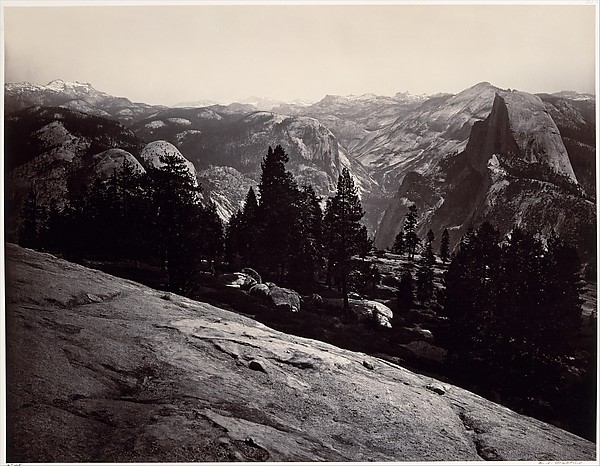 Carleton E. Watkins — View from the Sentinel Dome, Yosemite
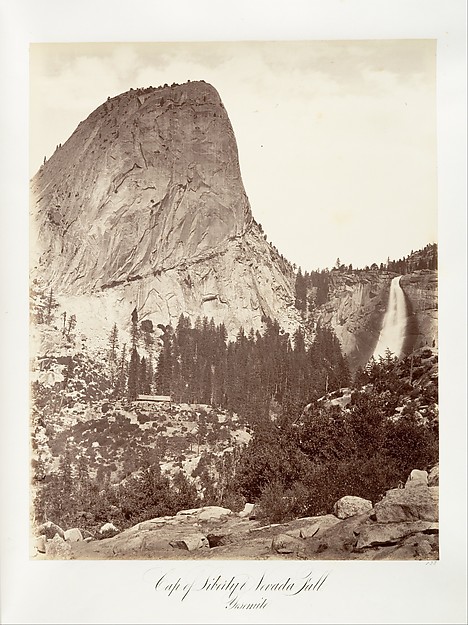 Carleton E. Watkins — Cap of Liberty and Nevada Fall, Yosemi
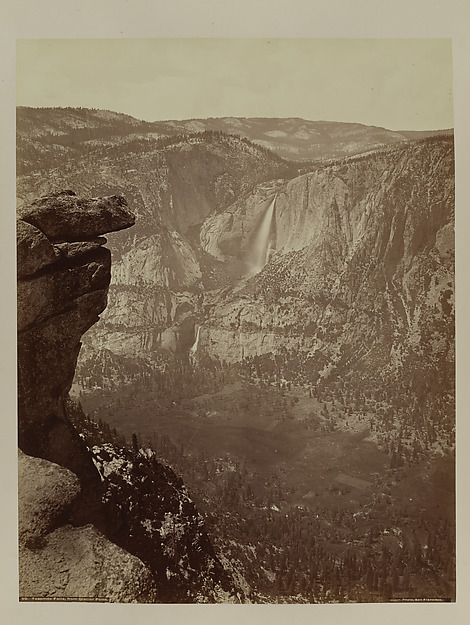 Carleton E. Watkins — Yosemite Falls from Glacier Point
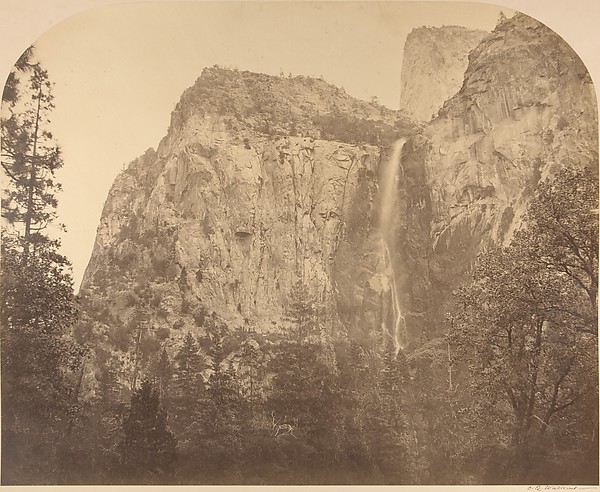 Carleton E. Watkins — Pohono, Bridal Veil, 900 Feet, Yosemit
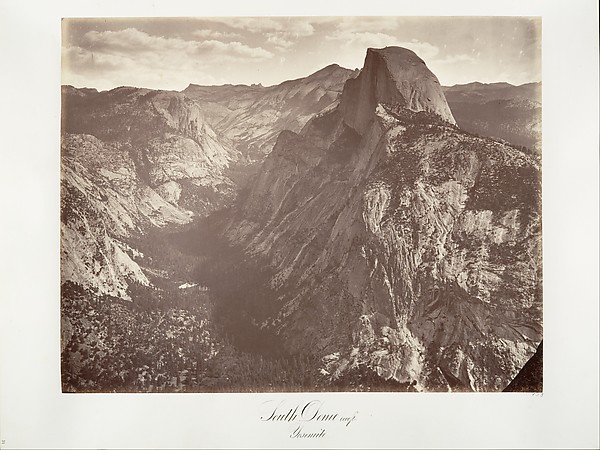 Carleton E. Watkins — South Dome, 6,000 feet
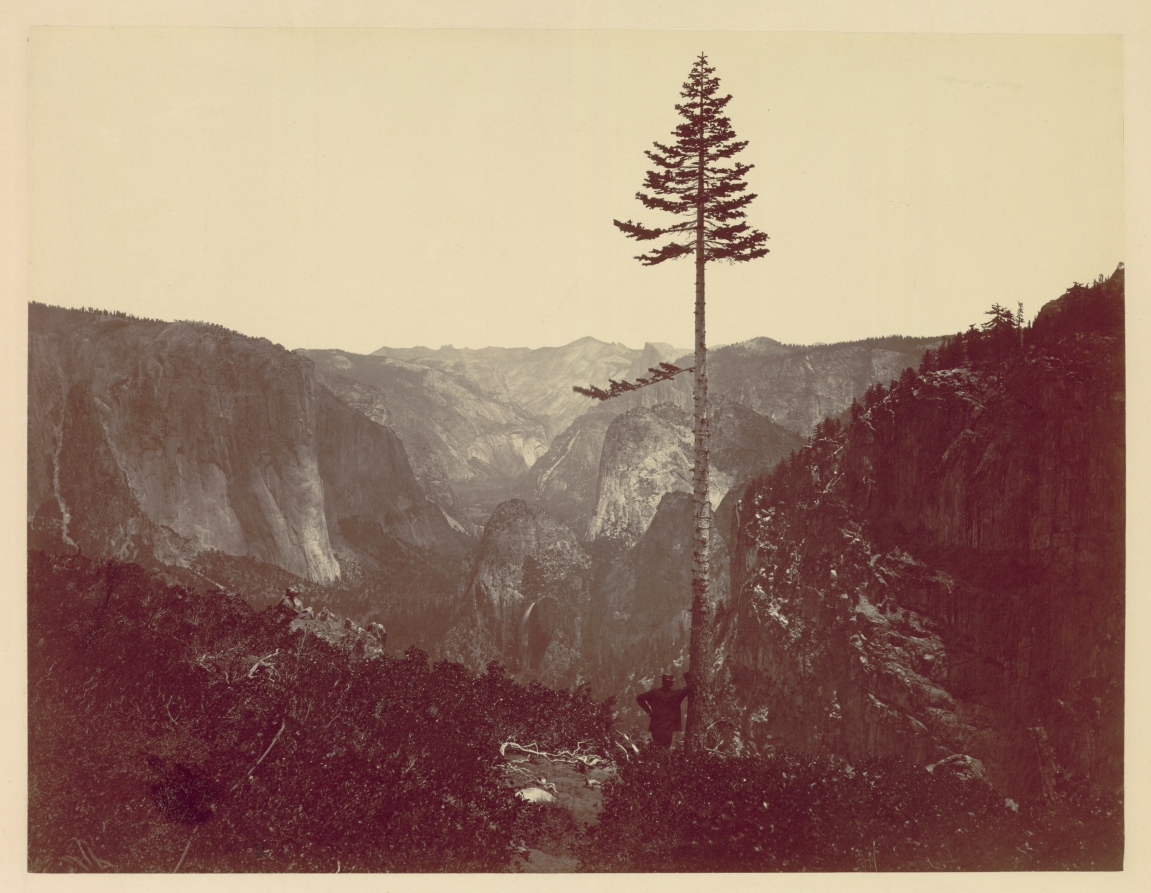 Charles Leander Weed (American, 1824–1903) — Yosemite Valley
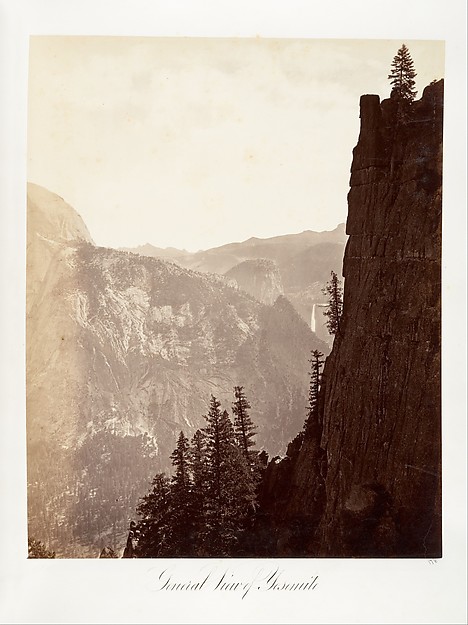 Carleton E. Watkins — General View of Yosemite
 Carleton E. Watkins — El Capitan, Yosemite
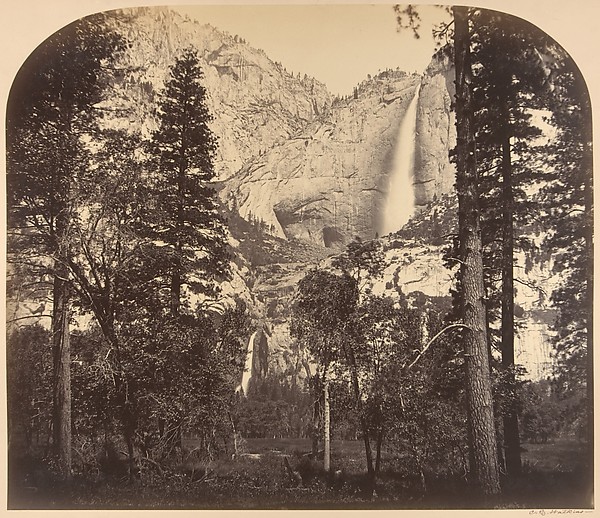 Carleton E. Watkins — Yosemite Fall. Down the Valley. 2637 F