Francisco José de Goya y Lucientes
Heavier than a Dead Donkey, plate 1 from Los Proverbios
SEE IT IN PERSON
Not currently on view
In the collection of Art Institute of Chicago, Chicago · as of July 2026
Discussion
FROM THE ART INSTITUTE OF CHICAGO’S CATALOG
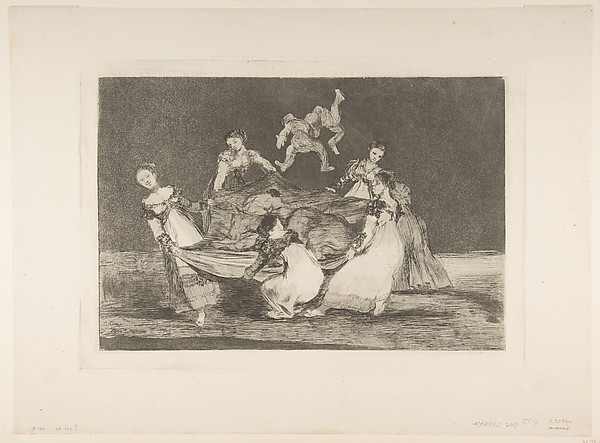
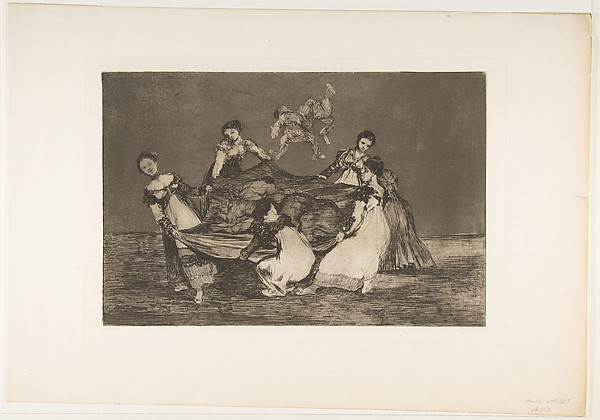
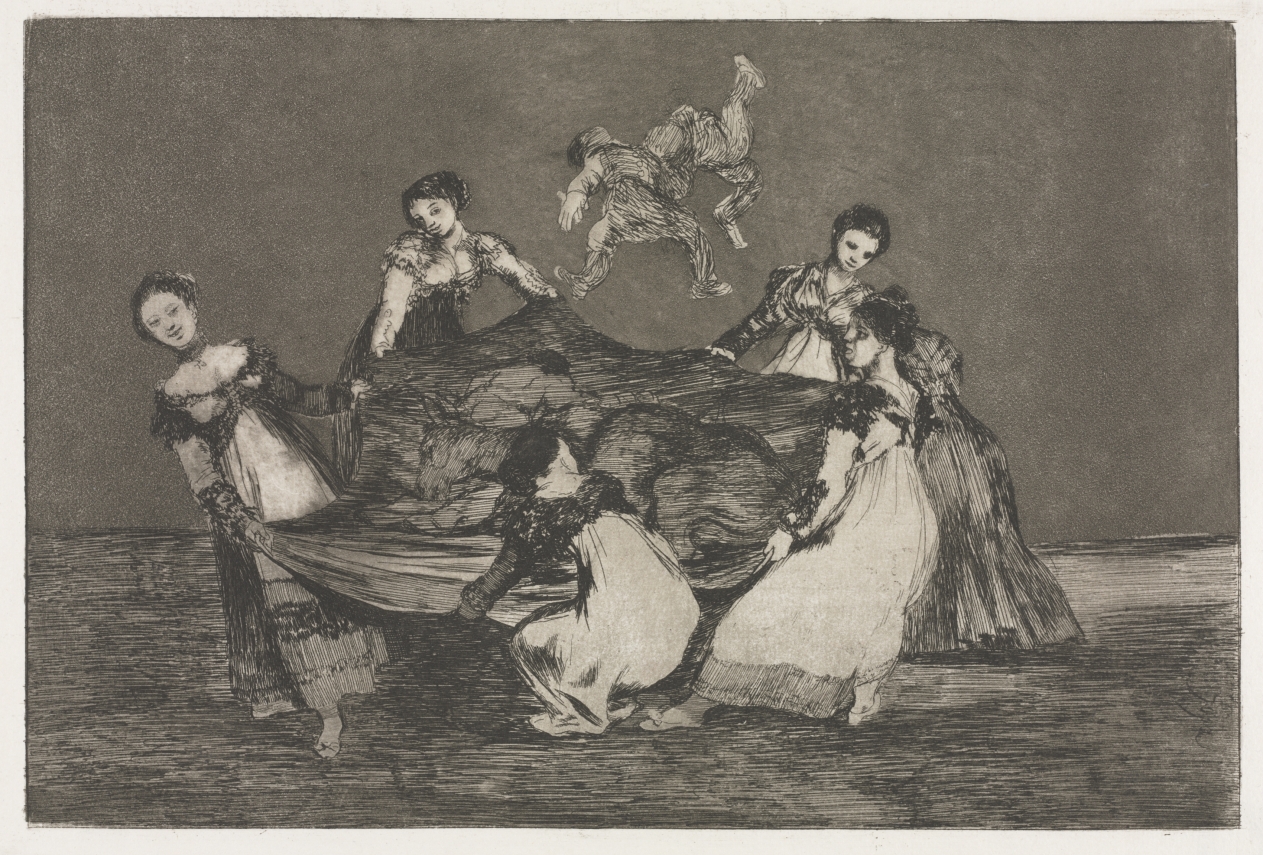
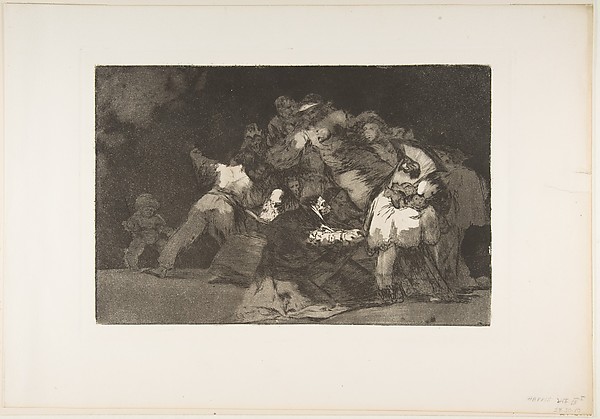
Four decades after the artist’s death, the Royal Academy of Fine Arts acquired 18 intaglio plates from an unfinished series by Goya. In an attempt to ascribe a theme to their enigmatic imagery, the prints were published with the title Los Proverbios (Proverbs). A handful of early trial proofs were later discovered on which the artist had inscribed Disparate , which roughly translates as folly, nonsense, absurdity, or fantasy. In this print, a group of women use a blanket to toss straw or rag dolls in the air. Hidden in the blanket are a muscular figure and a donkey. Inscriptions on proof print read, “The game is played with asses,” perhaps referring to the gullibility of those who fall for female trickery.
Be the first to share your thoughts.
Sign in to join the discussion.
More by Francisco José de Goya y Lucientes
 The Hanged Monk
 Friar Pedro Wrests the Gun from El Maragato
 Friar Pedro Shoots El Maragato as His Horse Runs Off
 Portrait of Isidoro Maiquez
 Winter Scene
 Friar Pedro Offers Shoes to El Maragato and Prepares to Push
 Friar Pedro Clubs El Maragato with the Butt of the Gun
 Friar Pedro Binds El Maragato with a Rope
More like this
 Goya (Francisco de Goya y Lucientes) — 'Feminine Folly' from
 Goya (Francisco de Goya y Lucientes) — 'Feminine Folly' from
 Francisco de Goya (Spanish, 1746–1828) — The Proverbs: Femi
 Goya (Francisco de Goya y Lucientes) — 'The Exhortations' fr
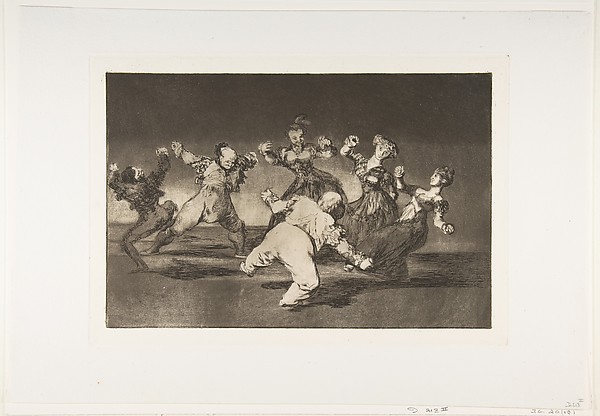 Goya (Francisco de Goya y Lucientes) — 'Merry Folly' from th
 Goya (Francisco de Goya y Lucientes) — 'Loyalty' from the 'D
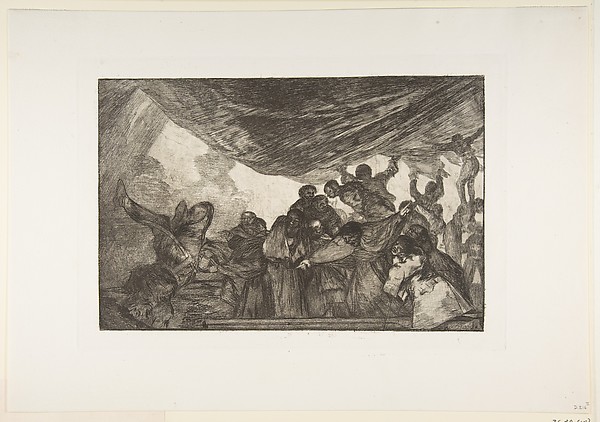 Goya (Francisco de Goya y Lucientes) — 'Clear Folly' from t
 Goya (Francisco de Goya y Lucientes) — Plate 9 from "The Dis
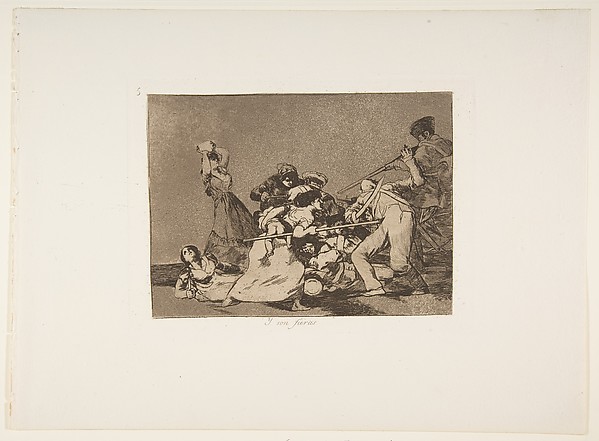 Goya (Francisco de Goya y Lucientes) — Plate 5 from "The Dis
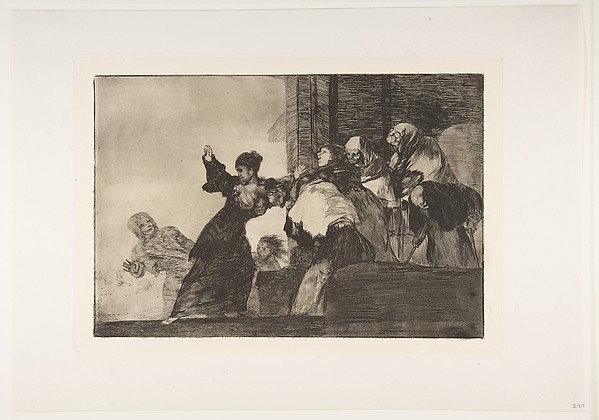 Goya (Francisco de Goya y Lucientes) — 'Poor Folly' from the
 Goya (Francisco de Goya y Lucientes) — 'General Folly' from
 Goya (Francisco de Goya y Lucientes) — Plate 10 from "The Di