Francisco José de Goya y Lucientes
Friar Pedro Wrests the Gun from El Maragato
SEE IT IN PERSON
● On view now — Gallery 220
Art Institute of Chicago, Chicago · verified July 2026
Discussion
FROM THE ART INSTITUTE OF CHICAGO’S CATALOG
In small, lively paintings made for his own pleasure or for a few discerning patrons, Francisco de Goya explored satirical and popular aspects of Spanish life. This series was inspired by a contemporary event, the capture of notorious criminal El Maragato by Friar Pedro de Saldivia in 1806. After escaping from prison, El Maragato spent two months stealing food, guns, and money before trying to take Friar Pedro and other innocent people hostage. The friar outsmarted the bandit, however, seizing his gun, shooting him in the thigh as he tried to flee, and finally tying him up. This story was extremely popular in the early 19th century and Spanish artists memorialized it in images, poems, and songs.
Be the first to share your thoughts.
Sign in to join the discussion.
More by Francisco José de Goya y Lucientes
 The Hanged Monk
 Friar Pedro Shoots El Maragato as His Horse Runs Off
 Portrait of Isidoro Maiquez
 Winter Scene
 Friar Pedro Offers Shoes to El Maragato and Prepares to Push
 Friar Pedro Clubs El Maragato with the Butt of the Gun
 Friar Pedro Binds El Maragato with a Rope
 El Maragato Threatens Friar Pedro de Zaldivia with His Gun
More like this
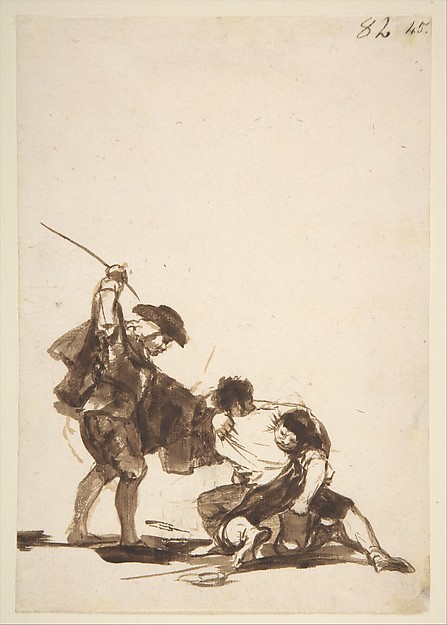 Goya (Francisco de Goya y Lucientes) — A man breaking up a f
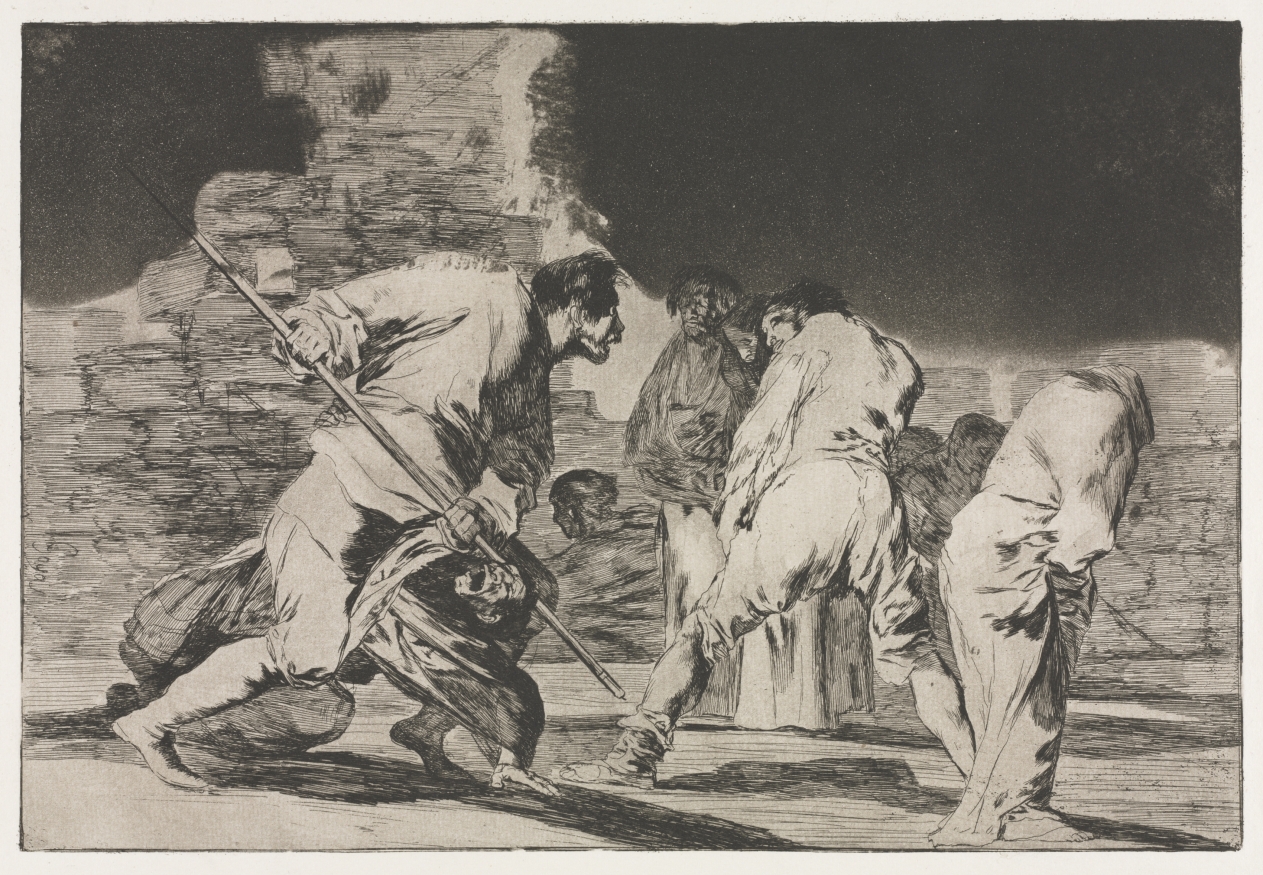 Francisco de Goya (Spanish, 1746–1828) — The Proverbs: The
  Goya (Francisco de Goya y Lucientes) — 'Well-Known Folly' fr
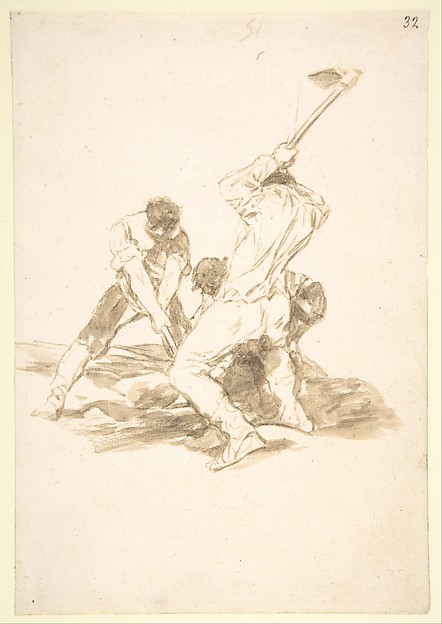 Goya (Francisco de Goya y Lucientes) — Three men digging; fo
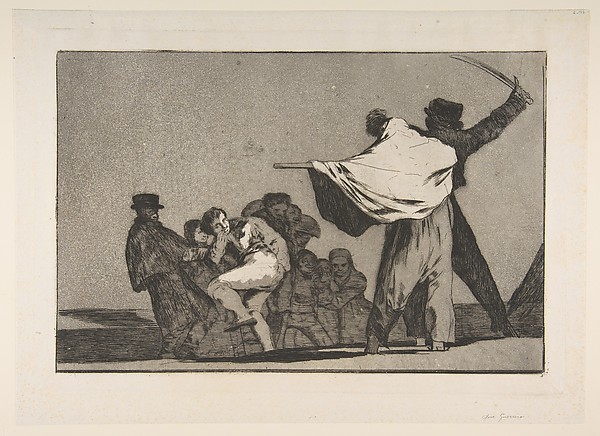 Goya (Francisco de Goya y Lucientes) — 'Well-Known Folly' fr
 Francisco de Goya (Spanish, 1746–1828) — They Carried Her Of
 Francisco de Goya (Spanish, 1746–1828) — Disasters of War: P
 Goya (Francisco de Goya y Lucientes) — A woman attacking a s
 Francisco de Goya (Spanish, 1746–1828) — The Proverbs: Simp
 Mariano Fortuny, 1838–1874 — Master of ceremonies, a man sta
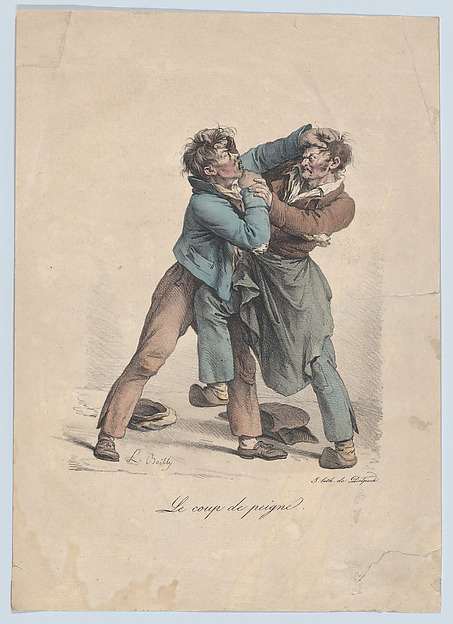 Louis Léopold Boilly|Delpech — The Comb Punch
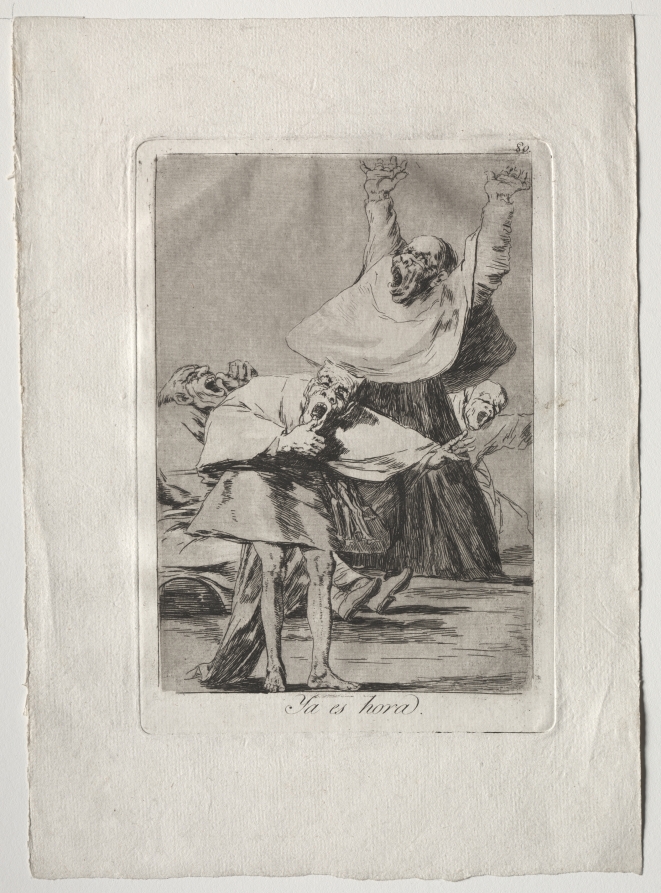 Francisco de Goya (Spanish, 1746–1828) — It is Time, Plate 8