Francisco José de Goya y Lucientes
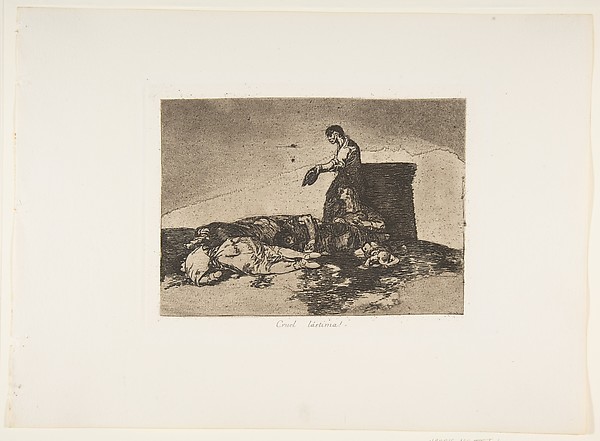
What Courage!, plate seven from The Disasters of War
SEE IT IN PERSON
Not currently on view
In the collection of Art Institute of Chicago, Chicago · as of July 2026
Discussion
FROM THE ART INSTITUTE OF CHICAGO’S CATALOG
Francisco de Goya responded to the Peninsular War (1808–11) by creating over 80 etchings critiquing the cruelty and senseless violence that accompanies war. In this print, he depicted a historical event: Augustina of Aragon heroically defending Saragossa, taking over the cannon of her fallen comrades. Because she had already become a woman of legendary status when this print was made, Goya did not show Augustina’s face. Due to the oppressive policies of King Ferdinand VII, these prints were not published until 1863.
Be the first to share your thoughts.
Sign in to join the discussion.
More by Francisco José de Goya y Lucientes
 The Hanged Monk
 Friar Pedro Wrests the Gun from El Maragato
 Friar Pedro Shoots El Maragato as His Horse Runs Off
 Portrait of Isidoro Maiquez
 Winter Scene
 Friar Pedro Offers Shoes to El Maragato and Prepares to Push
 Friar Pedro Clubs El Maragato with the Butt of the Gun
 Friar Pedro Binds El Maragato with a Rope
More like this
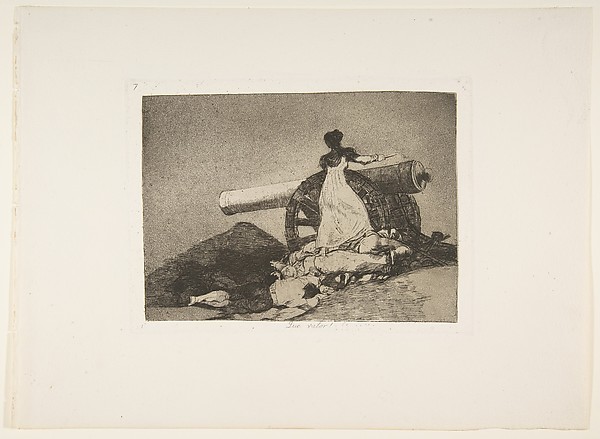 Goya (Francisco de Goya y Lucientes) — Plate 7 from "The Dis
 Goya (Francisco de Goya y Lucientes) — Plate 5 from "The Dis
 Goya (Francisco de Goya y Lucientes) — Plate 4 from "The Dis
 Goya (Francisco de Goya y Lucientes) — Plate 22 from "The Di
 Mariano Fortuny y Marsal — Dead Kabyle
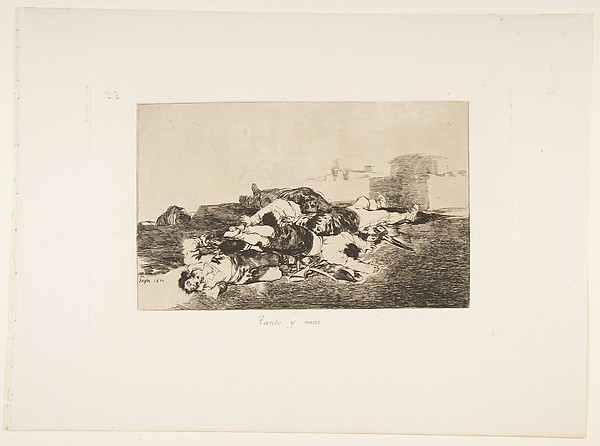 Goya (Francisco de Goya y Lucientes) — Plate 22 from "The Di
![Plate 10 from "The Disasters of War" (Los Desastres de la Guerra): 'Nor [do these] either' (Tampoco)](https://images.metmuseum.org/CRDImages/dp/web-large/DP817149.jpg) Goya (Francisco de Goya y Lucientes) — Plate 10 from "The Di
Goya (Francisco de Goya y Lucientes) — Plate 10 from "The Di Mariano Fortuny y Marsal — Arab Watching the Body of his Fri
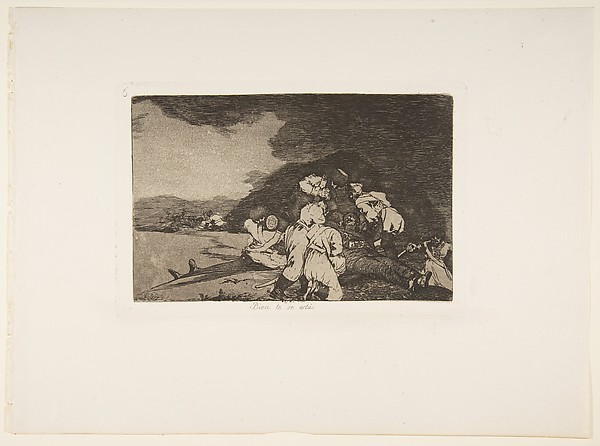 Goya (Francisco de Goya y Lucientes) — Plate 6 from "The Dis
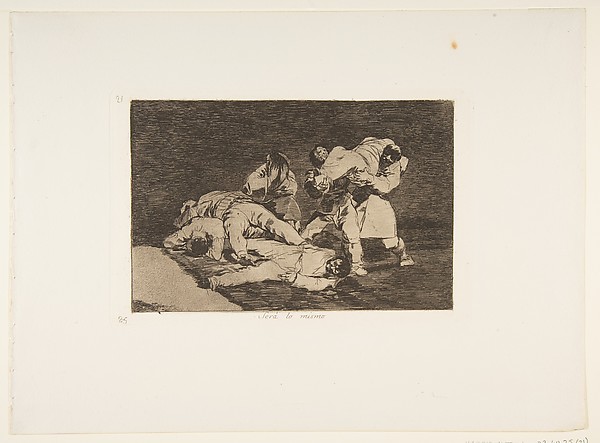 Goya (Francisco de Goya y Lucientes) — Plate 21 from "The Di
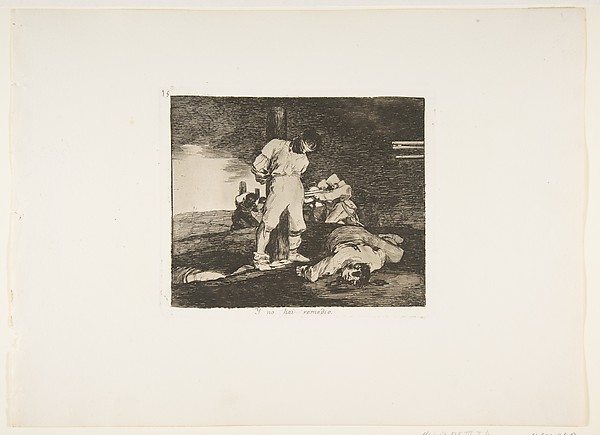 Goya (Francisco de Goya y Lucientes) — Plate 15 from "The Di
 Goya (Francisco de Goya y Lucientes) — Plate 48 from "The Di