A Bishop Saint
SEE IT IN PERSON
● On view now — Gallery 202
Art Institute of Chicago, Chicago · verified July 2026
Discussion
FROM THE ART INSTITUTE OF CHICAGO’S CATALOG
Bartolomé Bermejo likely learned his meticulous oil-painting technique by studying Netherlandish works imported into his native Spain. Colored pigments become translucent when mixed with oil, necessitating many thin layers to be built up that result in rich colors, like the green jacquard lining this saint’s vestments, and radiant light effects, as seen in his jewel-encrusted miter. This captivating realism went hand in hand with a strategy in Netherlandish art called disguised symbolism , which imbued everyday objects with sacred meaning. Here, for example, the three-horned snail that appears as a decorative detail carved into the arm of the wooden seat is also a symbol of Christ’s Resurrection.
Be the first to share your thoughts.
Sign in to join the discussion.
More like this
 Girolamo da Treviso I — St Bonaventure
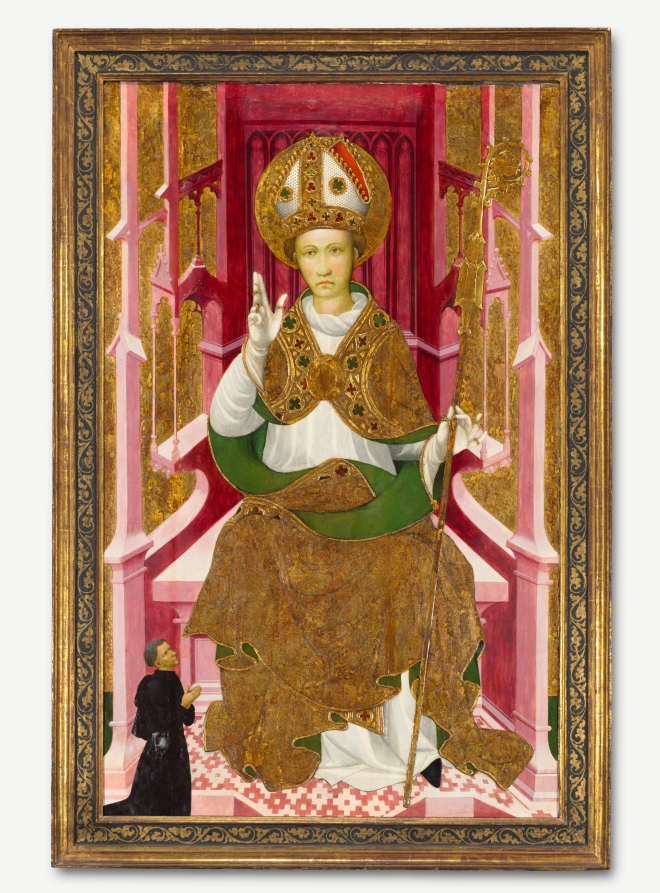 A Bishop Saint with a Donor (Saint Louis of Toulouse?)
 Spanish Painter — The Mass of Saint Gregory
 French — Altarpiece from Thuison-les-Abbeville: Saint Honoré
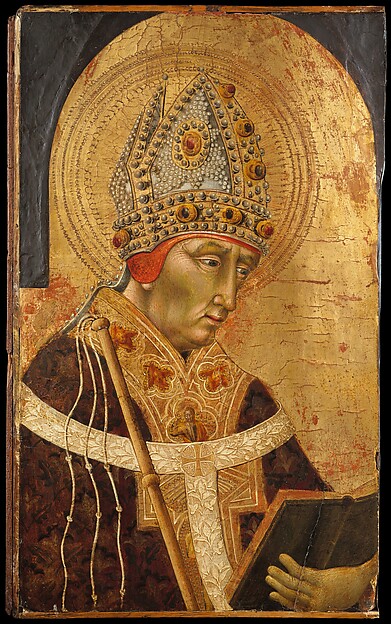 Giovanni di Paolo (Giovanni di Paolo di Grazia) — Saint Ambr
 Friedrich Walther — Sermon of Saint Albertus Magnus
 French — Altarpiece from Thuison-les-Abbeville: Saint Hugh o
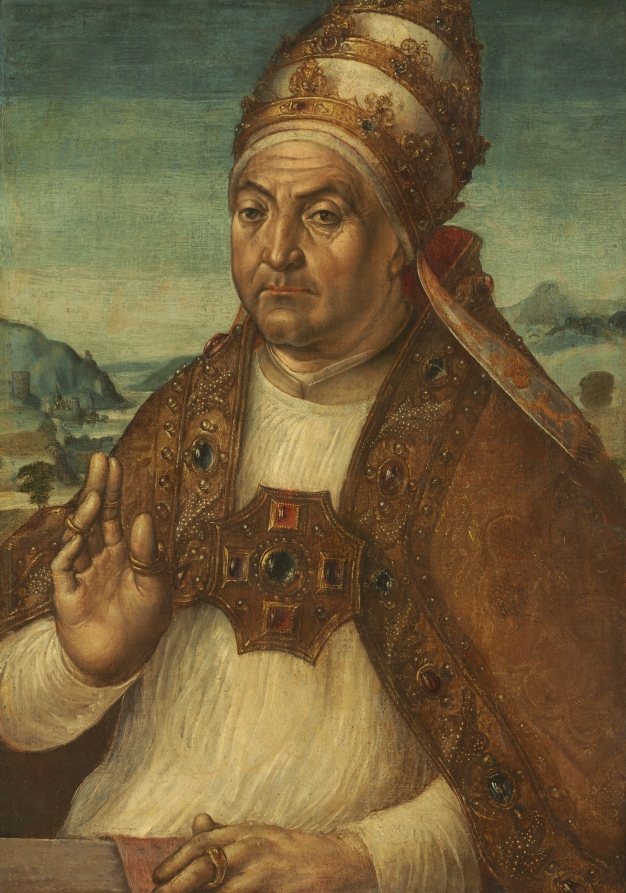 Pedro Berruguete (Castilian, c. 1445/1450-1503) — Portrait o
 Bernardino Pinturicchio ; Unidentified artist — Portrait of
  Master of Eggenburg — Saint Adalbert and Saint Procopius
 Maarten van Heemskerck — Portraits of a Couple, possibly Pie
 Vittore Crivelli — St Bonaventura