FROM THE CLEVELAND MUSEUM OF ART’S CATALOG
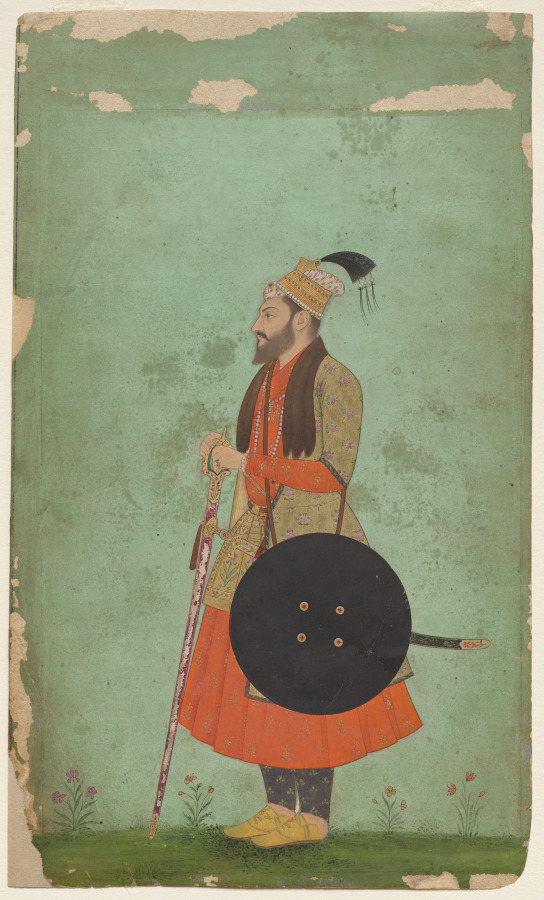
The sensitive, naturalistic rendering of weariness and forbearance in the face belies the trappings of favor bestowed on Ram Singh by the Mughal emperors Shah Jahan and Alamgir, whom he served as courtier and general between 1643 and 1688. He was a Hindu ruler from the kingdom of Amber in Rajasthan, under the control of the Mughal empire. Spending most of his life at the imperial court or leading military expeditions for the Mughals, this portrait was included in a Mughal album and inscribed with an Urdu verse indicating his value to the empire: "wherever he has led an expedition, victory is his." He wears a sumptuous coat of honor with a fur collar, woven with gold threads and floral sprigs and costly rubies, emeralds, and pearls. The straight sword with enameled hilt may be the one gifted to him by the emperor upon his succession to the throne as king of Amber in 1667. His long history of service at the imperial court, however, was checkered with troubles, including his allegiances with failed successors of Shah Jahan and the escape of the rebel Shivaji under his watch.
Source ↗︎
Be the first to share your thoughts.
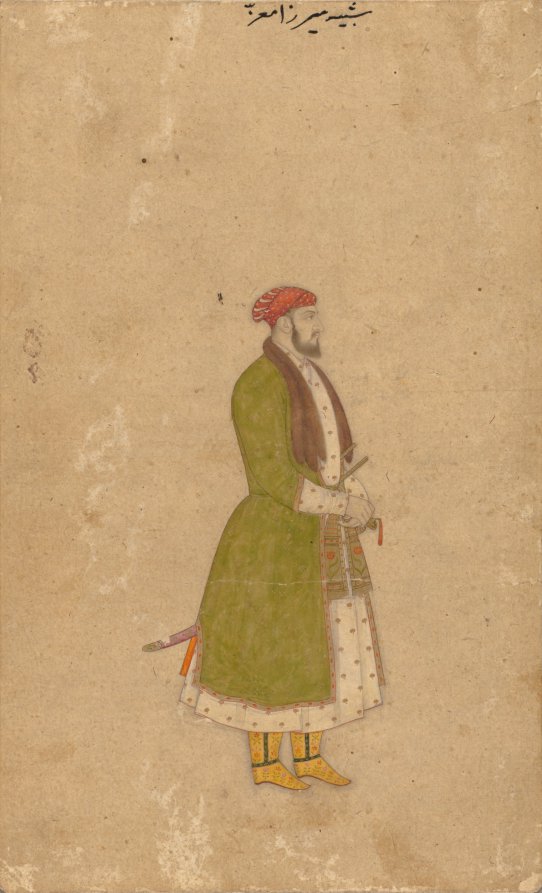 Portrait of the Courtier Mirza Muizz
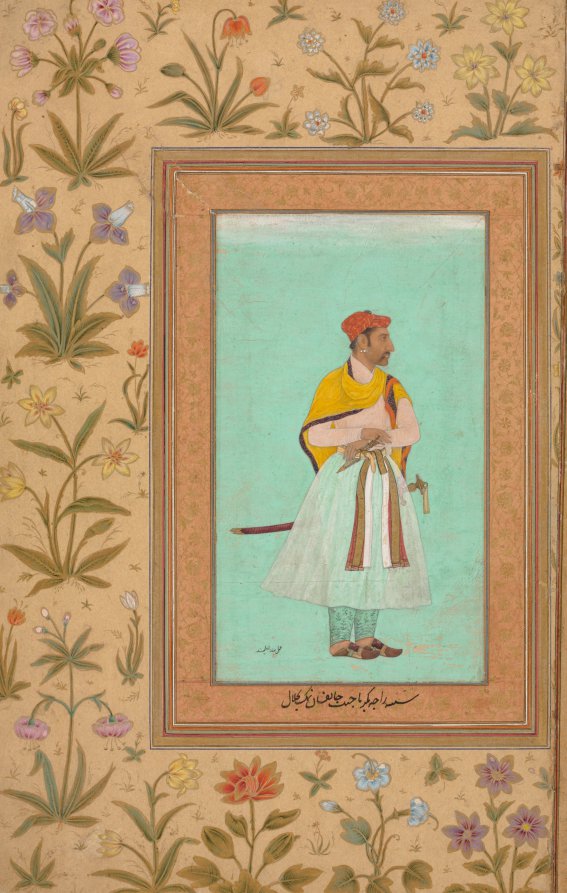 Lal Chand (Indian) — Portrait of Raja Bikramajit
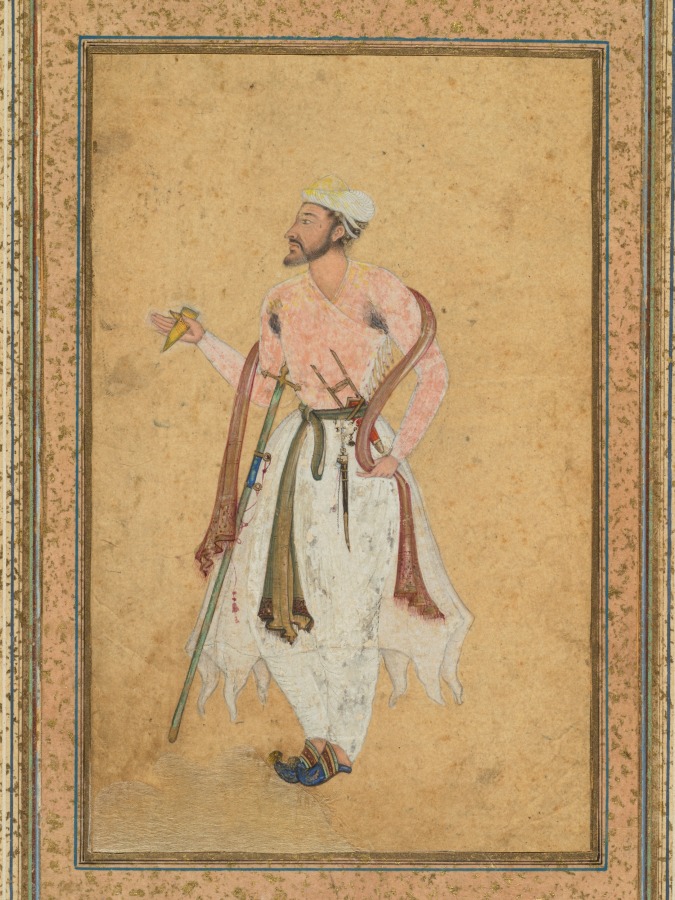 A Mughal courtier
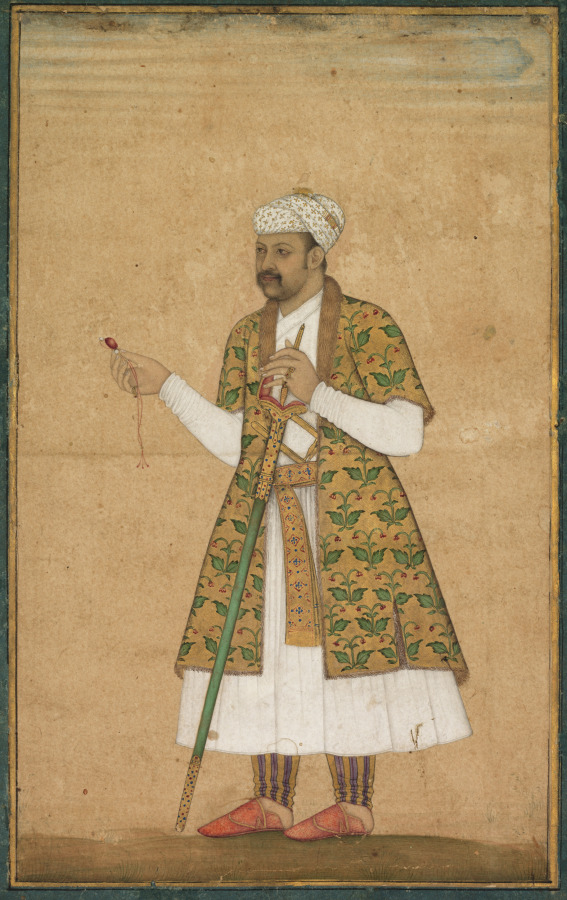 Govardhan (Indian, active c.1596–1645) — A Courtier, Possibl
 Portrait of Prince Murad Baksh (1624–1661)
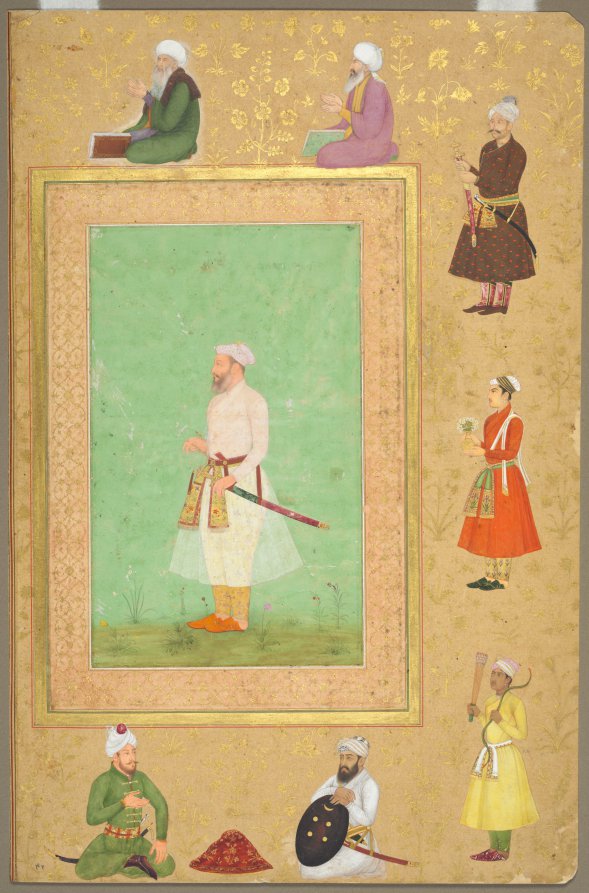 Portrait of Asaf Khan (1569–1641), from the Late Shah Jahan
 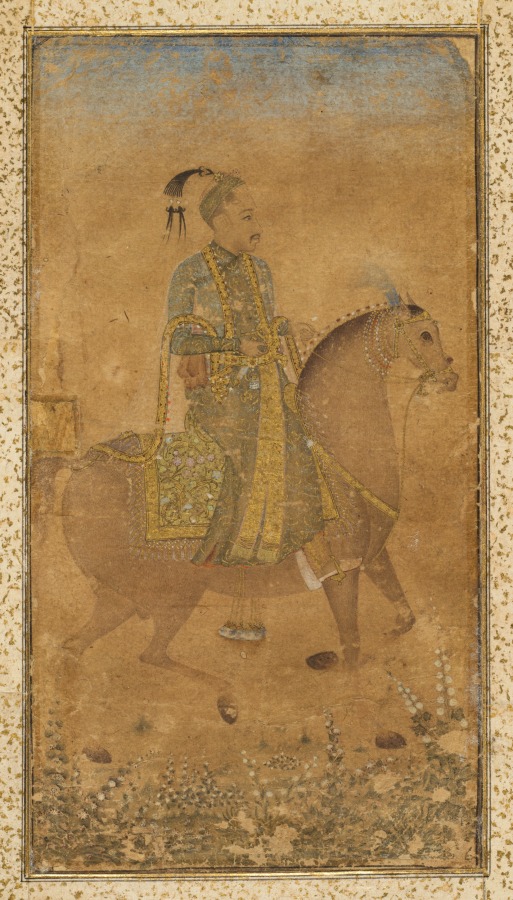 Sultan Abdullah Qutb Shah (1614-74) on Horseback
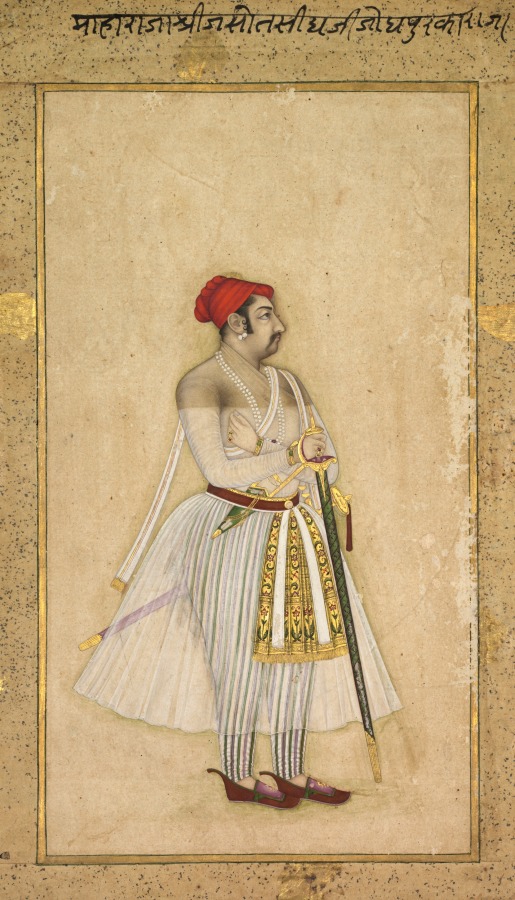 Jaswant Singh of Jodhpur (reigned 1635–1678)
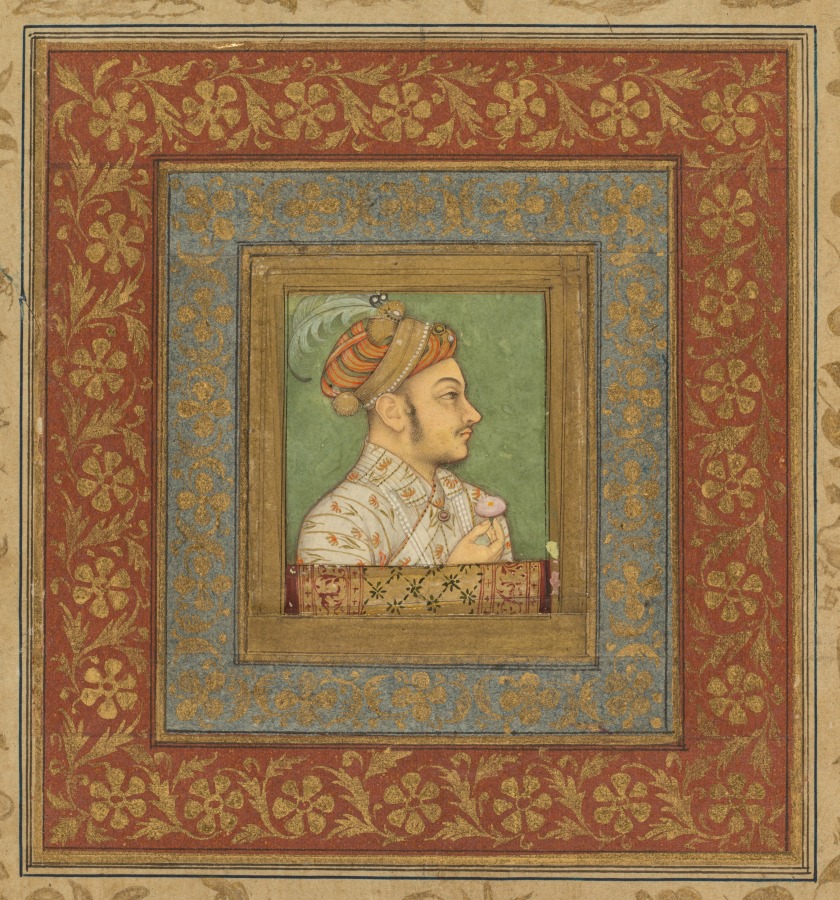 Balchand (Indian, active 1595–c. 1650) — Portrait of Murad B
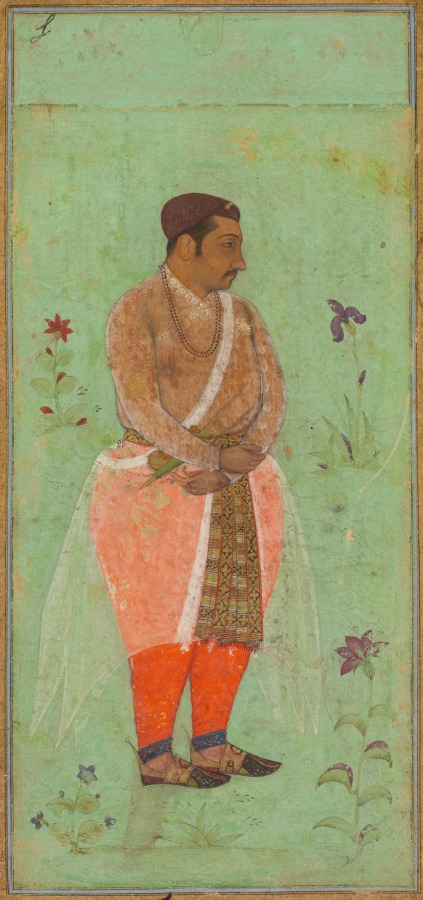 Bishandas (Indian, active c. 1610–30) — Portrait of Suraj Si
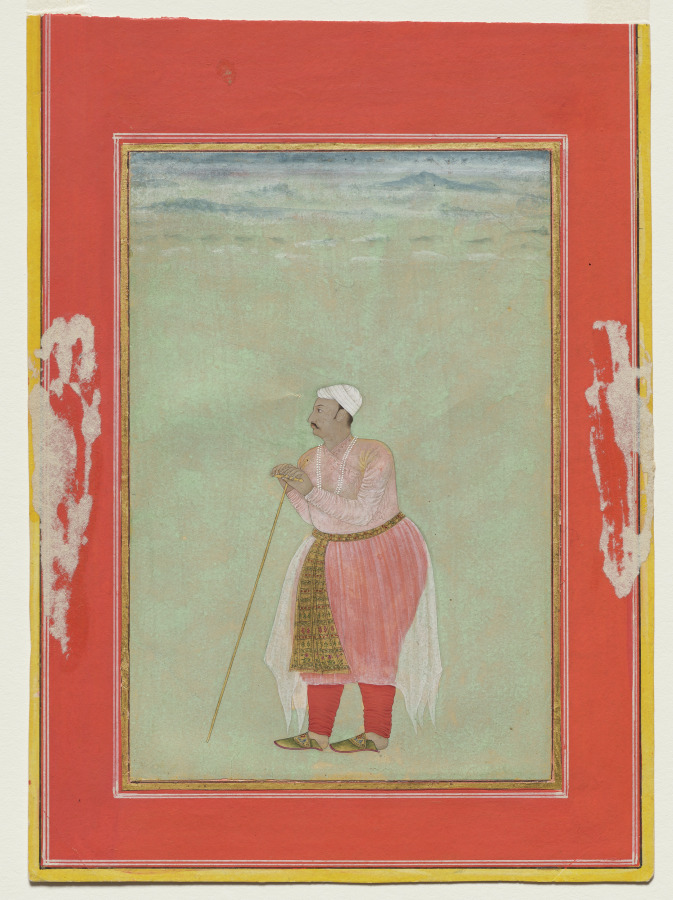 Portrait of Maharaja Rai Singh of Bikaner (reigned 1574–1612
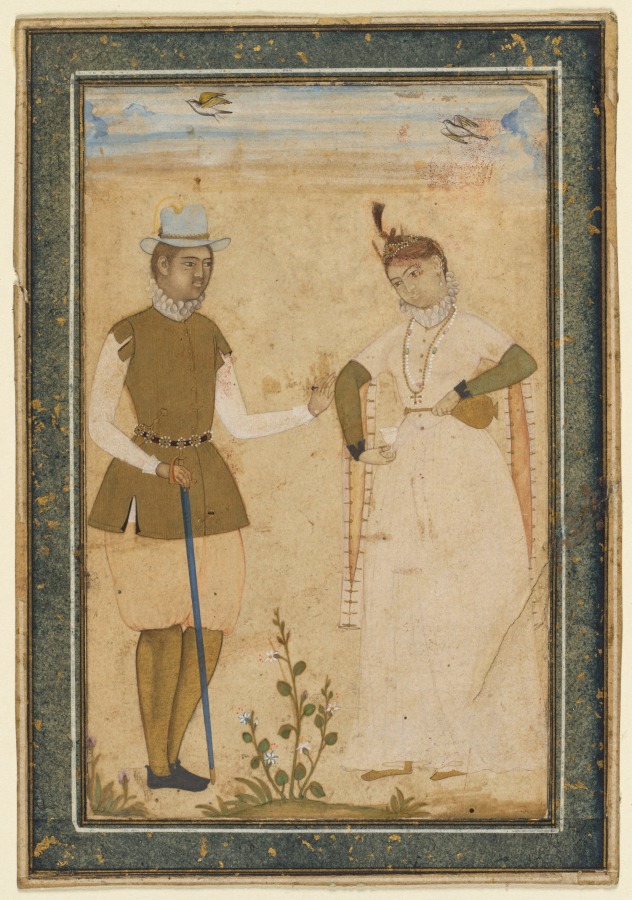 Ali Riza, the "Bodleian Painter" (Indian) — A European Coupl