In the collection of Cleveland Museum of Art, Cleveland — check current display status with the museum.
FROM THE CLEVELAND MUSEUM OF ART’S CATALOG
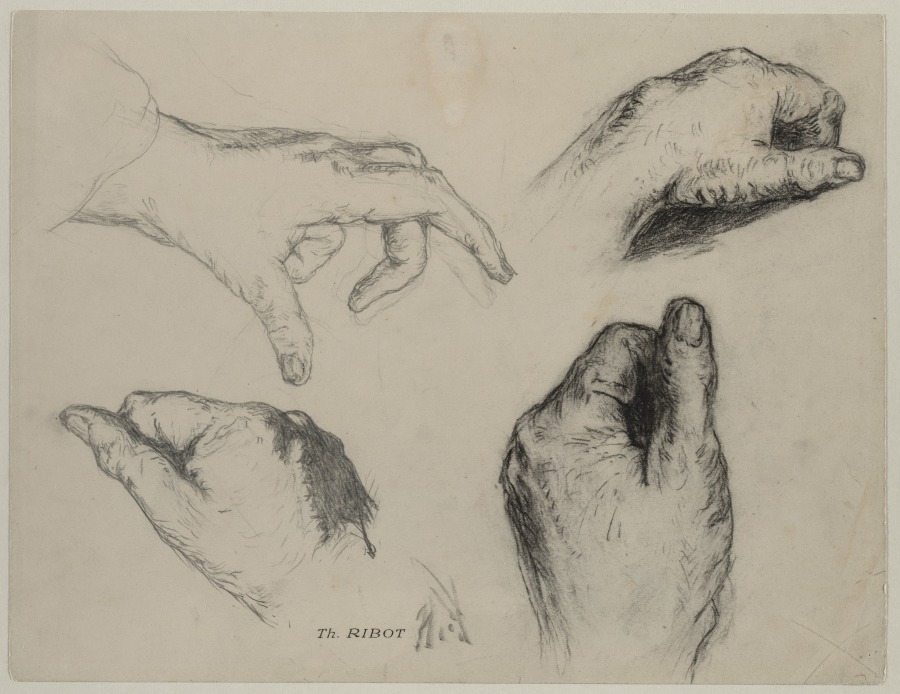
The subject of this painting comes from the 16th-century Spanish novel Lazarillo de Tormes . This tells the story of Lazarillo, a poor servant boy who worked for an impoverished blind man. Abused by his master, and never given enough to eat or drink, Lazarillo is forced to fend for himself. According to the story, he steals wine by drinking it from a straw directly from the blind man's jug. This painting relates to a cultural movement known as espagnolisme , the French interest in Spanish art and literature. Especially popular during the 1850s, espagnolisme focused upon realistic, often down-trodden characters such as Lazarillo. Instead of finding them naïve or foolishly humorous, artists such as Ribot related to their alienation from society and found inspiration in the detailed descriptions of their rough, lowly lifestyles.
Be the first to share your thoughts.
Sign in to join the discussion.
 Johann Carl Loth — Old Peasant Lighting a Pipe
 Rembrandt — St. Bartholomew
 Jean-Baptiste Camille Corot — Two Italian Peasants
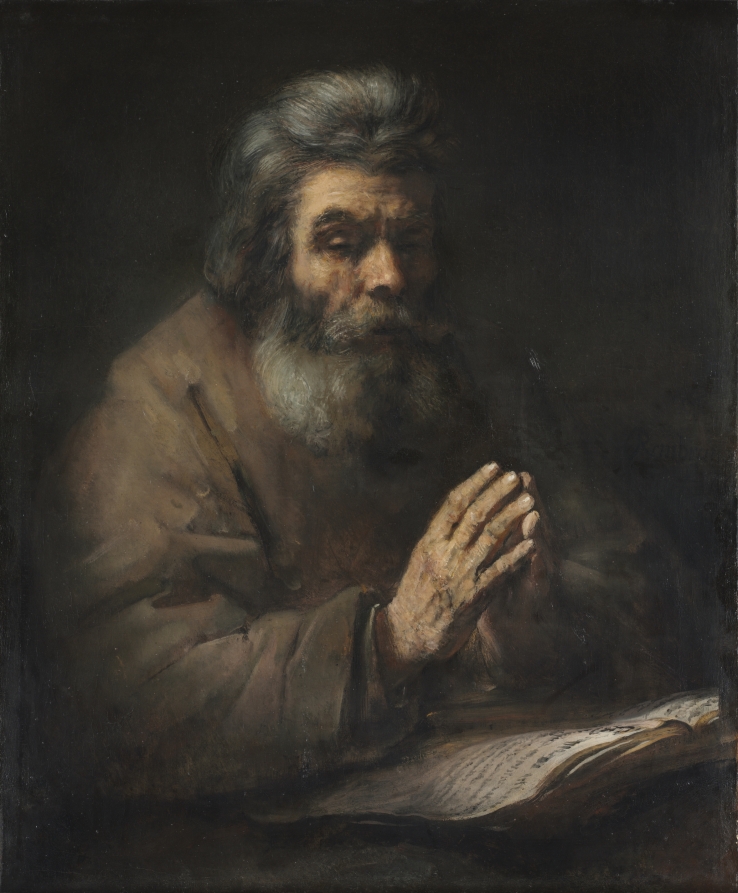 Rembrandt van Rijn (Dutch, 1606–1669) — An Elderly Man in Pr
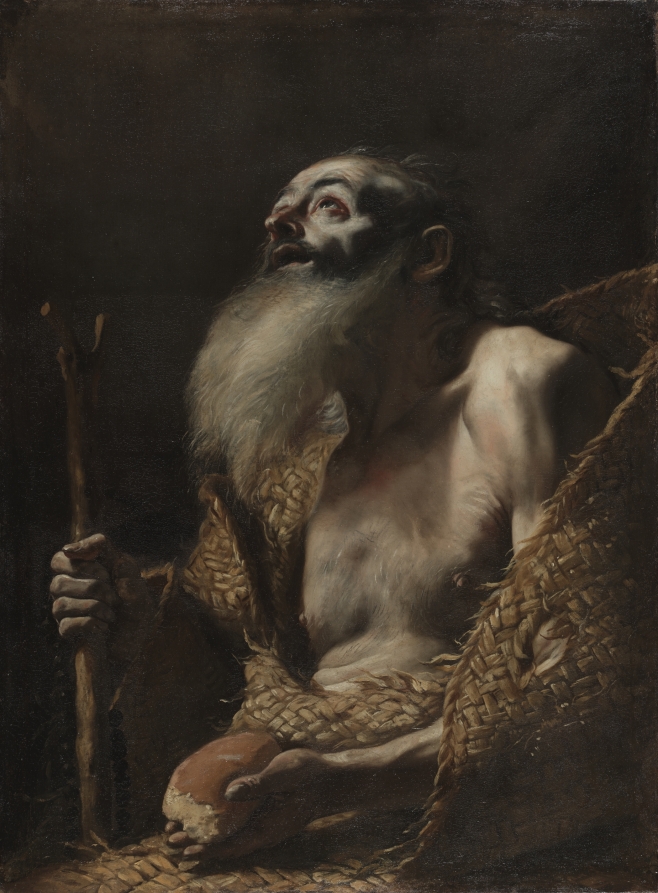 Mattia Preti (Italian, 1613–1699) — Saint Paul the Hermit
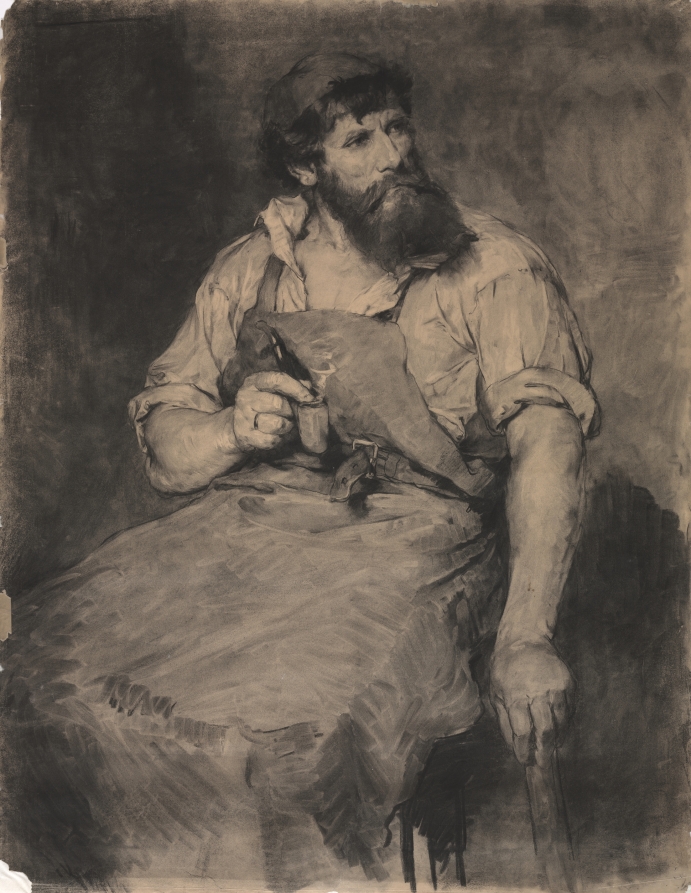 Samuel H. Crone (American, 1858–1913) — Smithy, study for "D
 anonymous — Supper at Emmaus
 Pier Francesco Mola — Homer Dictating
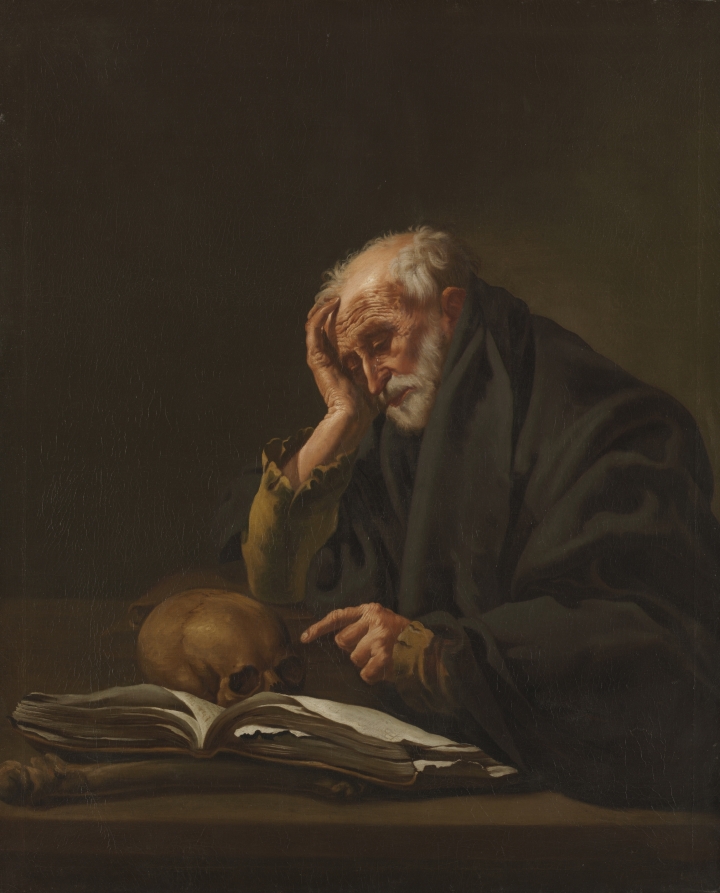 Hendrick ter Brugghen (Dutch, 1588–1629) — Saint Jerome
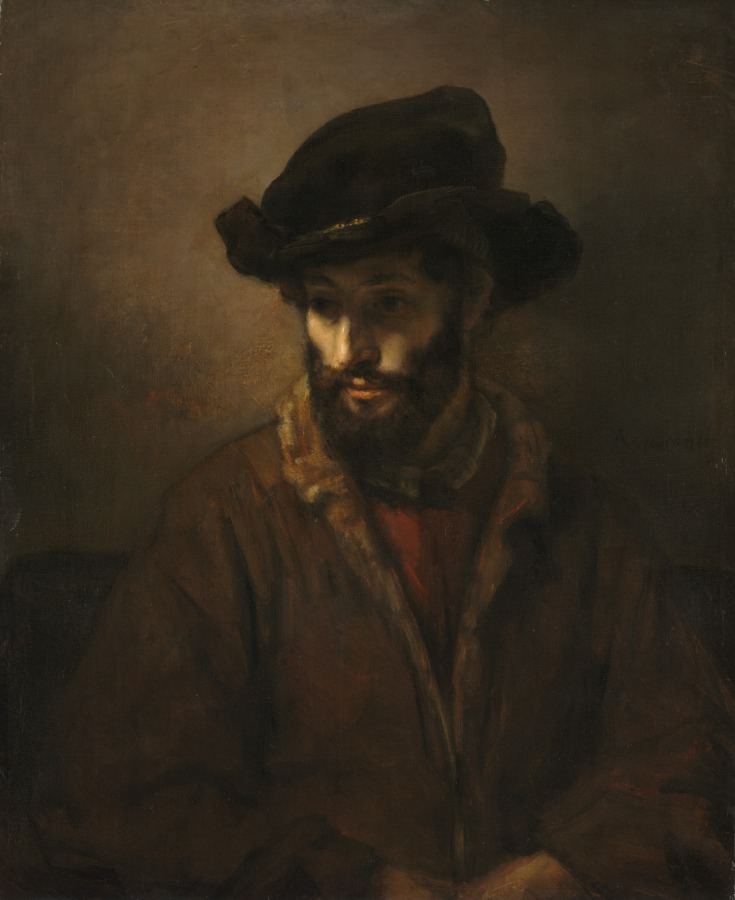 Rembrandt van Rijn (Dutch, 1606–1669) — A Bearded Man Wearin
 Adriaen Brouwer — Old craftsman
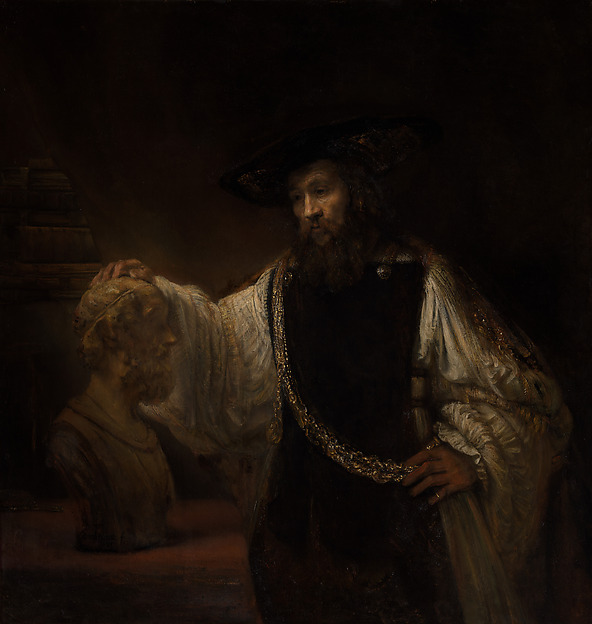 Rembrandt (Rembrandt van Rijn) — Aristotle with a Bust of Ho