Twelve Poetic Immortals and Their Poems
SEE IT IN PERSON
Not currently on view
In the collection of Art Institute of Chicago, Chicago · as of July 2026
Discussion
FROM THE ART INSTITUTE OF CHICAGO’S CATALOG
<BIG>屏風の12扇には、三十六歌仙の内の十二人の肖像が金地に描かれている。御所の公式行事でのごとく盛装しており、女性は十二単をまとい、男性は束帯や狩衣と烏帽子などを着用している。歌人の上には詠んだ和歌が達筆な書で記されている。女性の歌仙が多く描かれていることから、この屏風は、婦人の室内用に注文されたものと思われる。 為恭は、復古大和絵派の画家の中で、古典的な絵画の復興に、最も熱意を燃やした人物であった。技法を、数百年前の原画を丹念に模写することで習得し、さらに、宮廷の生活、儀式、衣裳の詳しい知識を独学で身につけた。 この絵の完成二ヶ月前に、長年希望していた官位を受けている。 幕末の騒乱期、為恭は、絵画の習得のため、幕府要人宅を訪問するところを見咎められ、後に尊皇派に追われ、42歳で暗殺された。</BIG> On each of twelve panels of this pair of screens, the figure of a revered poet from Japan’s classical age is seated, set against a solid gold ground. Attired as if in a formal courtly setting, the women wear the many-layered kimono of the aristocracy of the Heian period (794-1185), while the men sport clothing and lacquered hats of various court ranks. Above each poet is a waka verse that he or she composed, brushed in masterful calligraphy of a general style contemporary with the poet’s lifetime. The relatively large number of female poets depicted may indicate that the screens were commissioned for use in women’s quarters. Tamechika was perhaps the most earnest of the fukko yamato-e artists who revived classical Japanese painting. Learning this technique required painstaking copying of original, centuries-old works.
Be the first to share your thoughts.
Sign in to join the discussion.
More like this
 Artist unknown
Japanese — Southern Barbarians
Artist unknown
Japanese — Southern Barbarians Oeyama Engi
 Artist Unknown
Japanese — The Tale of Genji
Artist Unknown
Japanese — The Tale of Genji Utagawa Kunisada I (Toyokuni III) — The actor Ichikawa DanjuUtagawa Kunisada I (Toyokuni III) — The actor Segawa KikunojUtagawa Kunisada I (Toyokuni III) — The actor Bando MitsugorUtagawa Kunisada I (Toyokuni III) — Bando Mitsugoro III as M
 Artist unknown
Japanese — The Tale of Taishokan
Artist unknown
Japanese — The Tale of Taishokan Torii Kiyonaga — Five Musicians (Gonin bayashi)
 Torii Kiyonaga
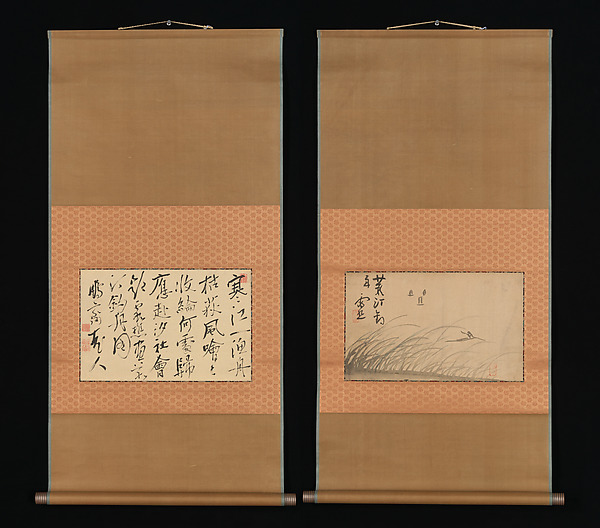 Kameda Bōsai|Ike Taiga
 Tao Cheng (Chinese, active c. 1471–after 1502) — Chrysanthem