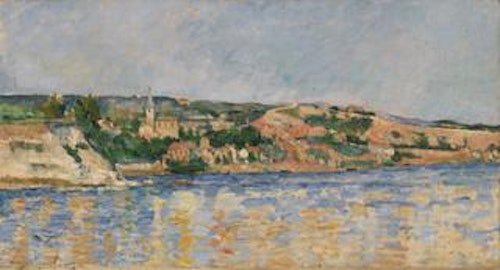
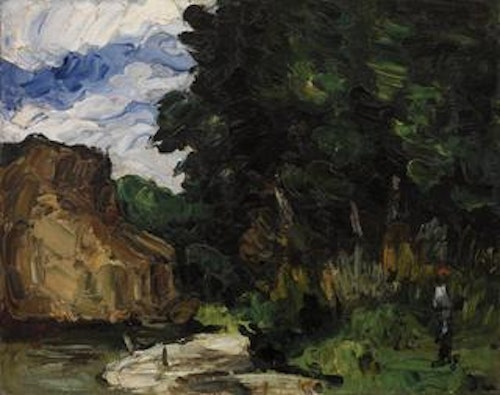
In the collection of Barnes Foundation, Philadelphia — check current display status with the museum.
FROM THE BARNES FOUNDATION’S CATALOG
During Cézanne's time, abandoned houses were common in the countryside of Provence due to the rules of inheritance, which distributed property equally among sons. Here Cézanne records specific details of the structure, like the thick crack on the facade that leads up to a small window. The relationship of the house to the surrounding wall is difficult to discern, particularly in the left-hand corner, where the perspective seems to shift. Such deliberate spatial ambiguities are typical of Cezanne's landscapes from this period.
Be the first to share your thoughts.
Sign in to join the discussion.
 Paul Cezanne — House of Père Lacroix
 Paul Cezanne — Landscape near Paris
 Paul Cezanne — At the Water's Edge
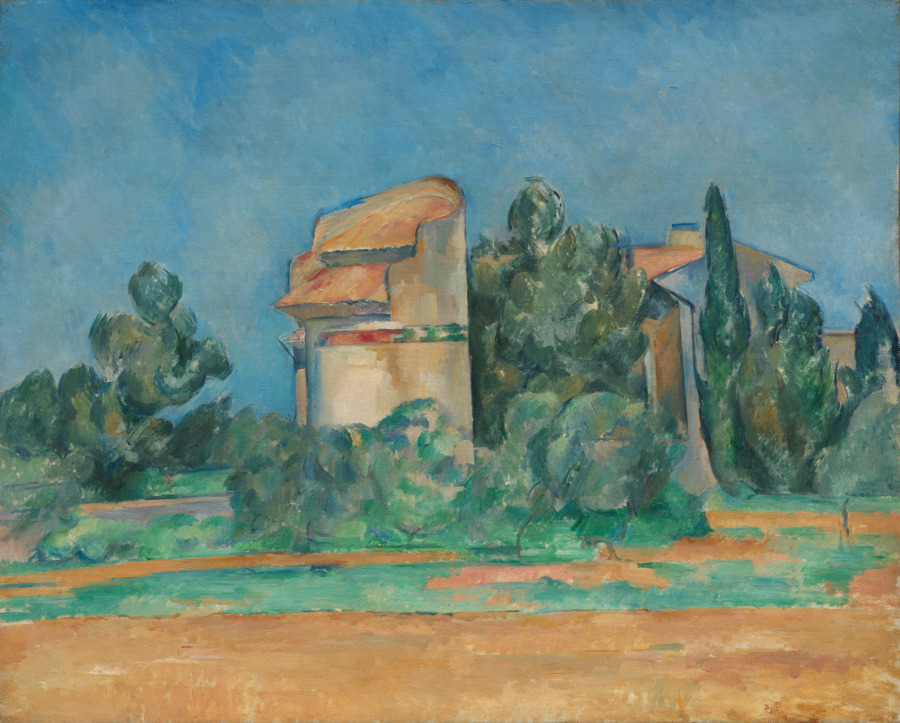 Paul Cezanne (French, 1839–1906) — The Pigeon Tower at Belle
 Maurice Utrillo — La petite maison à Pierrefitte (Seine-Sain
 Paul Cezanne — Houses in Provence: The Riaux Valley near L'E
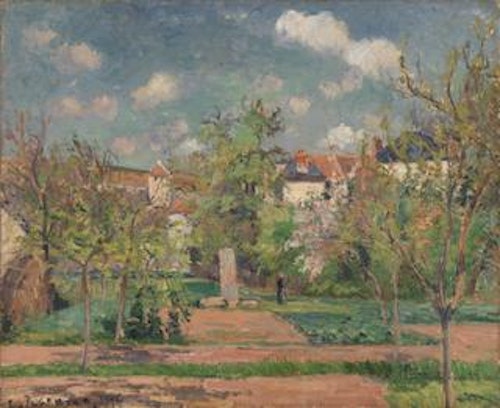 Camille Pissarro — Garden in Full Sunlight (Le Jardin au gra
 Camille Pissarro — The Path to Les Pouilleux, Pontoise
 Paul Cezanne — Banks of the Seine at Médan
 Camille Pissarro — Peasant House at Éragny
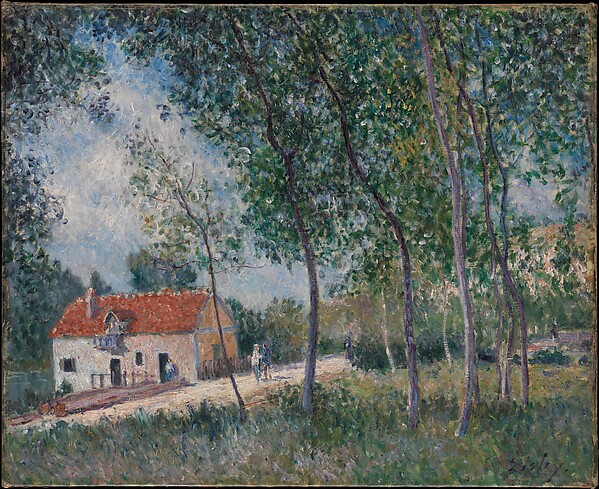 Alfred Sisley — The Road from Moret to Saint-Mammès
 Maurice Utrillo — Château de Mousseaux (Seine-et-Oise)