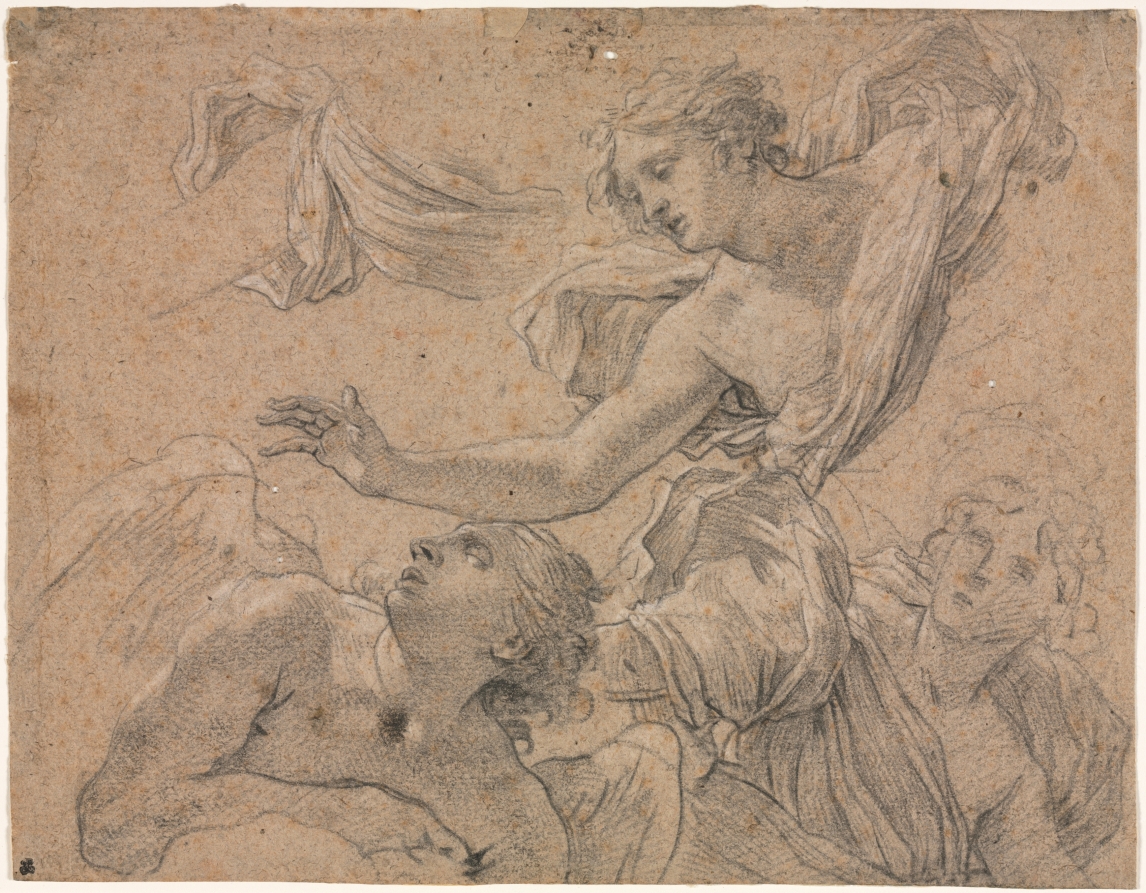
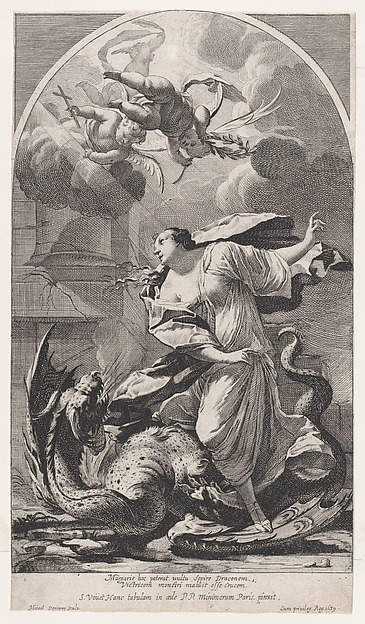
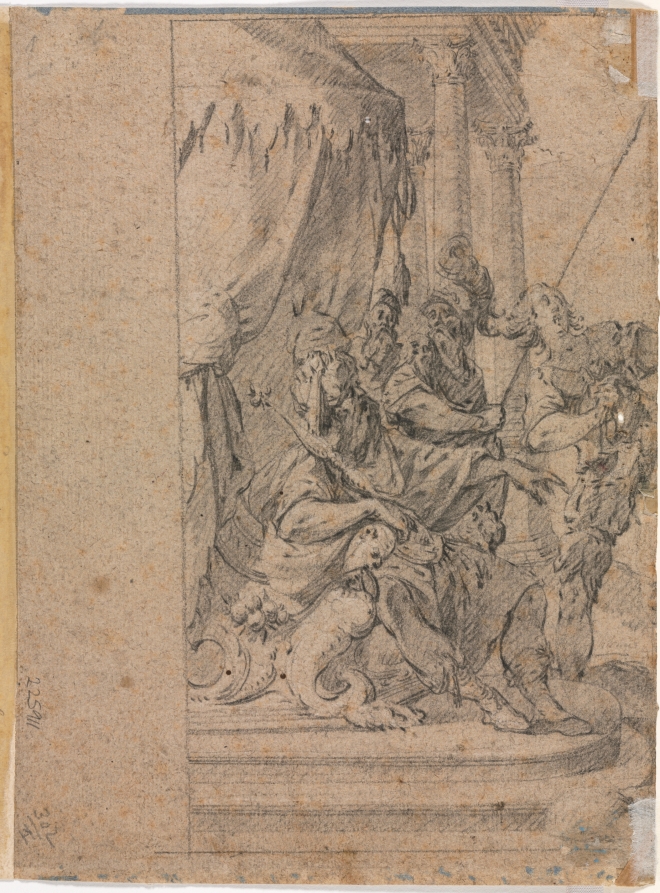
In the collection of Cleveland Museum of Art, Cleveland — check current display status with the museum.
FROM THE CLEVELAND MUSEUM OF ART’S CATALOG
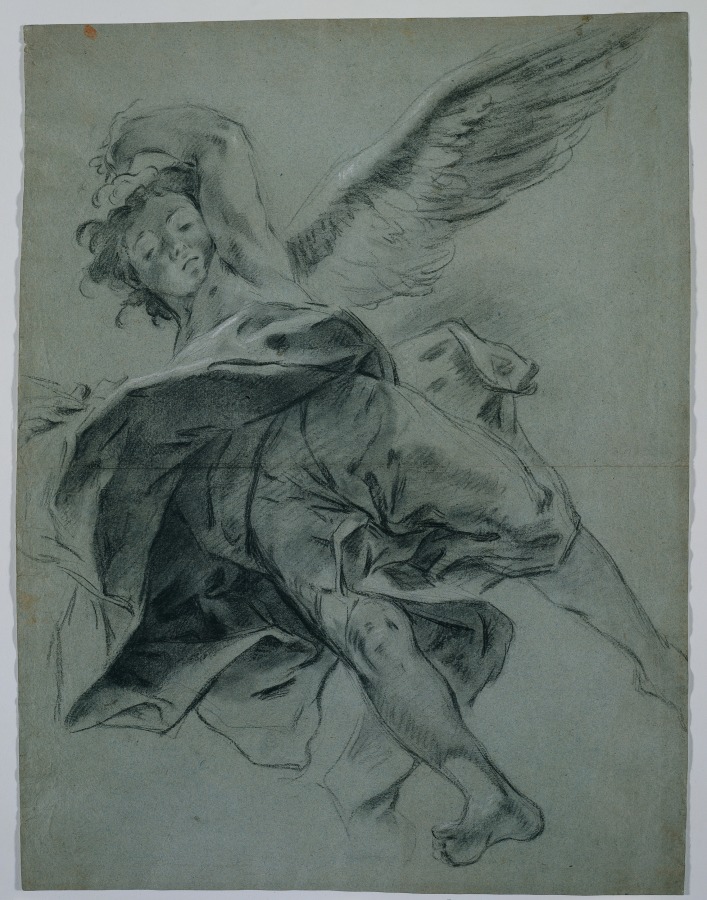
Dorigny was the collaborator and son-in-law of Simon Vouet, the leading painter working in Paris in the mid-1600s. Their drawing styles are similar, and this sheet was once attributed to Vouet. However, the airy, floating drapery, firm contour lines, and regular parallel hatching lines are all typical of Dorigny's technique in black chalk. Although we do not know of a painting to which this drawing relates, the flying angels indicate that Dorigny had a religious subject in mind when he drew them.
Be the first to share your thoughts.
Sign in to join the discussion.
 Anonymous — Apollo Flaying Marsyas (recto); Two Sketches of
 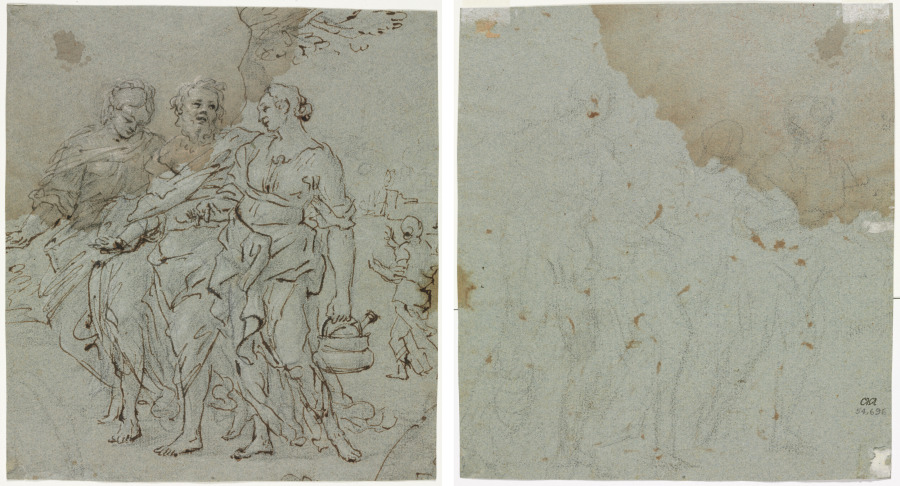 Pietro da Cortona (Italian, 1596–1669) — Lot and His Daughte
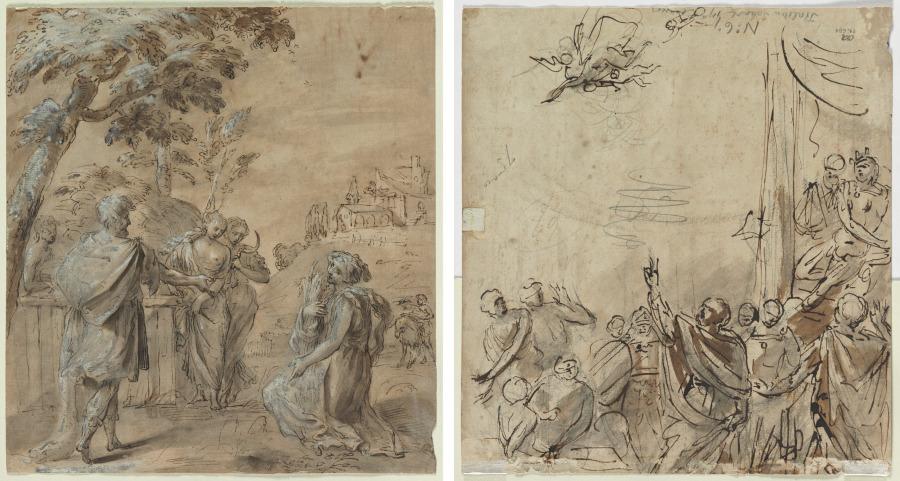 Ruth and Boaz (recto) The Fall of Simon Magus (verso)
 Giovanni Battista Piazzetta (Italian, 1682–1754) — A Flying
 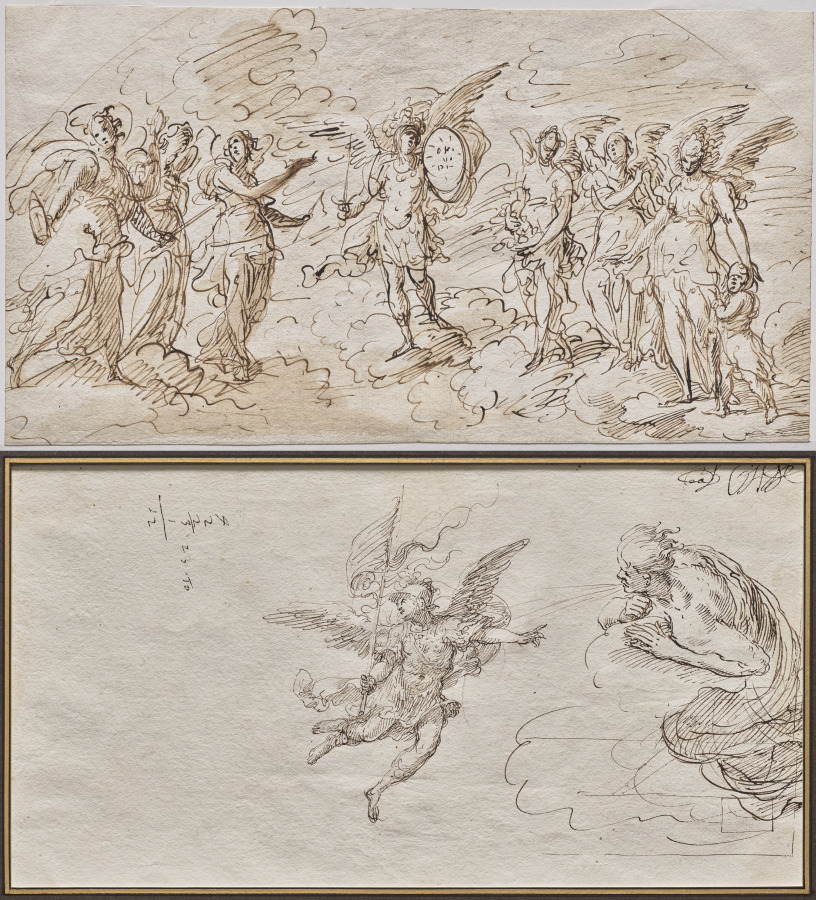 Massimo Stanzione (Italian, 1585–1656) — The Seven Archangel
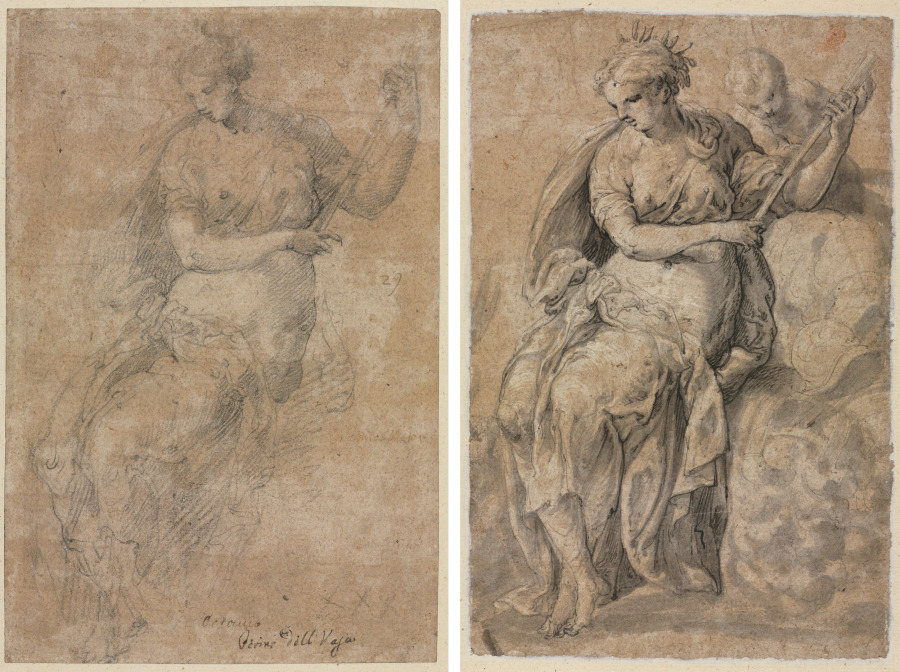 Niccolo dell' Abbate (Italian, c. 1512–1571) — Allegorical F
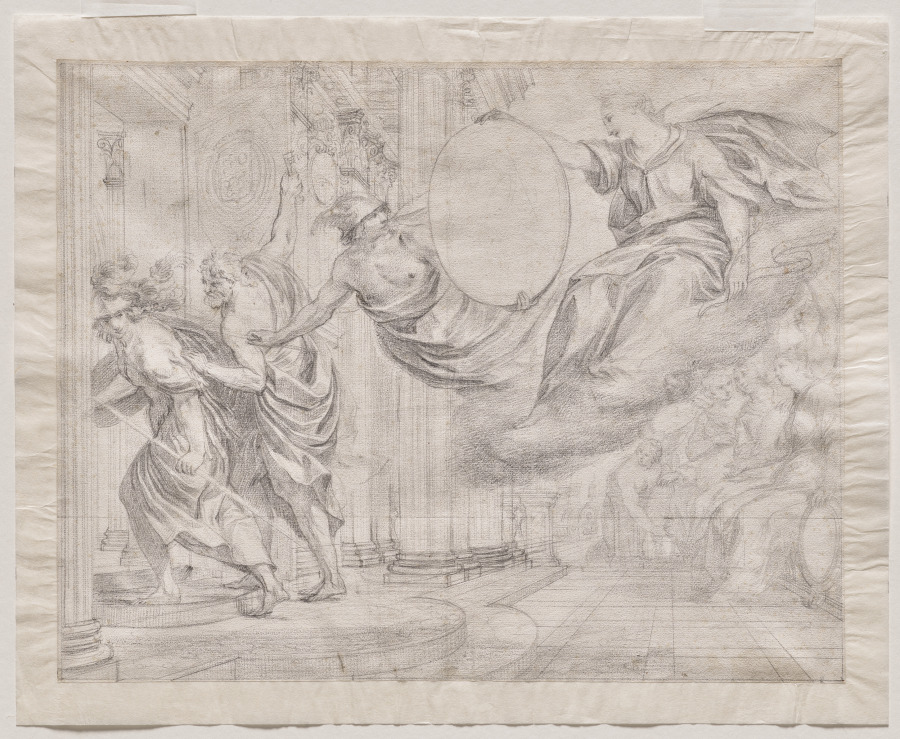 Grégoire Huret (French, 1606–1670) — Allegory in Honor of Cl
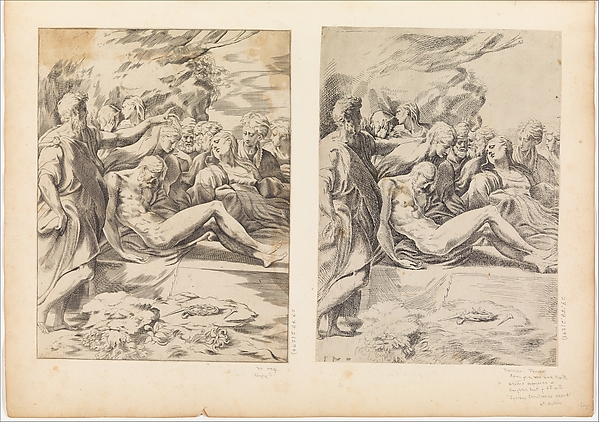 Anonymous, Italian, 16th to 17th century|Parmigianino (GirolFrançois Perrier|Parmigianino (Girolamo Francesco Maria Mazz
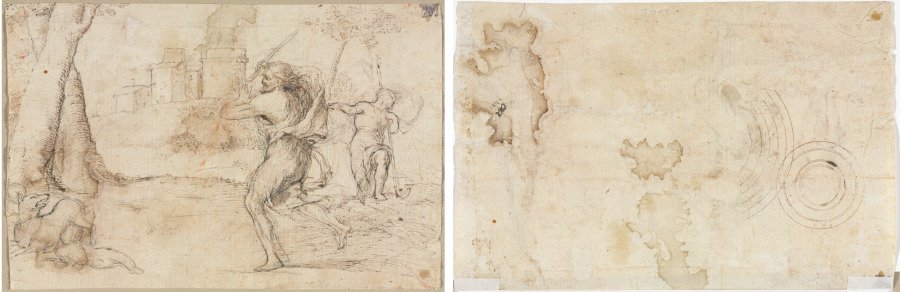 Romanino (Italian, 1484/87–1562) — Romulus and Remus Found b
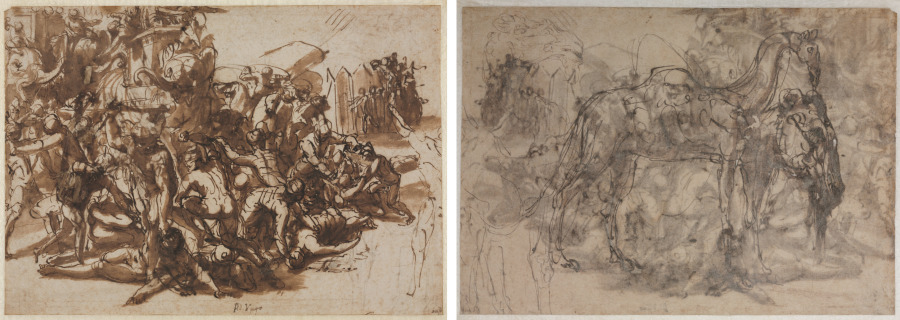 Perino del Vaga (Italian, 1501–1547) — Poros Assailed by the
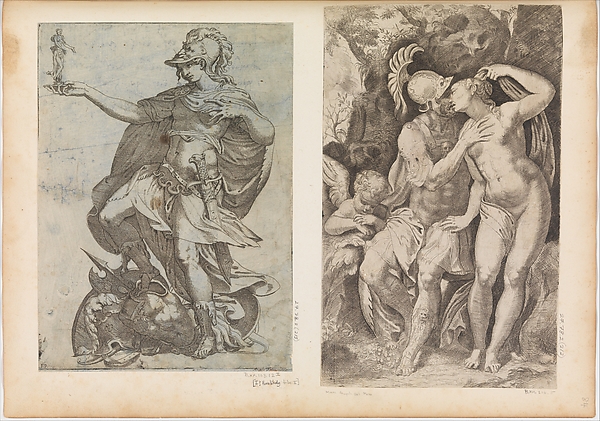 Marco Angolo del Moro — Mars and Venus