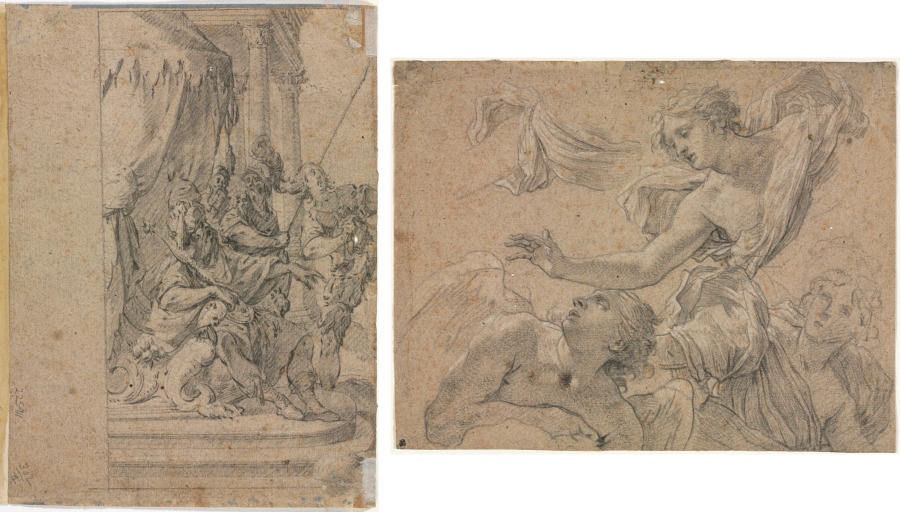
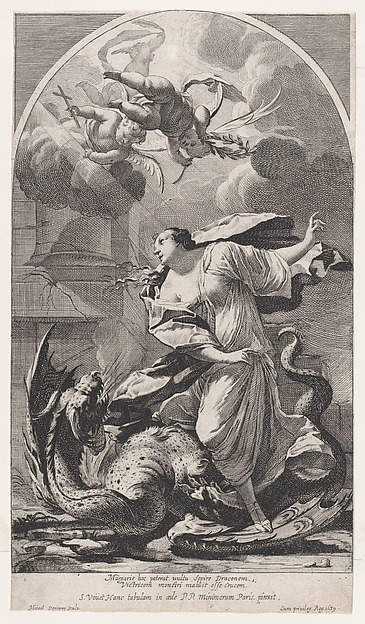
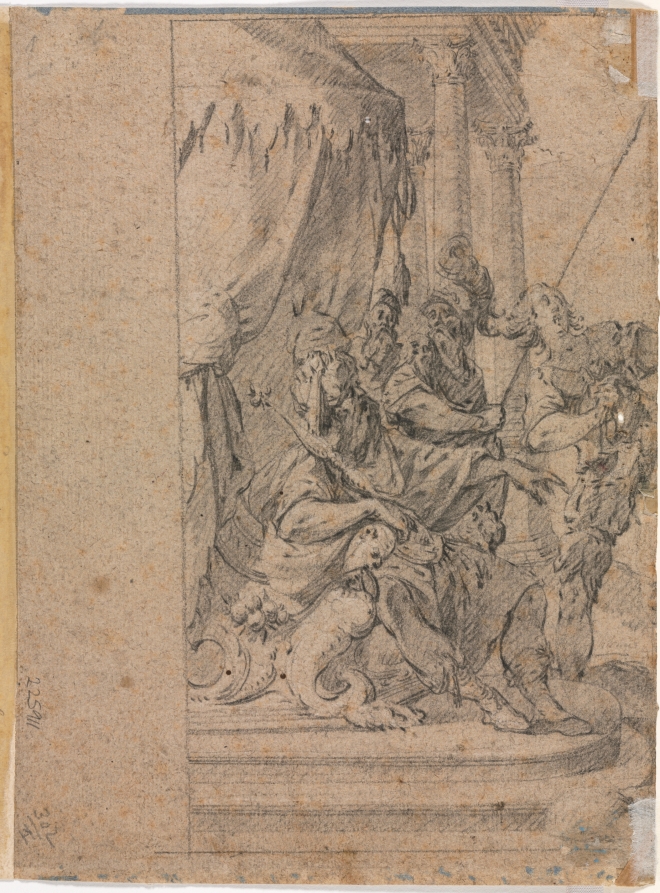
In the collection of Cleveland Museum of Art, Cleveland — check current display status with the museum.
FROM THE CLEVELAND MUSEUM OF ART’S CATALOG
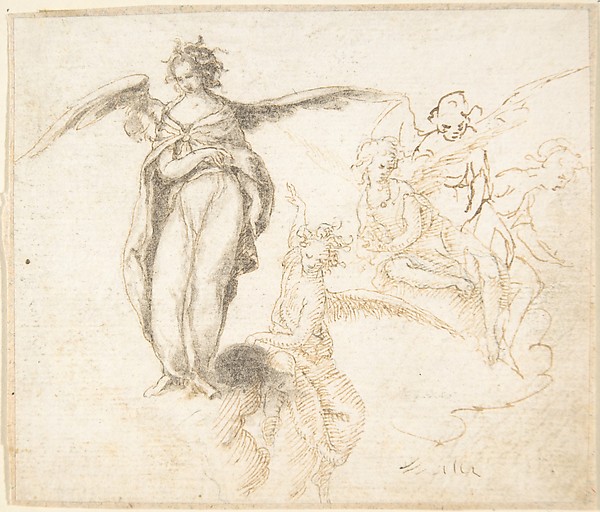
Dorigny was the collaborator and son-in-law of Simon Vouet, the leading painter working in Paris in the mid-1600s. Their drawing styles are similar, and this sheet was once attributed to Vouet. However, the airy, floating drapery, firm contour lines, and regular parallel hatching lines are all typical of Dorigny's technique in black chalk. Although we do not know of a painting to which this drawing relates, the flying angels indicate that Dorigny had a religious subject in mind when he drew them.
Be the first to share your thoughts.
Sign in to join the discussion.
 Pietro da Cortona (Pietro Berrettini) — Study of Two Figures
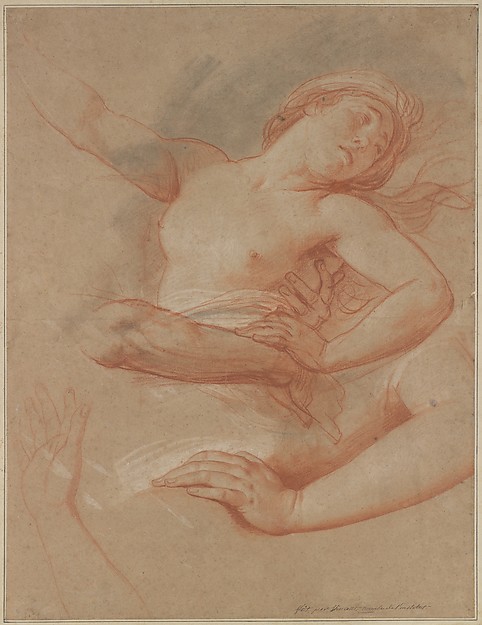 François André Vincent — Study for Boreas Abducting Oreithyi
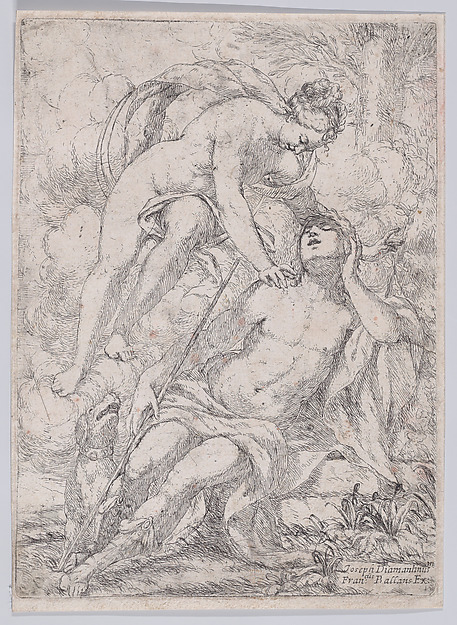 Giuseppe Diamantini — Bacchus, Ceres, and Venus
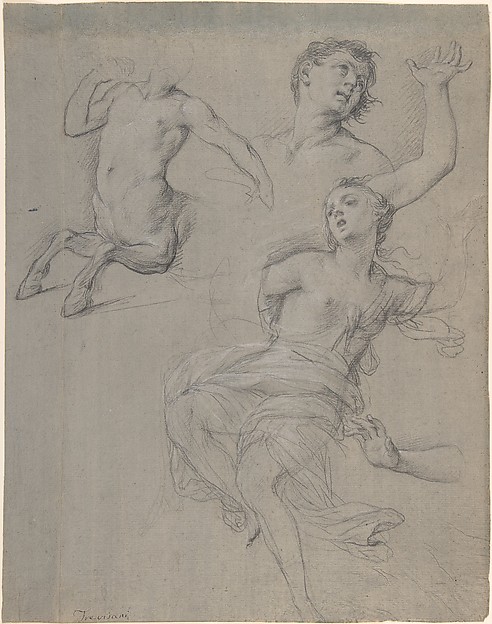 Francesco Trevisani — Studies for the Figure of a Centaur an
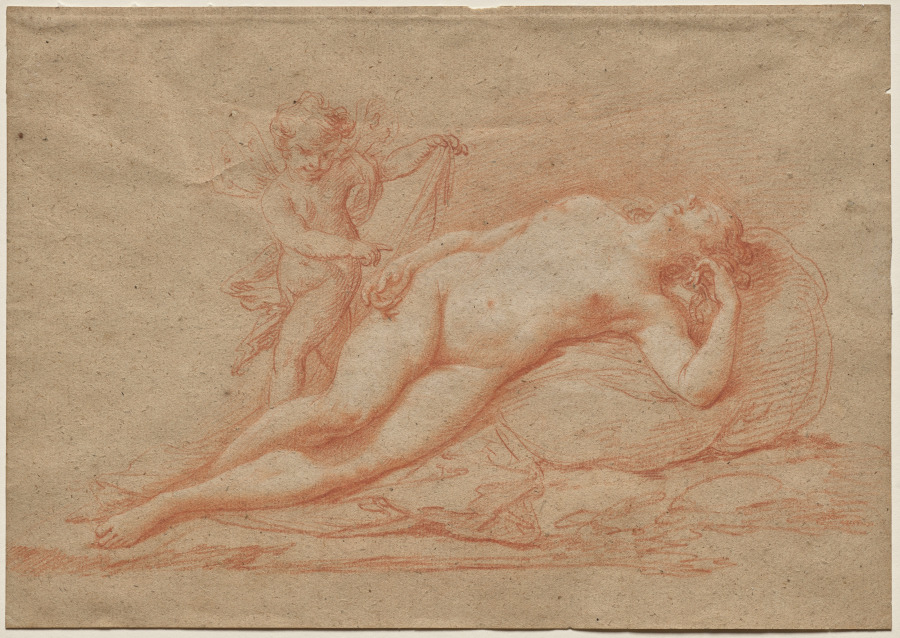 Giovanni Battista Cipriani (Italian, 1727–1785) — Reclining
 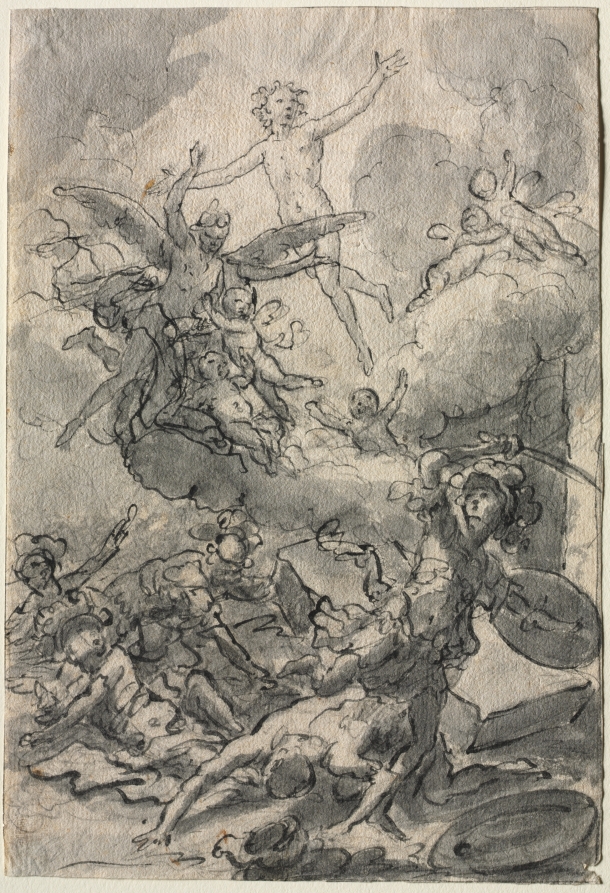 Martin Johann Schmidt (Austrian, 1718–1801) — The Resurrecti
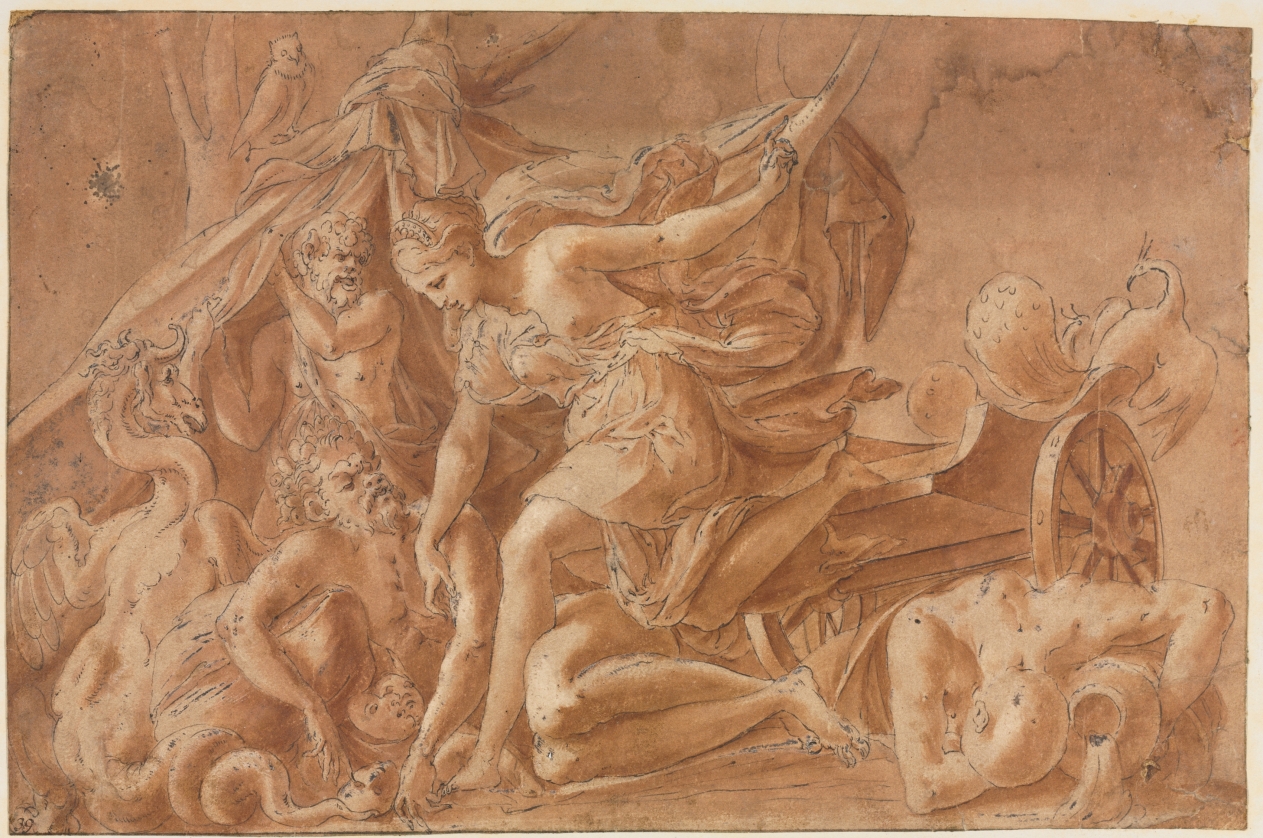 Francesco Primaticcio (Italian, 1504–1570) — Copy after Prim
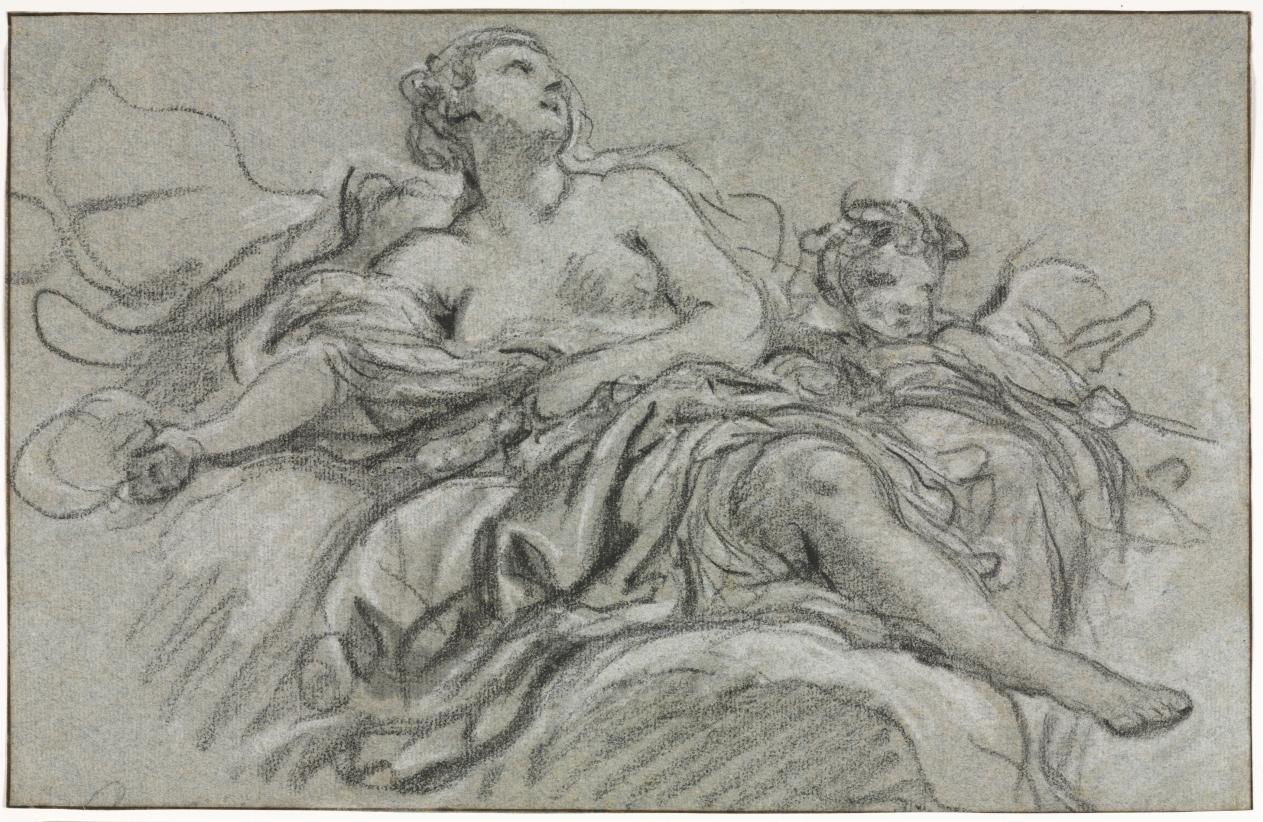 François Boucher (French, 1703–1770) — Venus and Cupid
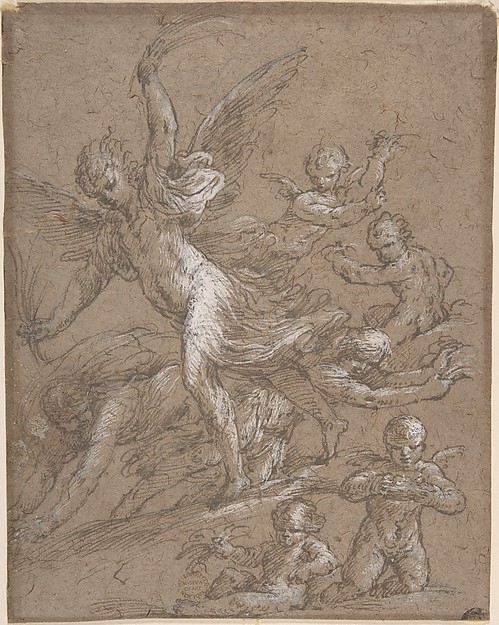 Anonymous, Italian, Roman-Bolognese, 17th century — Angels a
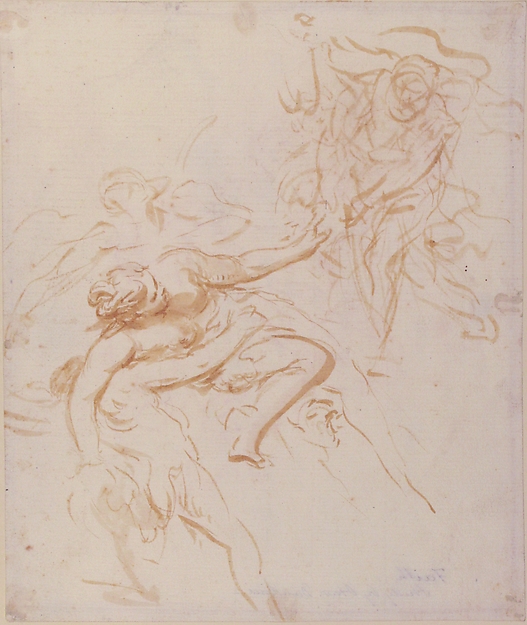 Ottaviano Dandini — Scene of Abduction (recto); Allegorical
  Anonymous, Spanish, School of Seville, 17th century — Studie
 Giovanni Battista Tiepolo — Marine Deity with Attendant Fema