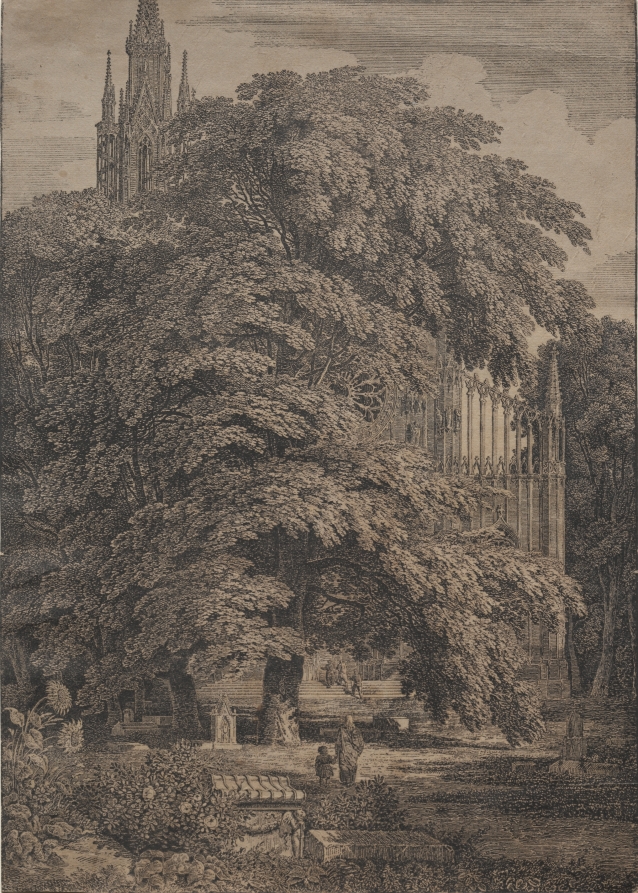
Gothic Church Behind an Oak Grove with Tombs
SEE IT IN PERSON
Not currently on view
In the collection of Art Institute of Chicago, Chicago · as of July 2026
Discussion
FROM THE ART INSTITUTE OF CHICAGO’S CATALOG
Architect, painter, and printmaker Karl Friedrich Schinkel understood Gothic architecture as a fusion between universal Christianity and German genius. The combination here of vernacular Gothic architecture and a grand oak tree symbolizing Teutonic strength—as well as the medium of lithography itself, which had recently been invented in Munich by Alois Senefelder—infuses the print with a particularly nationalistic significance. This patriotism is all the more pointed given Germany’s military defeat at the hands of Napoleon’s army in 1806 and the subsequent occupation of Schinkel’s home of Berlin by French troops.
Be the first to share your thoughts.
Sign in to join the discussion.
More by Karl Friedrich Schinkel
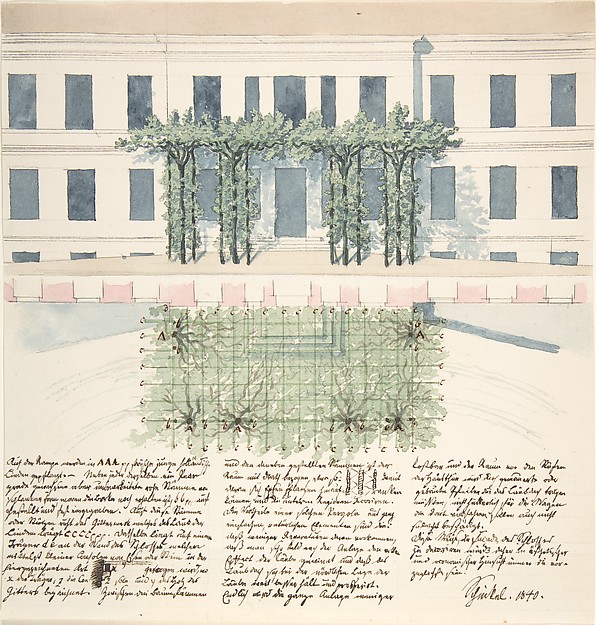 Elevation and Plan of the Façade of a Building
 Gothic Cathedral Behind a Pond with Swans
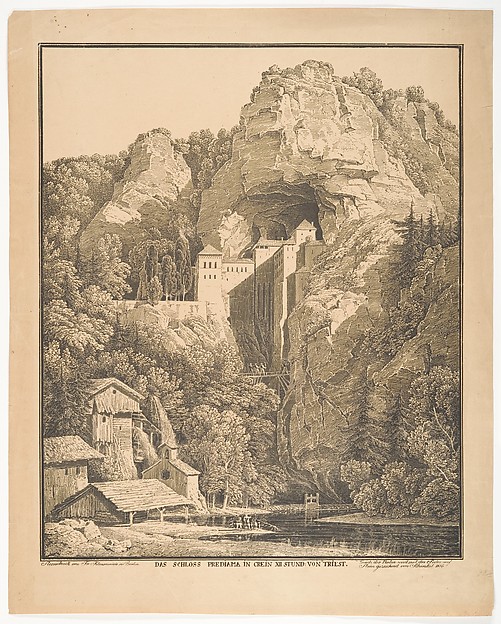 Das Schloss Prediama in Crein XII Stund: von Triest
 Gothic Church among Oaks
 Predjama Castle in Krein, Twelve Hours from Trieste
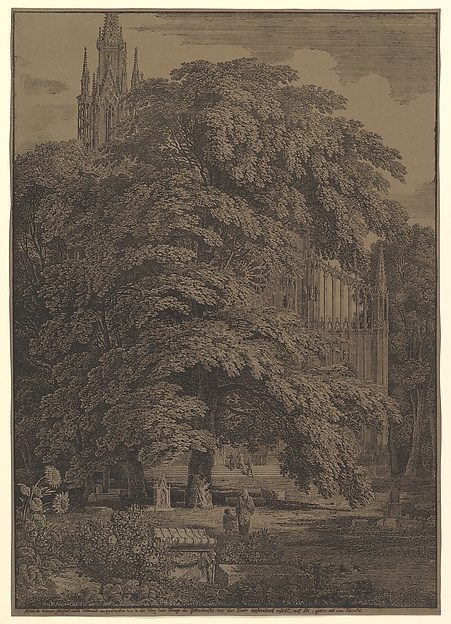 Gothic Church Hidden by a Tree
 Woodland Path with a Coach
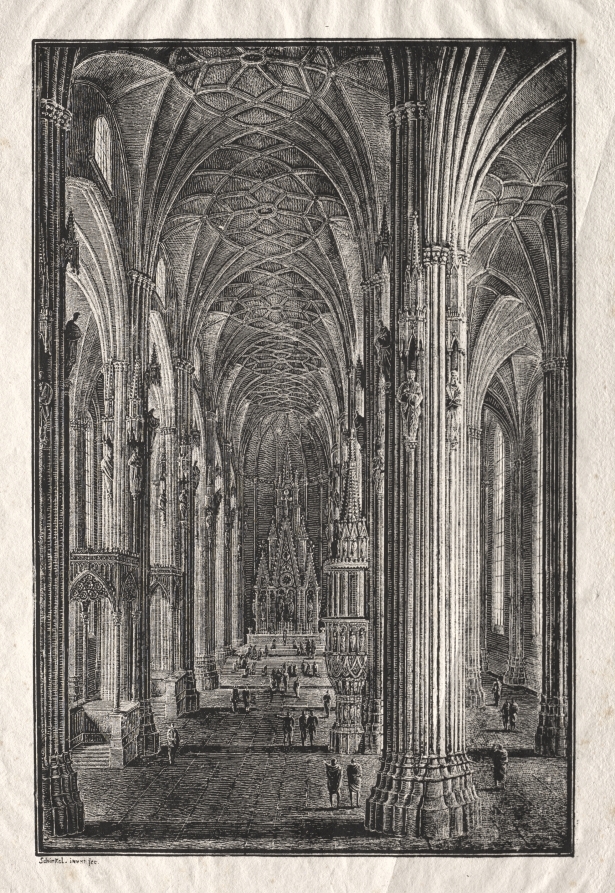 Interior of St. Stephen's Cathedral in Vienna
More like this
Karl Friedrich Schinkel (German, 1781–1841) — Gothic Church  Jan Looten — View of City from Road on Hill
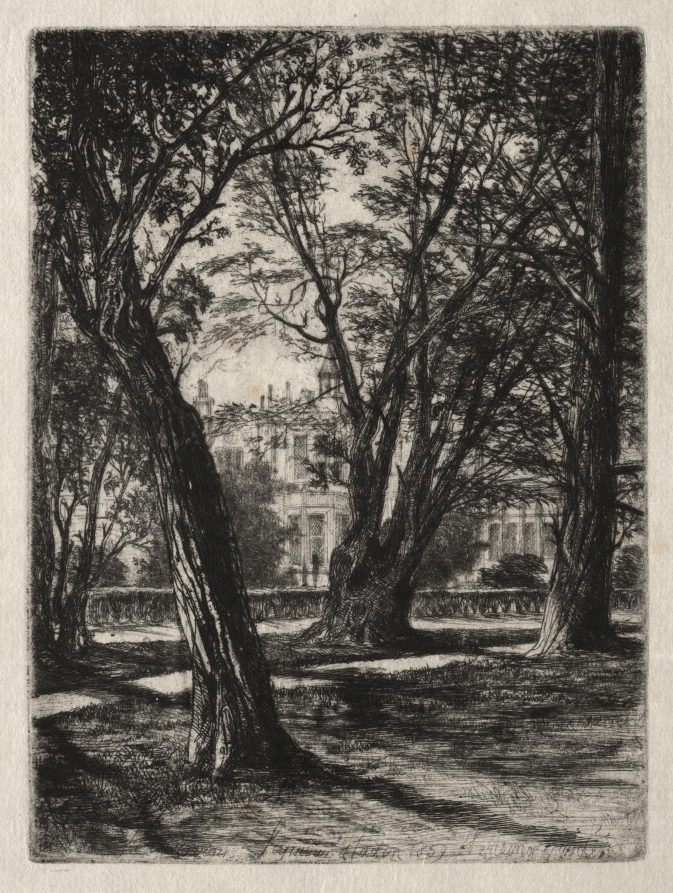 Francis Seymour Haden (British, 1818–1910) — Kensington Gard
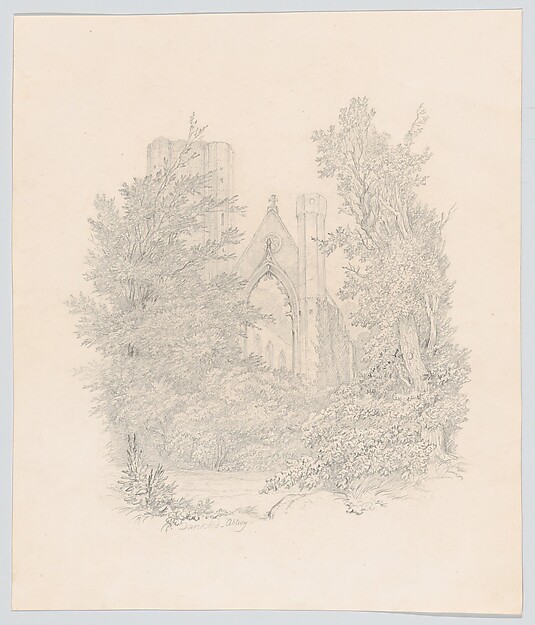 Carl Gustav Carus — View of the West Facade of Dunkeld Cathe
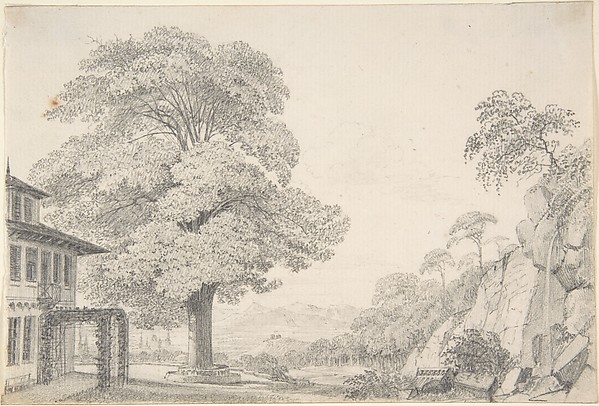 Eduard Gaertner — Landscape with a Tree in front of a Villa
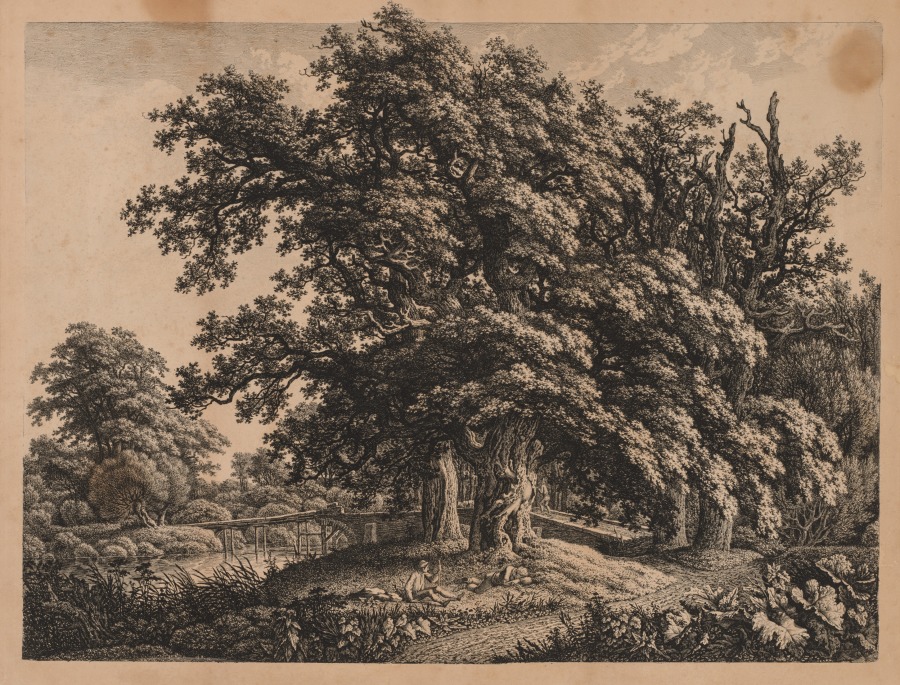 Carl Wilhelm I Kolbe (German, 1757–1835) — Landscape and Bri
 Domenico Quaglio — Ruin of Godesberg with the so-called High
 Francis Seymour Haden — Kensington Gardens, No. I (small pla
 James Duffield Harding — Abele and Oak, from The Park and th
 Adolphe Théodore Jules Martial Potémont (French, 1828–1883)
  Joseph Mallord William Turner — Berry Pomeroy Castle, plate
  Domenico Quaglio — Kiderich Church in Rheingau