In the collection of Cleveland Museum of Art, Cleveland — check current display status with the museum.
FROM THE CLEVELAND MUSEUM OF ART’S CATALOG
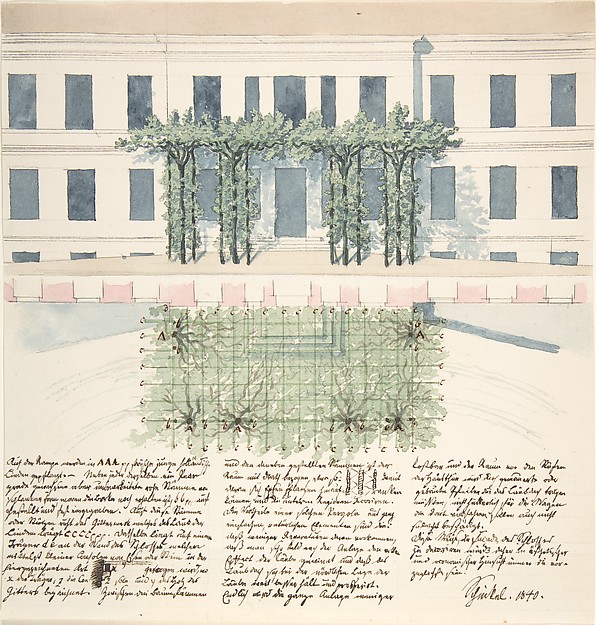
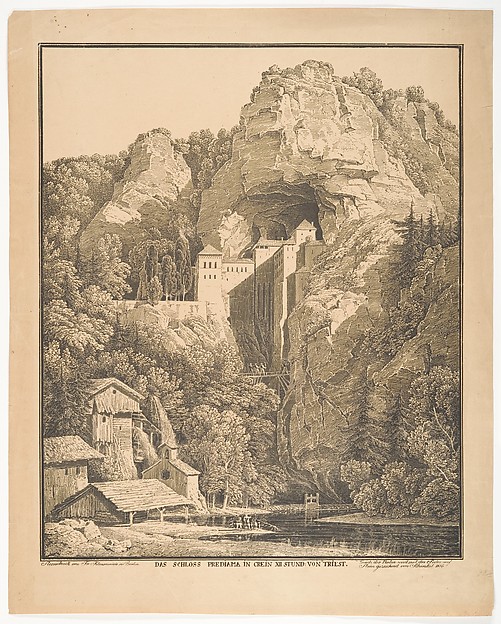
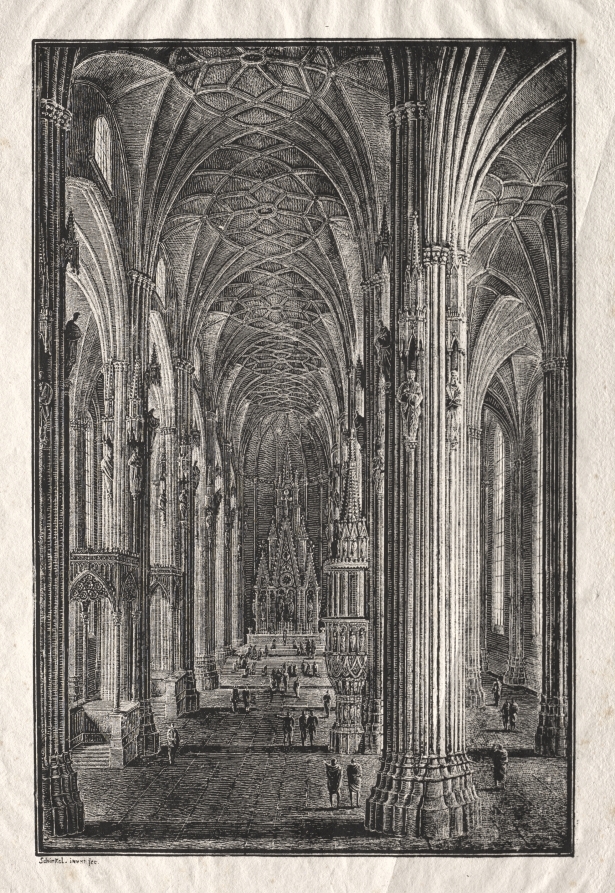
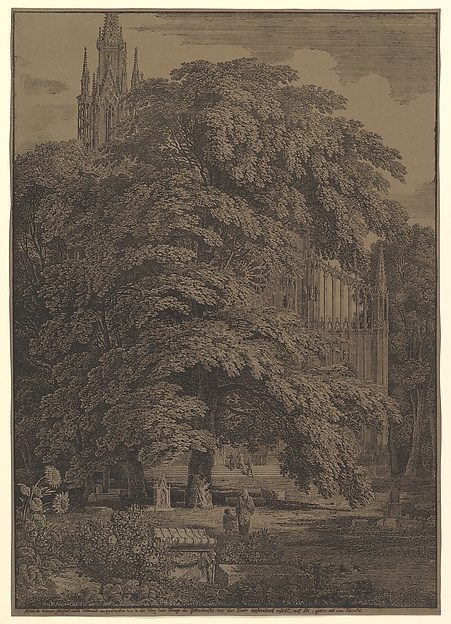
Schinkel was the principle German architect of the first half of the 19th century. Responsible for almost every public building in Berlin, his neoclassical buildings for the city, based on the rational order and classic proportions of antiquity, came to define the power and stability of the Prussian capital. Schinkel also had a career as a painter and printmaker in which he developed his ideas of architectural splendor in landscapes that juxtaposed nature with buildings. The theme of the visionary Gothic cathedral pervades his work. Gothic Church among Oaks combines the principal Romantic tenets of Christianity, nature, patriotism, and medievalism into one image. Here, as in Quaglio’s Outer Staircase of a Gothic Ruin , a small child is contrasted with the enormity of the oak and the Gothic ruin. The continuity of life in the midst of death is signified by the sunflower among gravestones.
Be the first to share your thoughts.
Sign in to join the discussion.
 Karl Friedrich Schinkel — Gothic Church Hidden by a Tree
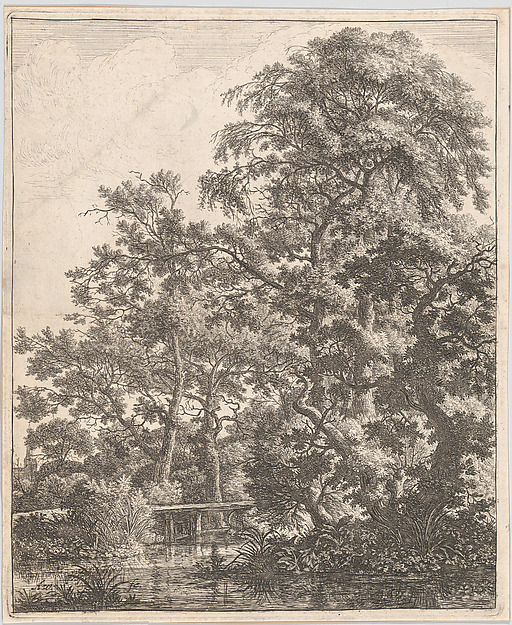 Anthonie Waterloo — A Small Bridge over a Stream
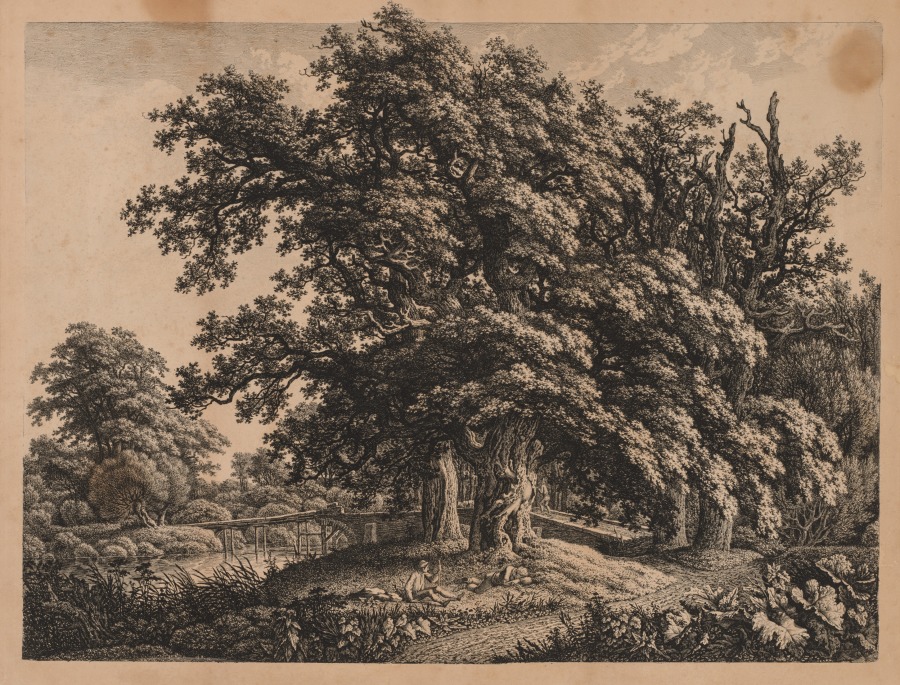 Carl Wilhelm I Kolbe (German, 1757–1835) — Landscape and Bri
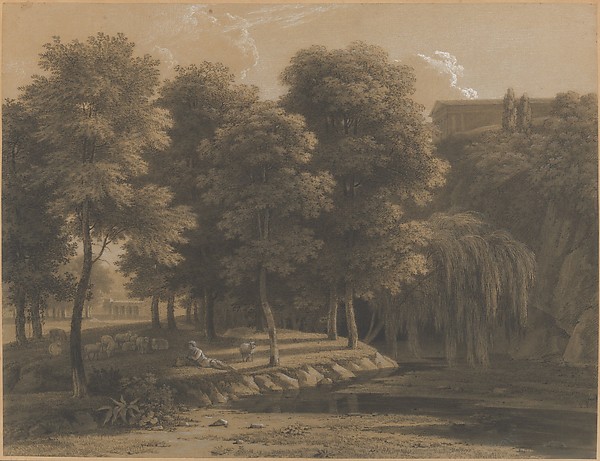 Jean Victor Bertin — Classical Landscape with a Shepherd
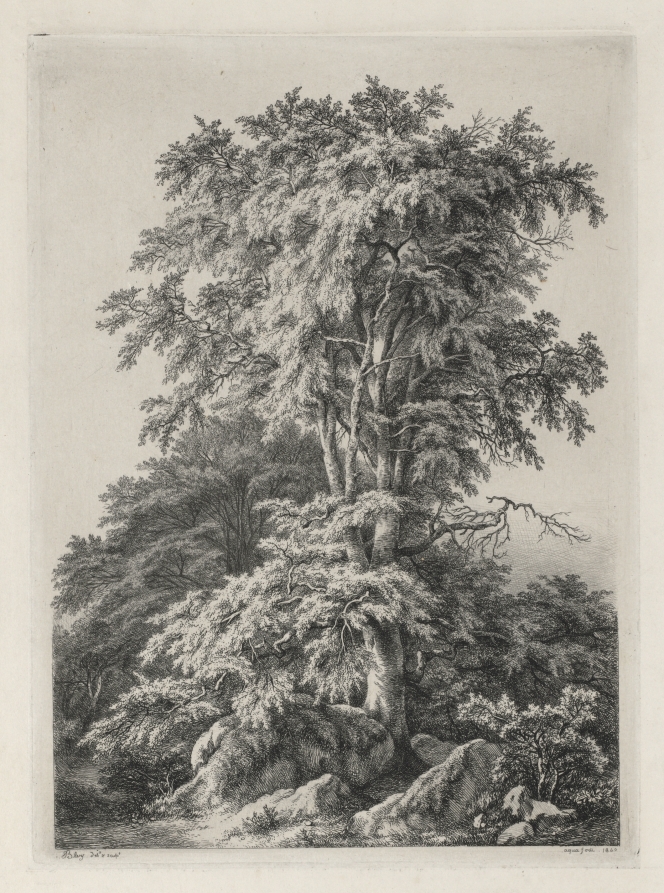 Eugene Bléry (French, 1805–1886) — Studies Drawn and Engrave
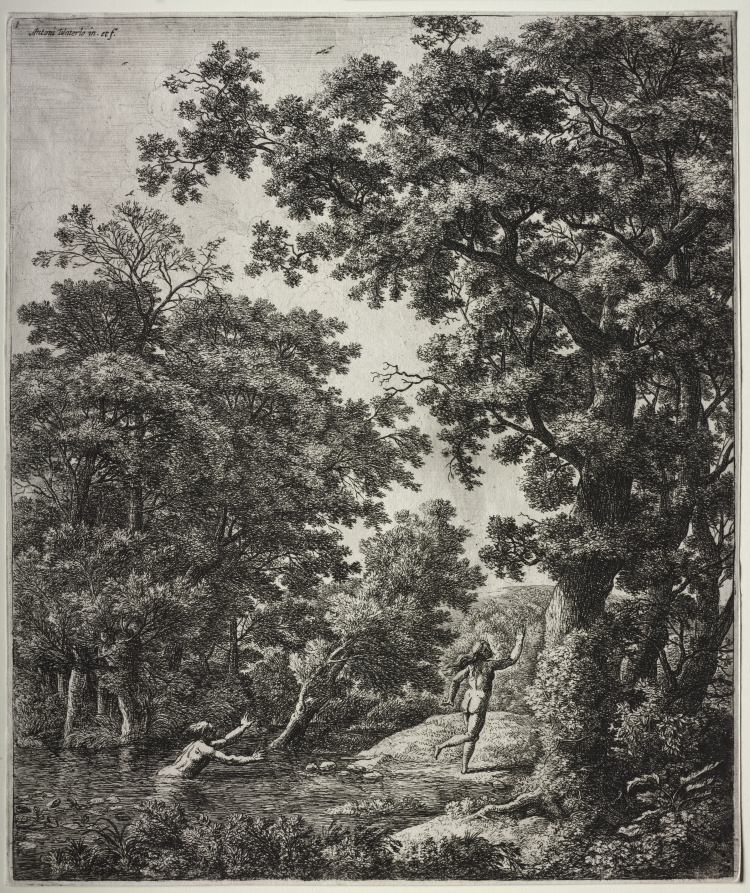 Anthonie Waterloo (Dutch, 1609/10–1690) — Six large upright
 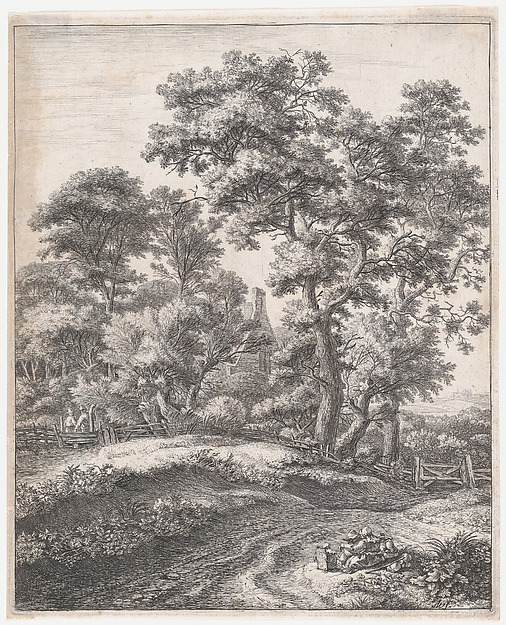 Anthonie Waterloo — Mother and Children At Rest
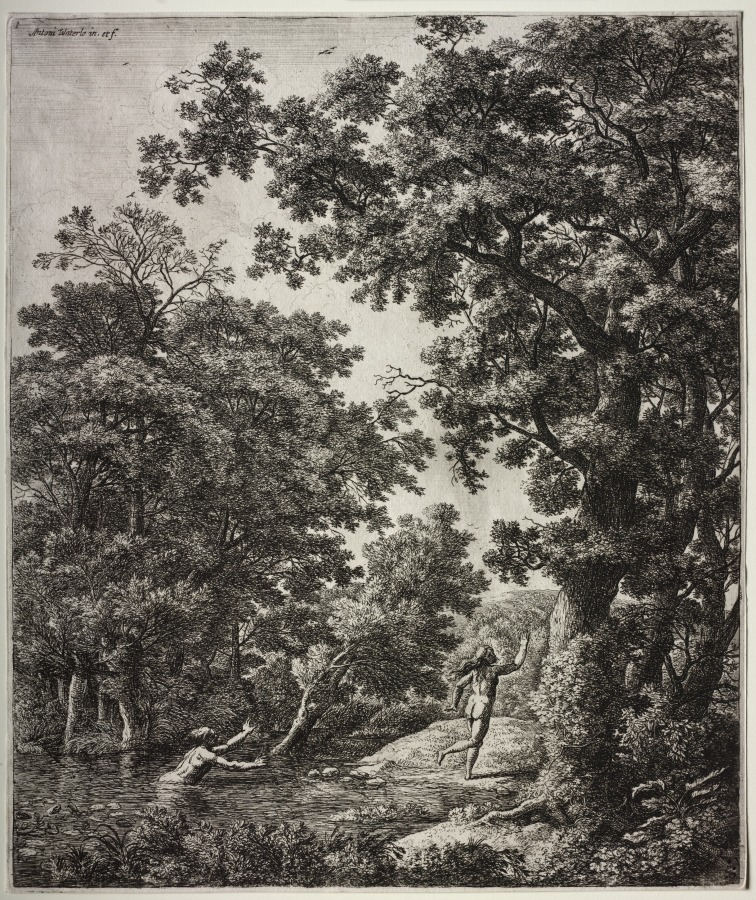 Anthonie Waterloo (Dutch, 1609/10–1690) — Six large upright
 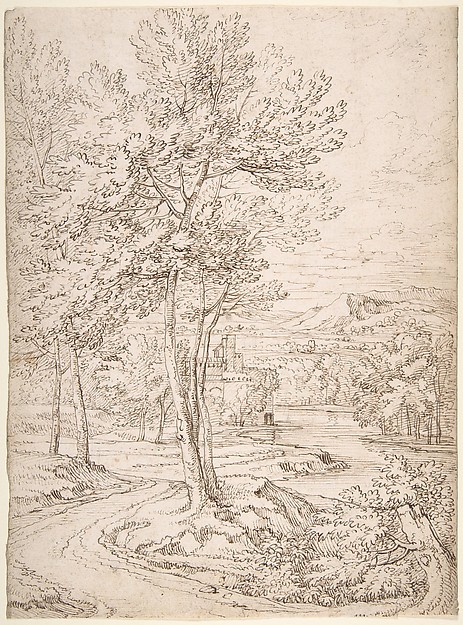 Abraham Genoels II — Classical Landscape with a Building and
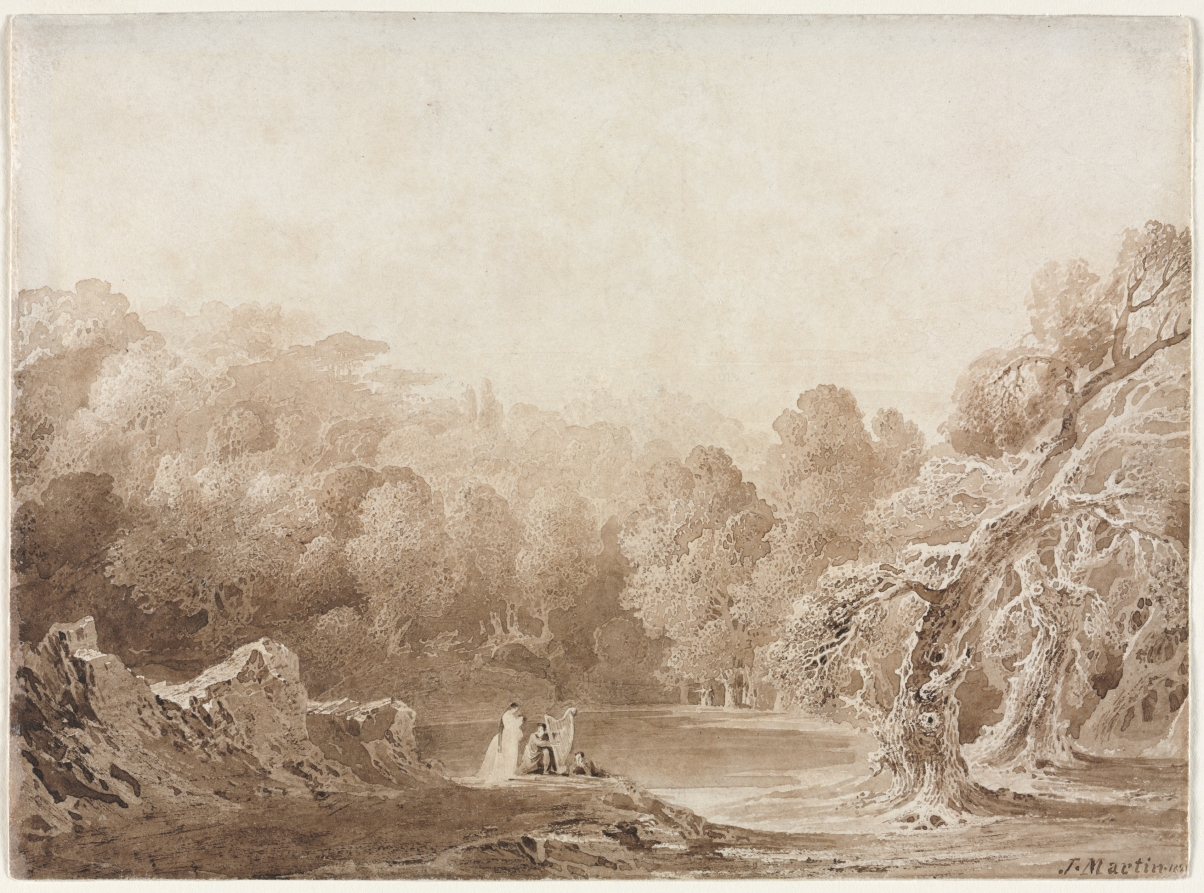 John Martin (British, 1789–1854) — A Man Playing a Harp with
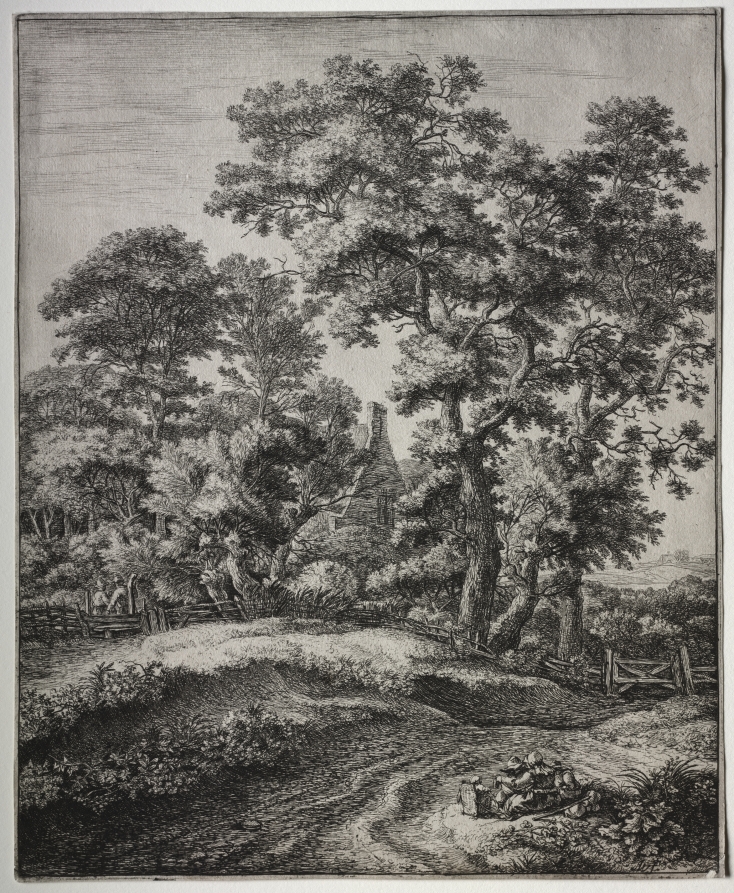 Anthonie Waterloo (Dutch, 1609/10–1690) — Six Large Upright
 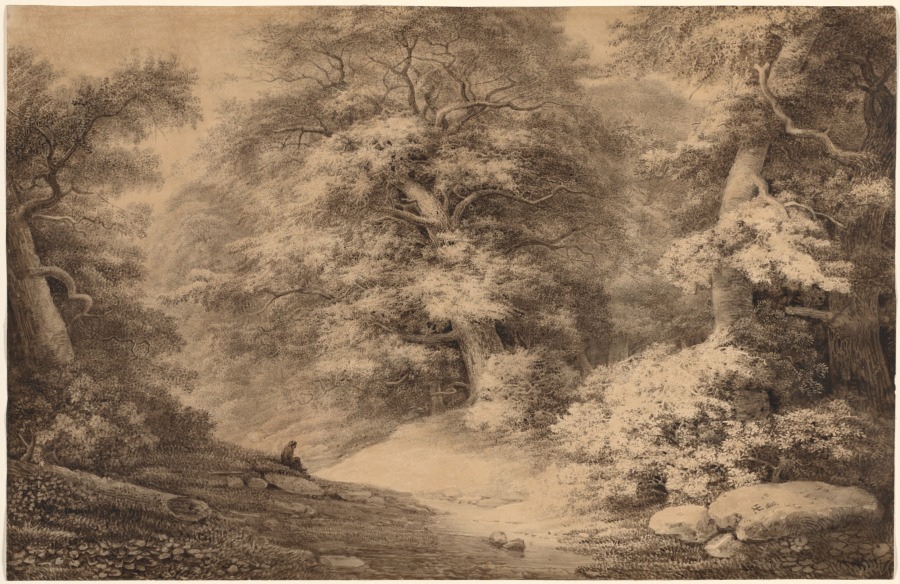 Christoph Nathe (German, 1753–1806) — A Beech Wood with a Re