Jacques Callot

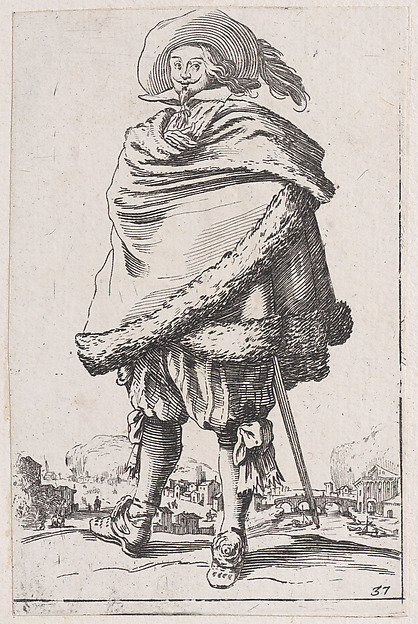
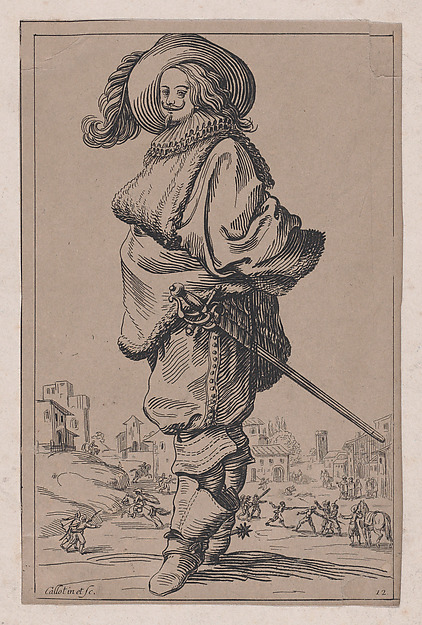
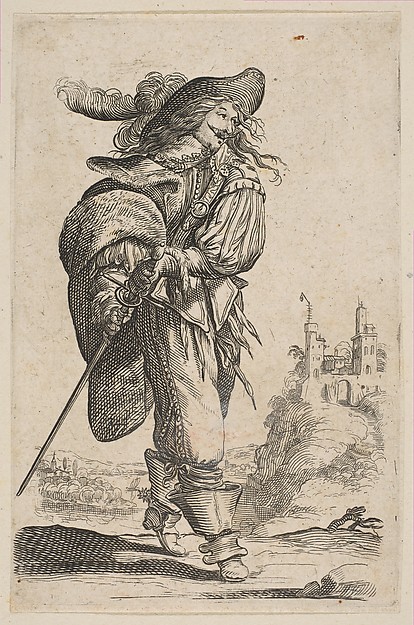
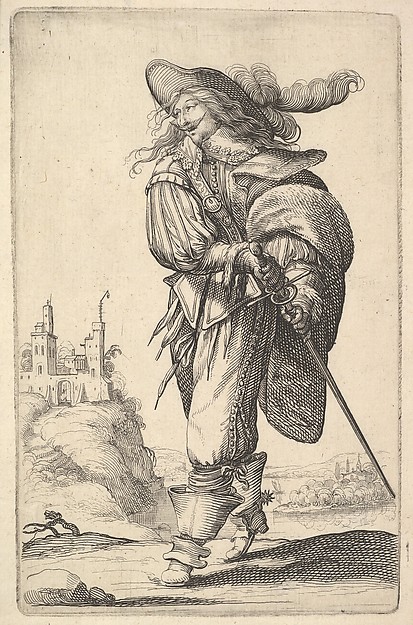
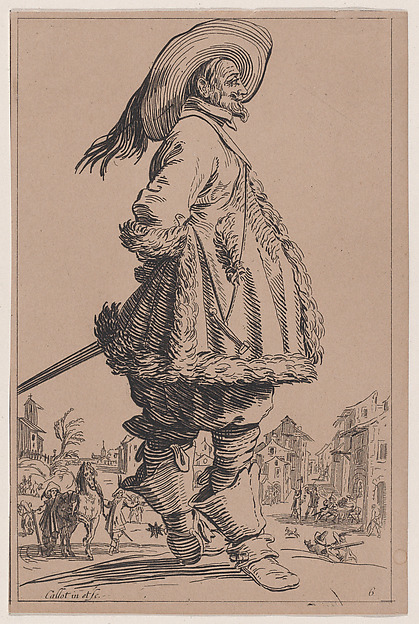
Le Gentilhomme Enroulé dans son Manteau Bordé de Fourrures (The Gentleman Wrapped in a Fur-Lined Mantle), from La Noblesse (The Nobility)

ca. 1623
Etching
14.2 × 9.2 cm (5.6 × 3.6 in)

SEE IT IN PERSON

Not currently on view

In the collection of The Metropolitan Museum of Art, New York · as of July 2026

View at metmuseum.orgPlan a visit ↗

Discussion

Be the first to share your thoughts.

Sign in to join the discussion.

Community guidelines

More by Jacques Callot
Sketches for the Balli di Sfessania (recto) Sketches of Dancers (verso)Sketches for the Balli di Sfessania (recto) Sketches of DancThe Combat of AvigliamoThe Combat of AvigliamoThe Feast of Saint James, Florence, July 25, 1619The Feast of Saint James, Florence, July 25, 1619The Fair at ImprunetaThe Fair at ImprunetaThe Palace Gardens at NancyThe Palace Gardens at NancyLes Miseres Et Les Mal-Heurs De La Guerre...IsraelLes Miseres Et Les Mal-Heurs De La Guerre...IsraelThe Temptation of Saint Anthony (second version)The Temptation of Saint Anthony (second version)Franca Trippa - Fritellino, from the Balli di SfessaniaFranca Trippa - Fritellino, from the Balli di Sfessania
More like this

Reverse Copy of La Mendiante Venant de Recevoir la Charité (The Female Beggar Receiving her Charity), from Les Gueux suite appelée aussi Les Mendiants, Les Baroni, ou Les Barons (The Beggars, also called the Barons)Jacques Callot|Anonymous — Reverse Copy of La Mendiante VenaCopy of Le Gentilhomme au Plastron de Fourrure (The Gentleman with a Shirt Front of Fur), from La Noblesse (The Nobility)Jacques Callot|Anonymous — Copy of Le Gentilhomme au PlastroGentleman in a Cape and Plumed Hat Seen from the BackAbraham Bosse|Jean de Saint-Igny — Gentleman in a Cape and PReverse Copy of La Mère et ses Trois Enfants (The Woman and her Three Children), from Les Gueux suite appelée aussi Les Mendiants, Les Baroni, ou Les Barons (The Beggars, also called the Barons)Jacques Callot|Anonymous — Reverse Copy of La Mère et ses TrGentleman in a Cape and Plumed Hat Seen from the BackJean de Saint-Igny|Anonymous, French, 17th century|Abraham BA gentleman, seen from behind, walking up a parapet, with a cloak over his left shoulder, wearing a plumed hat and boots with spurs, from "The Garden of the French Nobles In Which One Can Pick Up Their Way of Dressing"Abraham Bosse|Jean de Saint-Igny — A gentleman, seen from beCopy of Le Gentilhomme au Manteau Bordé de Fourrures Tenant ses Mains Derrière le Dos (The Gentleman with a Fur-Lined Mantle Holding His Hands Behind his Back), from La Noblesse (The Nobility)Jacques Callot|Anonymous — Copy of Le Gentilhomme au ManteauGentleman Holding a SwordAnonymous, French, 17th century|Abraham Bosse — Gentleman HoReverse Copy of L'Aveugle et son Chien (The Blind Man and his Dog), from Les Gueux suite appelée aussi Les Mendiants, Les Baroni, ou Les Barons (The Beggars, also called the Barons)Jacques Callot|Anonymous — Reverse Copy of L'Aveugle et son A gentleman, walking towards the left and drawing his sword from the sheath, wearing a plumed hat and boots with spurs, from "The Garden of the French Nobles In Which One Can Pick Up Their Way of Dressing"Abraham Bosse|Jean de Saint-Igny — A gentleman, walking towaCopy of Le Gentilhomme au Manetau Bordé de Fourrures Tenant ses Mains Derrière le Dos (The Gentleman with a Fur-Lined Mantle Holding his Hands Behind his Back), from La Noblesse (The Nobility)Jacques Callot|Anonymous — Copy of Le Gentilhomme au ManetauCostume Plate: German MessengerEnea Vico — Costume Plate: German Messenger