Flowers and Insects
SEE IT IN PERSON
Not currently on view
In the collection of Art Institute of Chicago, Chicago · as of July 2026
Discussion
FROM THE ART INSTITUTE OF CHICAGO’S CATALOG
This sensitively idyllic glimpse of nature is the collaborative work of two sisters, who resided in east coastal Hangzhou. The city’s mild climate and beautiful scenery attracted generations of intellectual elite. Fostered by that cultural ambience, both sisters became renowned as poets and painters, but their painting styles were quite distinct. Whereas Chai Jingyi specialized in semi-abstract images of nature that affirmed ideals of self-expression, Chai Zhengyi was most renowned for closely observant studies such as this. Depicted together with asters and Asiatic dayflowers, the fruiting wild rose (dog rose) places this scene in the autumn. Inhabiting this vegetation is a variety of graceful insects— the butterfly, mantis, locust, and other grasshoppers. Such creatures denoted the annual passage of seasons in early poetry, and from that literary tradition, became elegant and often allusive subjects of painting.
Be the first to share your thoughts.
Sign in to join the discussion.
More like this
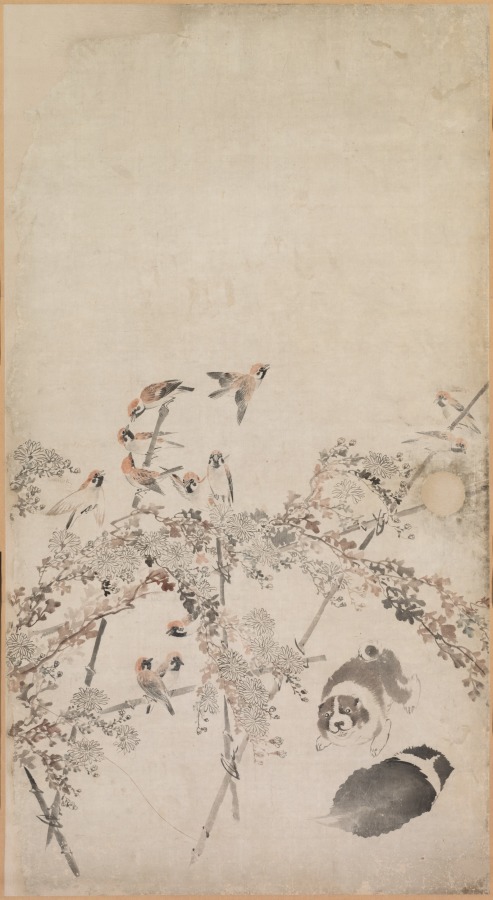 Nagasawa Rosetsu (Japanese, 1754–1799) — Puppies, Sparrows,
  Unidentified artist — 清 佚名 群羊圖卷絹本設色|Landscape with goats
 Geese Returning Home
 Kubo Shunman
 Nagasawa Rosetsu (Japanese, 1754–1799) — Puppies, Sparrows,
  Tsubaki Chinzan
 Shitao (Chinese, 1642–1707) — Rocks, Orchid, and Bamboo
 Kano Tan’yū (Japanese, 1602–1674) — Sparrows on Blossoming P
 Kano Tan’yū (Japanese, 1602–1674) — Sparrows on Blossoming P
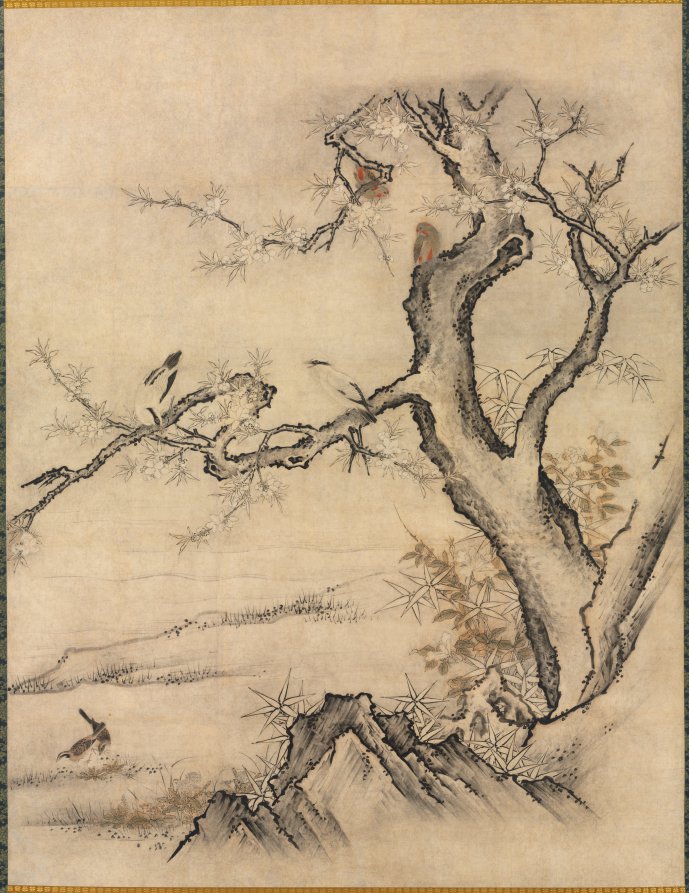 Kano Motonobu (Japanese, c. 1476–1559) — Flowers and Birds i
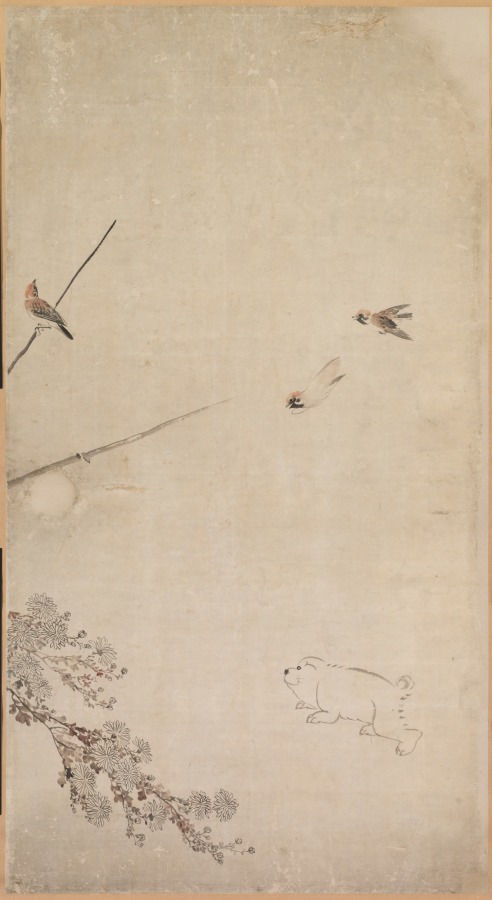 Nagasawa Rosetsu (Japanese, 1754–1799) — Puppies, Sparrows,
 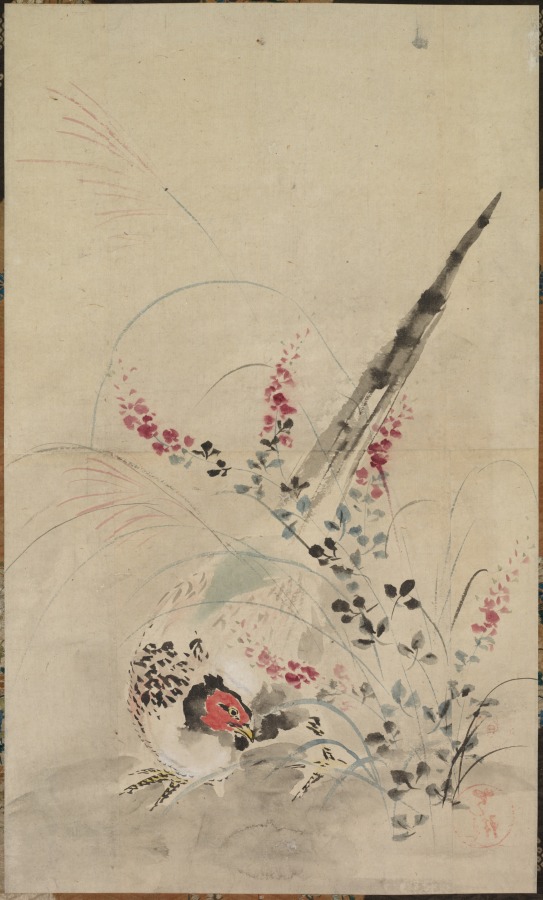 Ogata Kōrin (Japanese, 1658–1716) — Pheasant and Grasses