Francisco José de Goya y Lucientes
Rejoice, Carnival, for Tomorrow Thou wilt Be Ashes, plate 14 from Los Proverbios
SEE IT IN PERSON
Not currently on view
In the collection of Art Institute of Chicago, Chicago · as of July 2026
Discussion
FROM THE ART INSTITUTE OF CHICAGO’S CATALOG
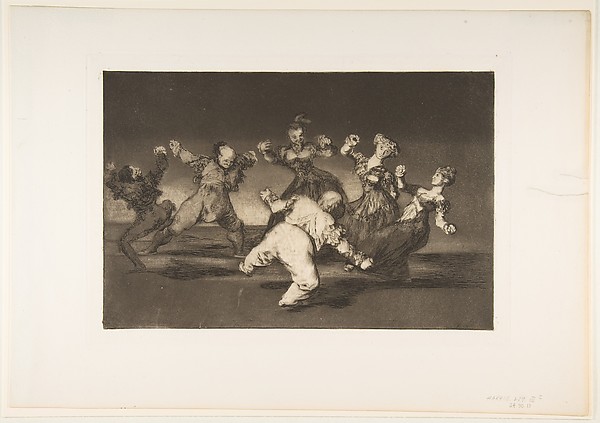
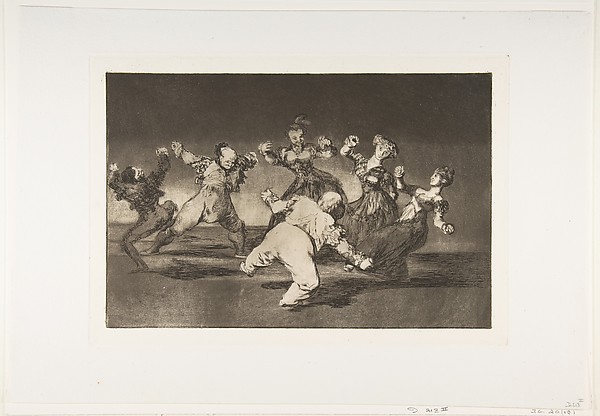
This group of leering figures in masks refers to the Roman Catholic festival Carnival, which (then, as now) precedes the more contemplative season of Lent. Goya used the common proverb of the title to compare the festival’s unsustainable indulgence and ritual pomp with the fate of Catholicism itself. In his art Goya frequently criticized the hypocrisy of the Spanish national religion, specifically its clergy. Both his Proverbs series and the Disasters of War , several etchings of which are also on view in this gallery, were published after his death.
Be the first to share your thoughts.
Sign in to join the discussion.
More by Francisco José de Goya y Lucientes
 The Hanged Monk
 Friar Pedro Wrests the Gun from El Maragato
 Friar Pedro Shoots El Maragato as His Horse Runs Off
 Portrait of Isidoro Maiquez
 Winter Scene
 Friar Pedro Offers Shoes to El Maragato and Prepares to Push
 Friar Pedro Clubs El Maragato with the Butt of the Gun
 Friar Pedro Binds El Maragato with a Rope
More like this
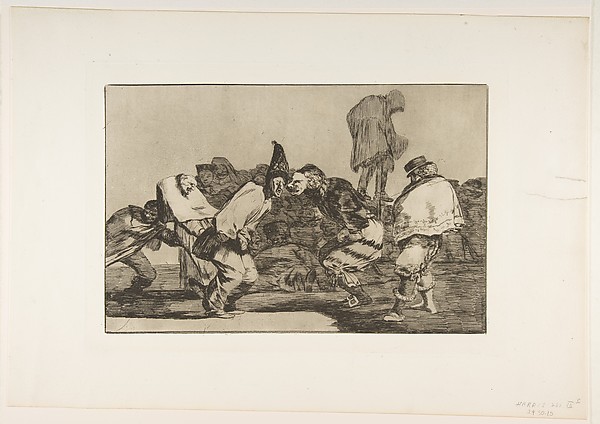 Goya (Francisco de Goya y Lucientes) — 'Carnival Folly' from
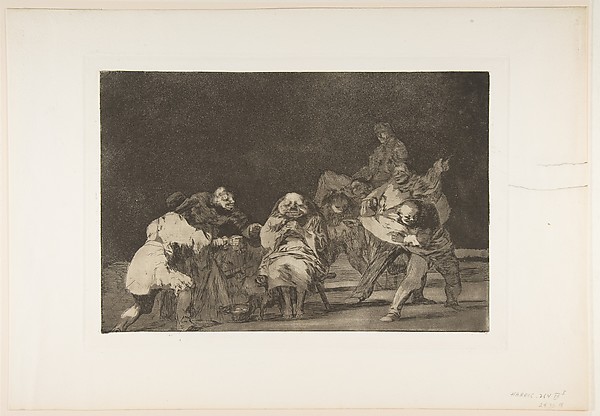 Goya (Francisco de Goya y Lucientes) — 'Loyalty' from the 'D
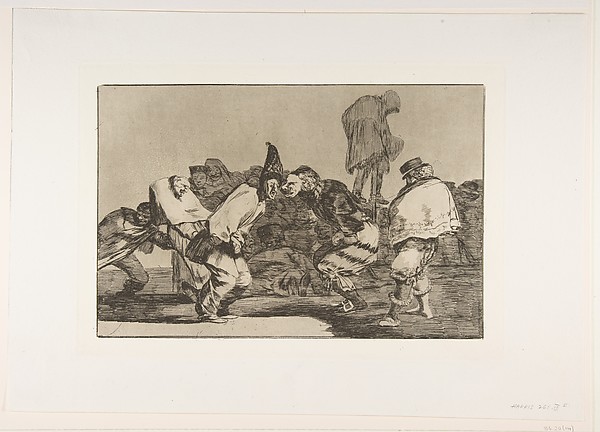 Goya (Francisco de Goya y Lucientes) — 'Carnival Folly' from
 Goya (Francisco de Goya y Lucientes) — 'Loyalty' from the 'D
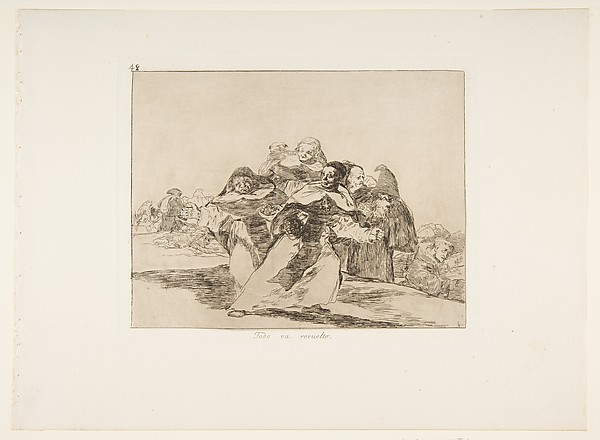 Goya (Francisco de Goya y Lucientes) — Plate 42 from "The Di
 Goya (Francisco de Goya y Lucientes) — Plate 47 from "The Di
 Goya (Francisco de Goya y Lucientes) — 'Merry Folly' from th
 Goya (Francisco de Goya y Lucientes) — Plate 9 from "The Dis
 Goya (Francisco de Goya y Lucientes) — Plate 10 from "The Di
 Goya (Francisco de Goya y Lucientes) — 'Merry Folly' from th
 Goya (Francisco de Goya y Lucientes) — Plate 44 from "The Di
 Goya (Francisco de Goya y Lucientes) — 'Cruel Folly', from t