In the collection of Barnes Foundation, Philadelphia — check current display status with the museum.
FROM THE BARNES FOUNDATION’S CATALOG
Parrots and parakeets have long been highly prized collector's items in Europe, and over the centuries artists have used the birds to evoke symbolic connotations ranging from virginity, during the Renaissance, to surrogate lovers, during the 19th century. Cézanne was no doubt aware of the theme's art historical lineage and the contemporary portrayals by his peers. His first representations of this subject date to the 1860s, and like the present canvas, draw on Dutch engravings for inspiration. According to Cézanne's son, Paul, Girl with Birdcage was intended as a gift for the artist's pious younger sister, Marie, who was attended religious services every day.
Be the first to share your thoughts.
Sign in to join the discussion.
 Edvard Munch — Young Woman Under a Tree
 Jacob Maris — Girl with a Peacock Feather
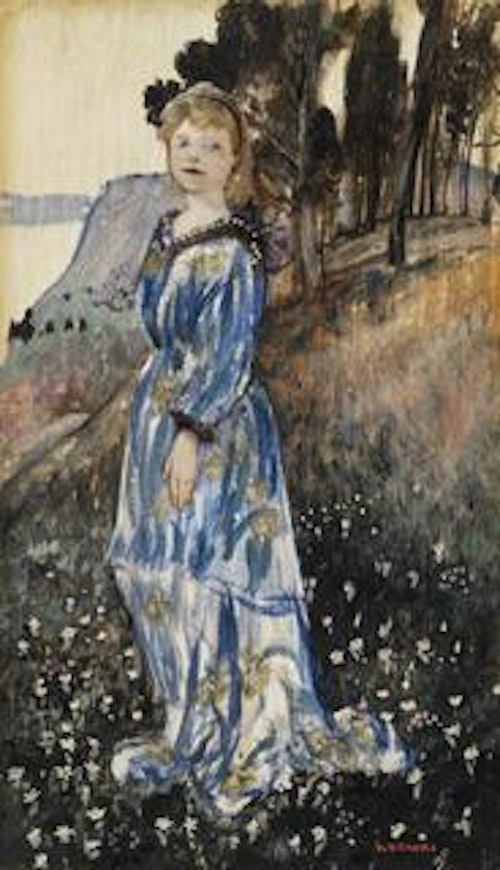 Arthur Davies — Flora
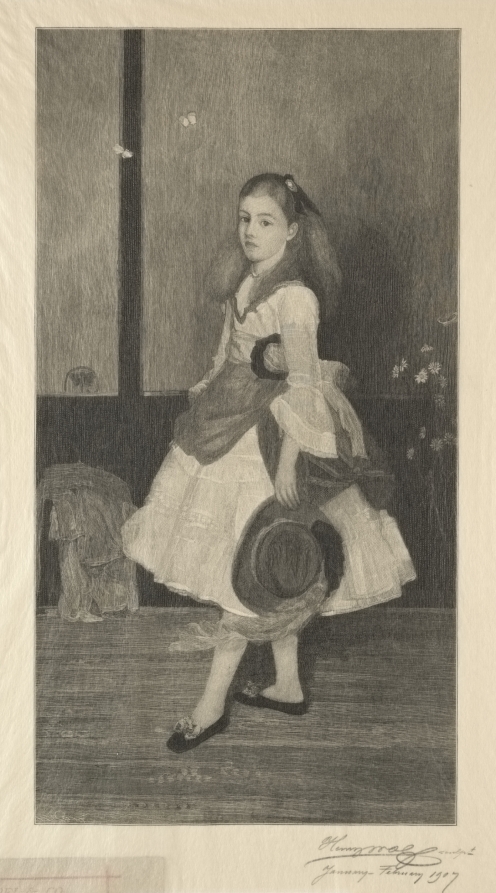 Henry Wolf (American, 1852–1916) — Miss Alexander
 Pierre-Auguste Renoir — Fillette au chapeau rouge et blanc
 Thomas Dewing — Music
 Pierre-Auguste Renoir — Portrait de Rapha Maître
 Pierre-Auguste Renoir — Étude de femme cueillant des cerises
 Edgar Degas — Dancer with a Fan
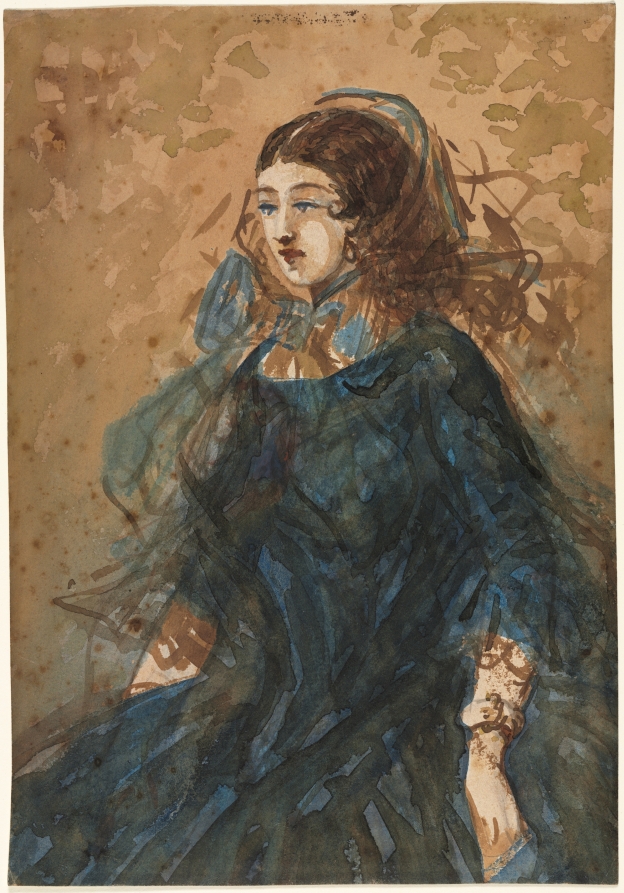 Constantin Guys (French, 1805–1892) — Woman in a Blue Dress
 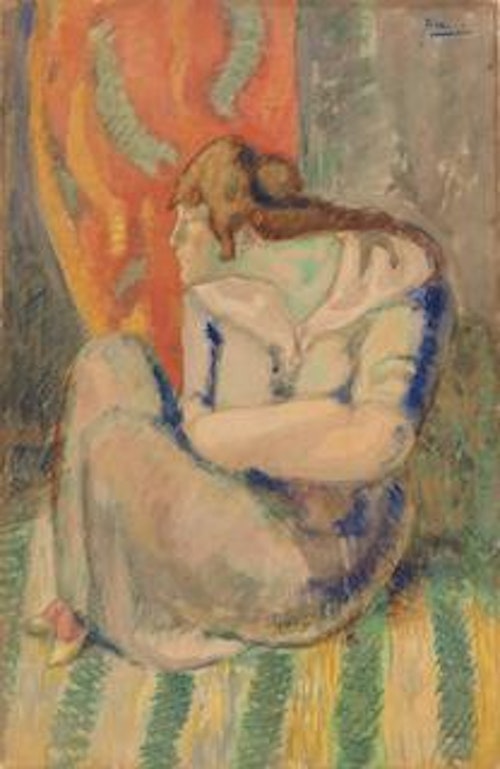 Pablo Picasso — Woman Seated on Striped Floor
 Dante Gabriel Rossetti|William Shakespeare — Jane Morris: St