FROM THE CLEVELAND MUSEUM OF ART’S CATALOG
Seclusion and leisure—the ideals of the literati, or scholar-gentlemen—are expressed in this mature work by Yao Tingmei. The theme acquired special meaning at a time of the military uprisings near the end of the Yuan dynasty. Dedicated to an ascetic named Du, this work combines painting, calligraphy, and poetry; following the painting are more than 20 poems and essays written by notable scholars, one of whom was the calligrapher Yang Weizhen. It reveals not only the aesthetic taste of the literati but also the practice of contributing artistic and literary works to fulfill social obligations. Yao's painting demonstrates his individual style derived from various ancient masters (Guo Xi, Dong Yuan, and Juran). Yang Weizhen's calligraphy exhibits his bold, vigorous style and his intent to capture the spirit of antiquity in art.
Source ↗︎
Be the first to share your thoughts.
 Kano Tan’yū (Japanese, 1602–1674) — Eight Views of Xiao-Xian
 Wang Jianzhang (Chinese, active 1621–1662) — Spring Rain Tha
 Zhao Mengfu (Chinese, 1254–1322) — Bamboo, Rocks and Lonely
  Insects and Flowers
 The Story of Fukutomi
 Sesson Shūkei (Japanese, c. 1492–c. 1577) — Eight Views of X
 Wen Zhenheng — Letter
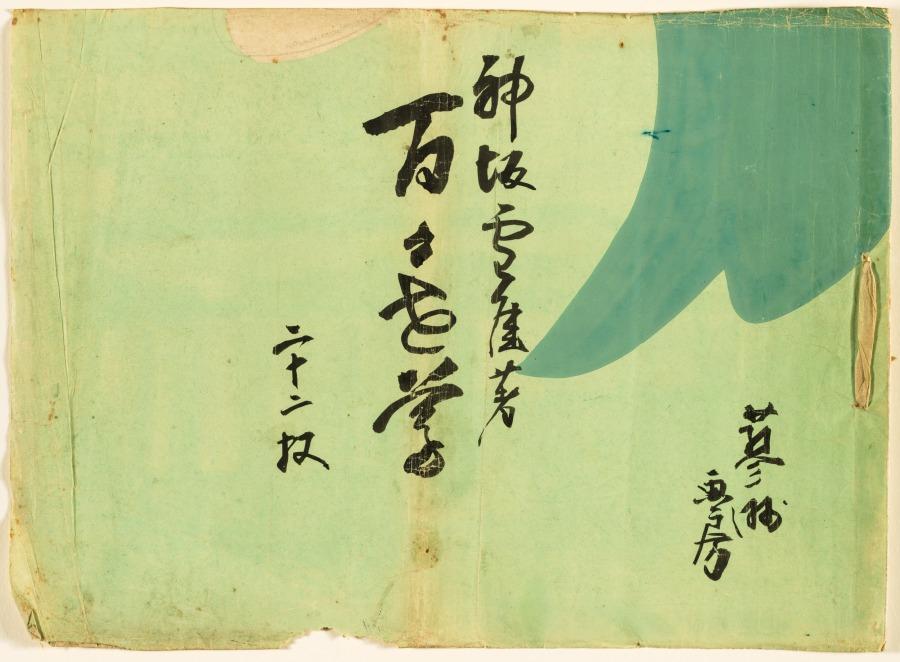 Kamisaka Sekka (Japanese, 1866–1942) — Flowers of a Hundred
  Du Qiong (Chinese, 1396–1474) — Mt. Taibo in the Style of Wa
 Xu Gu — Title slip
 Yan Hui (Chinese, active 1270–1310) — The Lantern Night Excu
 Dong Qichang (Chinese, 1555–1636) — River and Mountains on a