Francisco José de Goya y Lucientes
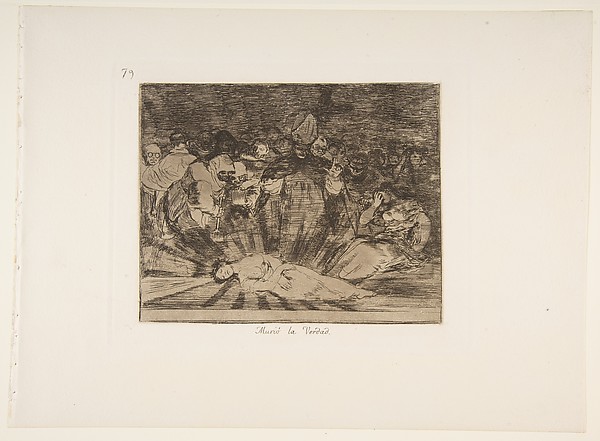
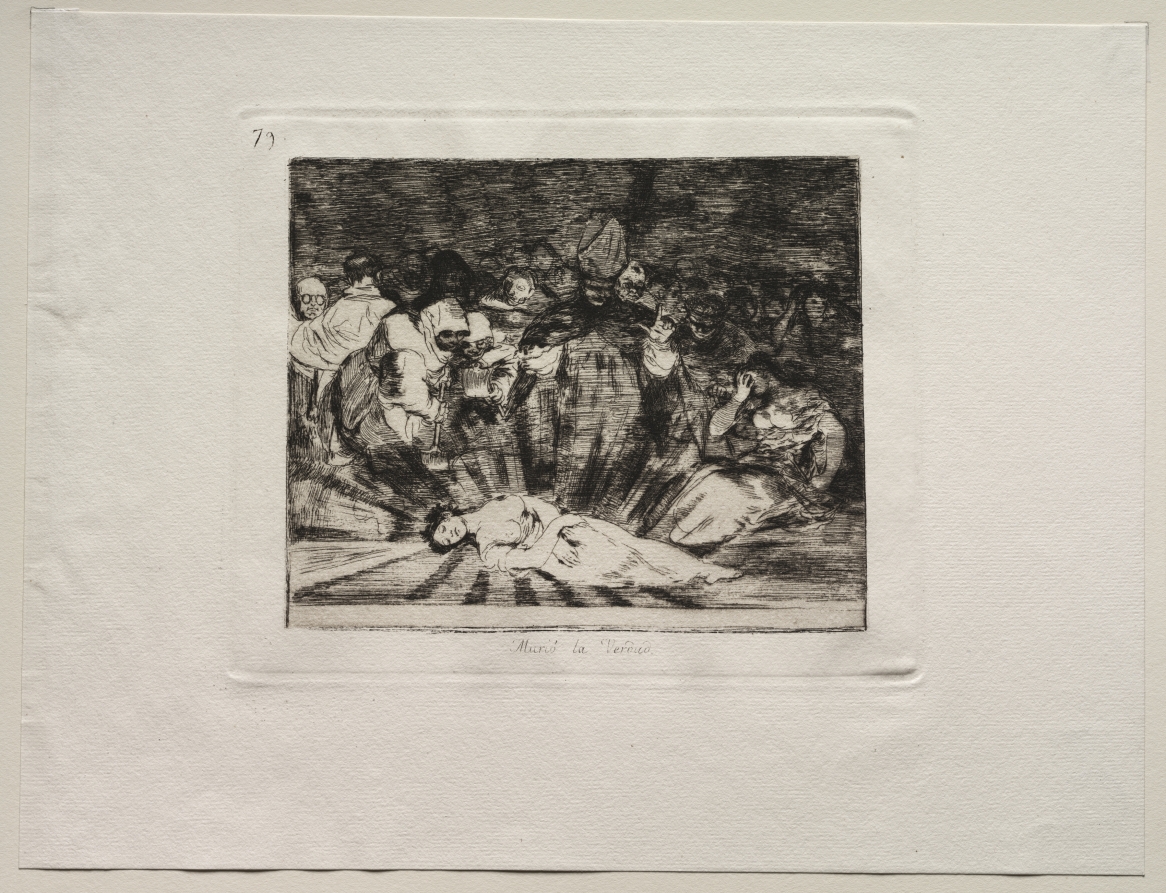
Truth has died, plate 79 from The Disasters of War
SEE IT IN PERSON
Not currently on view
In the collection of Art Institute of Chicago, Chicago · as of July 2026
Discussion
FROM THE ART INSTITUTE OF CHICAGO’S CATALOG
Though not the last plate of the series, this print finalizes its central themes in a profound manner, claiming that truth itself is dead. Here, personified by a shining corpse about to be buried, truth connotes constitutional liberty. Justice is featured at the right, clasping her scales in her left hand. She covers her face, perhaps weeping, as if she cannot bear the scene before her. By ending the series on this note of despair, Francisco de Goya brought an answer to the question of what must come to pass ( plate one )—the final blow of war is that truth is dead and justice despondent.
Be the first to share your thoughts.
Sign in to join the discussion.
More by Francisco José de Goya y Lucientes
 The Hanged Monk
 Friar Pedro Wrests the Gun from El Maragato
 Friar Pedro Shoots El Maragato as His Horse Runs Off
 Portrait of Isidoro Maiquez
 Winter Scene
 Friar Pedro Offers Shoes to El Maragato and Prepares to Push
 Friar Pedro Clubs El Maragato with the Butt of the Gun
 Friar Pedro Binds El Maragato with a Rope
More like this
 Goya (Francisco de Goya y Lucientes) — Plate 79 from "The Di
 Goya (Francisco de Goya y Lucientes) — 'Clear Folly' from t
 Goya (Francisco de Goya y Lucientes) — 'General Folly' from
 Goya (Francisco de Goya y Lucientes) — Plate 42 from "The Di
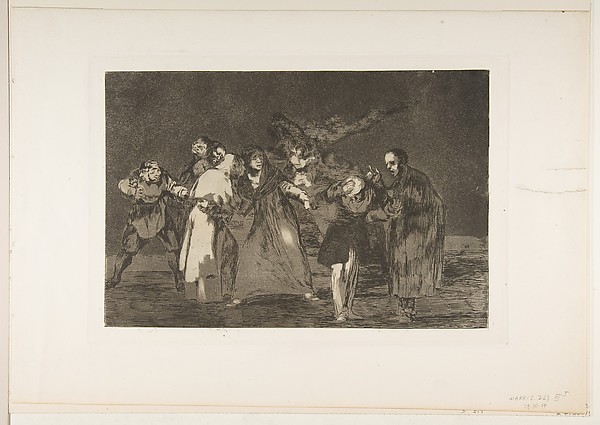 Goya (Francisco de Goya y Lucientes) — 'The Exhortations' fr
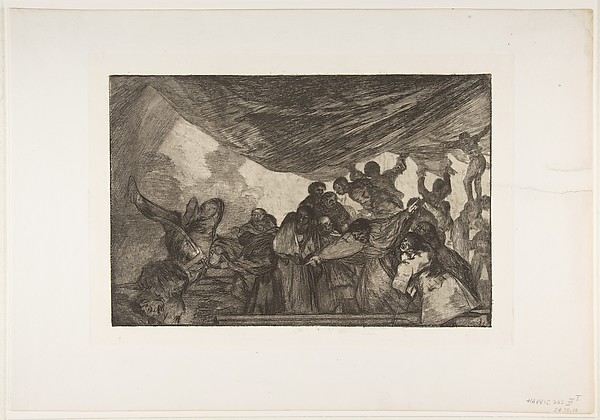 Goya (Francisco de Goya y Lucientes) — 'Clear Folly' from th
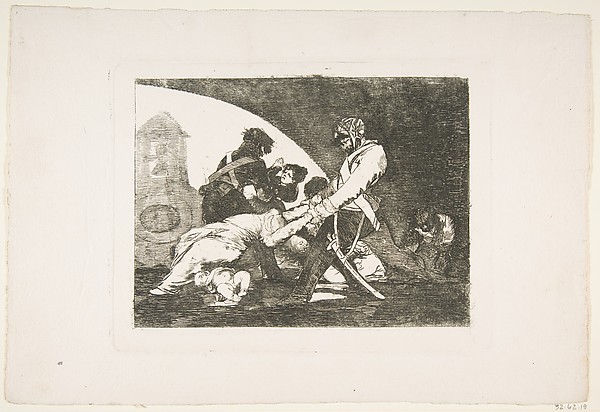 Goya (Francisco de Goya y Lucientes) — Plate 11 from "The Di
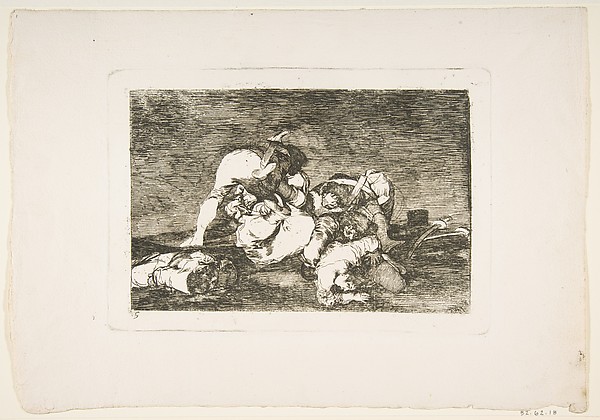 Goya (Francisco de Goya y Lucientes) — Plate 10 from "The Di
 Francisco de Goya (Spanish, 1746–1828) — The Horrors of War:
![Plate 10 from "The Disasters of War" (Los Desastres de la Guerra): 'Nor [do these] either' (Tampoco)](https://images.metmuseum.org/CRDImages/dp/web-large/DP817149.jpg) Goya (Francisco de Goya y Lucientes) — Plate 10 from "The Di
Goya (Francisco de Goya y Lucientes) — Plate 10 from "The Di Goya (Francisco de Goya y Lucientes) — Plate 26 from "The D
 Goya (Francisco de Goya y Lucientes) — Plate 21 from "The Di