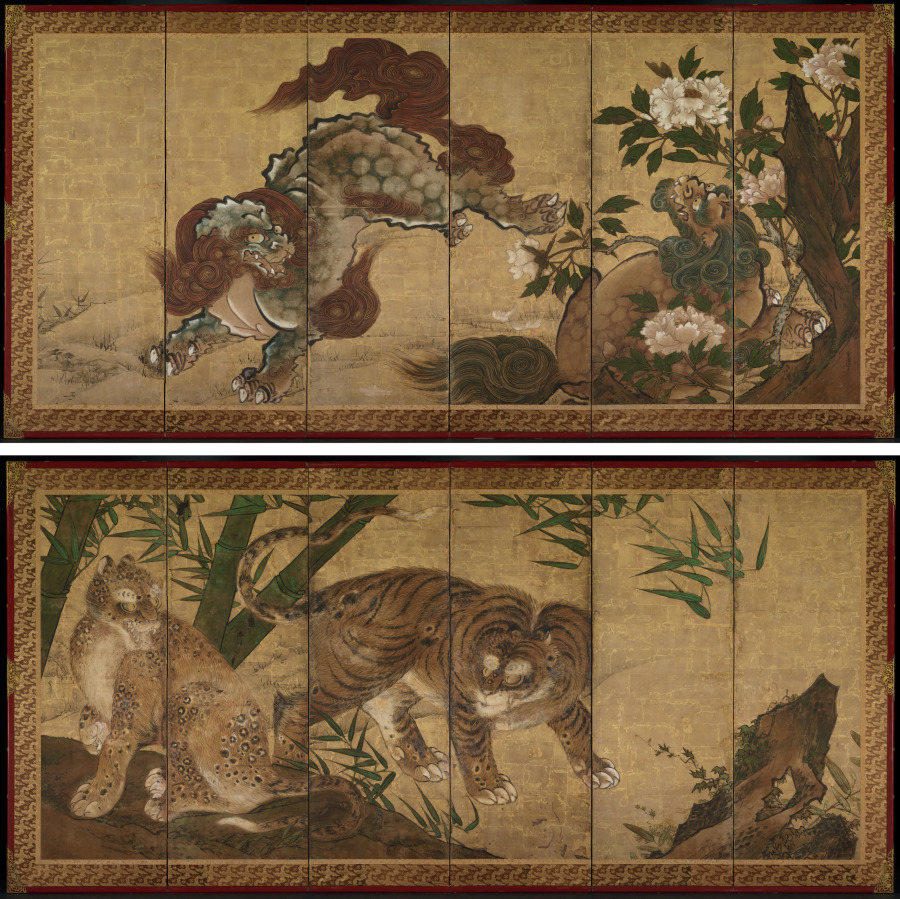
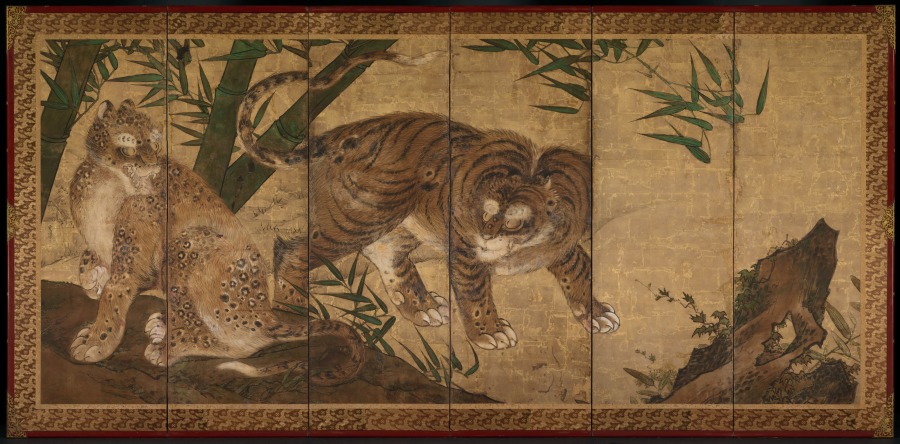
In the collection of Cleveland Museum of Art, Cleveland — check current display status with the museum.
FROM THE CLEVELAND MUSEUM OF ART’S CATALOG
Sekkei lived and studied painting in Kyoto at the Kano school studio, the center of traditional painting activity in Japan since 1500. The use of gold foil as a backdrop for the frolicking animals served a practical as well as a decorative function. Because traditional Japanese rooms had no windows, interior lighting came from portable oil lamps and wax candles, whose effects were magnified by reflective surfaces.
Be the first to share your thoughts.
Sign in to join the discussion.
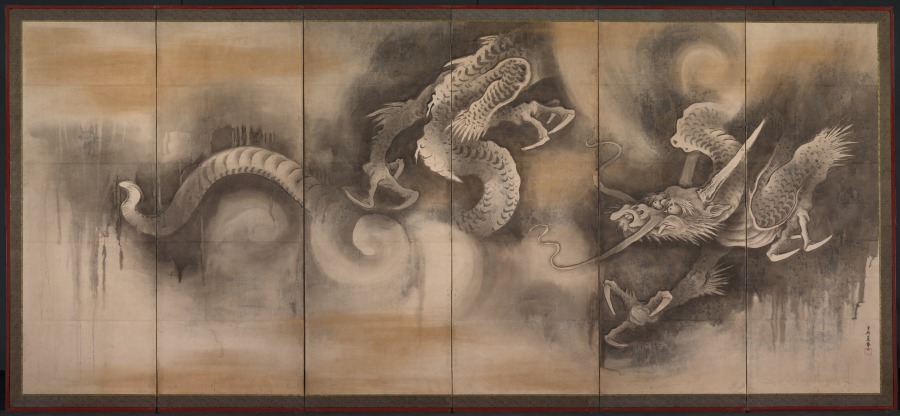 Soga Nichokuan (Japanese) — Dragon
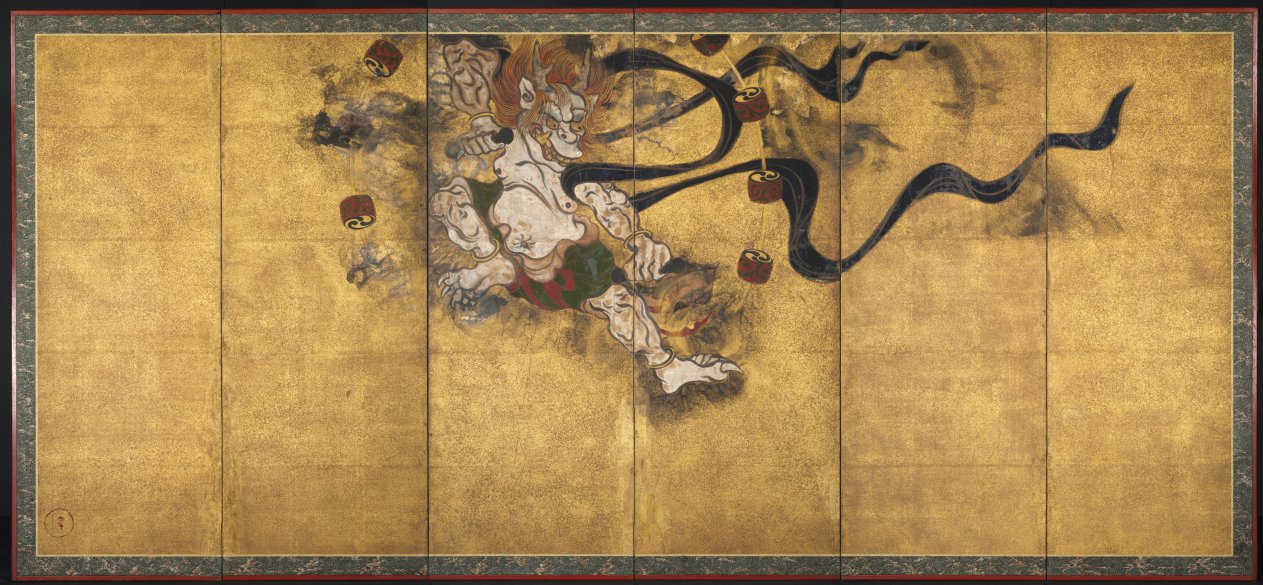 Tawaraya Sōtatsu (Japanese, c. 1570–c. 1640) — God of Thunde
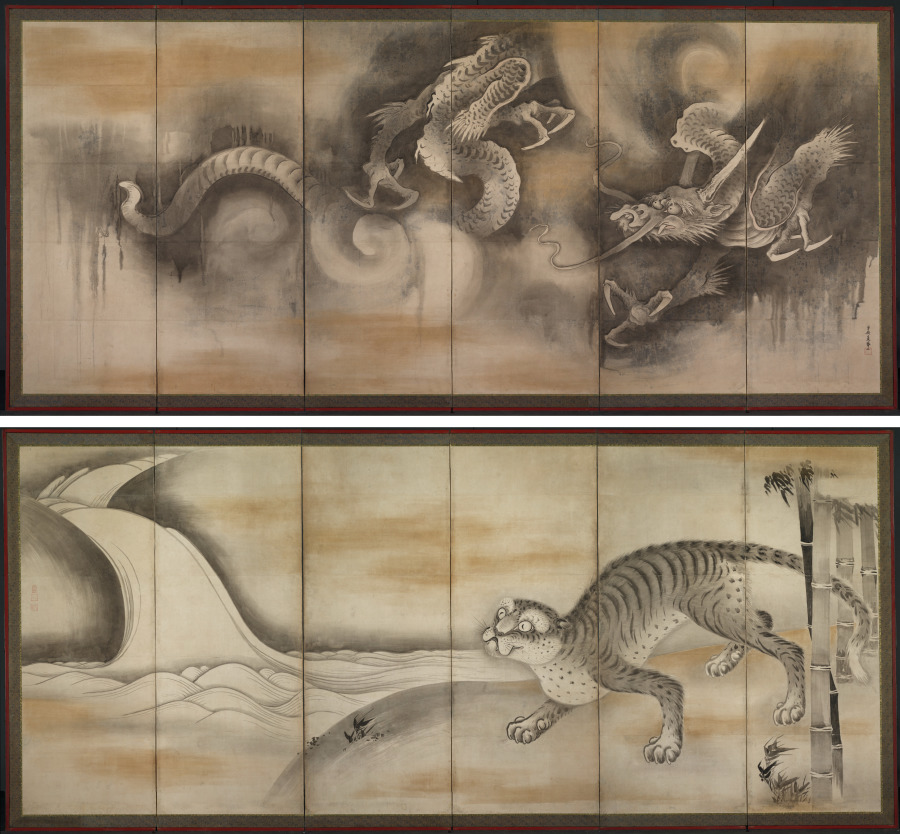 Soga Nichokuan (Japanese) — Dragon and Tiger
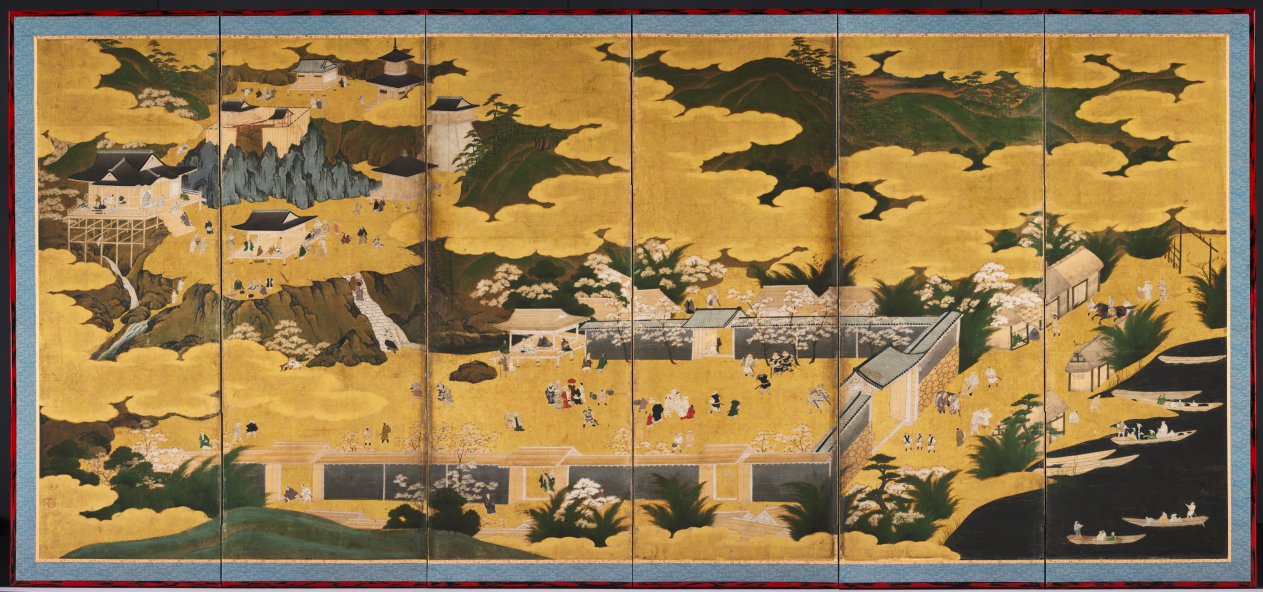 Famous Views of Ōmi
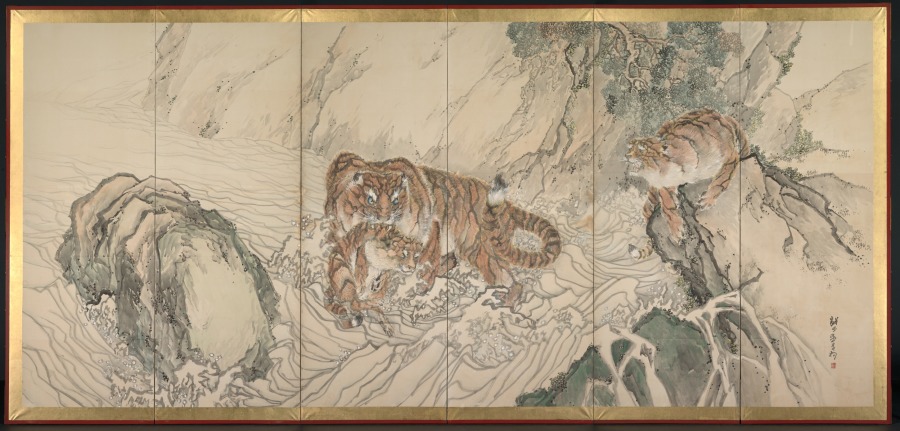 Kishi Ganku (Japanese, 1749/56–1838) — Tiger Family
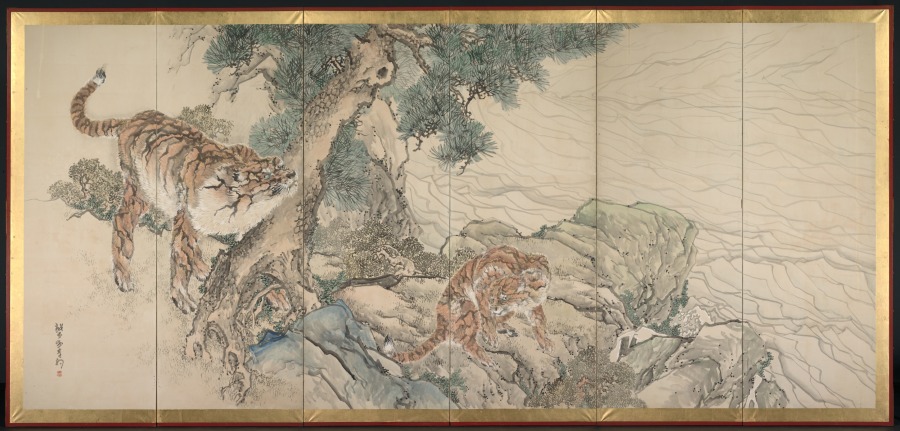 Kishi Ganku (Japanese, 1749/56–1838) — Tiger Family
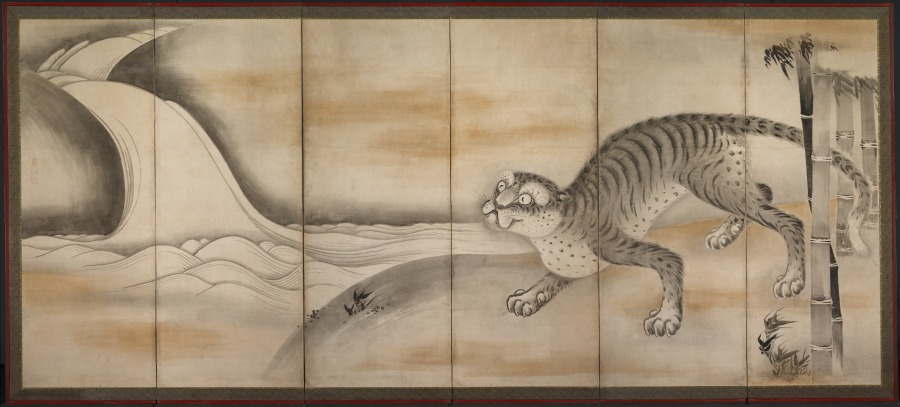 Soga Nichokuan (Japanese) — Tiger
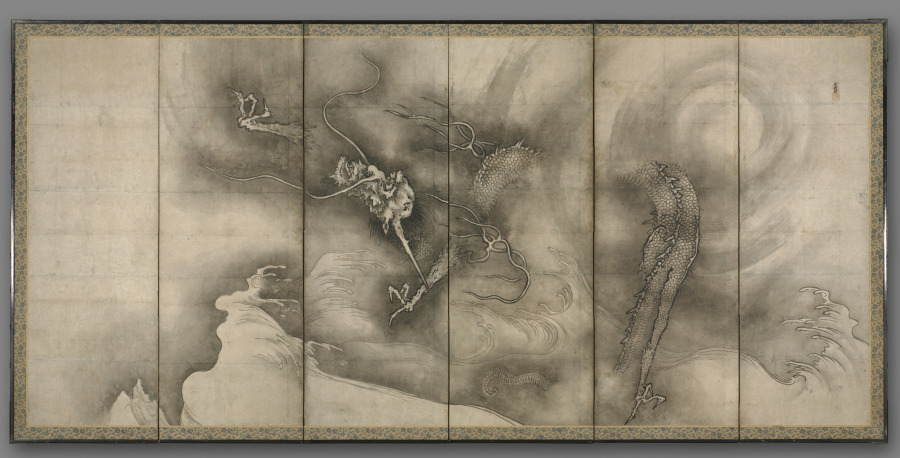 Sesson Shūkei (Japanese, c. 1492–c. 1577) — Dragon and Tiger
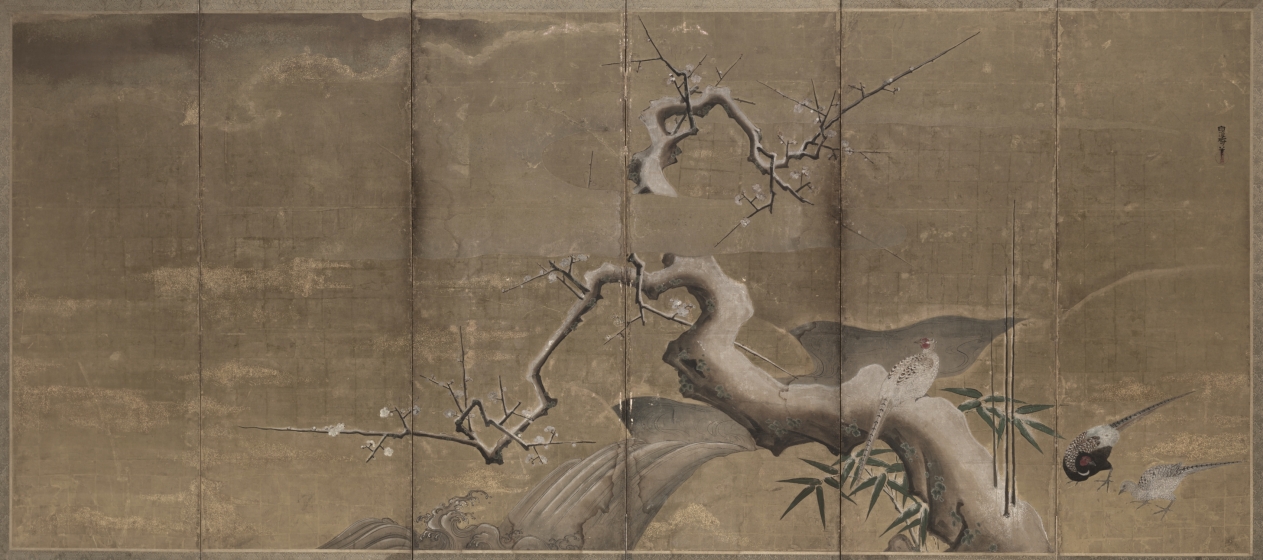 Kano Naonobu (Japanese, 1607–1650) — Winter Scene with Plum
 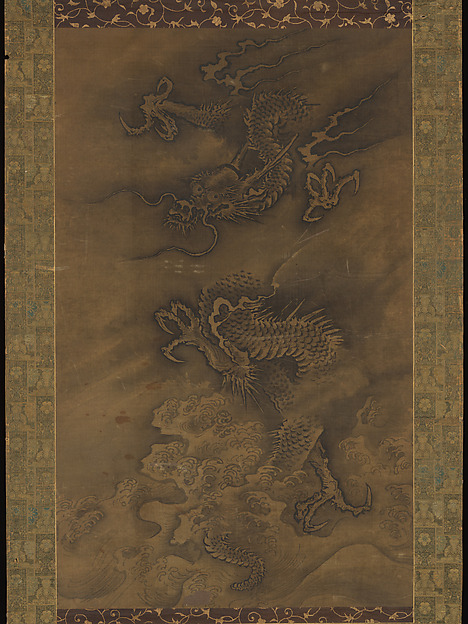 Unidentified artist — 明 佚名 雲龍圖 軸|Dragon Amid Clouds and W
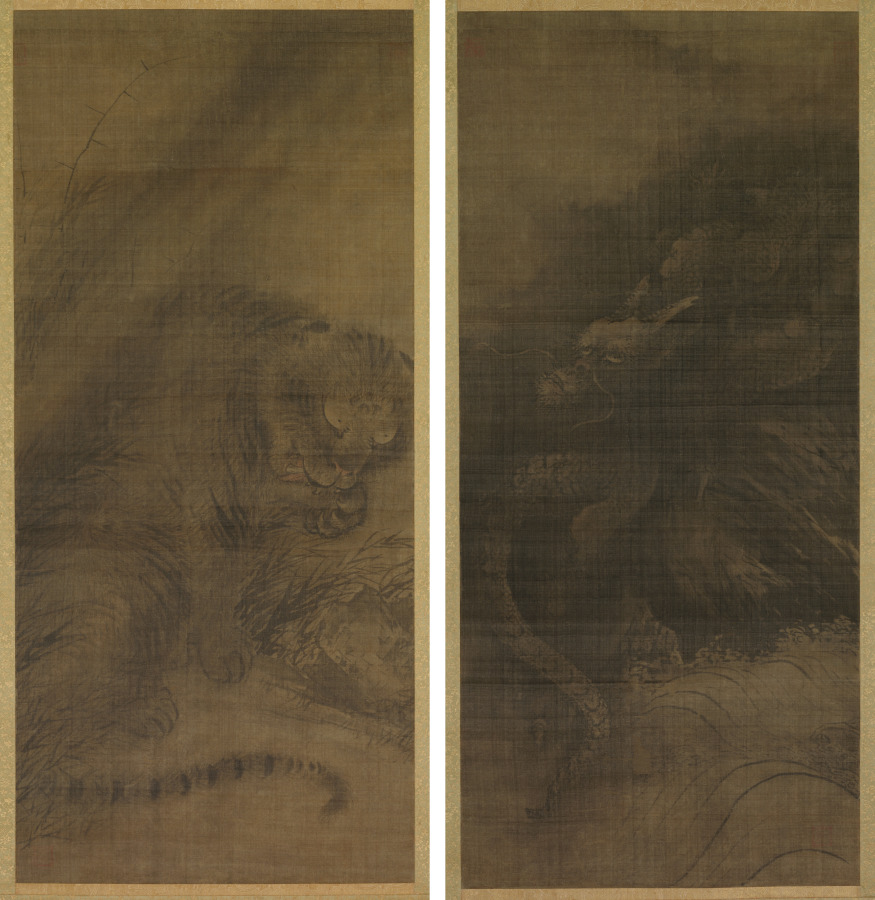 Fachang Muqi (Chinese, 1220–1280) — Dragon; Tiger
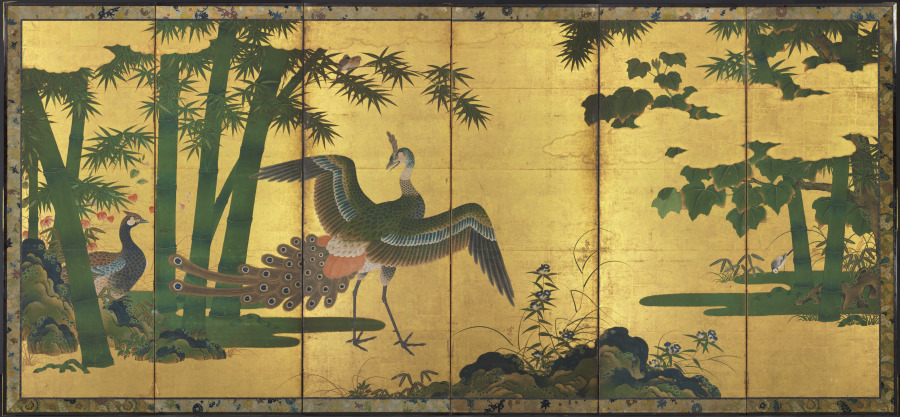 Tosa Mitsuyoshi (Japanese, 1539–1613) — Peacocks and Bamboo