Francisco José de Goya y Lucientes
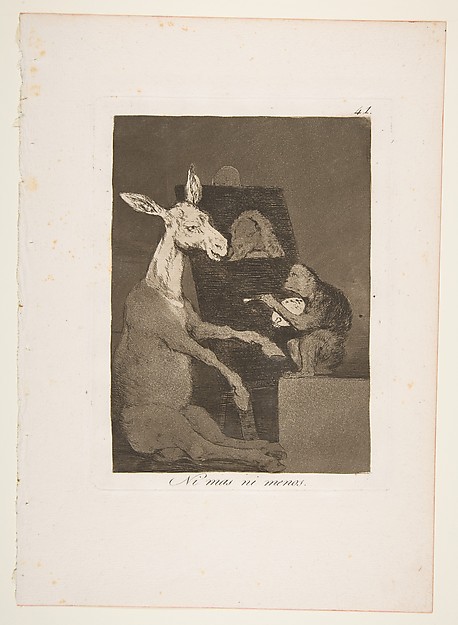
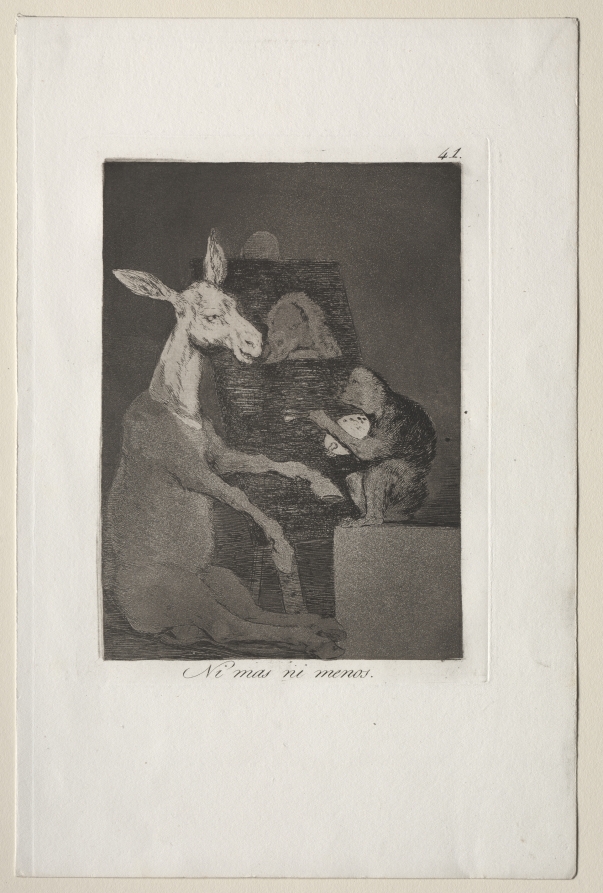
Neither more nor less, plate 41 from Los Caprichos
1797/99
Etching and aquatint on ivory laid paper
18 × 13 cm (7.1 × 5.1 in)
SEE IT IN PERSON
Not currently on view
In the collection of Art Institute of Chicago, Chicago · as of July 2026
Discussion
FROM THE ART INSTITUTE OF CHICAGO’S CATALOG
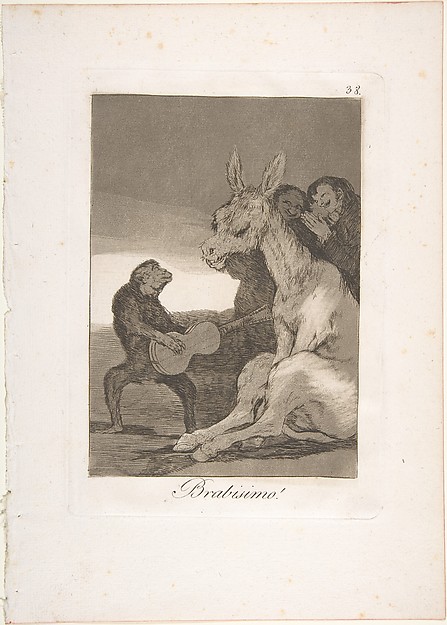
During 1797 to 1799, when Francisco de Goya was producing The Caprices , he served as court painter to Charles IV in Madrid. One cannot help but see this aquatint etching as a wry commentary on the main duty of his vocation—turning the oftentimes immoral and ignoble royals into fetching icons of morality and unfettered nobility. Here he compared his august sitter to a donkey instead—a common satirical trope in 18th-century Spanish literature—and, perhaps even more critically, himself to a monkey.
Be the first to share your thoughts.
Sign in to join the discussion.
More by Francisco José de Goya y Lucientes
 The Hanged Monk
 Friar Pedro Wrests the Gun from El Maragato
 Friar Pedro Shoots El Maragato as His Horse Runs Off
 Portrait of Isidoro Maiquez
 Winter Scene
 Friar Pedro Offers Shoes to El Maragato and Prepares to Push
 Friar Pedro Clubs El Maragato with the Butt of the Gun
 Friar Pedro Binds El Maragato with a Rope
More like this
 Goya (Francisco de Goya y Lucientes) — Plate 41 from "Los Ca
 Francisco de Goya (Spanish, 1746–1828) — Neither More Nor Le
 Goya (Francisco de Goya y Lucientes) — Plate 63 from "Los Ca
 Goya (Francisco de Goya y Lucientes) — Plate 37 from "Los Ca
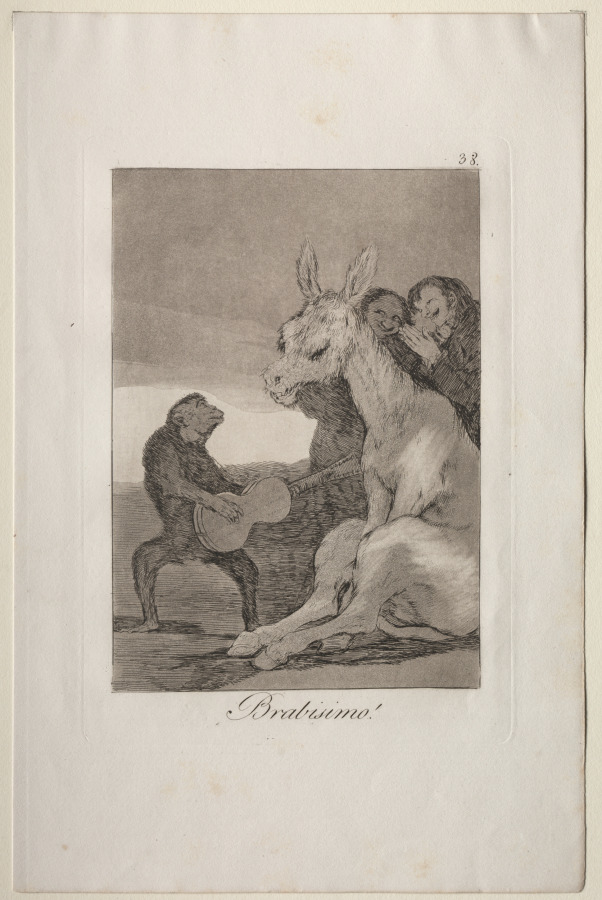 Francisco de Goya (Spanish, 1746–1828) — Bravo!, Plate 38
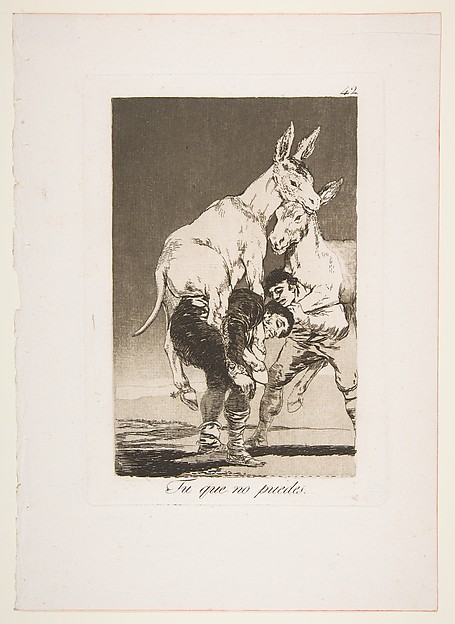 Goya (Francisco de Goya y Lucientes) — Plate 42 from "Los Ca
 Goya (Francisco de Goya y Lucientes) — Plate 39 from "Los Ca
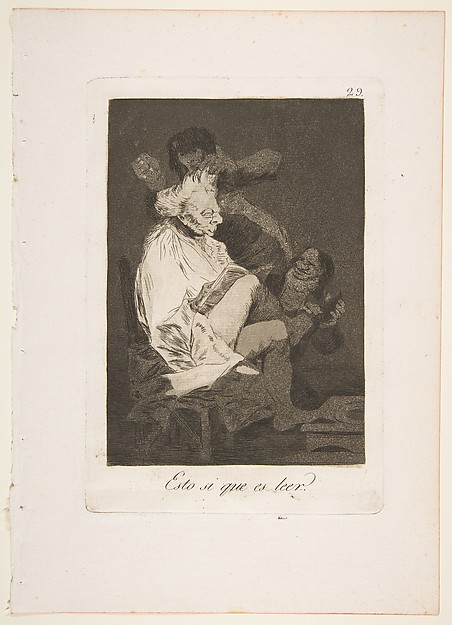 Goya (Francisco de Goya y Lucientes) — Plate 29 from "Los Ca
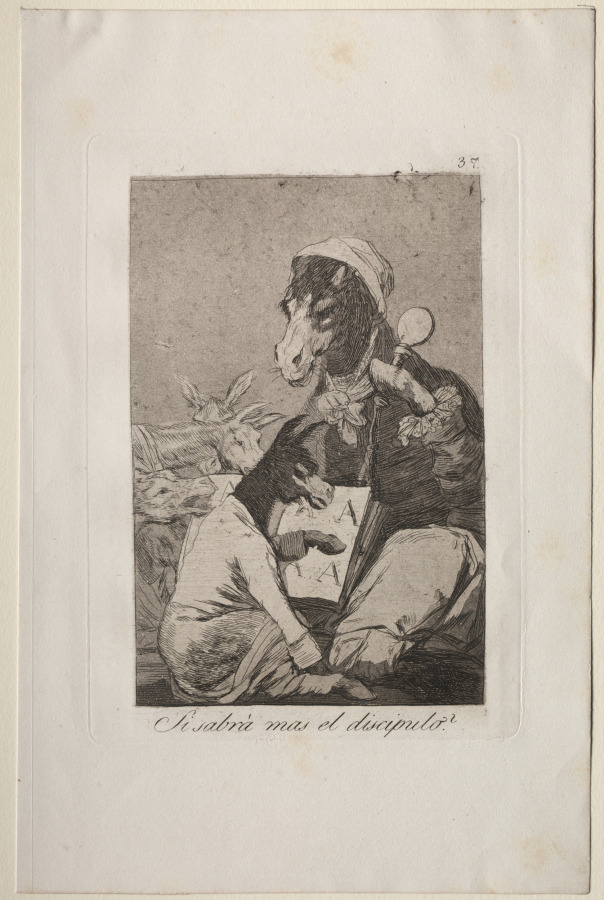 Francisco de Goya (Spanish, 1746–1828) — Might Not the Pupil
 Goya (Francisco de Goya y Lucientes) — Plate 67 from "Los Ca
 Goya (Francisco de Goya y Lucientes) — Plate 51 from "Los Ca
 Goya (Francisco de Goya y Lucientes) — Plate 38 from "Los Ca