In the collection of Cleveland Museum of Art, Cleveland — check current display status with the museum.
FROM THE CLEVELAND MUSEUM OF ART’S CATALOG
The doctrine of the Immaculate Conception maintains that the Virgin Mary was conceived free from sin, therefore ready to be the pure vessel for Christ’s birth. The Immaculate Conception enjoyed intense devotion in Spain during the 1600s, although it was only accepted as official doctrine in 1854. The abstract subject required artists to develop appropriate imagery. The crescent moon, for example, comes from the New Testament vision of Saint John the Evangelist (Revelation 12:1) of “a woman clothed with the sun, with the moon under her feet.”
Be the first to share your thoughts.
Sign in to join the discussion.
 Guido Reni — The Immaculate Conception
 Bartolomé Esteban Murillo — The Virgin of the Immaculate Con
 Girolamo da Carpi — The Apparition of the Virgin
 Juan de Valdés Leal — The Assumption of the Virgin
 Francesco Albani — Assumption of Mary
 Sir Anthony van Dyck — The Virgin as Intercessor
 Giovanni Battista Tiepolo — Immaculate Conception
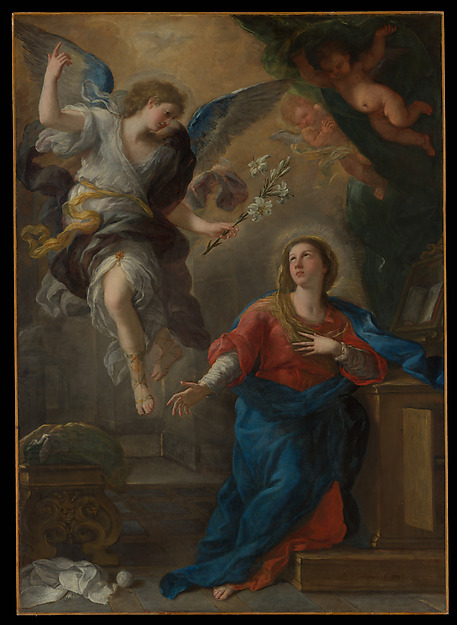 Luca Giordano — The Annunciation
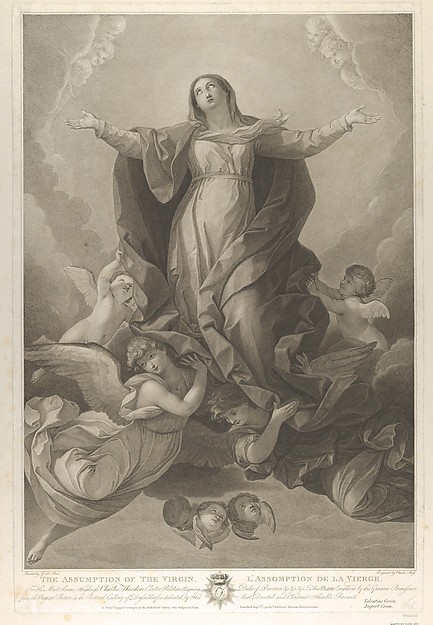 Guido Reni|Valentine Green|Rupert Green|Carl Ernst Christoph
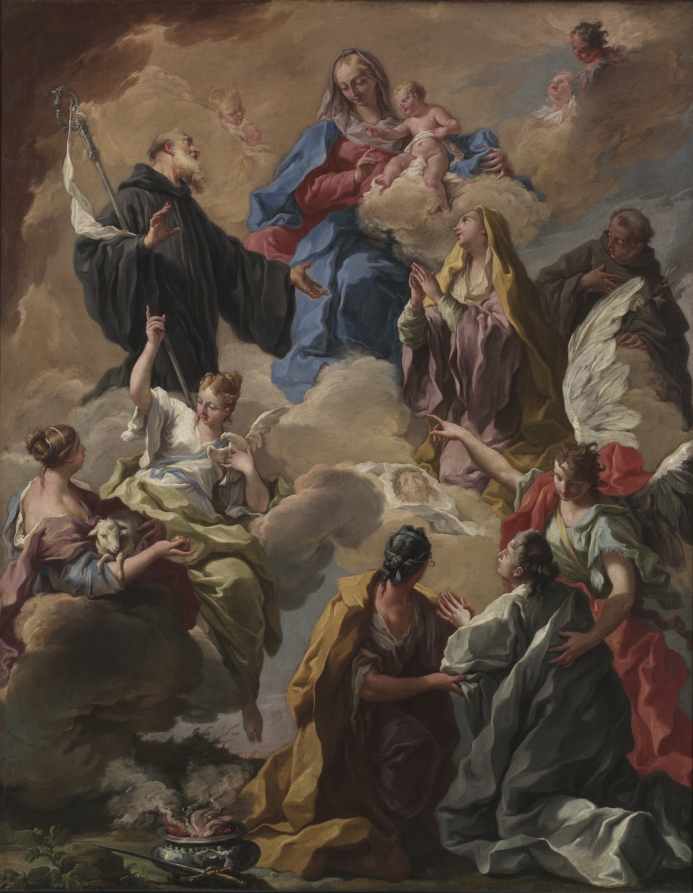 Giovanni Battista Pittoni (Italian, 1687–1767) — Saints Pres
 Peter Paul Rubens — The Virgin as the Woman of the Apocalyps
 Giovanni Battista Piazzetta — The Virgin Appearing to the Gu