Francisco José de Goya y Lucientes
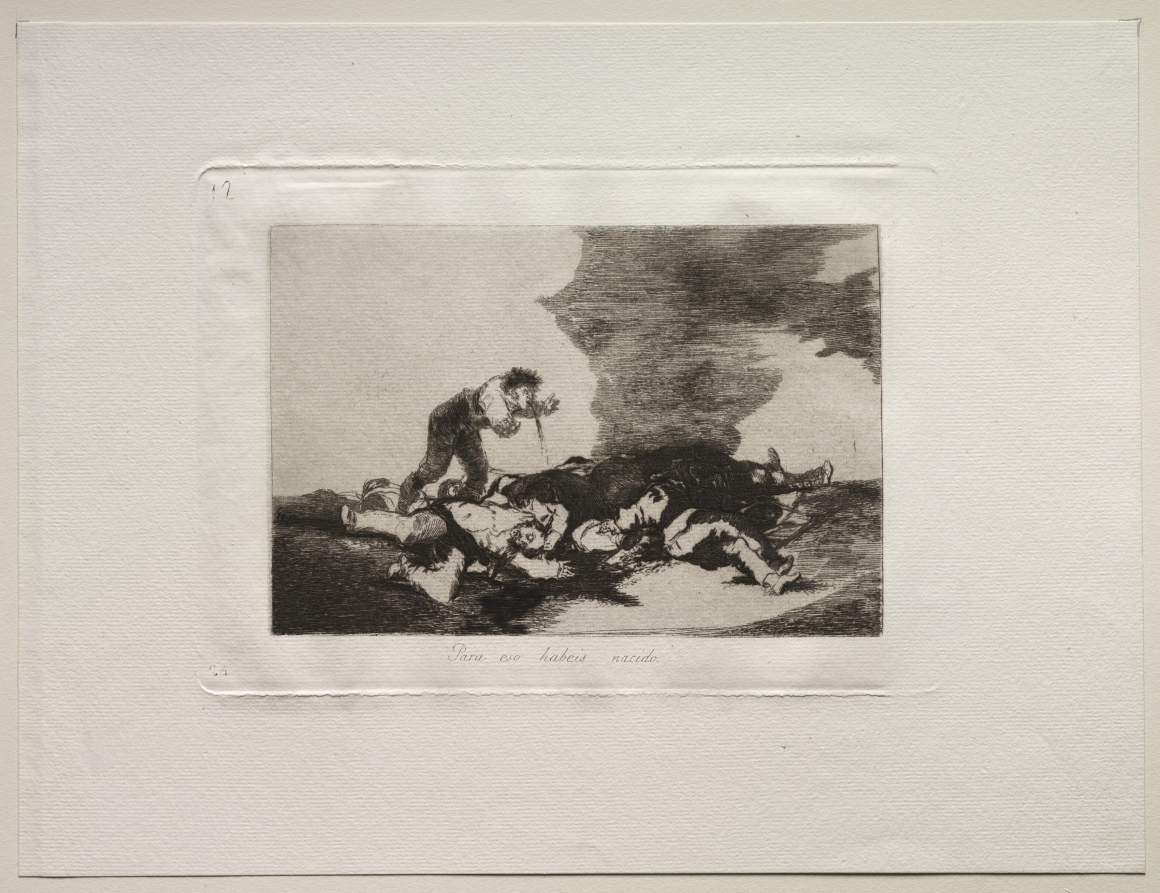
This is What You Were Born For, plate twelve from The Disasters of War
SEE IT IN PERSON
Not currently on view
In the collection of Art Institute of Chicago, Chicago · as of July 2026
Discussion
FROM THE ART INSTITUTE OF CHICAGO’S CATALOG
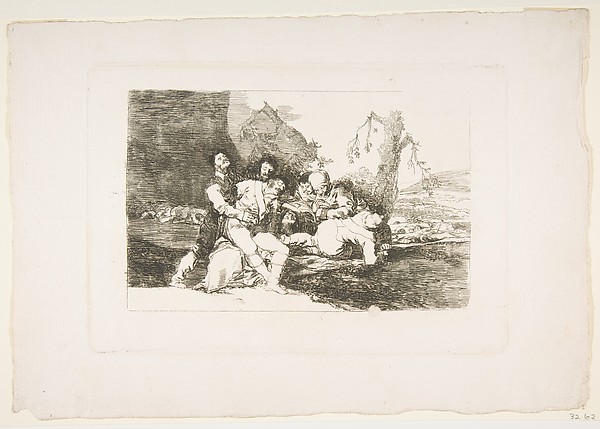
In Francisco de Goya’s series The Disasters of War , 10 of the 80 etchings are devoted to piles of dead bodies, aggressively cementing this subject’s narrative importance. Goya seems to have been engrossed in the artistic possibilities that these groupings allowed. The bodies are portrayed in varied compositions and techniques—some with aquatint, some with traditional etching. Some only depict the dead (alternately naked or clothed), and others, like This Is What You Were Born For , mingle the dead and barely alive.
Be the first to share your thoughts.
Sign in to join the discussion.
More by Francisco José de Goya y Lucientes
 The Hanged Monk
 Friar Pedro Wrests the Gun from El Maragato
 Friar Pedro Shoots El Maragato as His Horse Runs Off
 Portrait of Isidoro Maiquez
 Winter Scene
 Friar Pedro Offers Shoes to El Maragato and Prepares to Push
 Friar Pedro Clubs El Maragato with the Butt of the Gun
 Friar Pedro Binds El Maragato with a Rope
More like this
 Goya (Francisco de Goya y Lucientes) — Plate 12 from "The Di
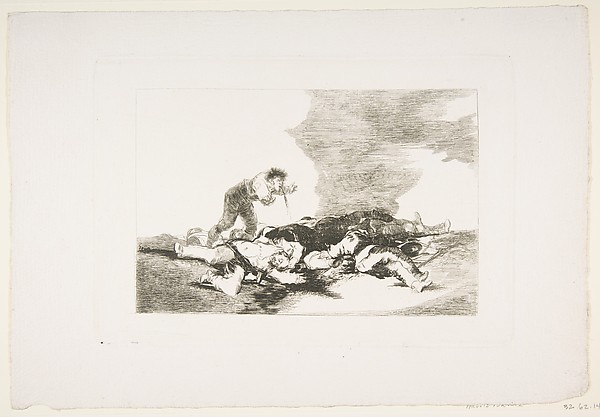 Goya (Francisco de Goya y Lucientes) — Plate 12 from "The Di
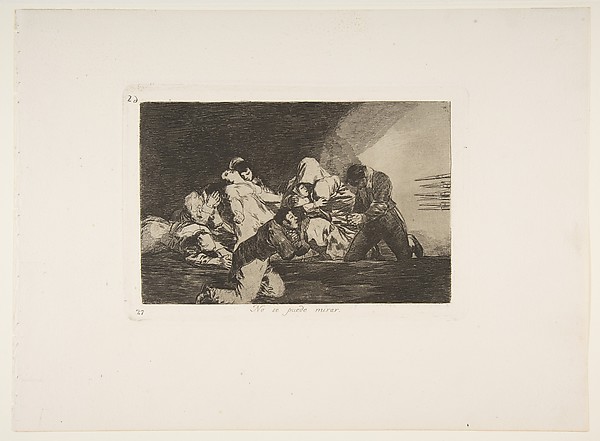 Goya (Francisco de Goya y Lucientes) — Plate 26 from "The D
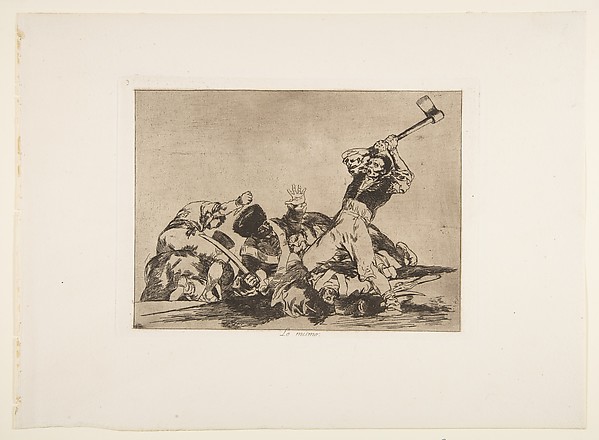 Goya (Francisco de Goya y Lucientes) — Plate 3 from "The Dis
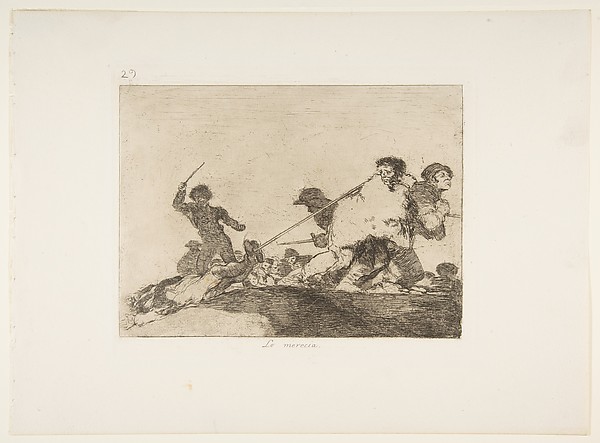 Goya (Francisco de Goya y Lucientes) — Plate 29 from "The Di
![Plate 10 from "The Disasters of War" (Los Desastres de la Guerra): 'Nor [do these] either' (Tampoco)](https://images.metmuseum.org/CRDImages/dp/web-large/DP817149.jpg) Goya (Francisco de Goya y Lucientes) — Plate 10 from "The Di
Goya (Francisco de Goya y Lucientes) — Plate 10 from "The Di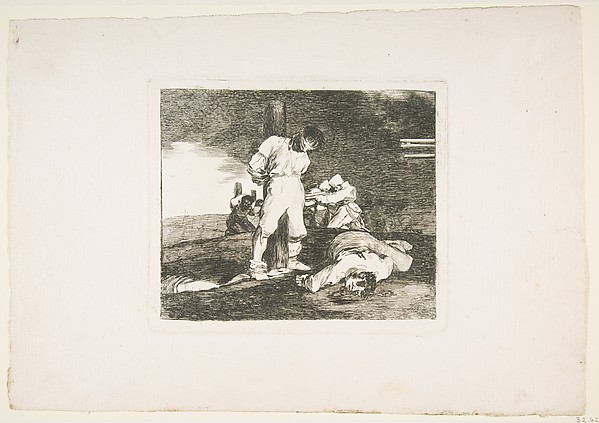 Goya (Francisco de Goya y Lucientes) — Plate 15 from "The Di
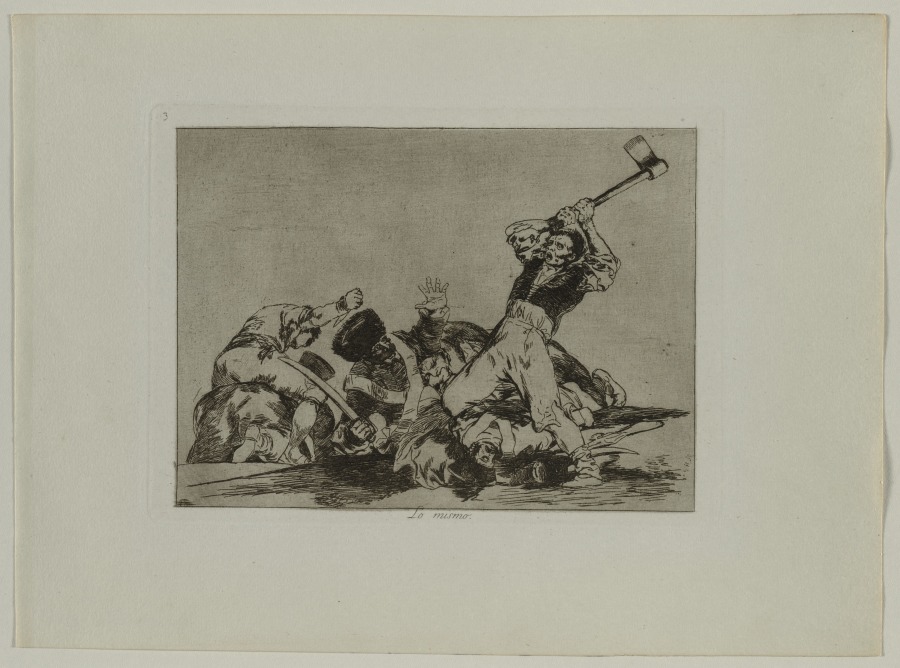 Francisco de Goya (Spanish, 1746–1828) — Disasters of War: P
 Francisco de Goya (Spanish, 1746–1828) — The Horrors of War:
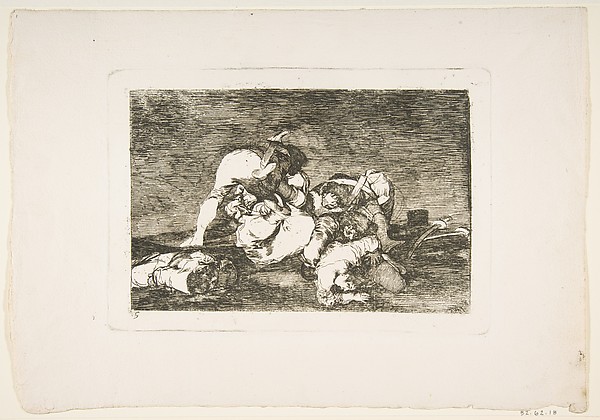 Goya (Francisco de Goya y Lucientes) — Plate 10 from "The Di
 Goya (Francisco de Goya y Lucientes) — Plate 20 from "The Di
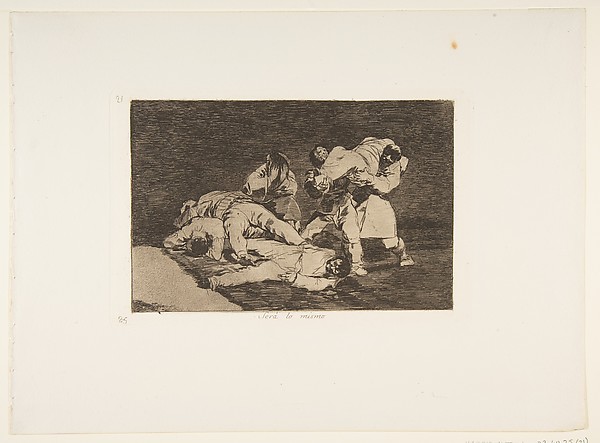 Goya (Francisco de Goya y Lucientes) — Plate 21 from "The Di