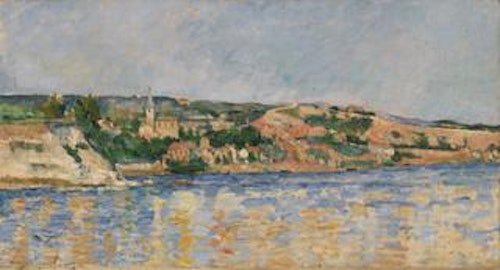
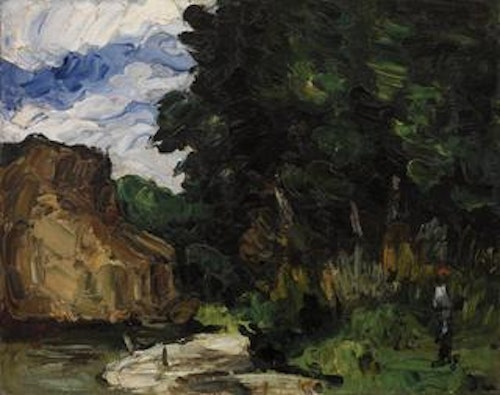
In the collection of Barnes Foundation, Philadelphia — check current display status with the museum.
FROM THE BARNES FOUNDATION’S CATALOG
In the mid-1870s, Cézanne briefly turned his attention to the depiction of laborers. These small canvases bear a lightness and freedom of expression that reflect Cézanne's practice of painting out of doors and his desire to escape the frenetic pace of life in Paris. Here, his choice of subject may have been informed by artists he admired such as Thomas Couture, who declared in 1867 that "Our workmen have not been represented; they remain yet to be put on canvas." Indeed, mid-19th-century artists often chose to depict the common laborer and rural poverty, in defiance of the French upper class, who considered such themes to be politically subversive.
Be the first to share your thoughts.
Sign in to join the discussion.
 Peder Severin Krøyer — The smith Hans Pedersen of Hornbæk. S
 Vincent van Gogh — Peasant digging
 Vincent van Gogh — Korensnijder met hoed, van achteren gezie
 Edvard Munch — The Sower
 Vincent van Gogh — Peasant Woman Digging
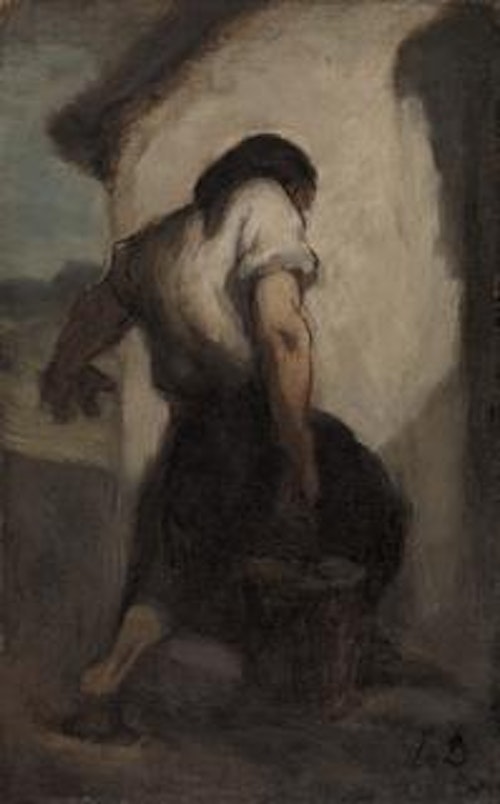 Honoré Daumier — Water Carrier (Le Porteur d'eau)
 Vincent van Gogh — Digger
 Édouard Vuillard — Portrait of Toulouse Lautrec, in Villeneu
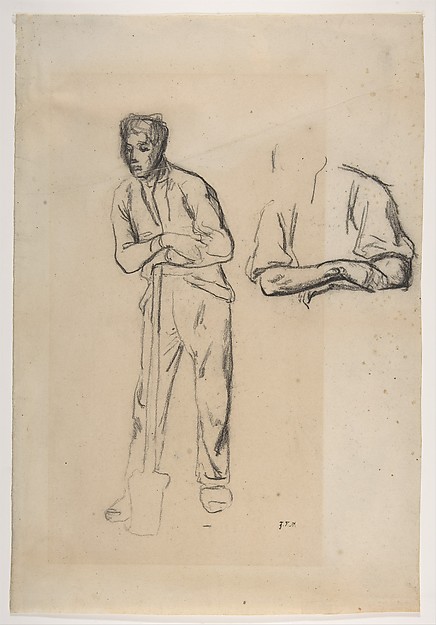 Jean-François Millet — Man with a Spade
 Vincent van Gogh — The Thresher (after Millet)
 Richard Nicolaüs Roland Holst — Building Site in Amsterdam
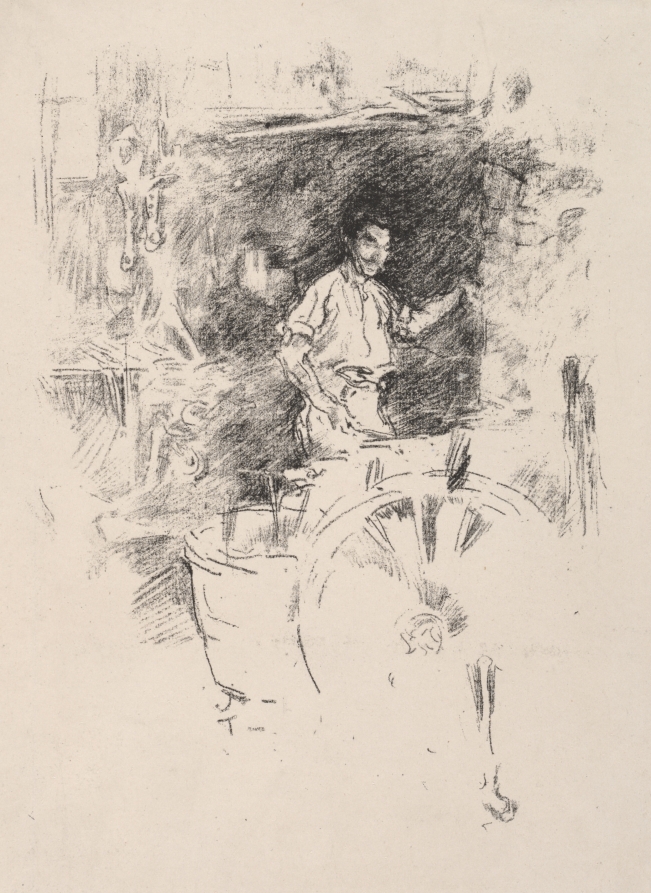 James McNeill Whistler (American, 1834–1903) — The Blacksmit