Francisco José de Goya y Lucientes
The Agility and Audacity of Juanito Apinani in the ring at Madrid, plate 20 from The Art of Bullfighting
SEE IT IN PERSON
Not currently on view
In the collection of Art Institute of Chicago, Chicago · as of July 2026
Discussion
FROM THE ART INSTITUTE OF CHICAGO’S CATALOG
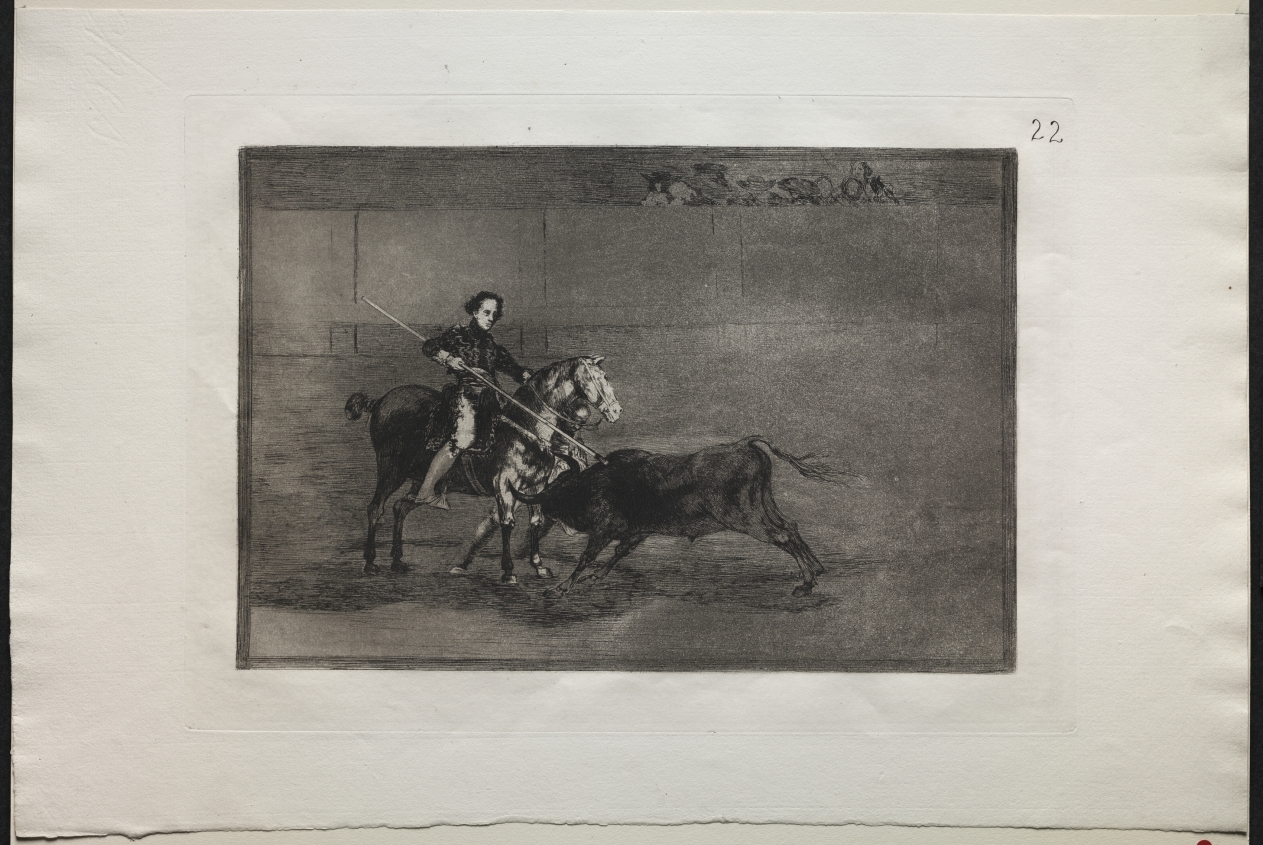
From 1785 to 1814, the laws regulating bullfighting in Spain were changed four times by succeeding governments. These regulations varied wildly depending on the government’s political bent, ranging from outright prohibition to free admission for all. Due to its politicization, bullfighting became a useful metaphor for societal conflict, which Francisco de Goya employed to obliquely comment on the Spanish body politic. For instance, Goya often pictured the spectators as compositionally divided—either huddled at the right of the print or crowded to the left as in this work—recalling stark divisions in Spanish society.
Be the first to share your thoughts.
Sign in to join the discussion.
More by Francisco José de Goya y Lucientes
 The Hanged Monk
 Friar Pedro Wrests the Gun from El Maragato
 Friar Pedro Shoots El Maragato as His Horse Runs Off
 Portrait of Isidoro Maiquez
 Winter Scene
 Friar Pedro Offers Shoes to El Maragato and Prepares to Push
 Friar Pedro Clubs El Maragato with the Butt of the Gun
 Friar Pedro Binds El Maragato with a Rope
More like this
![Plate 20 from "La Tauromaquia": The agility and audacity of Juanito Apiñani in [the ring] at Madrid](https://images.metmuseum.org/CRDImages/dp/web-large/DP817518.jpg) Goya (Francisco de Goya y Lucientes) — Plate 20 from "La Tau
Goya (Francisco de Goya y Lucientes) — Plate 20 from "La Tau![Plate 20 from the 'Tauromaquia':The agility and audacity of Juanito Apiñani in [the ring] at Madrid.](https://images.metmuseum.org/CRDImages/dp/web-large/DP817517.jpg) Goya (Francisco de Goya y Lucientes) — Plate 20 from the 'Ta
Goya (Francisco de Goya y Lucientes) — Plate 20 from the 'Ta Francisco de Goya (Spanish, 1746–1828) — Bullfights: The Ag
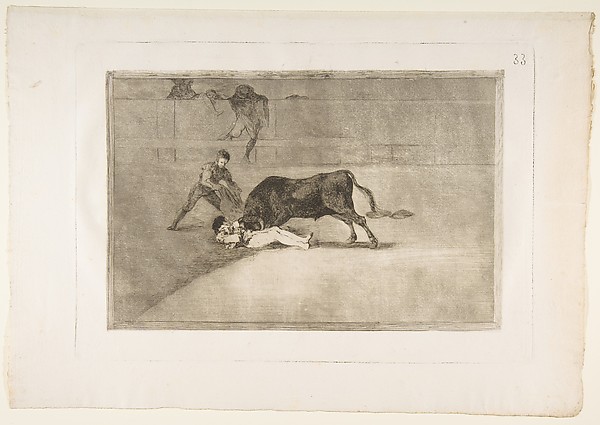 Goya (Francisco de Goya y Lucientes) — Plate 33 from "La Tau
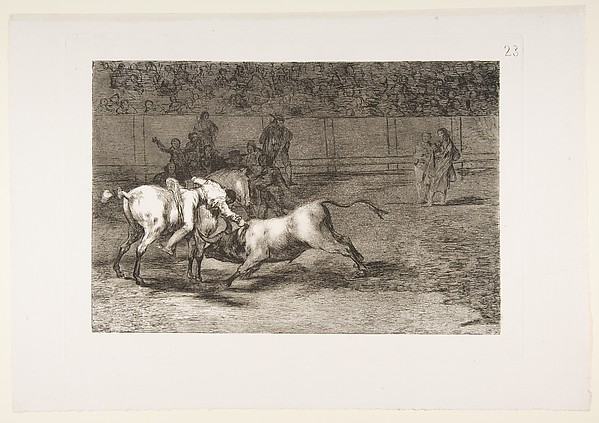 Goya (Francisco de Goya y Lucientes) — Plate 23 from "La Tau
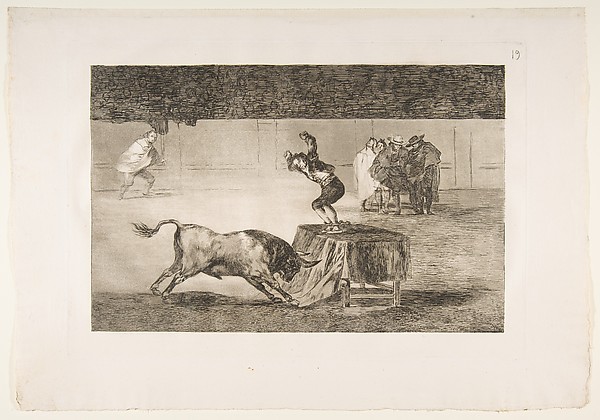 Goya (Francisco de Goya y Lucientes) — Plate 19 of "La Tauro
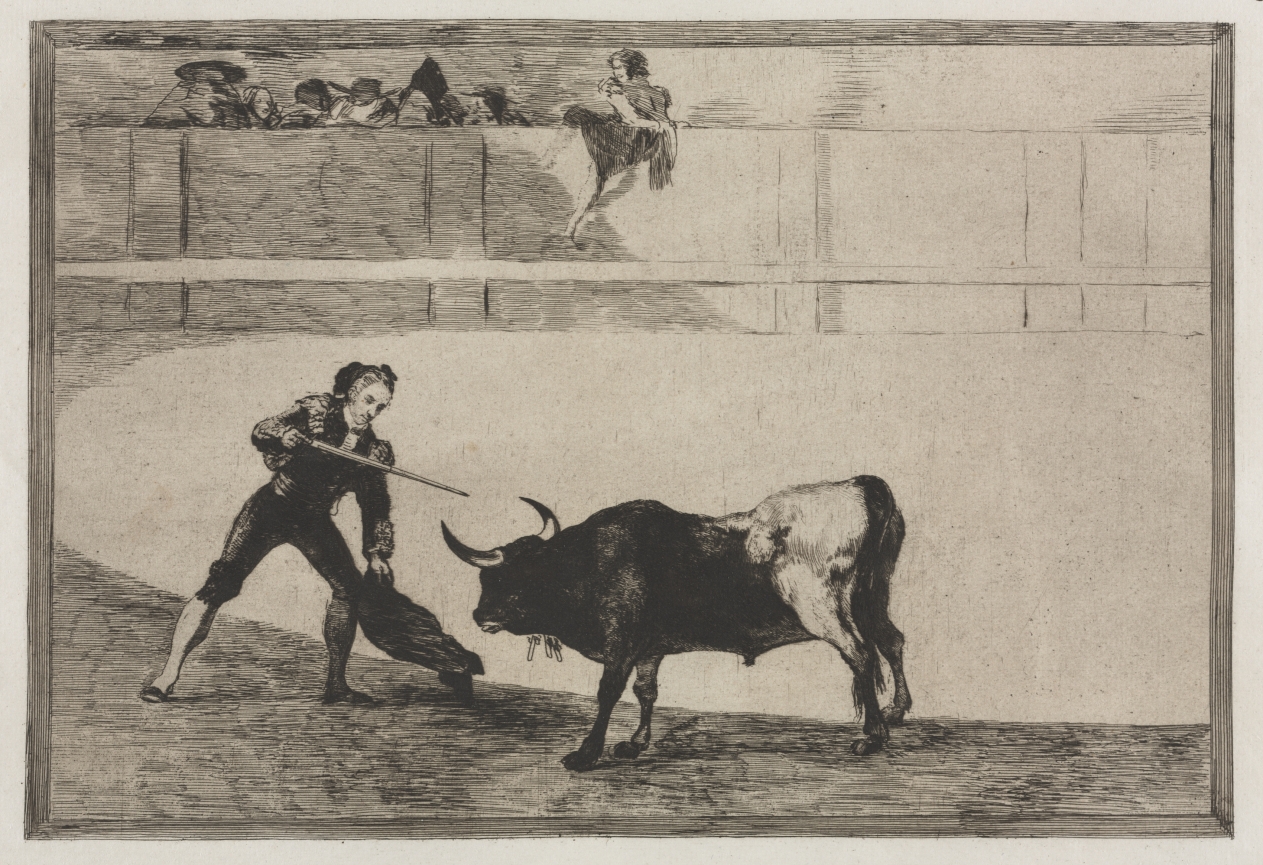 Francisco de Goya (Spanish, 1746–1828) — Bullfights: Pedro
 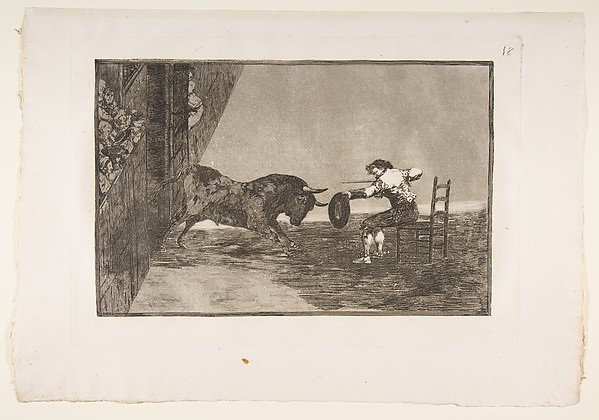 Goya (Francisco de Goya y Lucientes) — Plate 18 of "La 'Taur
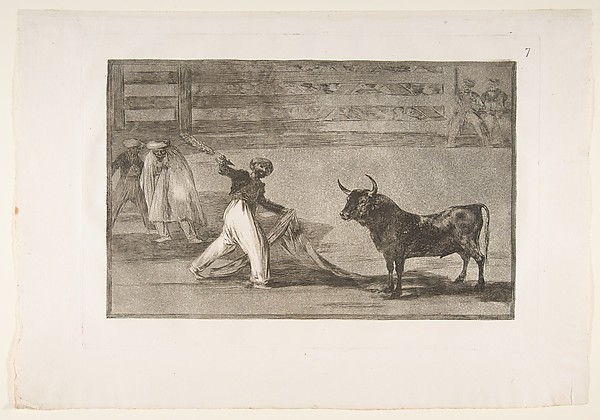 Goya (Francisco de Goya y Lucientes) — Plate 7 from "La Taur
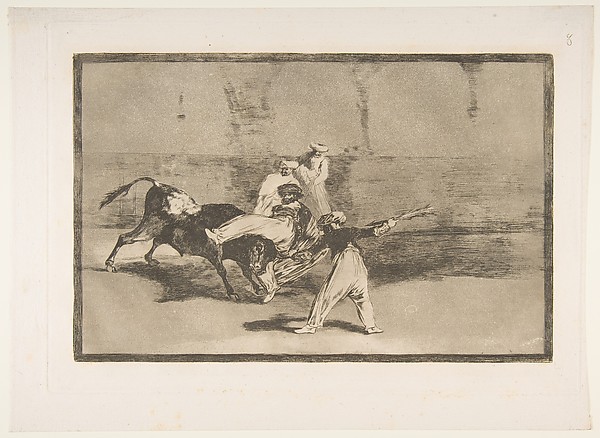 Goya (Francisco de Goya y Lucientes) — Plate 8 from the 'Tau
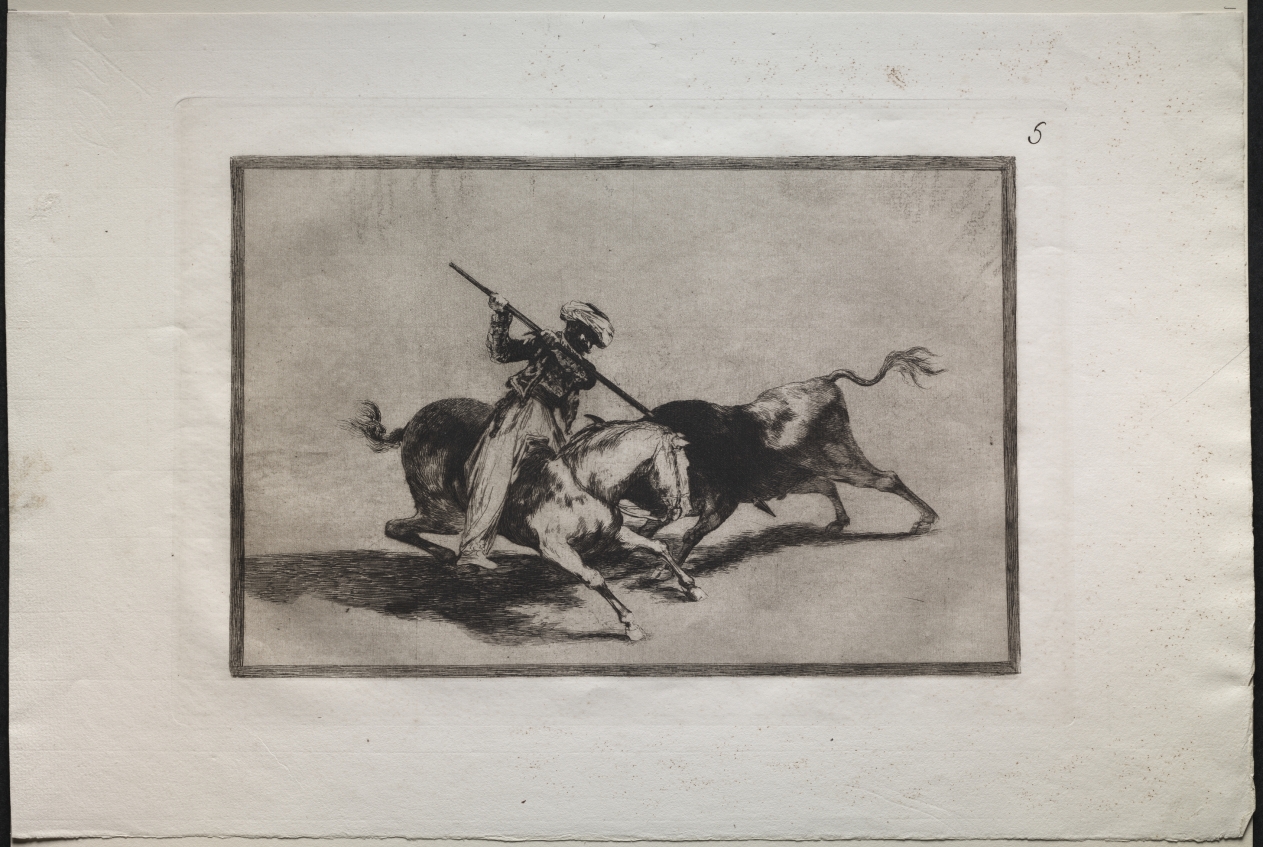 Francisco de Goya (Spanish, 1746–1828) — Bullfights: The Sp
 Francisco de Goya (Spanish, 1746–1828) — Bullfights: Manly