The Last of New England—The Beginning of New Mexico
SEE IT IN PERSON
Not currently on view
In the collection of Art Institute of Chicago, Chicago · as of July 2026
Discussion
FROM THE ART INSTITUTE OF CHICAGO’S CATALOG
In this painting, Marsden Hartley depicted an imagined scene in which the fallen trees of a New England forest in the foreground transition to the golden hills of New Mexico beyond. Weary of the East Coast, the artist spent 18 months in the Southwest in 1918–19, believing that he could find rejuvenation in nature. Here, thick black lines define the Southwestern landscape, which he saw as alive with expressive potential. He wrote to Alfred Stieglitz, “I like the country very well, for it is big and clean and true, and there is nothing dirty standing between one and the sunlight, as there is in the east.” Like many artists who lived in New England at this time, he pictured the Southwest as uninhabited and unspoiled, overlooking the centuries of civilizations in the region.
Be the first to share your thoughts.
Sign in to join the discussion.
More by Marsden Hartley


More like this
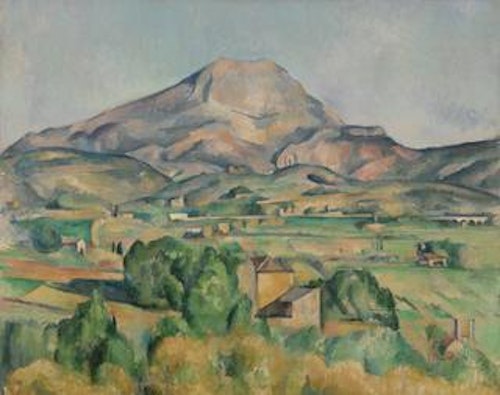 Paul Cézanne — Mont Sainte-Victoire (La Montagne Sainte-Vict
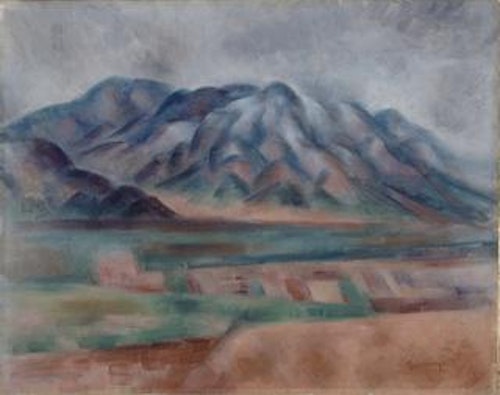 Andrew Dasburg — Landscape (Mountain in the Southwest)
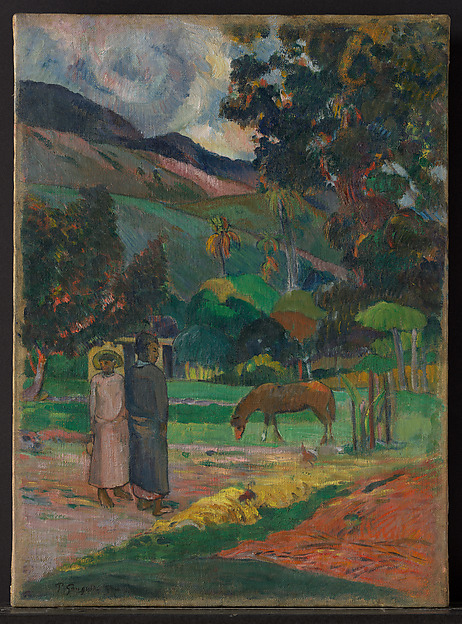 Paul Gauguin — Tahitian Landscape
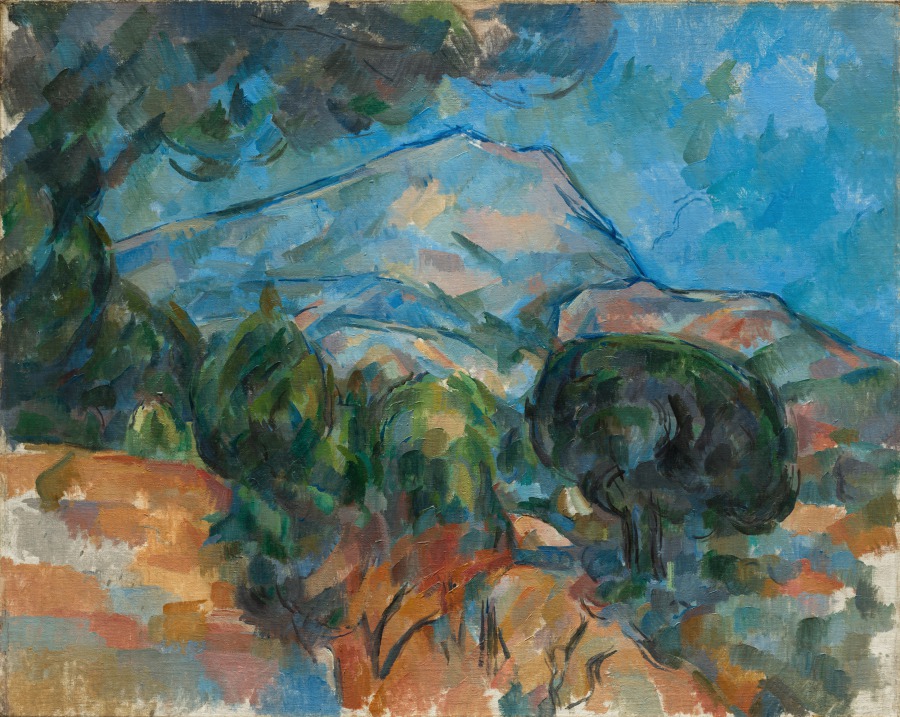 Paul Cezanne (French, 1839–1906) — Mount Sainte-Victoire
 Alfred Maurer — Hills
 Paul Cézanne — House in Provence (Maison en Provence)
 Alexis Gritchenko — Landscape (Trees and Goats)
 Paul Cézanne — Toward Mont Sainte-Victoire (Vers la Montagne
 Guy Rose (American, 1867–1925) — Carmel Hills
 Camille Pissarro — Landscape
 Samuel Halpert (American, born Russian Empire [now Poland],
  Salvatore Pinto — Ajaccio, Corsica