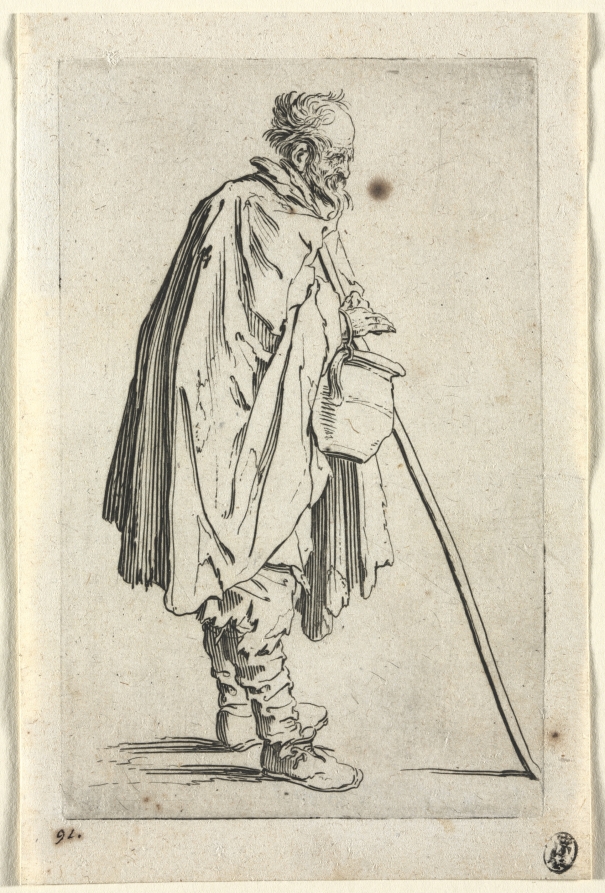
Jacques Callot

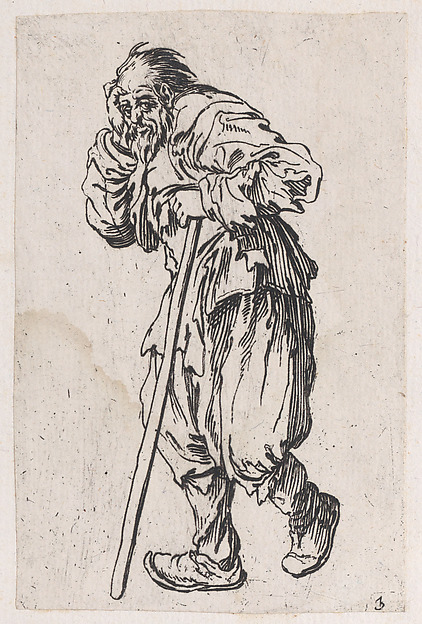
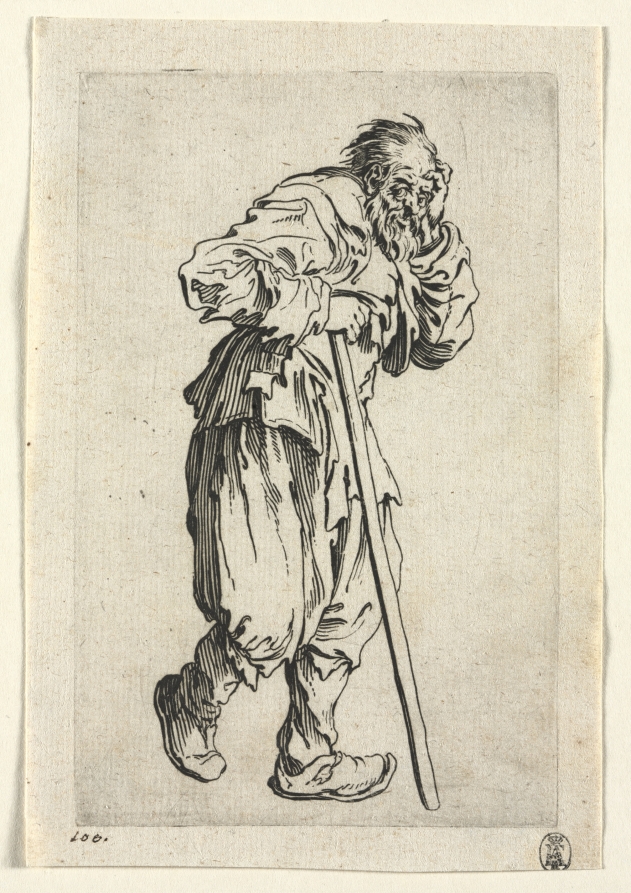
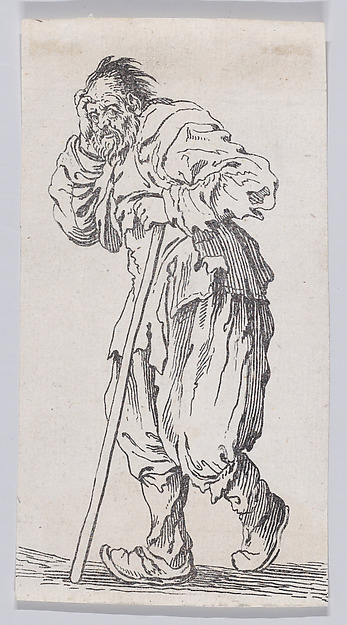
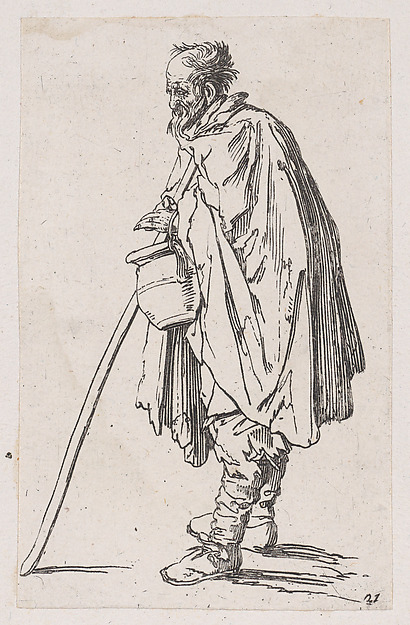
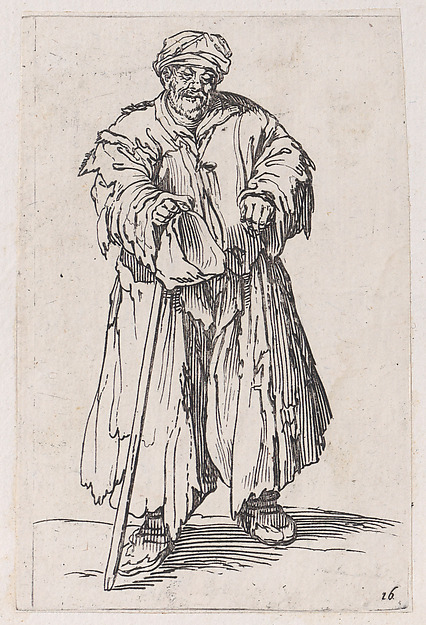
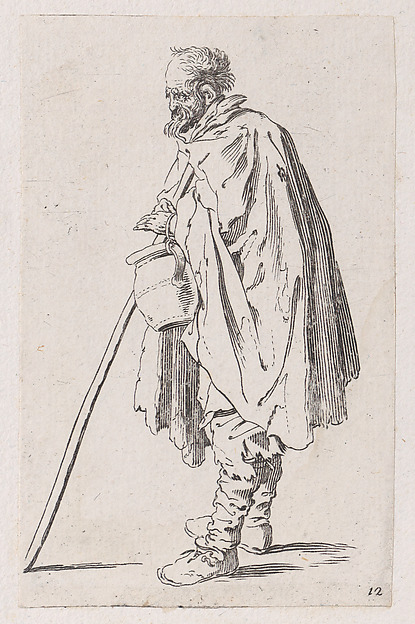
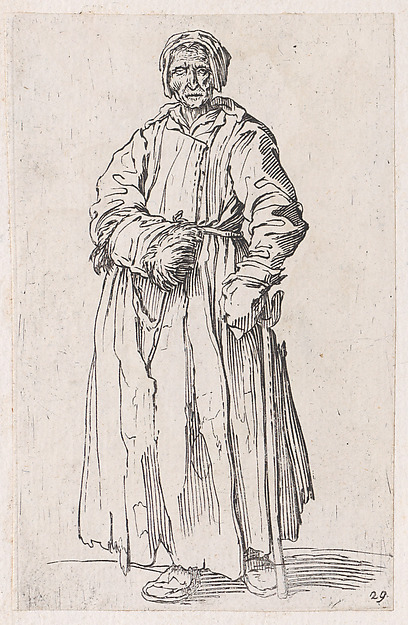
La Gueux Appuye sur son Baton (The Beggar Leaning on his Cane), from Les Gueux suite appelée aussi Les Mendiants, Les Baroni, ou Les Barons (The Beggars, also called the Barons)

ca. 1623
Etching; first state of two (Lieure)
14.1 × 9 cm (5.6 × 3.5 in)

SEE IT IN PERSON

Not currently on view

In the collection of The Metropolitan Museum of Art, New York · as of July 2026

View at metmuseum.orgPlan a visit ↗

Discussion

Be the first to share your thoughts.

Sign in to join the discussion.

Community guidelines

More by Jacques Callot
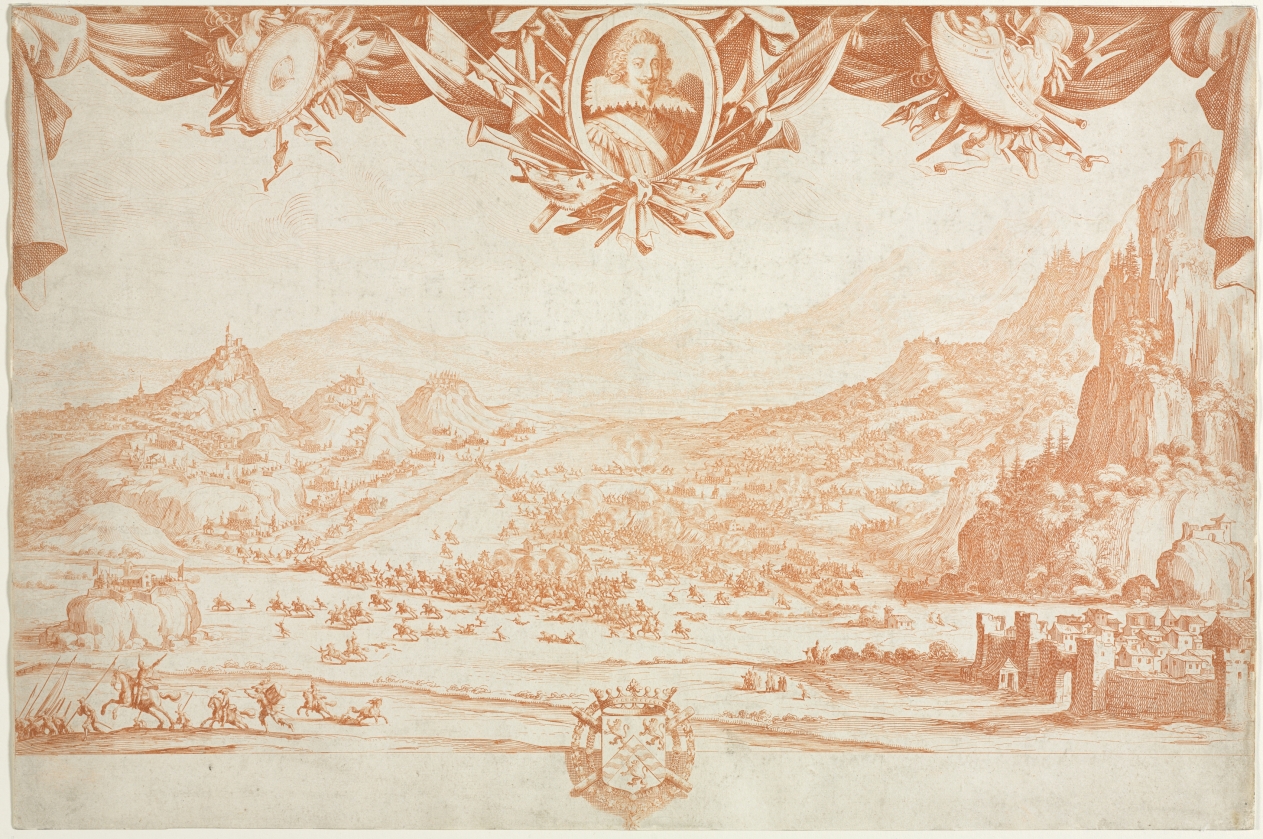
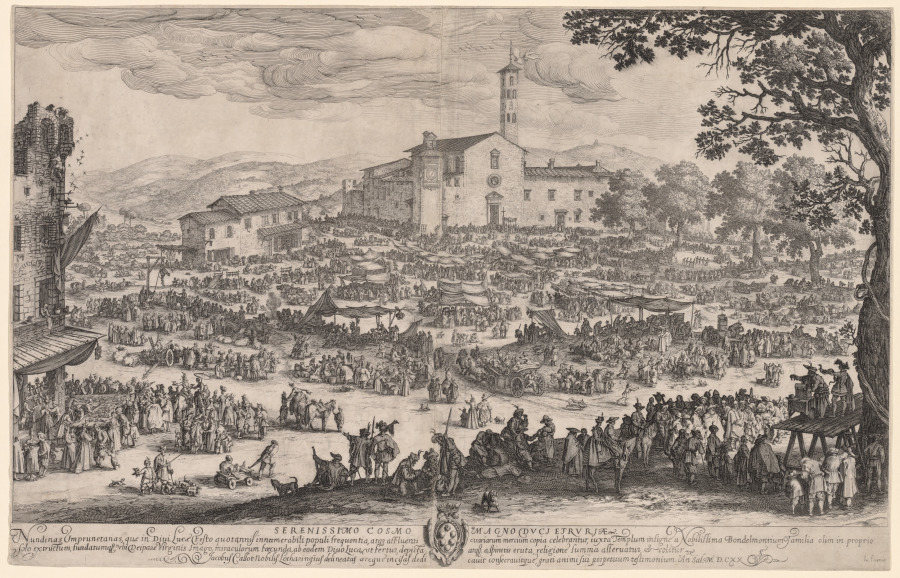
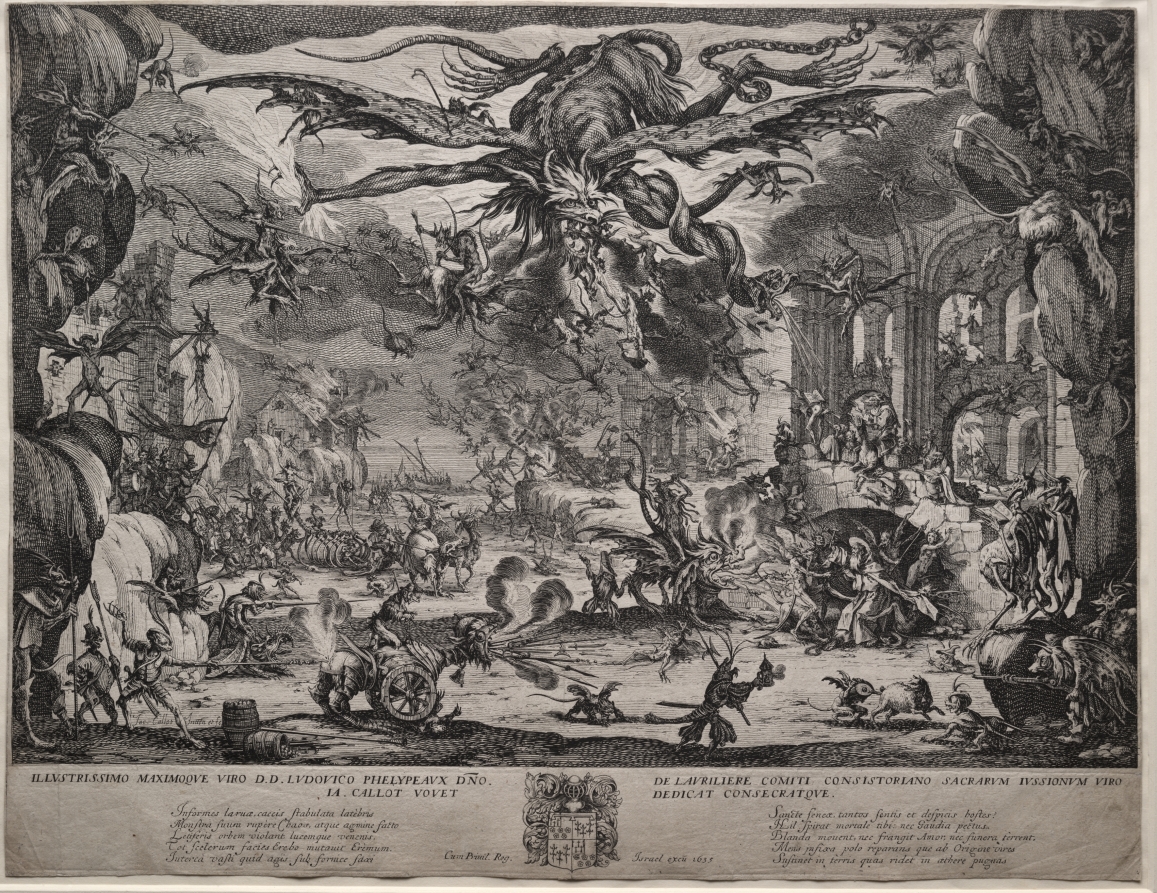
Sketches for the Balli di Sfessania (recto) Sketches of Dancers (verso)Sketches for the Balli di Sfessania (recto) Sketches of DancThe Combat of AvigliamoThe Combat of AvigliamoThe Feast of Saint James, Florence, July 25, 1619The Feast of Saint James, Florence, July 25, 1619The Fair at ImprunetaThe Fair at ImprunetaThe Palace Gardens at NancyThe Palace Gardens at NancyLes Miseres Et Les Mal-Heurs De La Guerre...IsraelLes Miseres Et Les Mal-Heurs De La Guerre...IsraelThe Temptation of Saint Anthony (second version)The Temptation of Saint Anthony (second version)Franca Trippa - Fritellino, from the Balli di SfessaniaFranca Trippa - Fritellino, from the Balli di Sfessania
More like this

Reverse Copy of Le Gueux Appuyé sur son Baton (The Beggar Leaning on His Cane), from Les Gueux suite appelée aussi Les Mendiants, Les Baroni, ou Les Barons (The Beggars, also called the Barons)Jacques Callot|Anonymous — Reverse Copy of Le Gueux Appuyé sThe Beggars: Beggar Leaning on a StickJacques Callot (French, 1592–1635) — The Beggars: Beggar LeaReverse Copy of L'Aveugle et son Compagnon (The Blind Man and his Companion), from Les Gueux suite appelée aussi Les Mendiants, Les Baroni, ou Les Barons (The Beggars, also called the Barons)Jacques Callot|Anonymous — Reverse Copy of L'Aveugle et son Reverse Copy of Le Gueux Appuyé sur son Baton (The Beggar Leaning on His Cane), from "Les Gueux suite appelée aussi Les Mendiants, Les Baroni, ou Les Barons" (The Beggars, also called the Barons)Jacques Callot|Anonymous — Reverse Copy of Le Gueux Appuyé sReverse Copy of Le Mendiant aux Béquilles et la Besace (The Beggar with the Crutches and the Pouch), from Les Gueux suite appelée aussi Les Mendiants, Les Baroni, ou Les Barons (The Beggars, also called the Barons)Jacques Callot|Anonymous — Reverse Copy of Le Mendiant aux BReverse Copy of Le Mendiant au Couvet (The Beggar of Couvet), from Les Gueux suite appelée aussi Les Mendiants, Les Baroni, ou Les Barons (The Beggars, also called the Barons)Jacques Callot|Anonymous — Reverse Copy of Le Mendiant au CoReverse Copy of Le Mendiant Obèse aux Yeux Baissés (The Obese Beggar with Lowered Eyes), from Les Gueux suite appelée aussi Les Mendiants, Les Baroni, ou Les Barons (The Beggars, also called the Barons)Jacques Callot|Anonymous — Reverse Copy of Le Mendiant ObèsePeasant in a High Cap, Standing Leaning on a StickRembrandt van Rijn — Peasant in a High Cap, Standing LeaningReverse Copy of Le Mendiant au Couvet (The Beggar of Couvet), from Les Gueux suite appelée aussi Les Mendiants, Les Baroni, ou Les Barons (The Beggars, also called the Barons)Jacques Callot|Anonymous — Reverse Copy of Le Mendiant au CoReverse Copy of Le Mendiant aux Béquilles Coiffée d'un Chapeau et Vu de Dos (The Beggar with Crutches Wearing a Hat and Viewed from Behind), from Les Gueux suite appelée aussi Les Mendiants, Les Baroni, ou Les Barons (The Beggars, also called the Barons)Jacques Callot|Anonymous — Reverse Copy of Le Mendiant aux BThe Beggars: Beggar with PotJacques Callot (French, 1592–1635) — The Beggars: Beggar witA Peasant in a High Cap, Standing Leaning on a StickRembrandt (Rembrandt van Rijn) — A Peasant in a High Cap, St