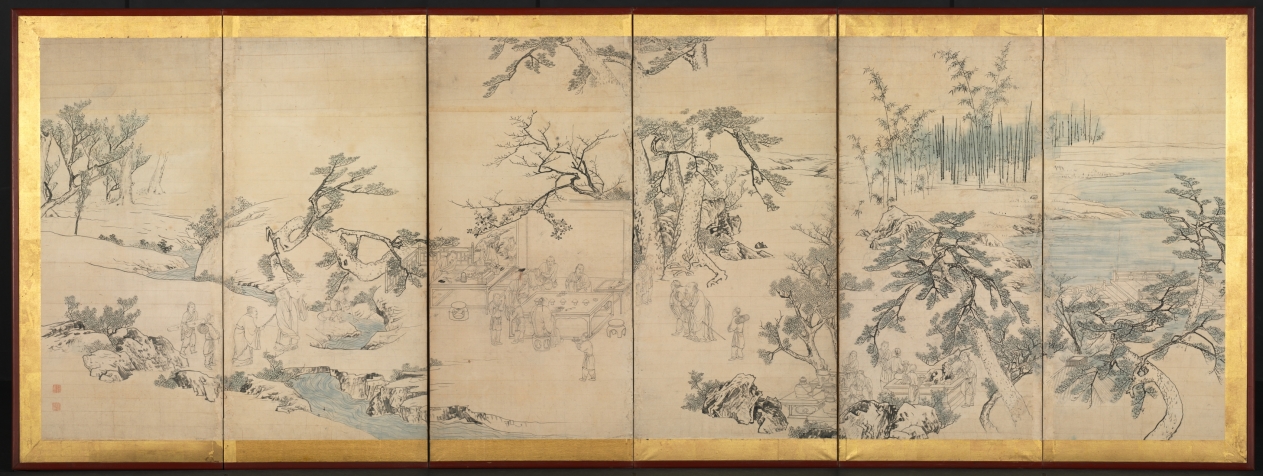
In the collection of Cleveland Museum of Art, Cleveland — check current display status with the museum.
FROM THE CLEVELAND MUSEUM OF ART’S CATALOG
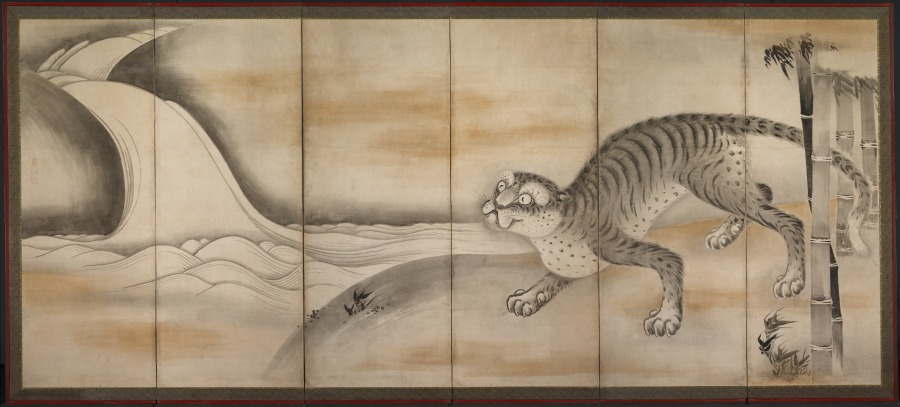
The seals appended to the inscription on this painting suggest that the text was brushed by Yūjō (1723–1773), an imperial prince who became a Buddhist monk and was abbot of Enman'in at Miidera. The line is from a poem attributed to a Yuan dynasty poet, Yu Ruyu (dates unknown), and describes the sound of a fierce wind lashing the ground. Wind is associated with the roar of the tiger. Yūjō was Maruyama Ōkyo's most important patron as a young artist, and this painting has a signature asserting that Ōkyo created it in 1772, the year before Yūjō's death. While Yūjō produced a preface for a now famous set of handscrolls he commissioned Ōkyo to paint, and a number of Ōkyo's compositions for Enman'in survive, this work would appear to be one imagining their relationship, as opposed to a genuine piece.
Be the first to share your thoughts.
Sign in to join the discussion.
 Kishi Ganku — Tiger and Bamboo
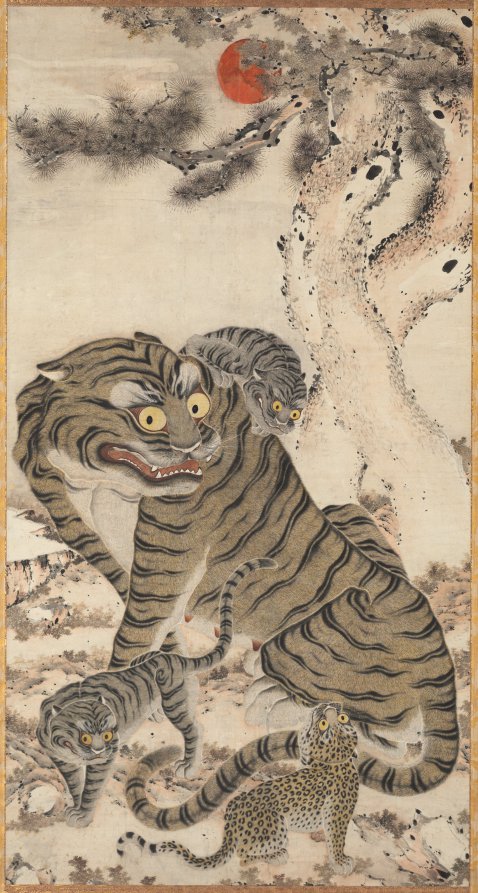 Tiger Family
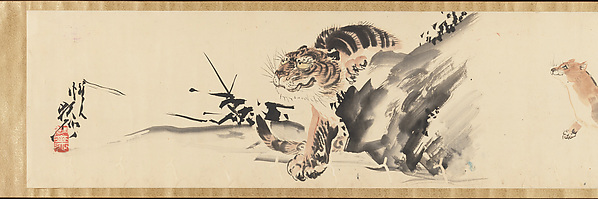 Kawanabe Kyōsai 河鍋暁斎
 Soga Nichokuan (Japanese) — Tiger
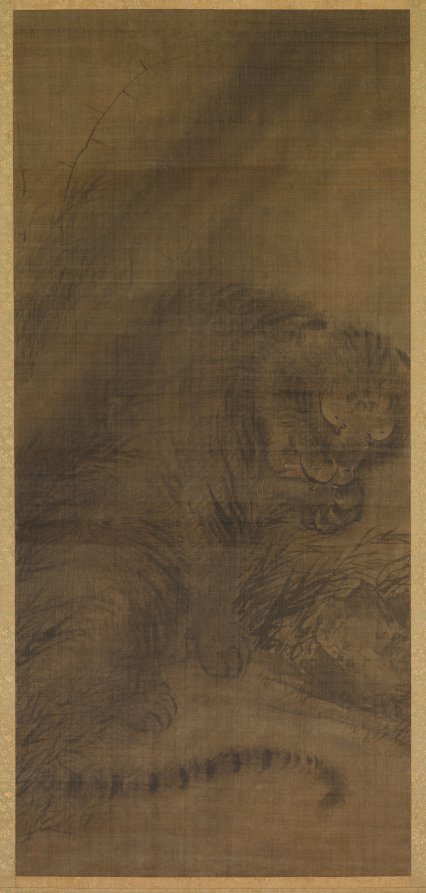 Fachang Muqi (Chinese, 1220–1280) — Tiger
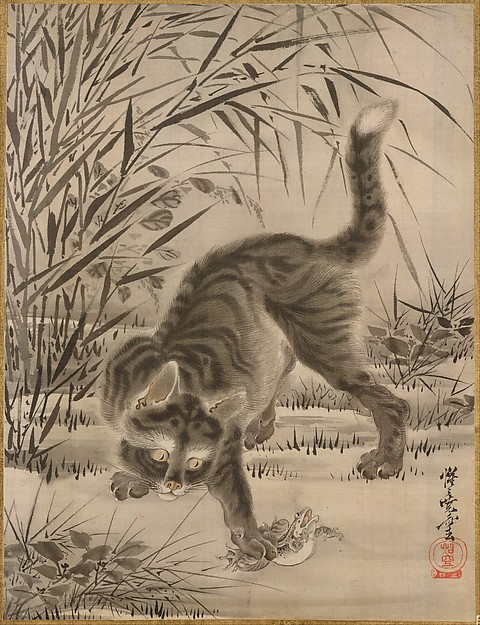 Kawanabe Kyōsai 河鍋暁斎
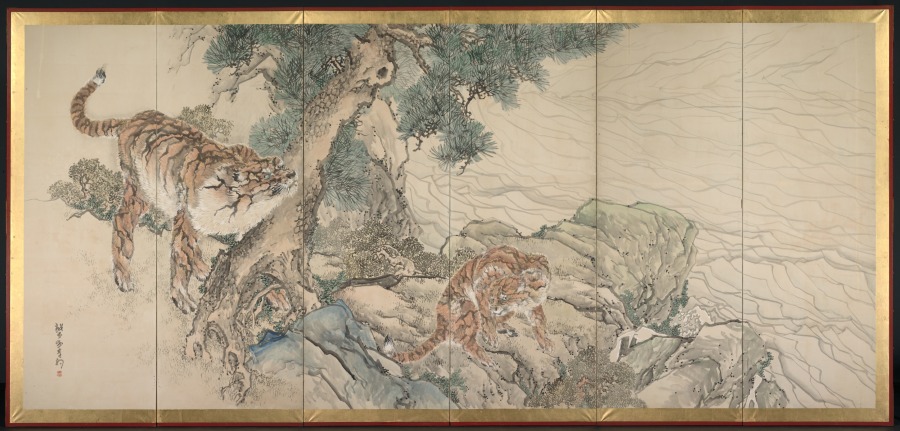 Kishi Ganku (Japanese, 1749/56–1838) — Tiger Family
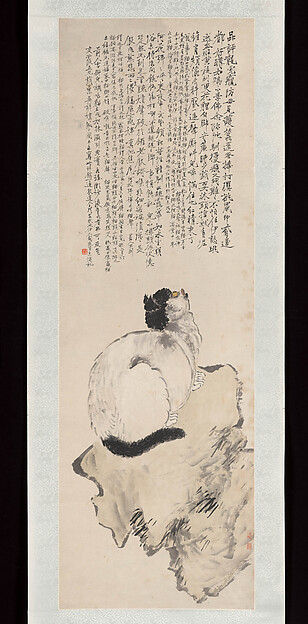 Wang Li — 清 王禮 狸奴圖 軸|Cat
 Kanō Sansetsu — Tiger Drinking from a Raging River
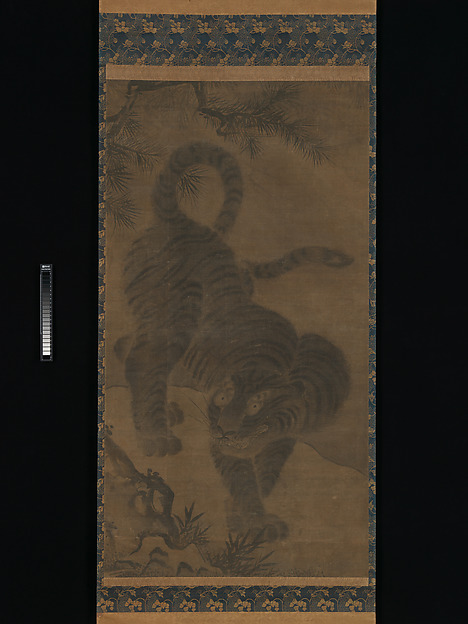 Muqi — 작자미상 용과 호랑이 조선 또는 일본 (에도)|簋簅痡萳 樻虎圖 朝鮮 日本 江戶|Tiger
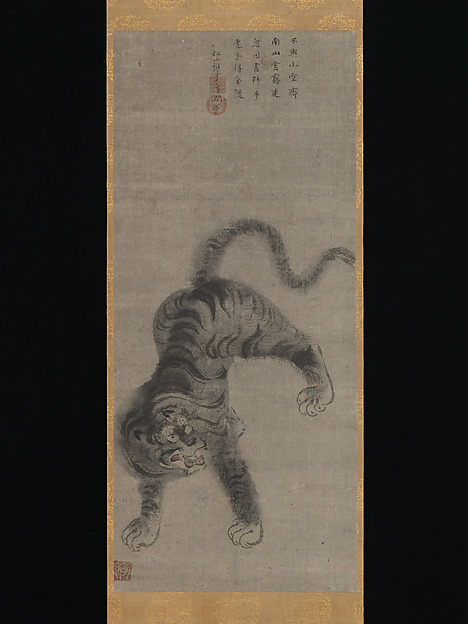 Meisō — 明窓筆 虎図|Tiger
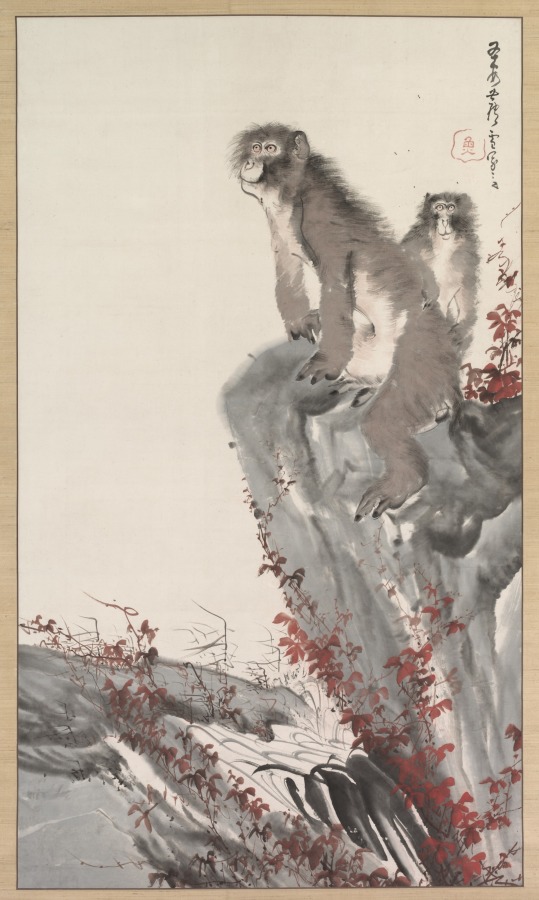 Nagasawa Rosetsu (Japanese, 1754–1799) — Monkeys by a Stream