In the collection of Cleveland Museum of Art, Cleveland — check current display status with the museum.
FROM THE CLEVELAND MUSEUM OF ART’S CATALOG
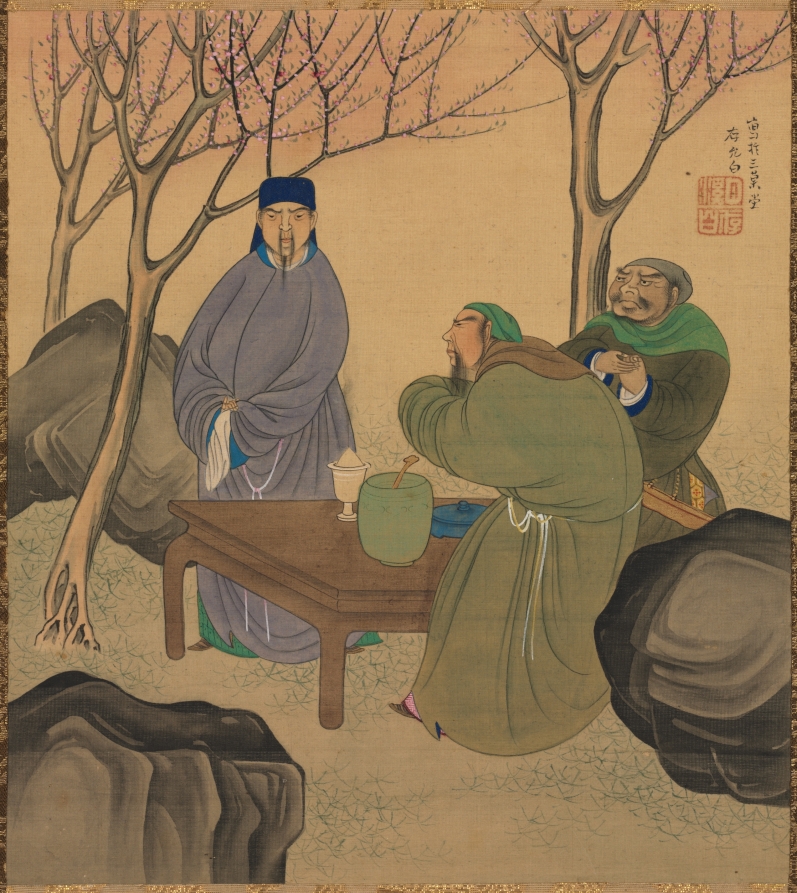
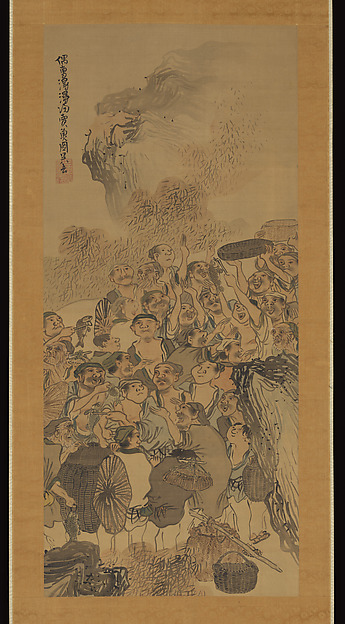
The Chinese literary classic Water Margin is set in the 1120s and tells the story of 108 outlaws who first rebel against the government and then join forces with it. This painting depicts an episode in which hero Wu Song reclaims the tavern Happy Forest for its rightful owner, the prison warden’s son, Shi En. To prepare for the fight, Wu Song drinks a lot of wine. The painting was inscribed with a quote in which an ally describes Wu Song’s fighting style. It reads as follows: Where his twin fists rise, clouds and thunder roar, When his flying kick comes, wind and rain tremble.
Be the first to share your thoughts.
Sign in to join the discussion.
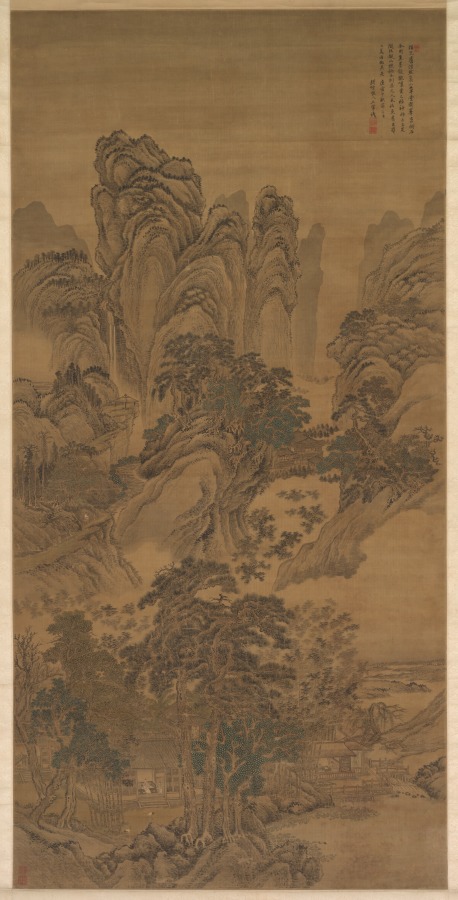 Wang Hui (Chinese, 1632–1717) — Landscape
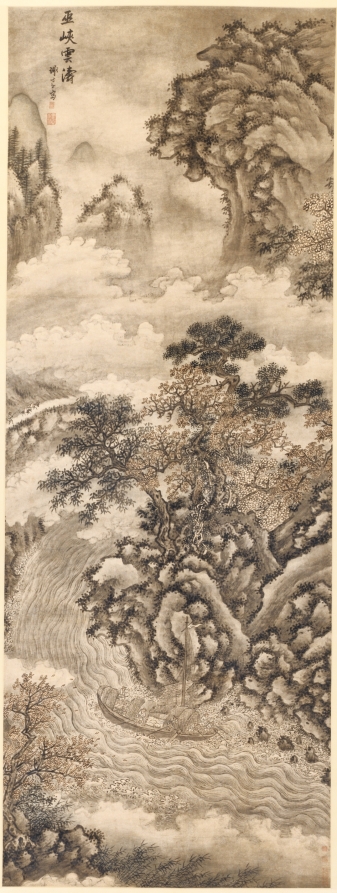 Xie Shichen (Chinese, 1487–after 1567) — Clouds and Waves at
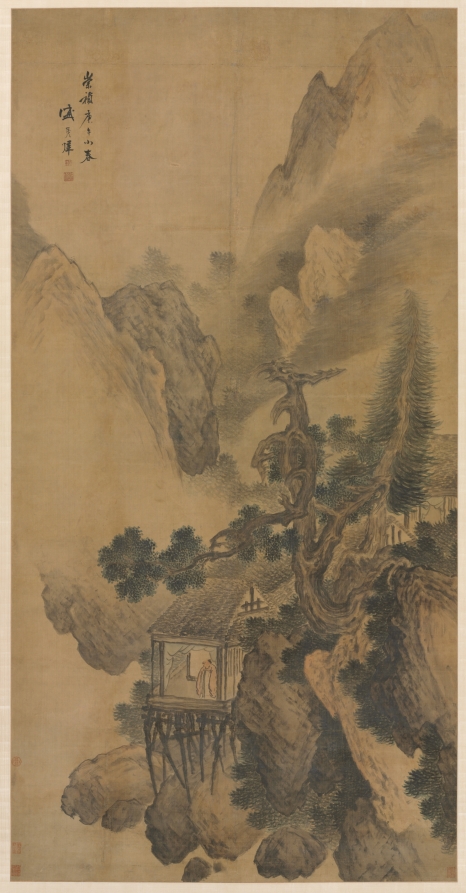 Sheng Maoye (Chinese, active early 1600s) — Lonely Retreat O
 Shen Zhou — Scholar and Waterfall, in Ming style
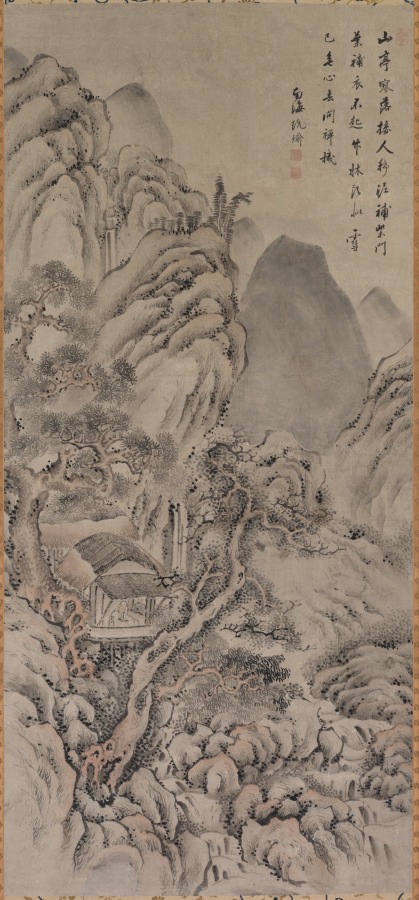 Gion Nankai (Japanese, 1677–1751) — Landscape
 Chen Jiru — Landscape
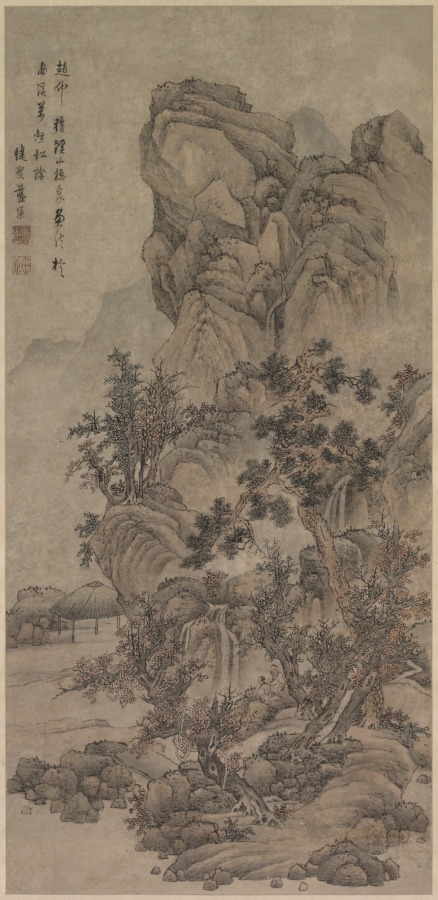 Landscape with Figures
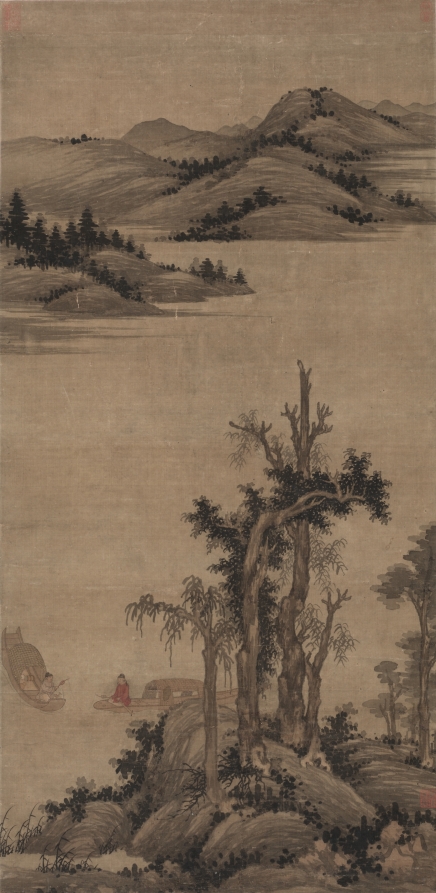 Zhao Yong (Chinese, c. 1289-c. 1362) — Fishermen-Hermits in
  Ding Yunpeng (Chinese, 1547-c. 1628) — Morning Sun over Heav
 Wang Meng — Quiet Life in a Wooded Glen
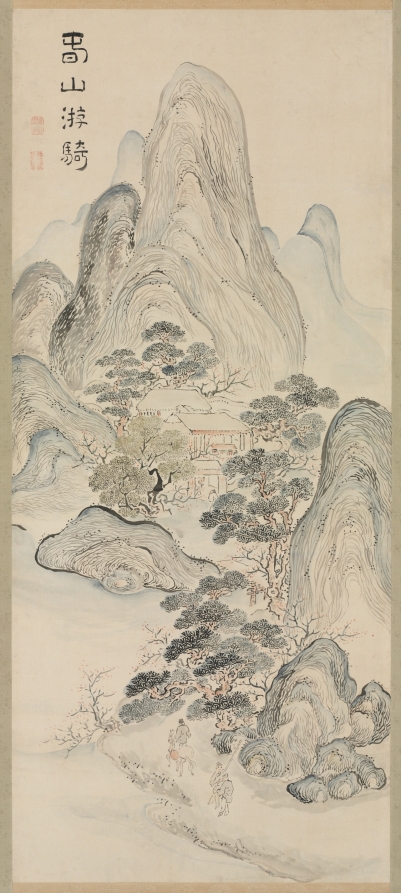 Ike Taiga (Japanese, 1723–1776) — Spring Landscape
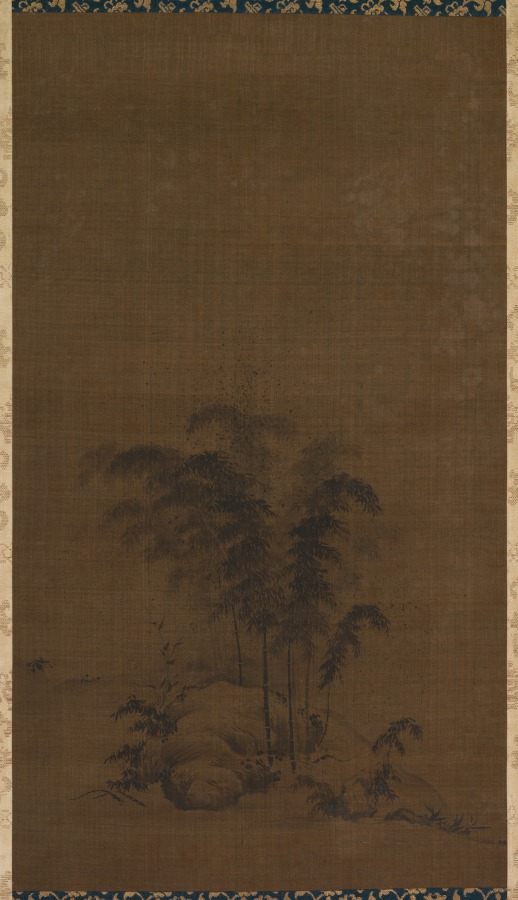 Bamboo Landscape