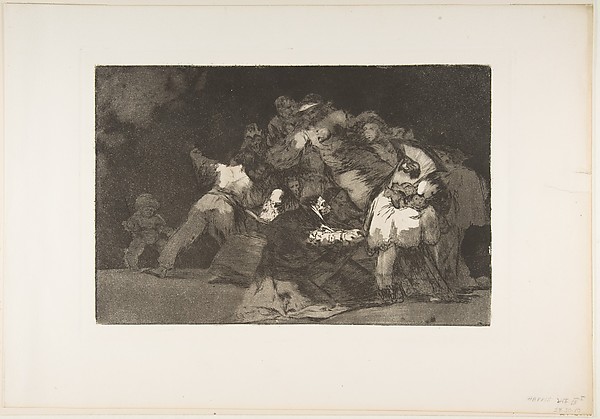
Francisco José de Goya y Lucientes
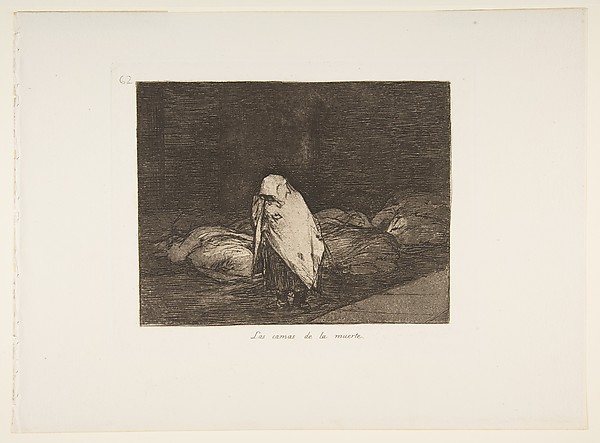
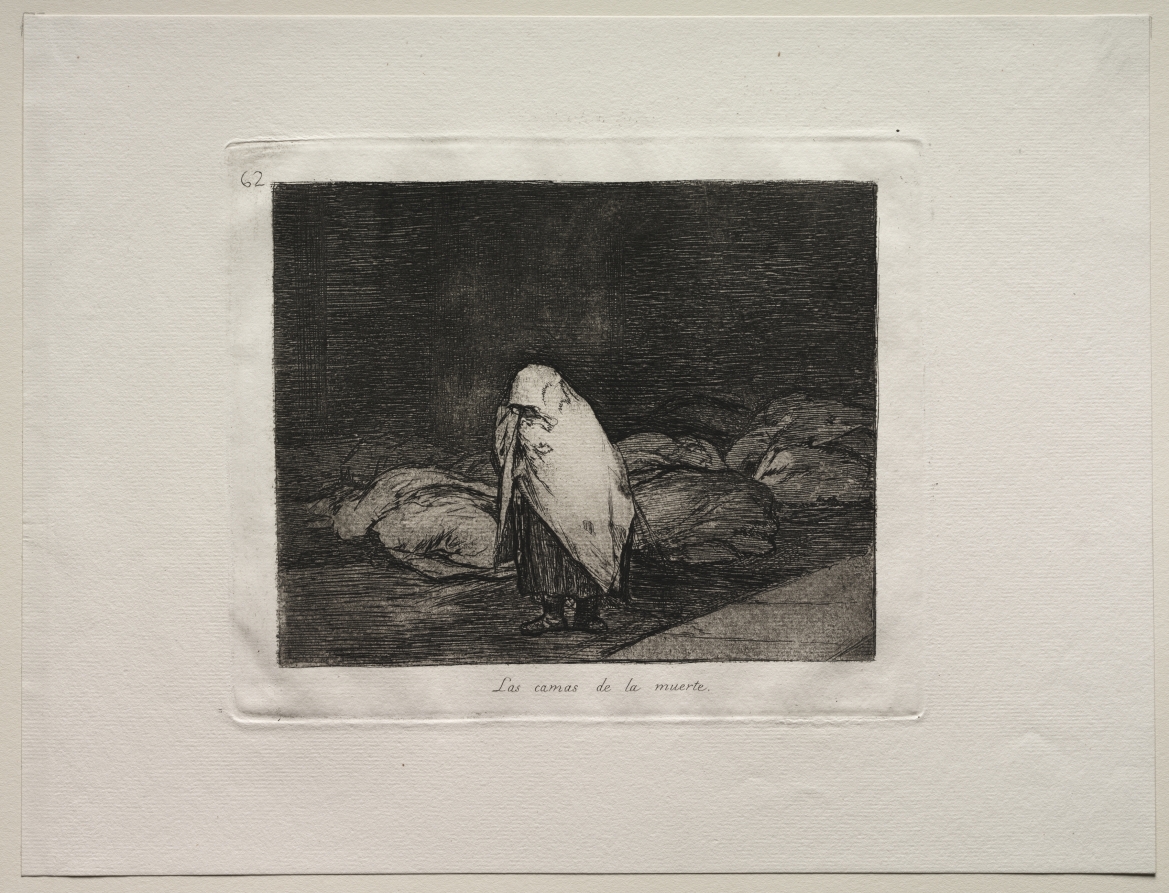
The Beds of Death, plate 62 from The Disasters of War
1812/15, published 1863
Etching, lavis, drypoint, burin and burnishing on ivory wove paper with gilt edges
14.7 × 19 cm (5.8 × 7.5 in)
SEE IT IN PERSON
Not currently on view
In the collection of Art Institute of Chicago, Chicago · as of July 2026
Discussion
FROM THE ART INSTITUTE OF CHICAGO’S CATALOG
Despair and helplessness are symbolized by the central figure in this image, who mourns the dead and shrouded victims littering the enclosure.
Be the first to share your thoughts.
Sign in to join the discussion.
More by Francisco José de Goya y Lucientes
 The Hanged Monk
 Friar Pedro Wrests the Gun from El Maragato
 Friar Pedro Shoots El Maragato as His Horse Runs Off
 Portrait of Isidoro Maiquez
 Winter Scene
 Friar Pedro Offers Shoes to El Maragato and Prepares to Push
 Friar Pedro Clubs El Maragato with the Butt of the Gun
 Friar Pedro Binds El Maragato with a Rope
More like this
 Goya (Francisco de Goya y Lucientes) — Plate 62 from "The D
 Francisco de Goya (Spanish, 1746–1828) — The Horrors of War:
 Mariano Fortuny y Marsal — Arab Watching the Body of his Fri
 Goya (Francisco de Goya y Lucientes) — Plate 45 from "The Di
 Mariano Fortuny y Marsal — Arab Seated, His Hands Crossed on
 Goya (Francisco de Goya y Lucientes) — Plate 52 from "The Di
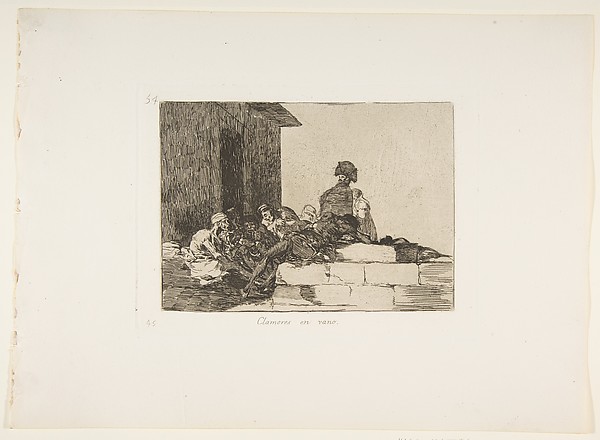 Goya (Francisco de Goya y Lucientes) — Plate 54 from "The Di
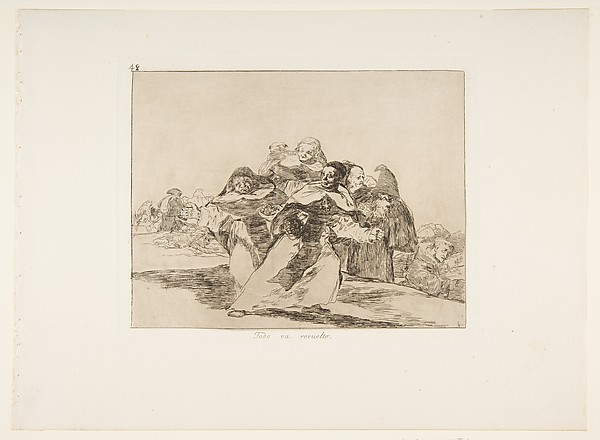 Goya (Francisco de Goya y Lucientes) — Plate 42 from "The Di
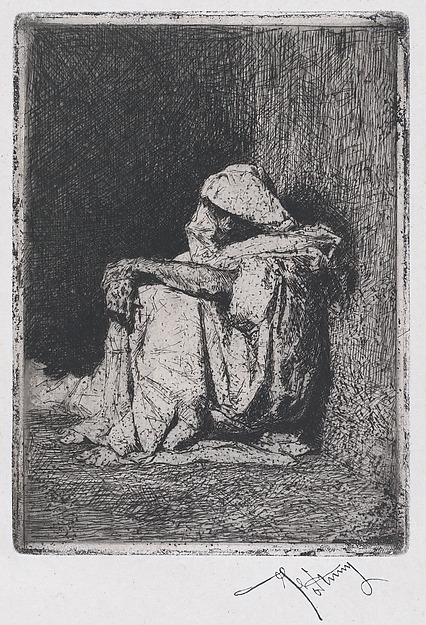 Mariano Fortuny, 1838–1874 — A Moroccan man seated on the gr
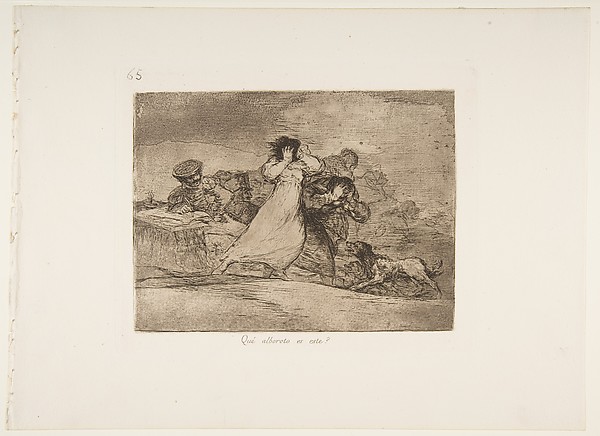 Goya (Francisco de Goya y Lucientes) — Plate 65 from "The D
 Goya (Francisco de Goya y Lucientes) — 'General Folly' from
 Théophile-Alexandre Pierre Steinlen — The Sick Child