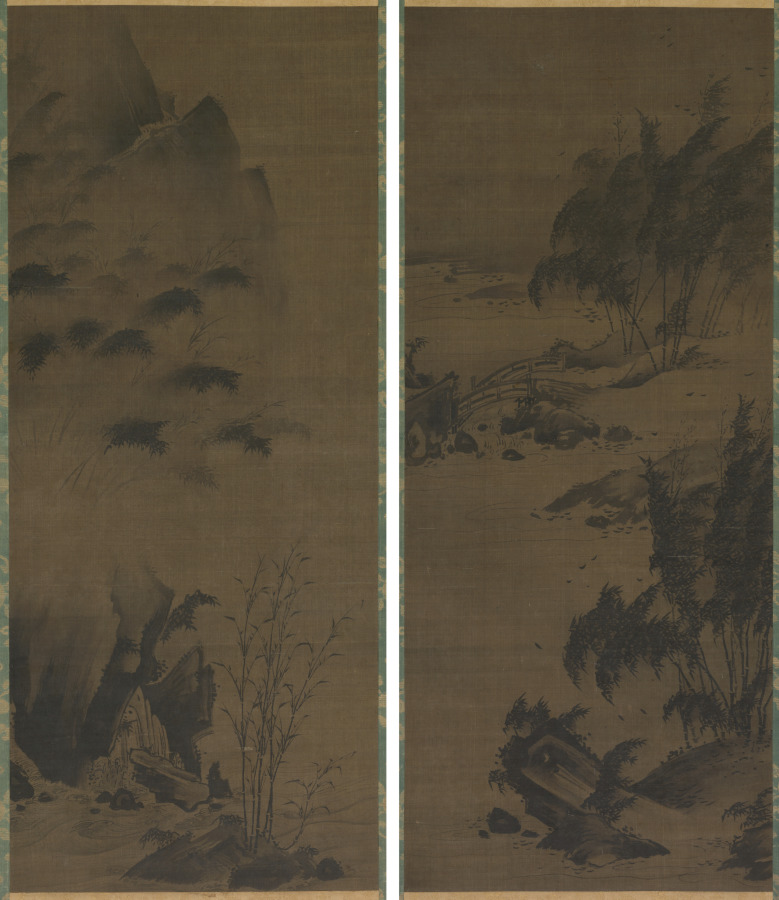
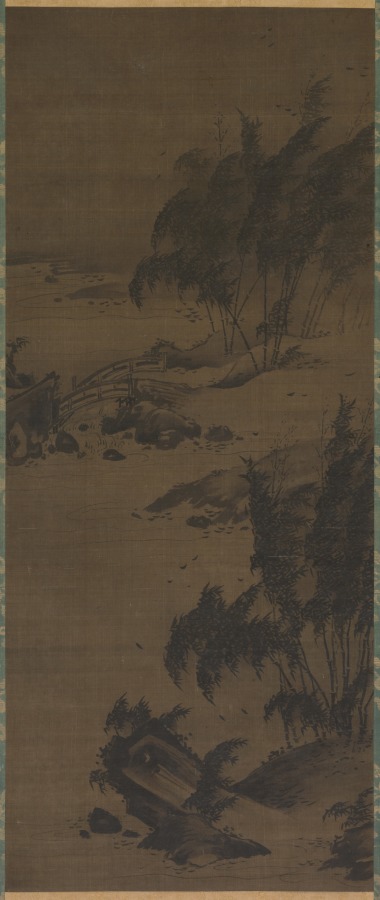
In the collection of Cleveland Museum of Art, Cleveland — check current display status with the museum.
FROM THE CLEVELAND MUSEUM OF ART’S CATALOG
East Asian paintings from China, Korea, and Japan were frequently conceived as sets of multiple images. These sets might have been composed for specific palace or temple rooms, or to portray a specific theme, such as the four seasons. Over time, the original intent of such sets is often lost through damage, changes in ownership, or a variety of other reasons. The identity of the artist can also be lost, but then, sometimes, retrieved. This pair of ink paintings has traditionally been labeled as Japanese and attributed to the 16th-century painter Genga. Since there are no seals or signature of the artist on the painting, this attribution was based on comparisons of brush style with paintings known to be by Genga. More recent study indicates that while the 16th century is an appropriate time frame for the pair, the precise cultural identity of the artist is not certain after all. The dark, eccentric shapes of the rocks and bamboo clusters and the dramatic tonal contrasts evident throughout the composition point to either Korean authorship or influence upon a Japanese painter of the period.
Be the first to share your thoughts.
Sign in to join the discussion.
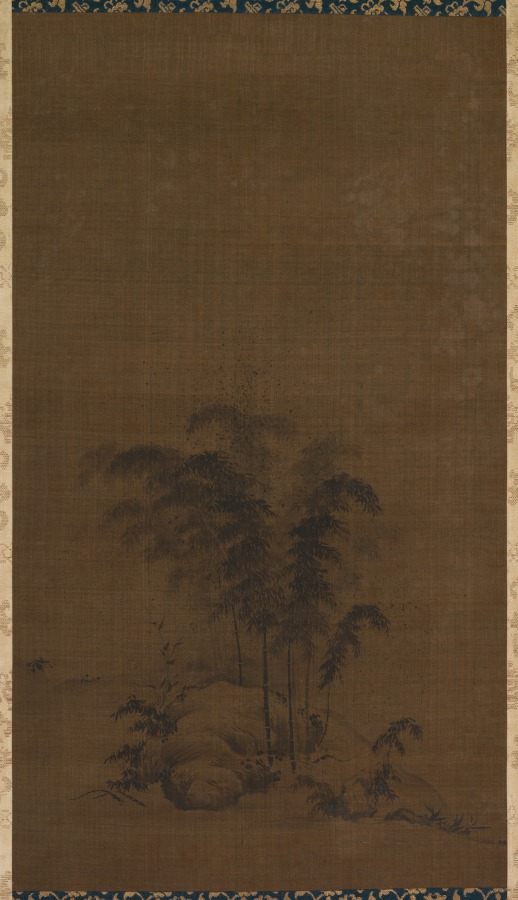 Bamboo Landscape
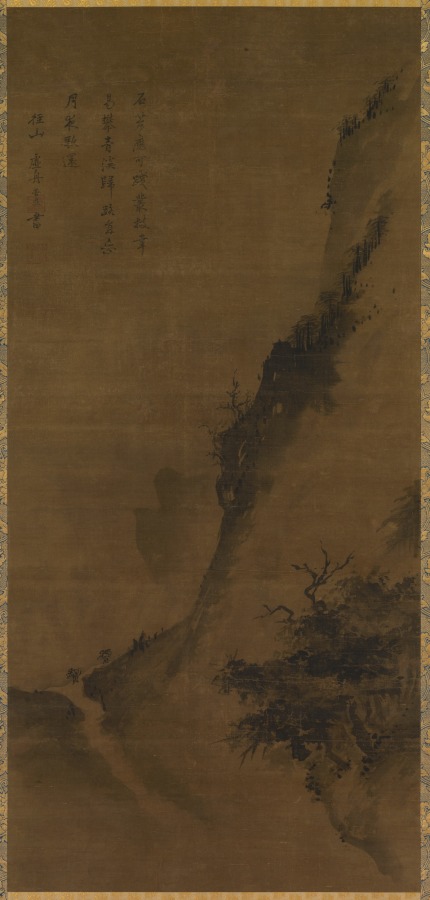 Landscape with Woodcutters Returning Home
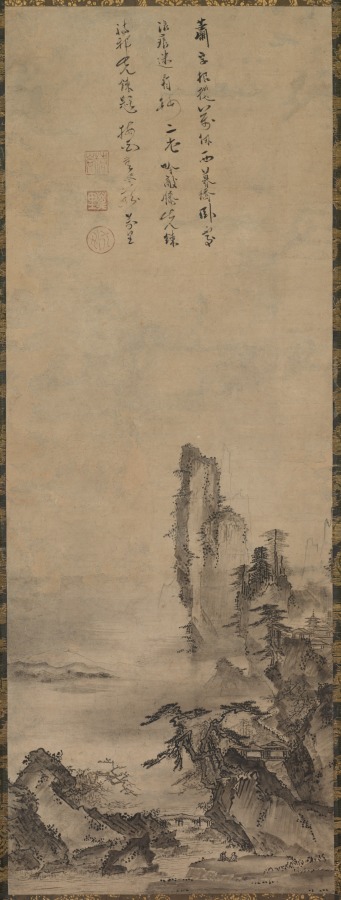 Kenkō Shōkei (Japanese, active 1478–1506) — Lonely Temple an
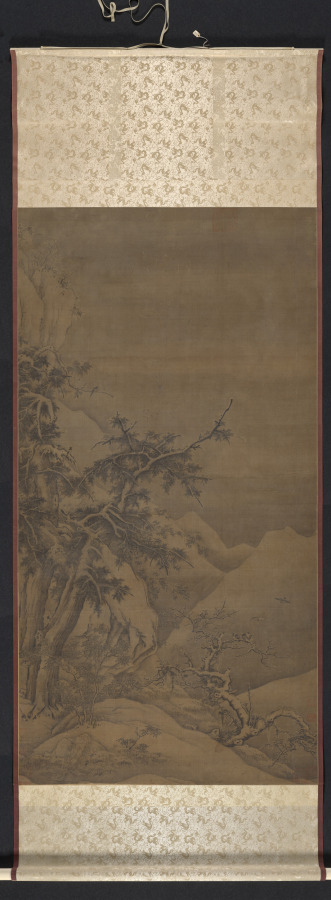 Gao Tao (Chinese, 1100s) — Birds in a Grove in a Mountainous
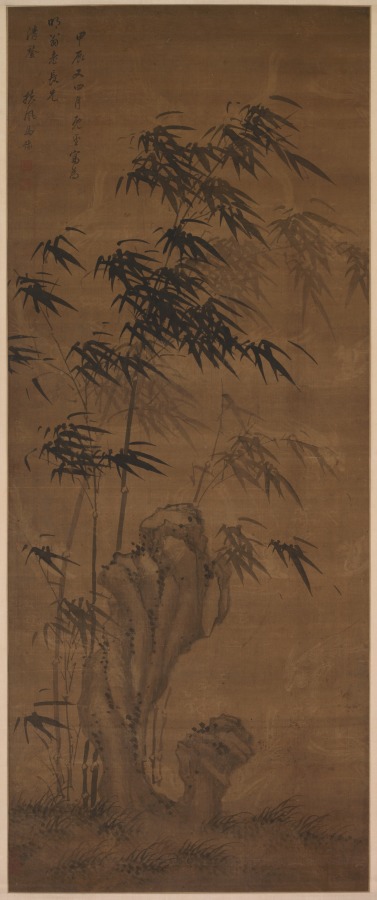 Ma Yu (Chinese, active 1706–1724) — Bamboo in the Wind
 Tawaraya Sōtatsu (Japanese, c. 1570–c. 1640) — The Bird's Ne
 Ink Bamboo
 Shen Zhou — Scholar and Waterfall, in Ming style
 Ma Yuan — Plum Ridge and Distant Peaks (Meiling yaocen 梅嶺遙岑)
 Wang Jianzhang (Chinese, active 1621–1662) — Solitary Colors
 Luo Zhichuan (Chinese, active 1280s–1320s) — Carrying a Qin
 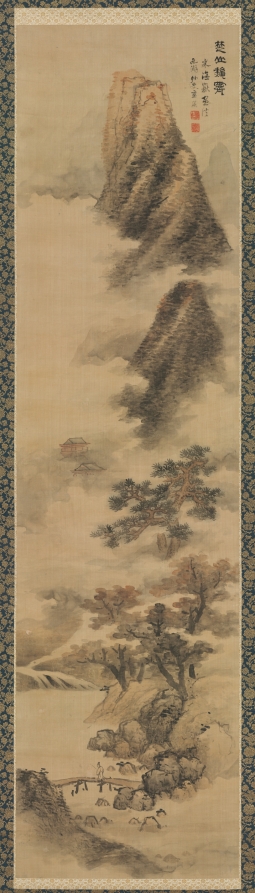 Lan Ying (Chinese, 1585–after 1664) — Clearing Autumn Mists