In the collection of Cleveland Museum of Art, Cleveland — check current display status with the museum.
FROM THE CLEVELAND MUSEUM OF ART’S CATALOG
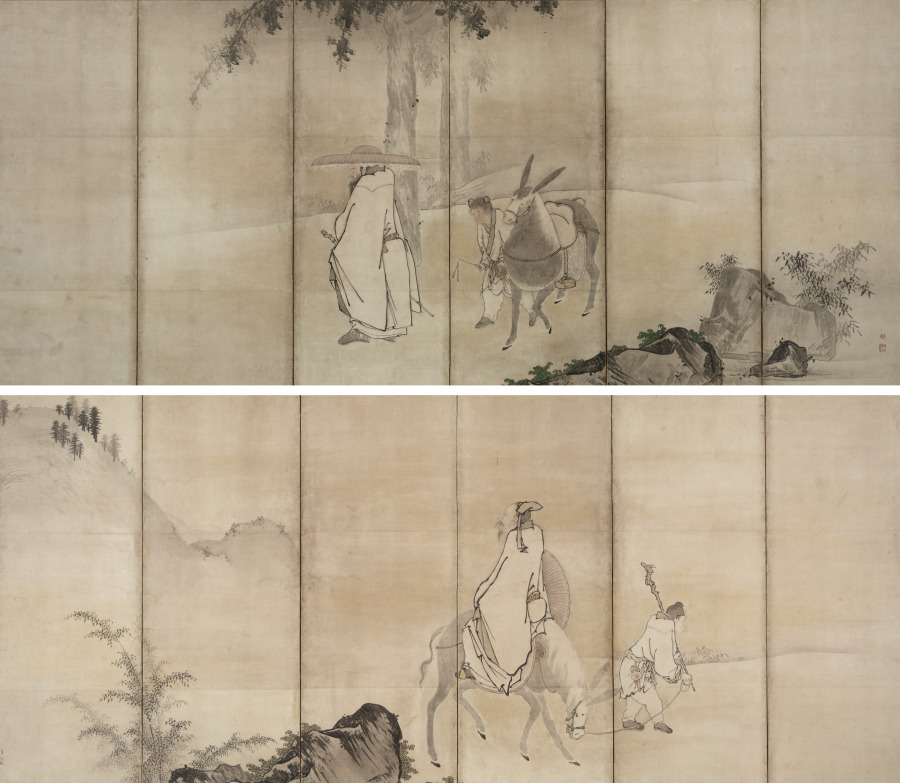
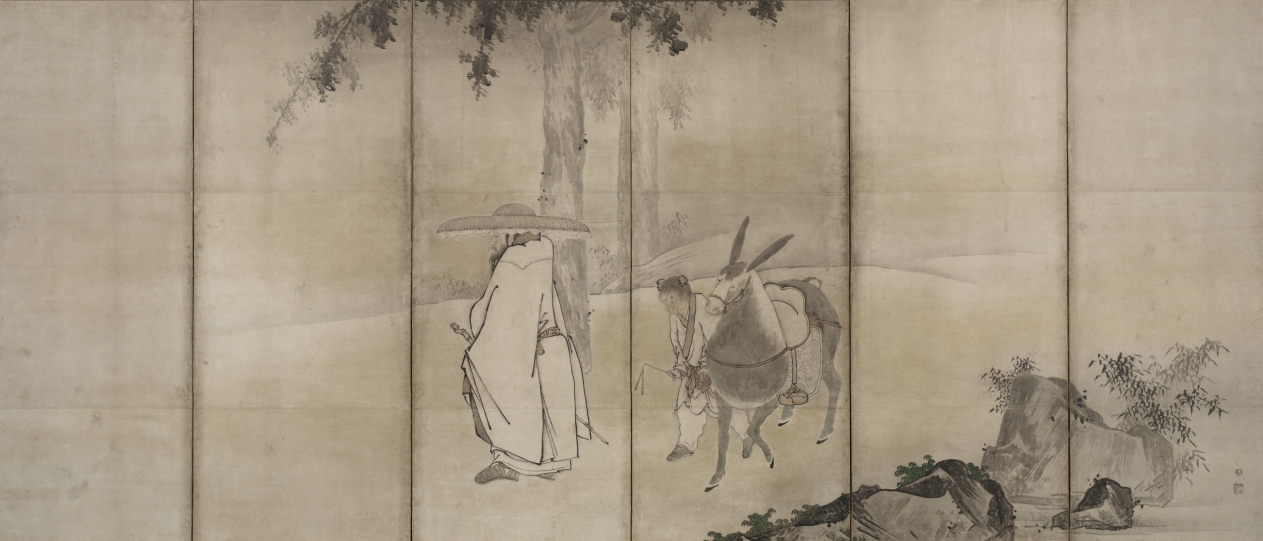
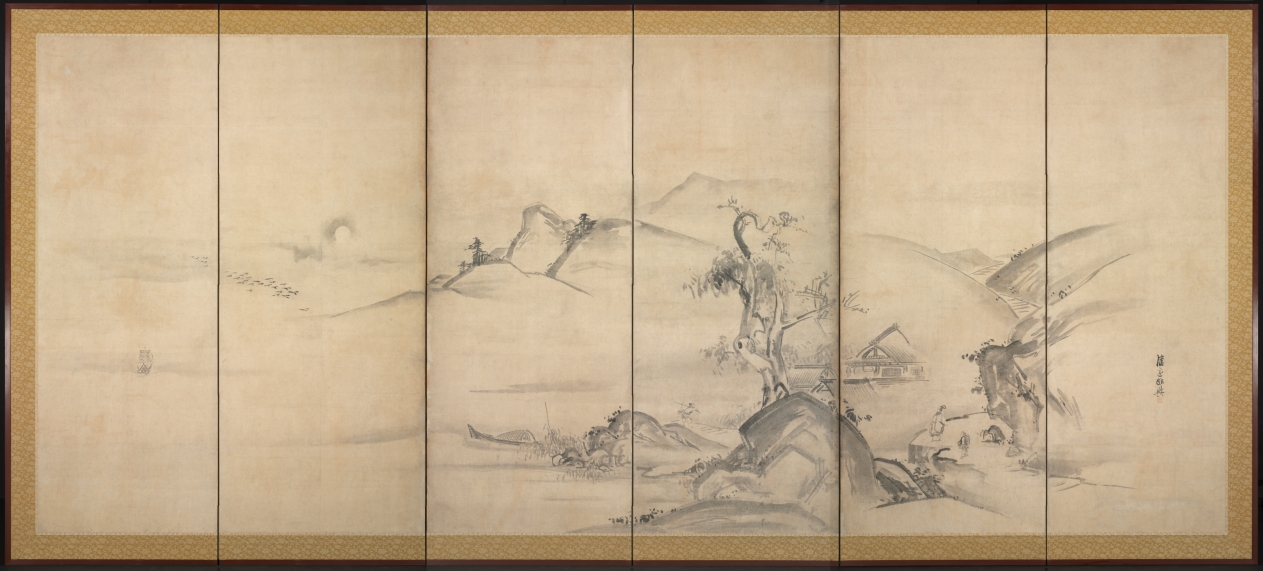
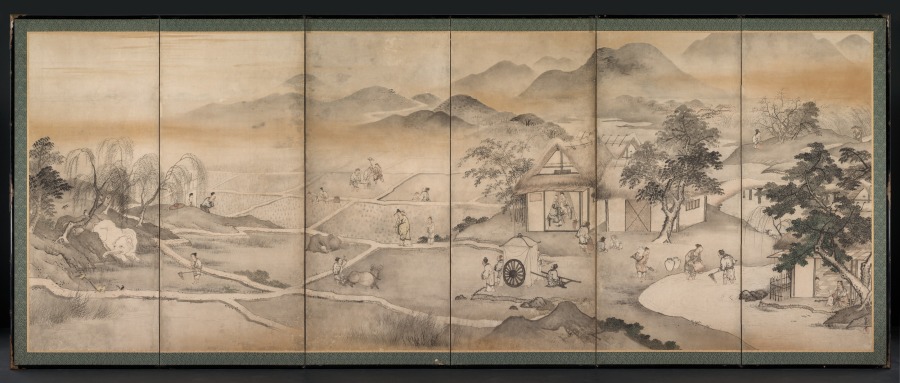
This is one of the pair of screens depicts episodes from the stories of famed Song-dynasty poets Su Shi of the 1000s and Zhou-dynasty official Pan Lang of the 900s. Both men were banished by their rulers for their perceived missteps. Su Shi’s comments on a series of economic reforms were seen as criticism of the emperor. Pan Lang composed an ill-advised verse about one of the king’s horses. In this screen Pan rides backward on his donkey as he returns from exile so that he may have a last look at his now beloved Mount Hua. Su Shi, on the other screen, is shown embarking on his journey into exile. The artist of these screens, Unkoku Tōgan, was the founder of the Unkoku school of painting, which emulated the style of renowned ink painter Sesshū Tōyō (1420–1506). Tōgan was the official painter of the Mori family of what is now Yamaguchi prefecture in the south of Japan.
Be the first to share your thoughts.
Sign in to join the discussion.
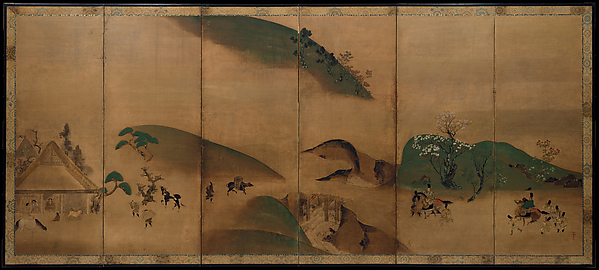 Tawaraya Sōtatsu — 俵屋宗達工房 大原御幸図屏風|Royal Visit to Ōhara, from
 Watanabe Shikō (Japanese, 1683–1755) — Eight Views of the Xi
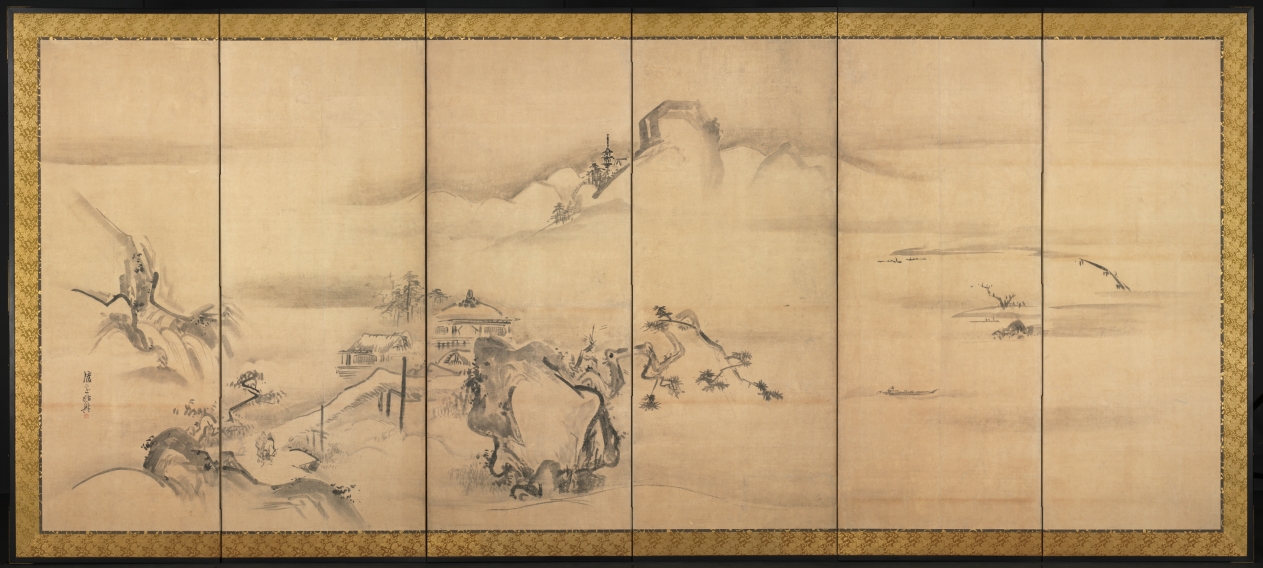 Watanabe Shikō (Japanese, 1683–1755) — Eight Views of the Xi
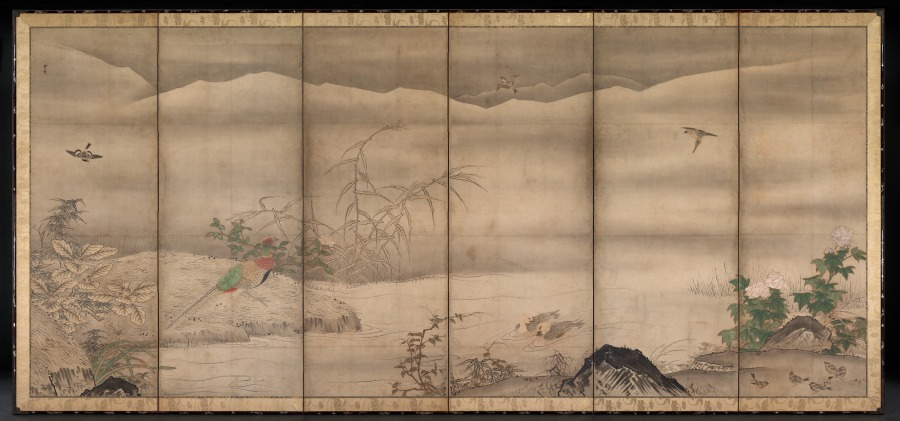 Sesshū Tōyō (Japanese, 1420–1506) — Birds and Flowers in a L
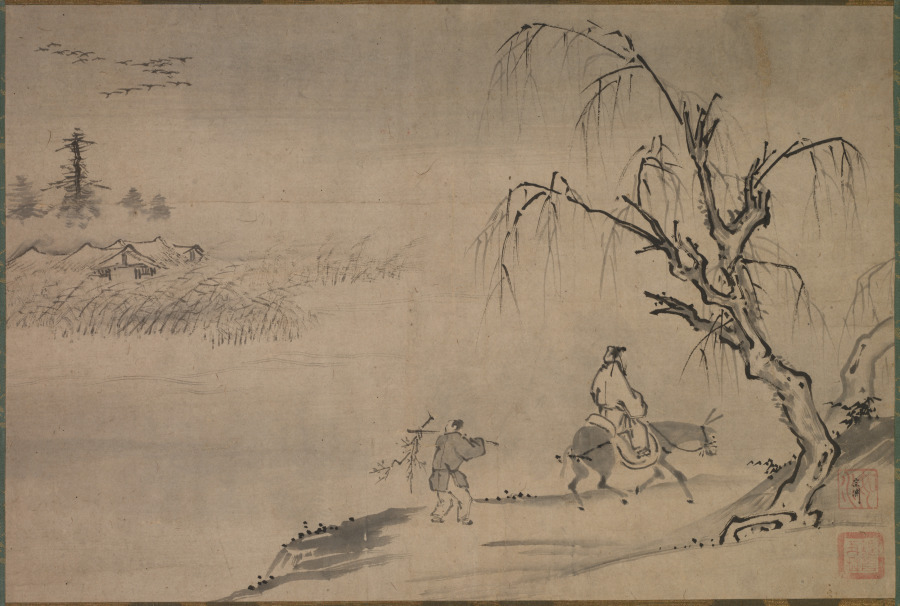 Josui Sōen (Japanese, active c. 1489–1500) — Chinese Literat
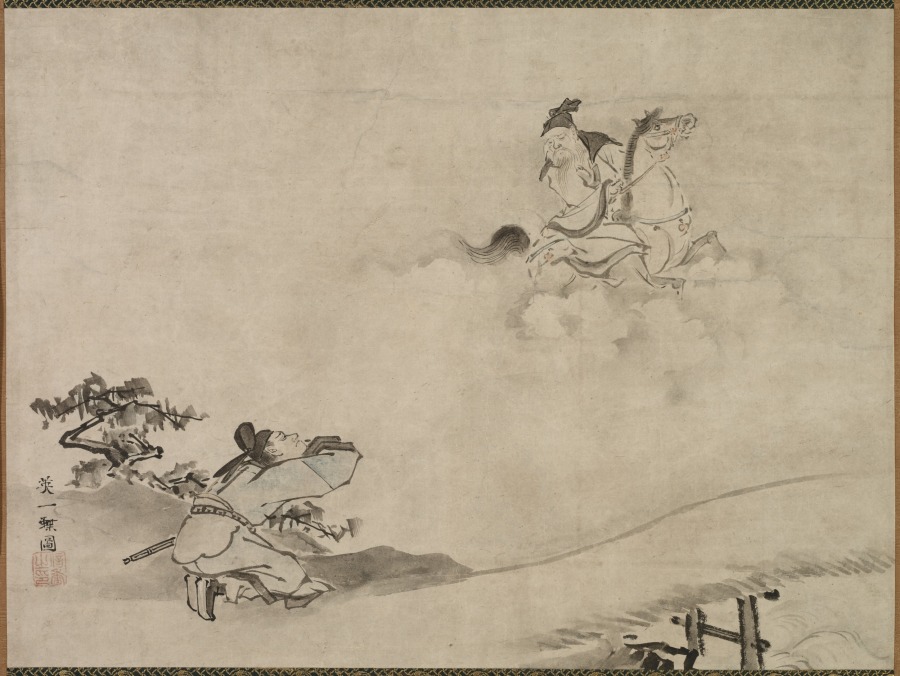 Hanabusa Itchō (Japanese, 1652–1724) — Daoist Immortal
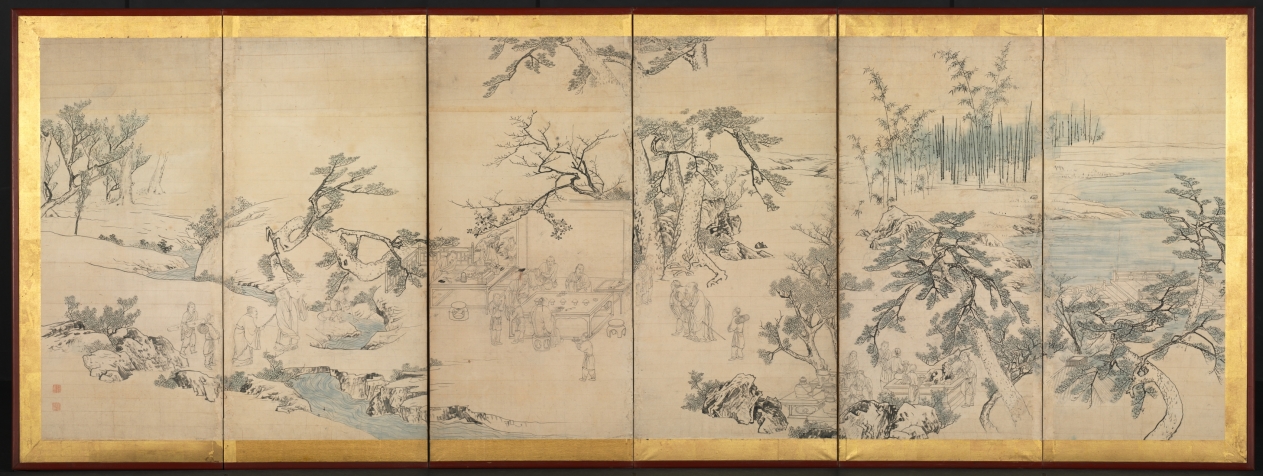 Maruyama Ōkyo (Japanese, 1733–1795) — Literary Gathering in
 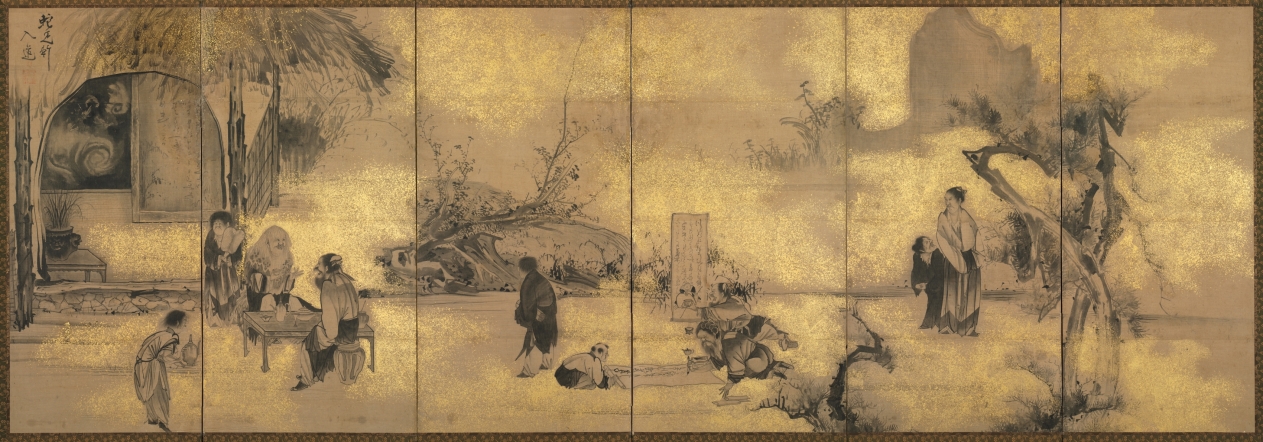 Soga Shōhaku (Japanese, 1730–1781) — The Eight Immortals of
 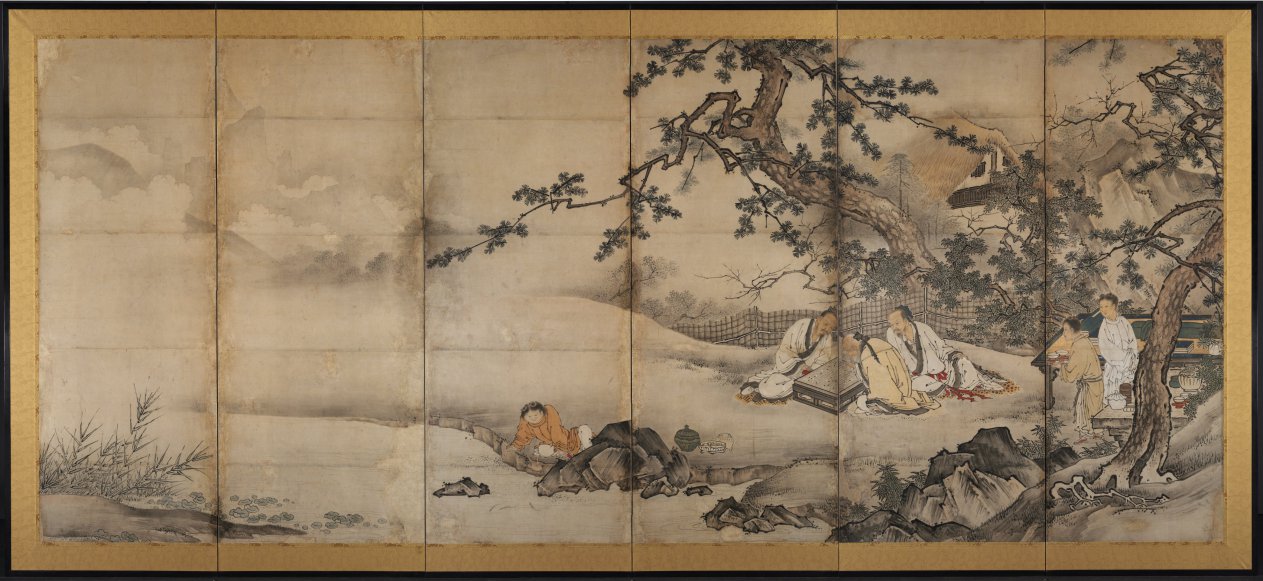 Kano Shōei (Japanese, 1519–1592) — The Four Accomplishments
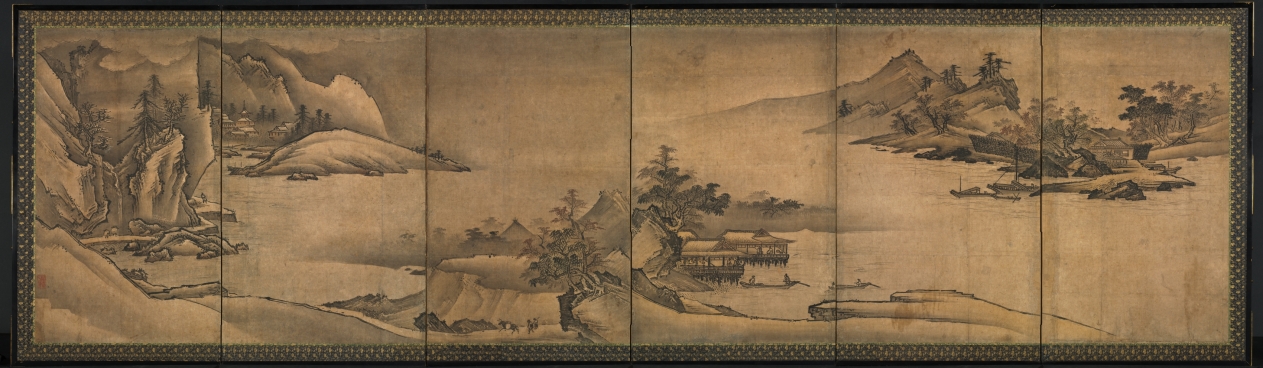 Yi Sumun (Korean, b. c. 1404) — Landscape of the Four Season
 Kusumi Morikage (Japanese, active c. 1620–1690) — Emperor Ya