In the collection of Cleveland Museum of Art, Cleveland — check current display status with the museum.
FROM THE CLEVELAND MUSEUM OF ART’S CATALOG
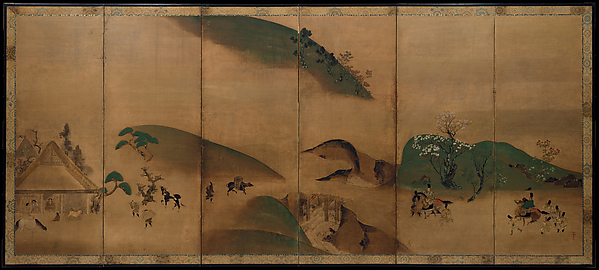
Like many paintings from the Sōtatsu studio, a Kyoto-based atelier that ran the shop Tawaraya, this one is done in ink, mineral colors, and gold, and is formally reminiscent of 12th- and 13th-century paintings associated with the Japanese aristocracy. It depicts a man on horseback with two attendants crossing a bridge that once spanned the Kino River in Sano in eastern Wakayama Prefecture. The composition was inspired by a poem by Fujiwara no Teika (1162–1241) that translates as follows: I stop my horse, but there is no shelter as I brush off my sleeves at Sano Crossing in the evening snow.
Be the first to share your thoughts.
Sign in to join the discussion.
 Tosa Mitsuyoshi — Chapter Twenty-Five “Fireflies” from The T
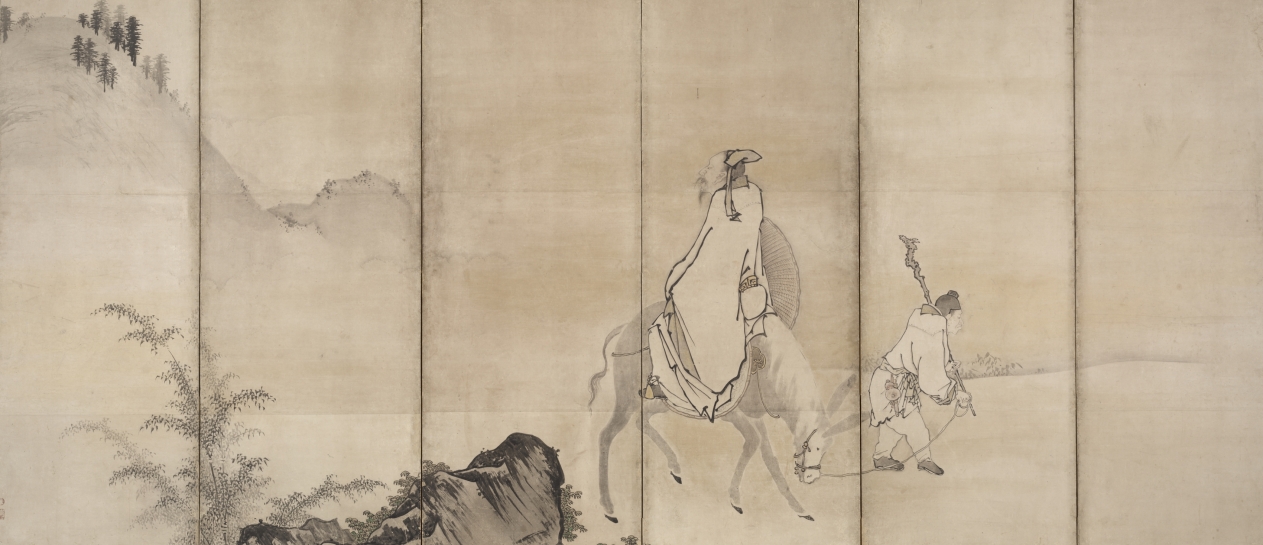 Unkoku Tōgan (Japanese, 1547–1618) — Pan Lang (Han Rō)
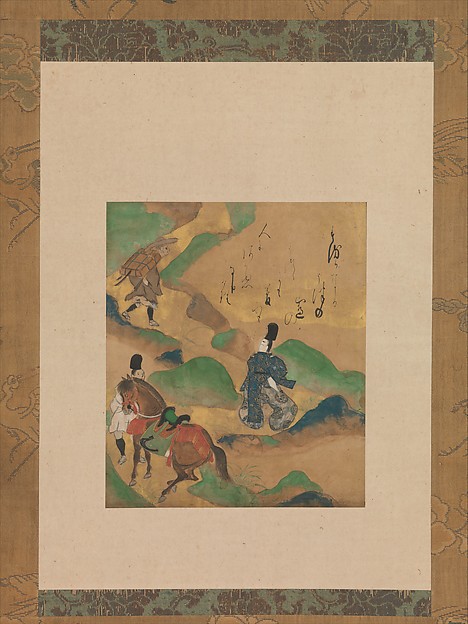 Tawaraya Sōtatsu|Takeuchi Toshiharu
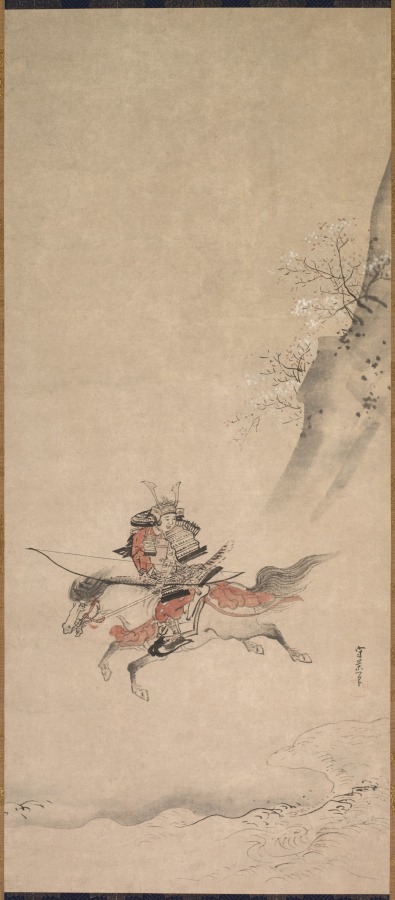 Kusumi Morikage (Japanese, active c. 1620–1690) — A Samurai
 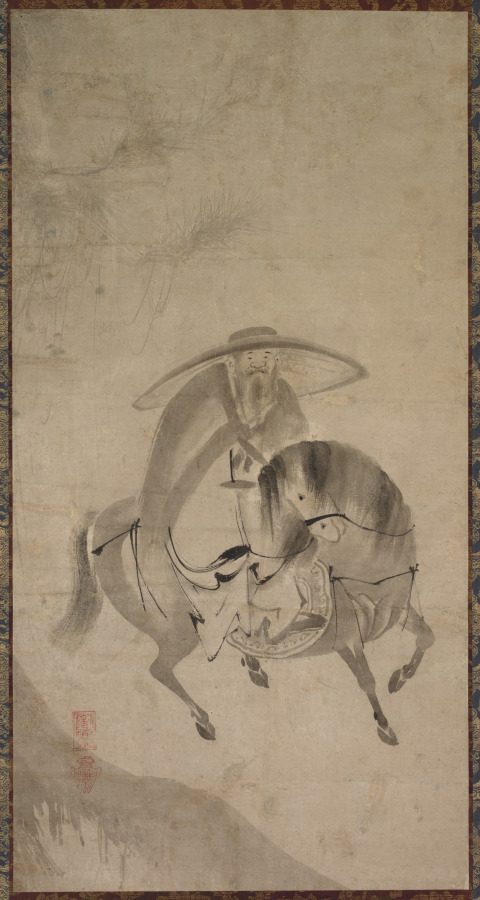 Reietsu (Japanese, active late 1500s to early 1600s) — Su Do
 Unidentified artist|Zhao Mengfu — 明/清 佚名 趙孟頫(僞款) 西成歸樂圖 卷|Hap
 Toriyama Sekien — 鳥山石燕筆 「翁」図|The Auspicious Noh Dance "Okina
 Utagawa Toyohiro
 Zhao Yong — 清 佚名 趙雍(僞款) 馬術圖 卷|Horsemanship demonstration
 Cui Zizhong (Chinese, 1574–1644) — Xu Jingyang Moving His Fa
 Matsumura Goshun — 蓮生法師図|Monk Renshō Riding His Horse Backwa
 Yōshū (Hashimoto) Chikanobu