Francisco José de Goya y Lucientes
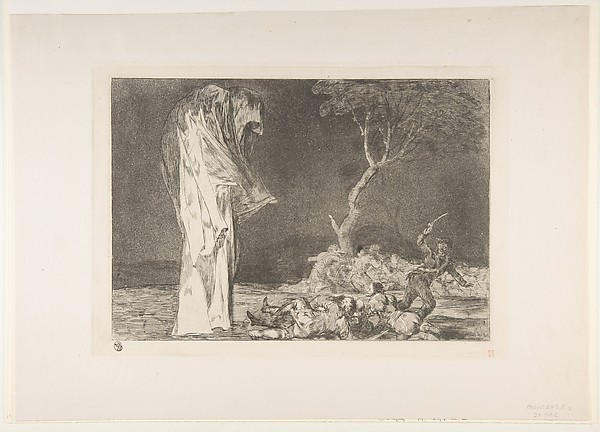
Nothing. The Event Will Tell, plate 69 from The Disasters of War
1812/20, published 1863
Etching, burnished aquatint, lavis, drypoint, and burin on ivory wove paper with gilt edges
14.4 × 19.7 cm (5.7 × 7.8 in)
SEE IT IN PERSON
Not currently on view
In the collection of Art Institute of Chicago, Chicago · as of July 2026
Discussion
FROM THE ART INSTITUTE OF CHICAGO’S CATALOG
The sign resting on the skeletal remains reads “nada,” which means “nothing” in Spanish. Whether referring to the outcome of the war and suffering, the vindication of the dead, or the promise of an afterlife, the nihilism communicated in this image is some of the most intense in the series.
Be the first to share your thoughts.
Sign in to join the discussion.
More by Francisco José de Goya y Lucientes
 The Hanged Monk
 Friar Pedro Wrests the Gun from El Maragato
 Friar Pedro Shoots El Maragato as His Horse Runs Off
 Portrait of Isidoro Maiquez
 Winter Scene
 Friar Pedro Offers Shoes to El Maragato and Prepares to Push
 Friar Pedro Clubs El Maragato with the Butt of the Gun
 Friar Pedro Binds El Maragato with a Rope
More like this
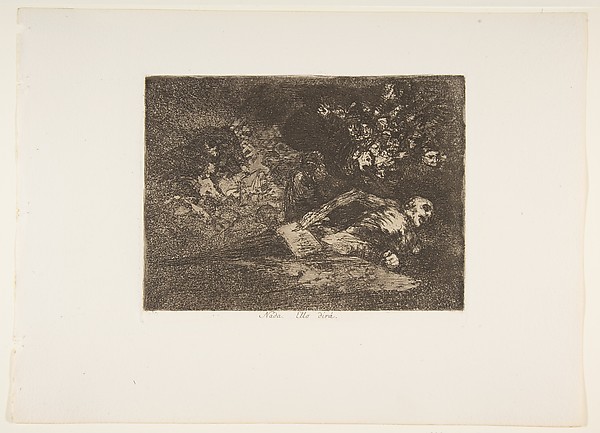 Goya (Francisco de Goya y Lucientes) — Plate 69 from "The D
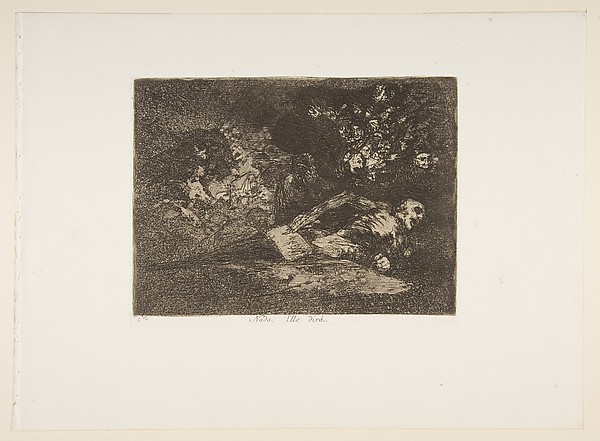 Goya (Francisco de Goya y Lucientes) — Plate 69 from "The Di
![Plate 10 from "The Disasters of War" (Los Desastres de la Guerra): 'Nor [do these] either' (Tampoco)](https://images.metmuseum.org/CRDImages/dp/web-large/DP817149.jpg) Goya (Francisco de Goya y Lucientes) — Plate 10 from "The Di
Goya (Francisco de Goya y Lucientes) — Plate 10 from "The Di Goya (Francisco de Goya y Lucientes) — Plate 16 from "The Di
 Goya (Francisco de Goya y Lucientes) — Plate 22 from "The Di
 Goya (Francisco de Goya y Lucientes) — Plate 12 from "The Di
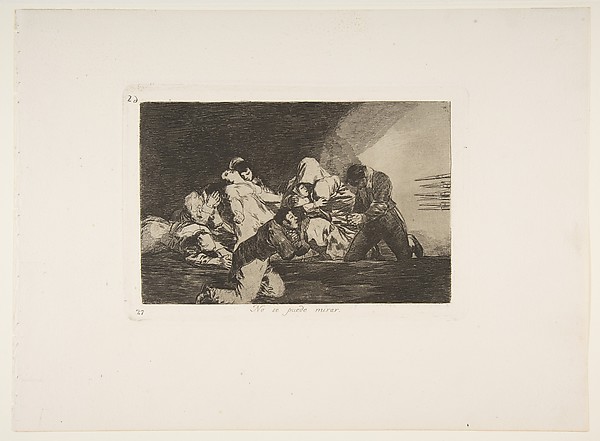 Goya (Francisco de Goya y Lucientes) — Plate 26 from "The D
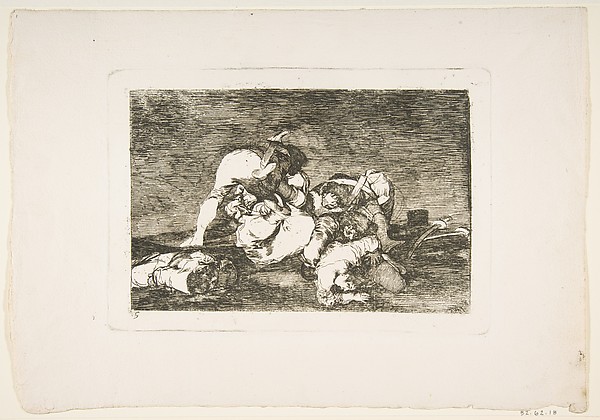 Goya (Francisco de Goya y Lucientes) — Plate 10 from "The Di
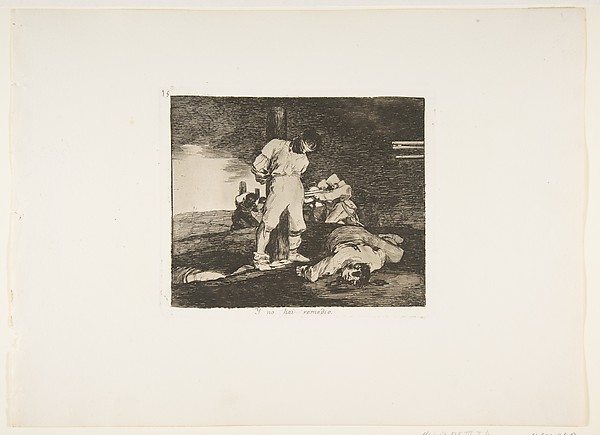 Goya (Francisco de Goya y Lucientes) — Plate 15 from "The Di
![Plate10 from "The Disasters of War" (Los Desastres de la Guerra): Nor [do these] either (Tampoco)](https://images.metmuseum.org/CRDImages/dp/web-large/DP817144.jpg) Goya (Francisco de Goya y Lucientes) — Plate10 from "The Dis
Goya (Francisco de Goya y Lucientes) — Plate10 from "The Dis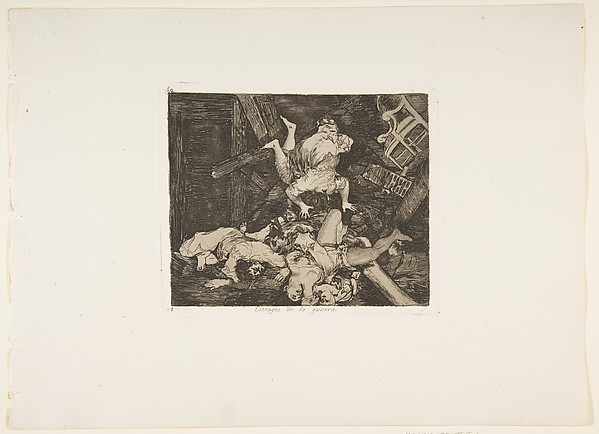 Goya (Francisco de Goya y Lucientes) — Plate 30 from "The Di
 Goya (Francisco de Goya y Lucientes) — 'Folly of Fear' from