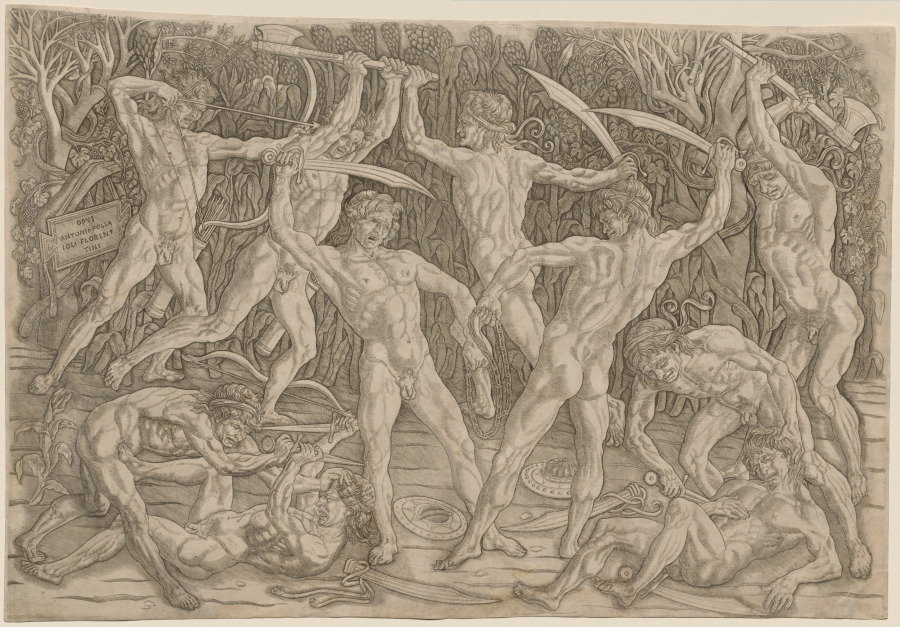
Battle of the Naked Men
1489-95
Engraving in black on ivory laid paper
40.4 × 58.9 cm (15.9 × 23.2 in)
SEE IT IN PERSON
Not currently on view
In the collection of Art Institute of Chicago, Chicago · as of July 2026
Discussion
FROM THE ART INSTITUTE OF CHICAGO’S CATALOG
A group of men, arranged more or less symmetrically, engage in violent combat against a background of dense vegetation. While the reason for their fighting is unknown, this unusually large engraving was the most influential Italian print of the 15th century, engendering numerous copies and emulations. Antonio Pollaiuolo, a goldsmith and sculptor, probably executed it to advertise his skills in metalworking as well as his ability to convincingly depict the nude male body in motion, a central concern of Italian Renaissance artists.
Be the first to share your thoughts.
Sign in to join the discussion.
More by Antonio Pollaiuolo
More like this
 Antonio del Pollaiuolo (Italian, 1431/32–1498) — Battle of t
 Cristofano Robetta — Allegory of Carnal Love
 Andrea Mantegna — Bacchanal with Silenus
 Allaert Claesz. (Netherlandish, active c. 1520–26) — Fight b
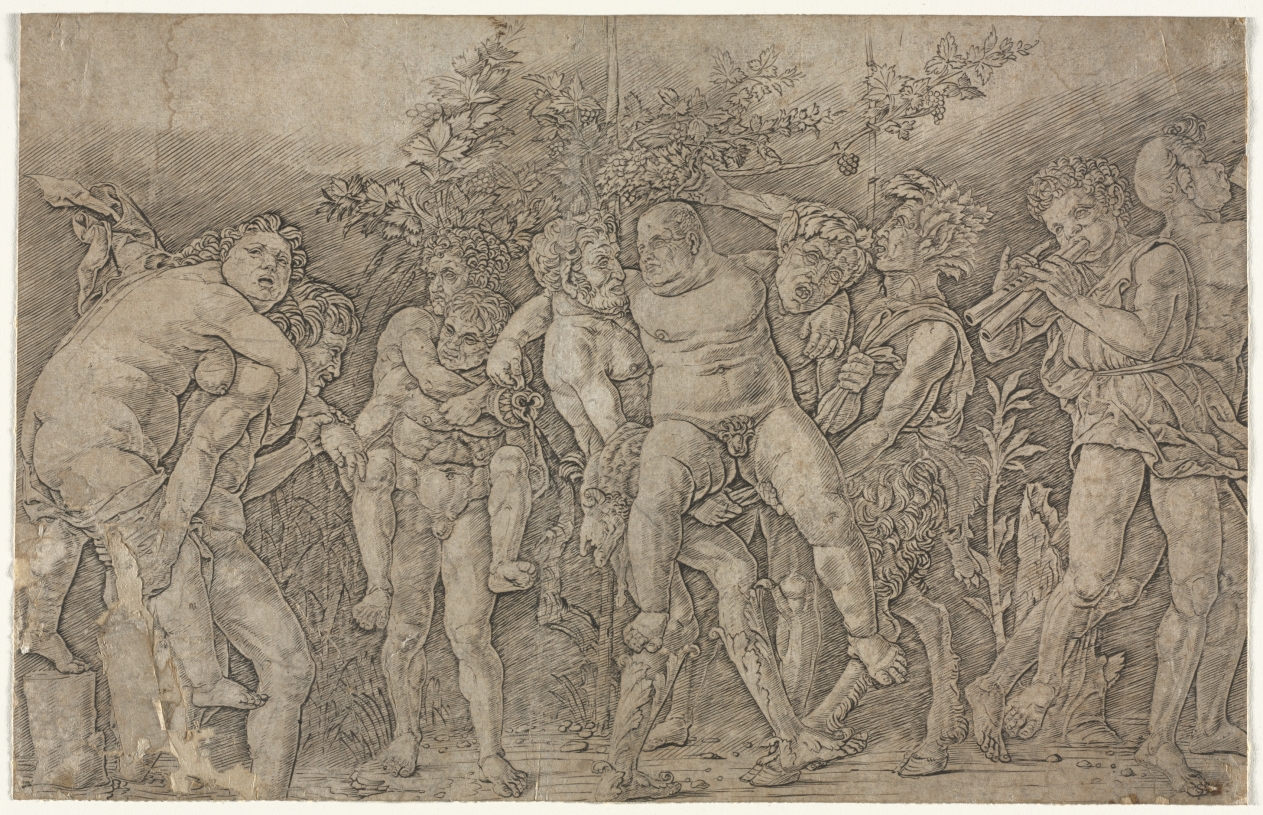 Andrea Mantegna (Italian, about 1431–1506) — Bacchanal with
  Jacopo de' Barbari — Three Captives
 Daniel Hopfer, I — The Bacchanal with a Wine Vat
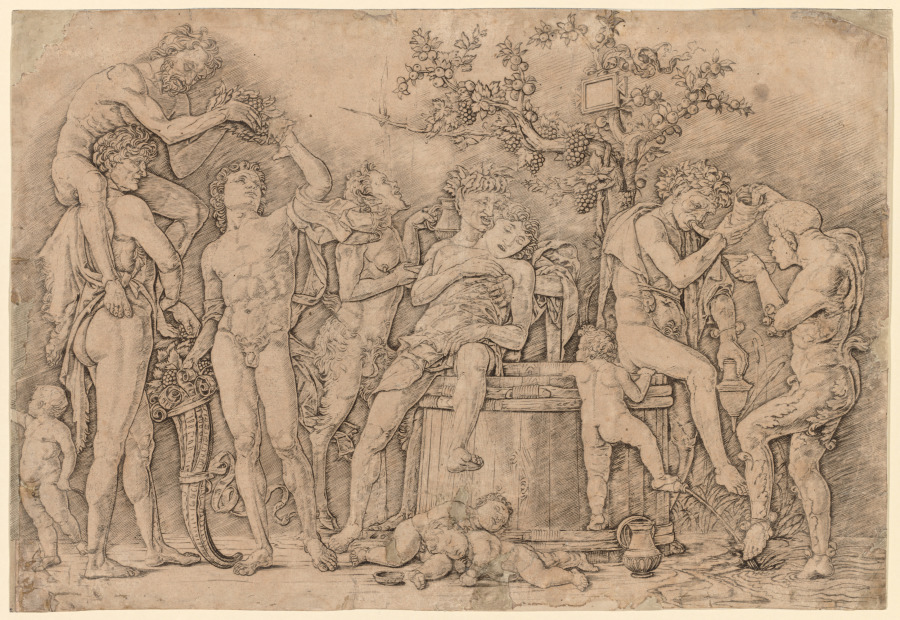 Andrea Mantegna (Italian, about 1431–1506) — Bacchanal with
 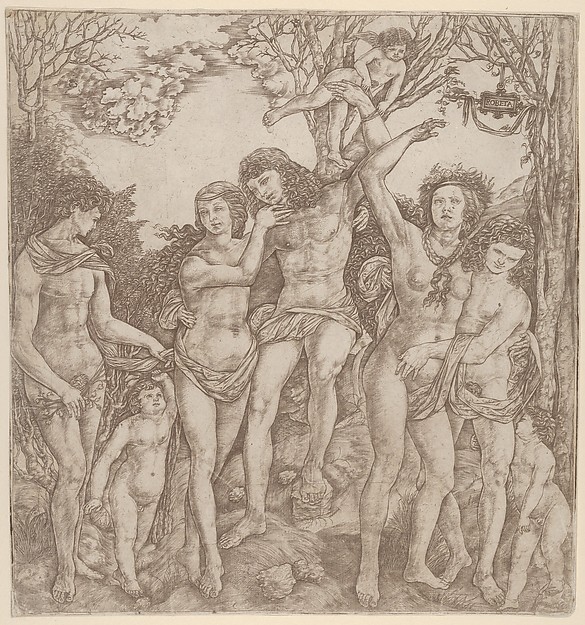 Cristofano di Michele Martini (Il Robetta) — Allegory of the
 Andrea Mantegna — Bacchanal with a Wine Vat
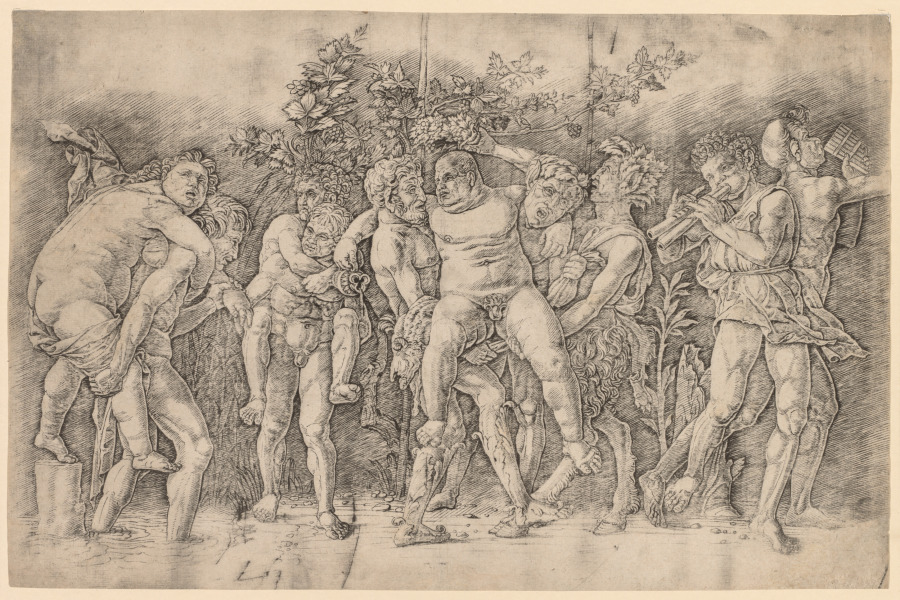 Andrea Mantegna (Italian, about 1431–1506) — Bacchanal with
  Baccio Baldini, Circle of — Inferno According to Dante