The Water Fan
SEE IT IN PERSON
Not currently on view
In the collection of Art Institute of Chicago, Chicago · as of July 2026
Discussion
FROM THE ART INSTITUTE OF CHICAGO’S CATALOG
The Water Fan depicts a young black man intently searching for coral using a glass-bottomed bucket. Referred to as a “water glass” or “sponge glass,” this device was used to stabilize the surface of moving water in order to improve visibility. Homer may have been attracted to the subject because it draws attention to the constantly moving surface of the water as well as its transparency, aspects of the sea that especially intrigued him in the Bahamas. Like The Sponge Diver (1898/99; MFA Boston), this work originally had more visible red washes in the water, hinting at the pink coral beneath the surface. While these areas have faded, the fluid strokes of darker blue over layers of transparent turquoise are effective in suggesting the play of light, both direct and reflected, over water. Homer depicted light shimmering on the ocean using watercolor paper with a heavy twill texture in The Water Fan . The diagonal pattern of the sheet, which runs from top right to lower left, was imparted during manufacture by the papermaker’s woven wire screen that supported the paper pulp during sheet formation. The opposite side is relatively smooth. A truncated watermark reading “J WHAT,” for J Wha
Be the first to share your thoughts.
Sign in to join the discussion.
More by Winslow Homer




More like this
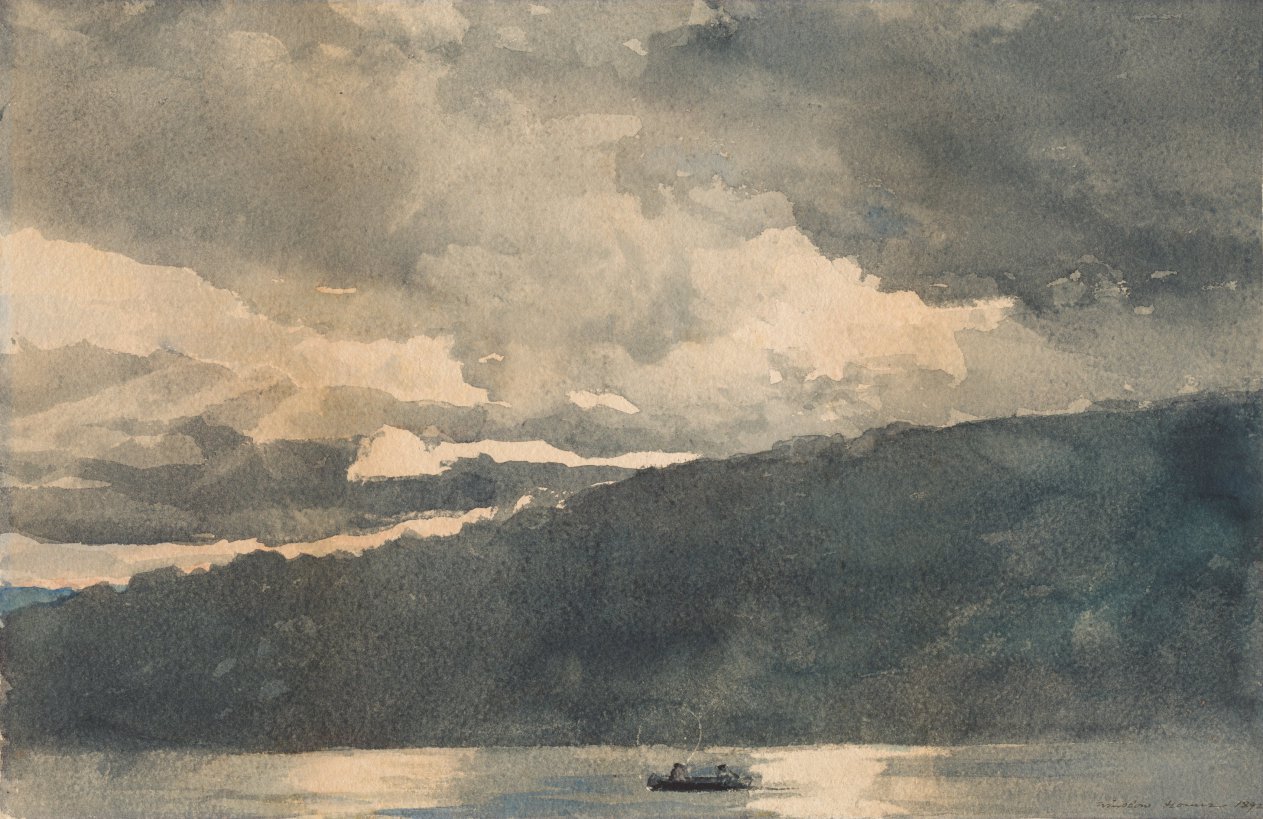 Winslow Homer (American, 1836–1910) — Mink Lake, Adirondacks
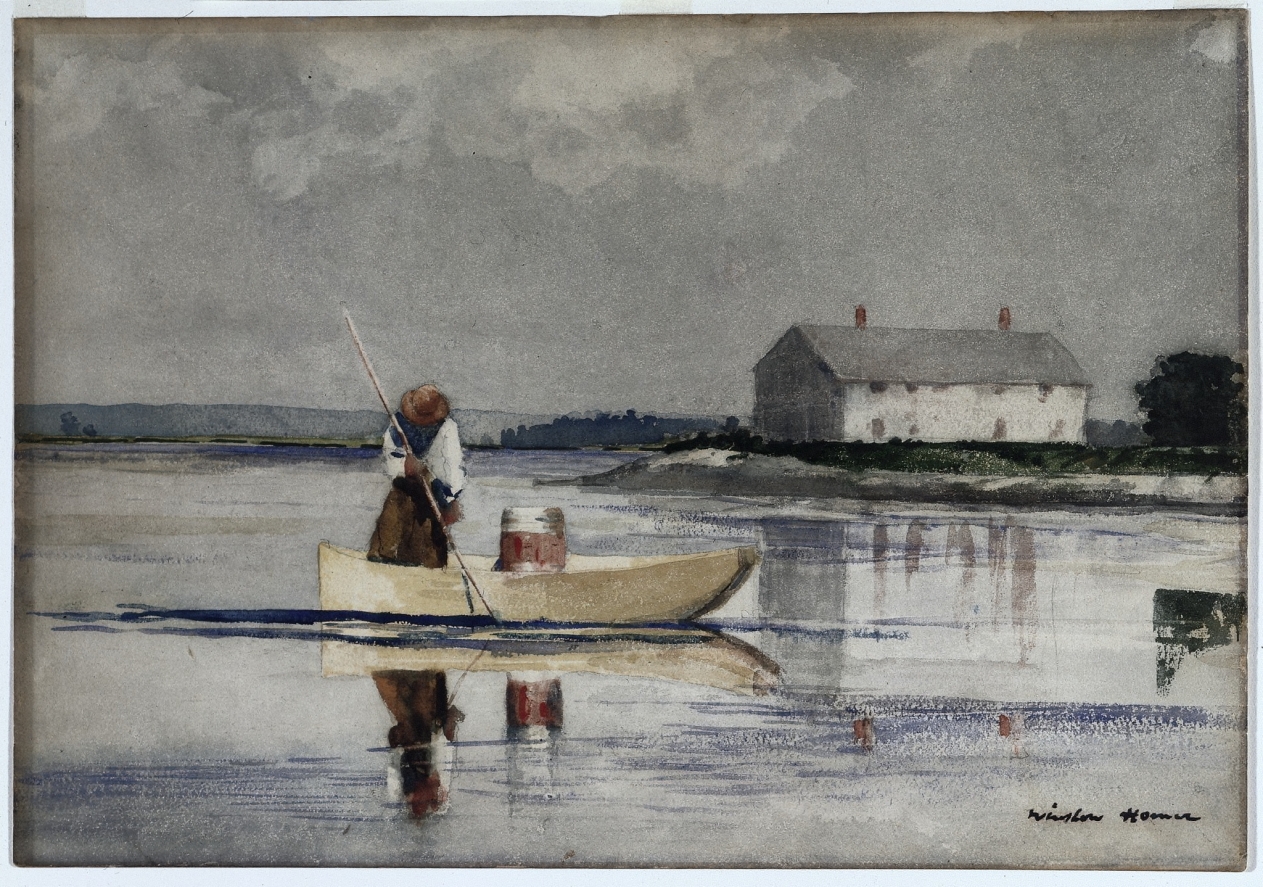 Winslow Homer (American, 1836–1910) — Spearing Eels
 Henri-Edmond Cross (Henri-Edmond Delacroix) — Marine Scene (
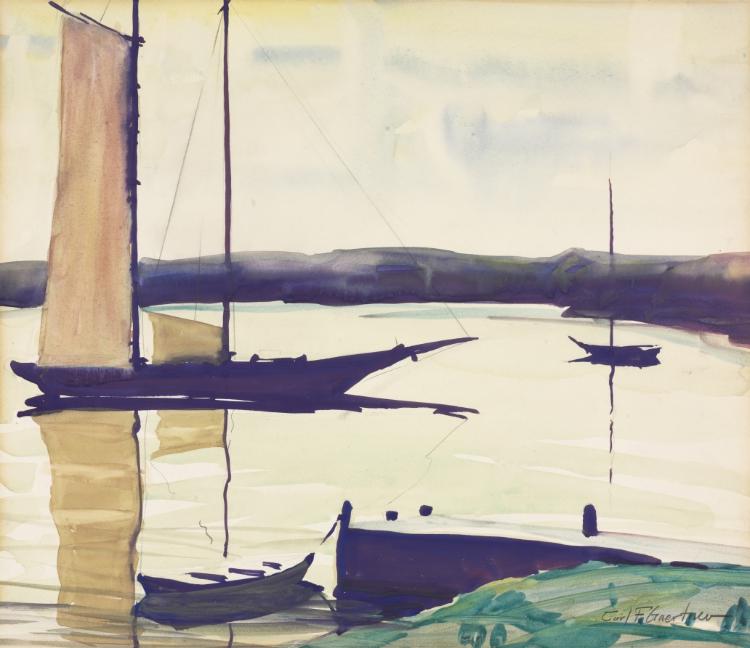 Carl Gaertner (American, 1898–1952) — The Harbor
 Anton Mauve — Zandschuit
 Johan Hendrik Weissenbruch — View on the Beach
 James McNeill Whistler — Trouville (Grey and Green, the Silv
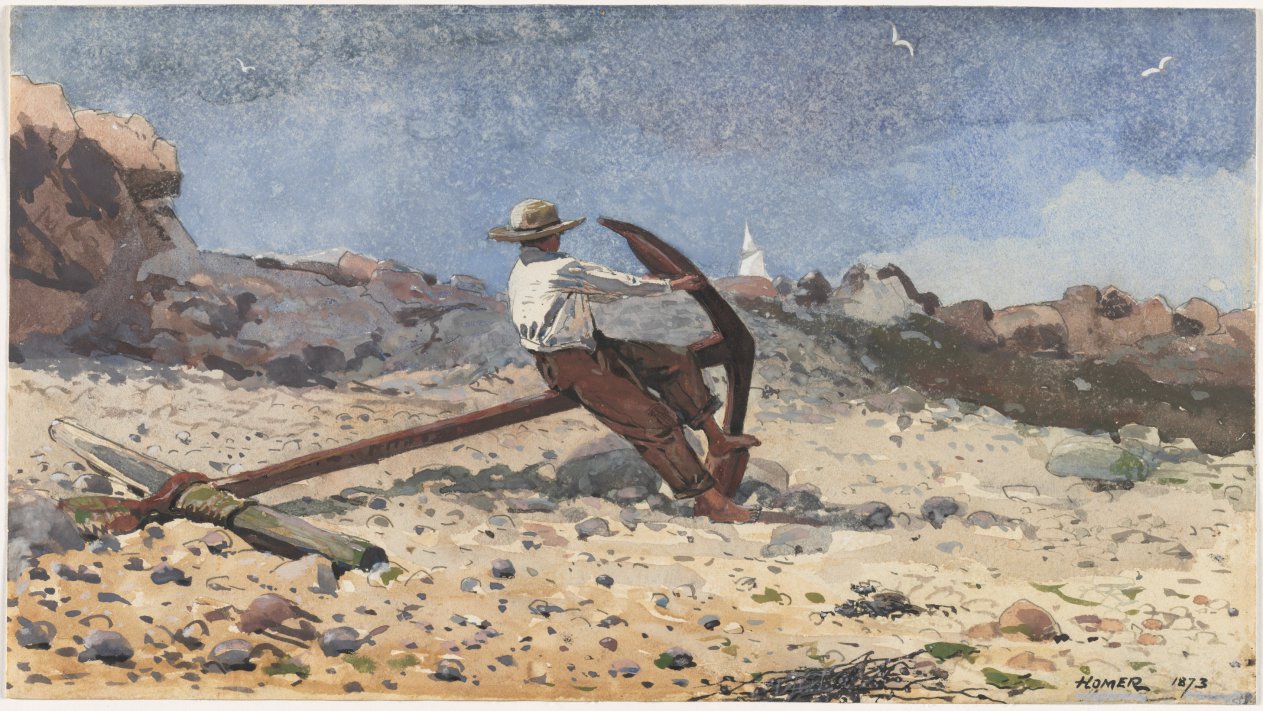 Winslow Homer (American, 1836–1910) — Boy with Anchor
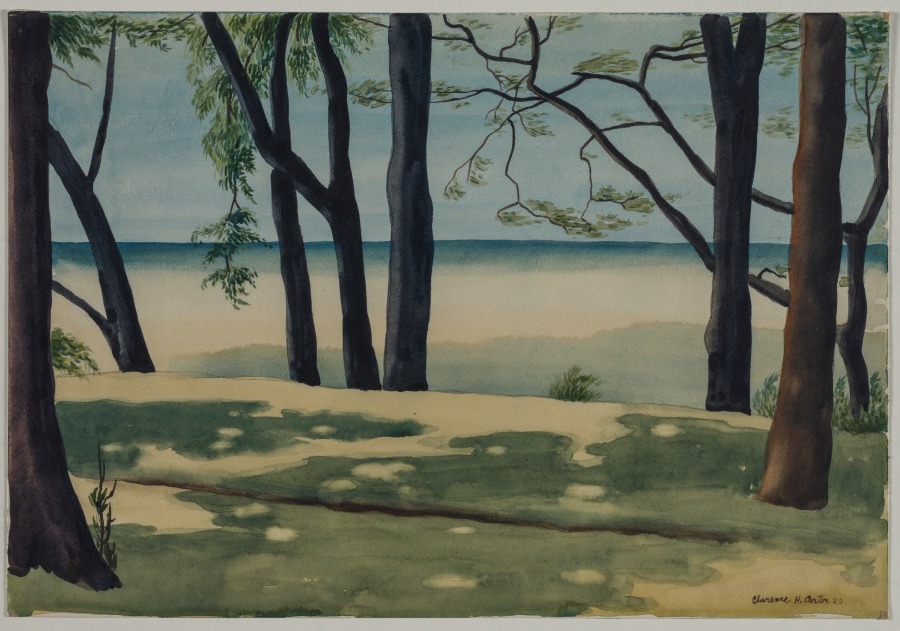 Clarence Holbrook Carter (American, 1904–2000) — Mysterious
 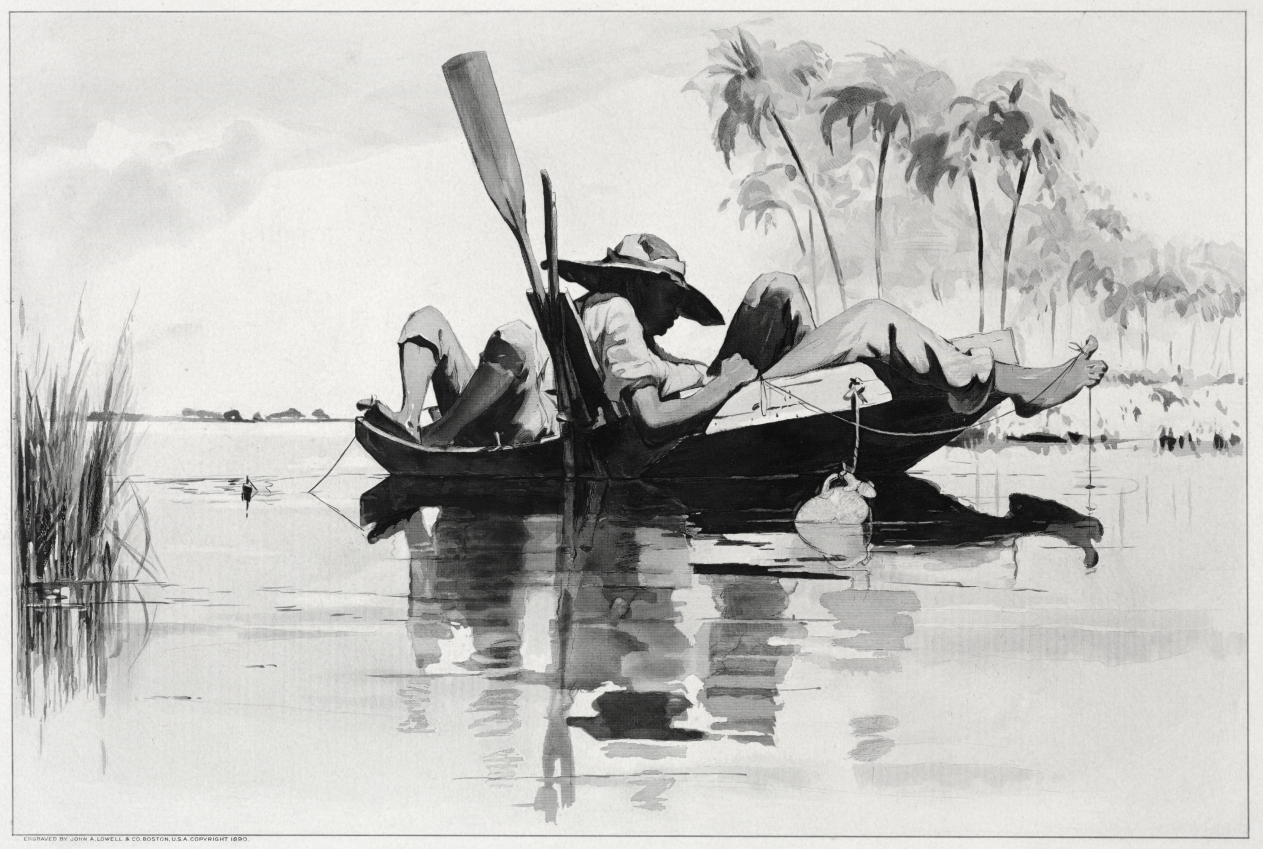 Winslow Homer (American, 1836–1910) — A Fishing Party
 Jacob Maris — Visserspink aan het strand
 Odilon Redon — Flower Clouds