Francisco José de Goya y Lucientes
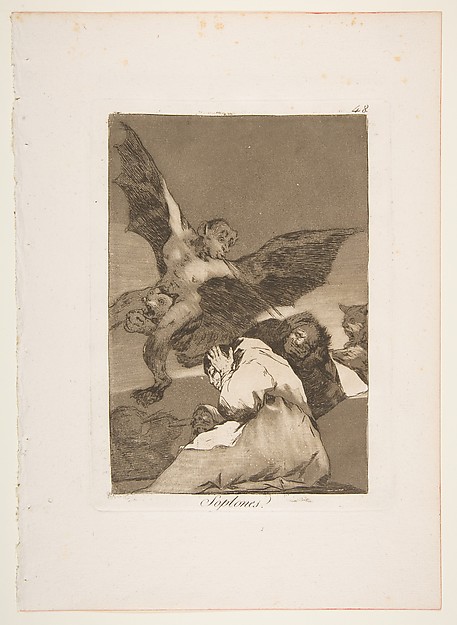
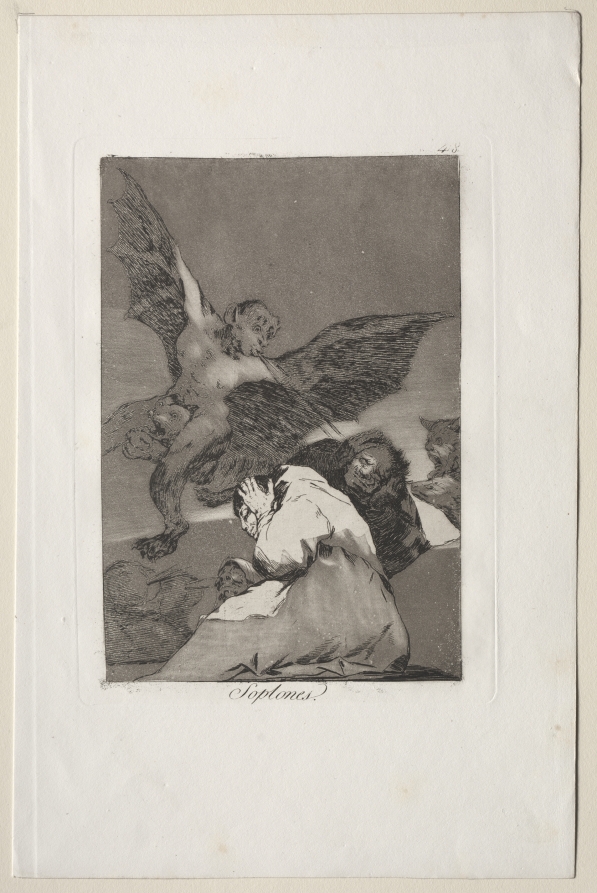
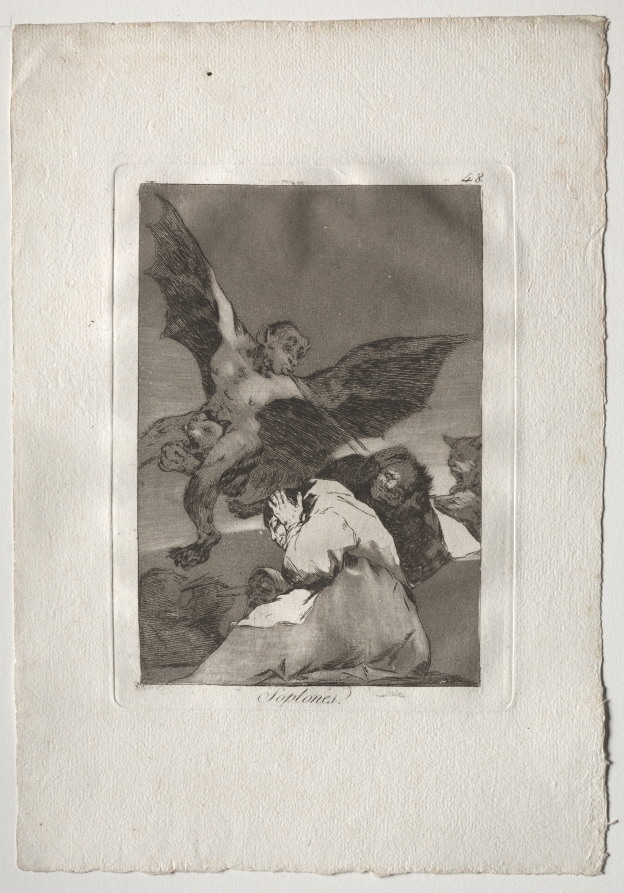
Tale-Bearers - Blasts of Wind, plate 48 from Los Caprichos
SEE IT IN PERSON
Not currently on view
In the collection of Art Institute of Chicago, Chicago · as of July 2026
Discussion
FROM THE ART INSTITUTE OF CHICAGO’S CATALOG
Published in book form in 1799, Goya’s Los caprichos (caprices) presents a dark commentary on the moral, social, and religious ills that plagued late 18th-century Spain. One of Goya’s best-known publications, the series of 80 etchings considers themes of sexuality, violence, superstition, and the fantastical nature of dreams and nightmares. Many of the prints in Los caprichos feature hordes of monstrous demons, ranging from winged owl-like creates to demonic cats and bats, as depicted in Tale-Bearers . This prints shows a bybrid bat-like figure riding a flying cat, tormenting the three monks below. The Spanish word soplón in the print’s title can mean both “gust of wind” and “tattletale” or “gossip.”
Be the first to share your thoughts.
Sign in to join the discussion.
More by Francisco José de Goya y Lucientes
 The Hanged Monk
 Friar Pedro Wrests the Gun from El Maragato
 Friar Pedro Shoots El Maragato as His Horse Runs Off
 Portrait of Isidoro Maiquez
 Winter Scene
 Friar Pedro Offers Shoes to El Maragato and Prepares to Push
 Friar Pedro Clubs El Maragato with the Butt of the Gun
 Friar Pedro Binds El Maragato with a Rope
More like this
 Goya (Francisco de Goya y Lucientes) — Plate 48 from "Los Ca
 Francisco de Goya (Spanish, 1746–1828) — Tale-Bearers--Blast
 Francisco de Goya (Spanish, 1746–1828) — Tale-Bearers - Blas
 Goya (Francisco de Goya y Lucientes) — Plate 70 from 'Los Ca
 Francisco de Goya (Spanish, 1746–1828) — They Spruce Themsel
 Goya (Francisco de Goya y Lucientes) — Plate 51 from "Los Ca
 Leonardo Alenza y Nieto — Birds of a Feather ("Entre los suy
 Goya (Francisco de Goya y Lucientes) — Plate 64 from "Los Ca
 Goya (Francisco de Goya y Lucientes) — 'Dancing Giant' from
  Goya (Francisco de Goya y Lucientes) — 'The Exhortations' fr
 Goya (Francisco de Goya y Lucientes) — Plate 46 from "Los Ca
 Goya (Francisco de Goya y Lucientes) — 'Dancing Giant' from