In the collection of Cleveland Museum of Art, Cleveland — check current display status with the museum.
FROM THE CLEVELAND MUSEUM OF ART’S CATALOG
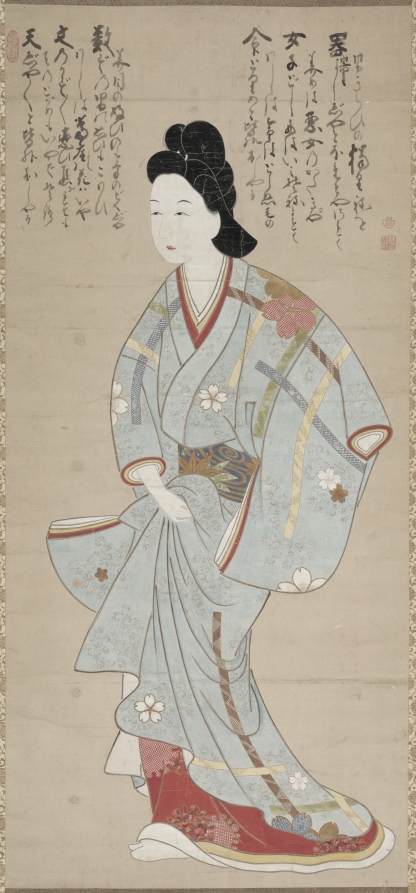
Ukiyo-e artists’ exploration of beautiful people extended to figures from other lands. Here, an elegant Chinese palace lady holding a fan stands before a banana plant. The poem at the top is written in a Japanese appropriation of Chinese called kanbun. Based on its imagery of a palanquin (an enclosed couch with poles used for carrying passengers), silk fan, and autumn winds, it may allude to the story of Lady Ban (about 48 BC–about AD 2). A Chinese beauty famous for her scholarly achievements, Ban was once consort to an emperor but later lost his favor. In a poem attributed to her, she compared herself to a used silk fan put away in autumn.
Be the first to share your thoughts.
Sign in to join the discussion.
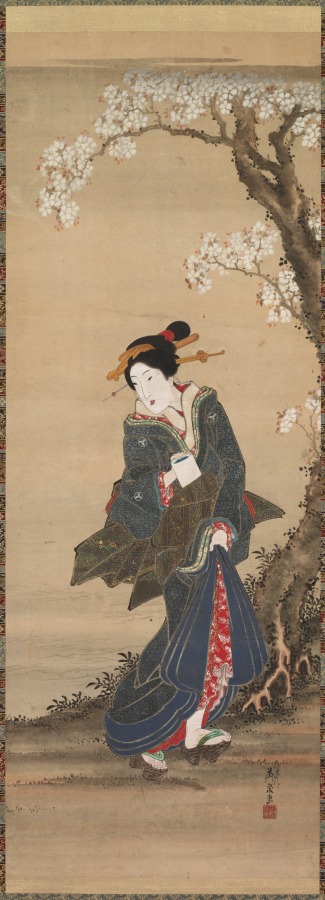 Ikeda Eisen (Japanese, 1790–1848) — Courtesan
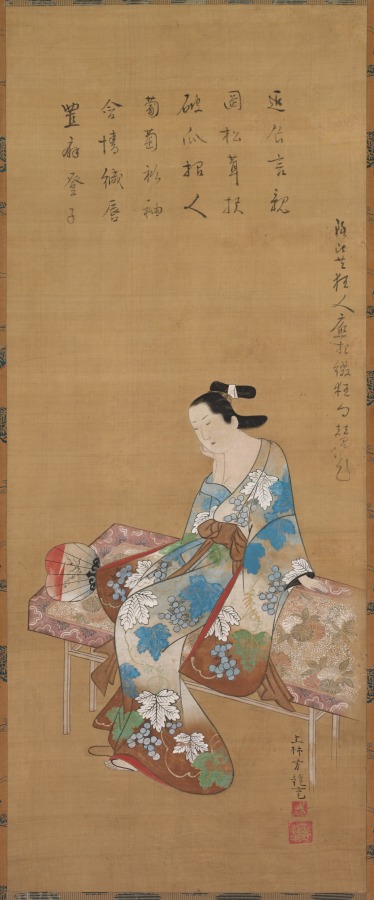 Kamigaki Hōryū (Japanese, dates unknown) — Courtesan Seated
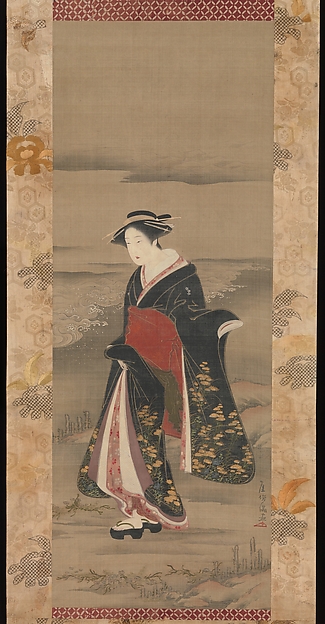 Kubo Shunman
 Katsukawa Shunshō — Dancer with a Maple Branch
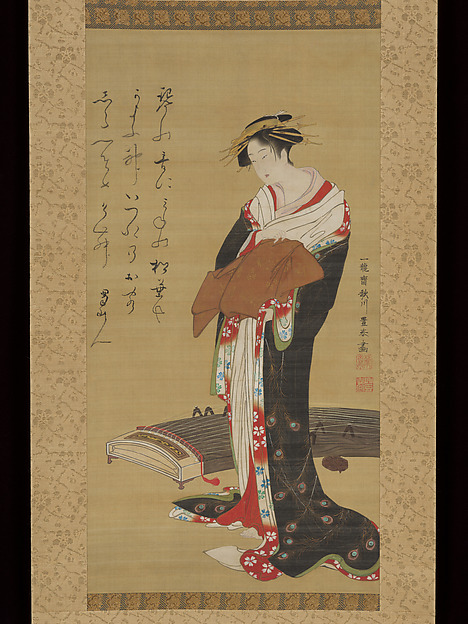 Utagawa Toyoharu|Shokusanjin (Ōta Nanpo) — 歌川豊春筆 蜀山人(大田 南畝)賛
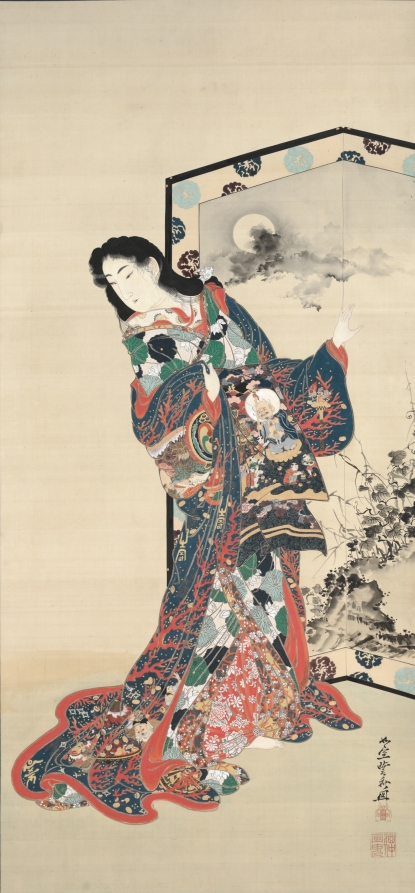 Kawanabe Kyōsai (Japanese, 1831–1889) — Hell Courtesan
 Hosoda Eishi — A Courtesan Reading a Letter
 Takizawa Shigenobu
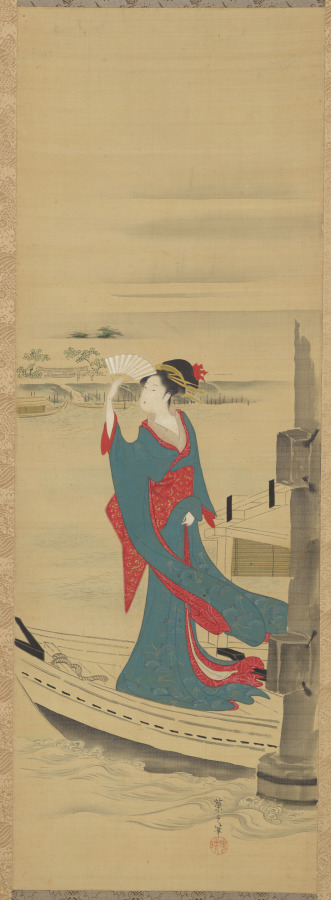 Chōbunsai Eishi (Japanese, 1756–1829) — Beauty in a Boat on
 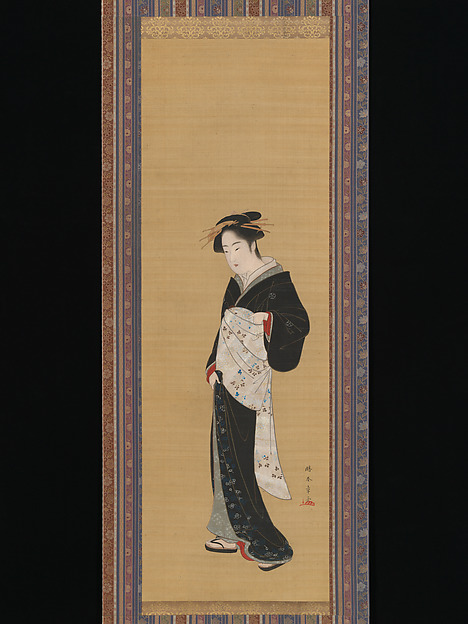 Katsukawa Shunshō 勝川春章 — 勝川春章筆 立姿美人図|Woman in a Black Kimono
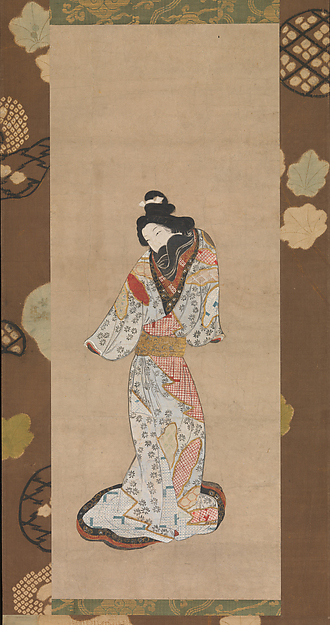 寛文美人図|Beauty of the Kanbun Era
 Hakuin Ekaku (Japanese, 1685–1768) — Figure of a Woman