FROM THE CLEVELAND MUSEUM OF ART’S CATALOG
In a pensive pose with her chin resting in her hand, a courtesan is seated on a wooden bench that extends diagonally across the lower half of the scroll. Her open robe suggests that it is a warm evening-perhaps late summer or early fall, as indicated by the grapevine pattern on her kimono. The floral patterns in the composition hint at the seasons: the plum blossom on the fan for spring; grape pattern on the robe for late summer; and chrysanthemum design on the bench indicating autumn. Note also how the grapevine pattern in the painting's mounting mimics the design of her kimono. The overall mood is one of intimacy, created by Hõryþ through the delicate rendering of the courtesan's facial features and hands. In contrast to the other scrolls of beauties nearby, the artist here portrayed his subject with little background, allowing her grace and elegance to carry the picture.
Source ↗︎
Be the first to share your thoughts.
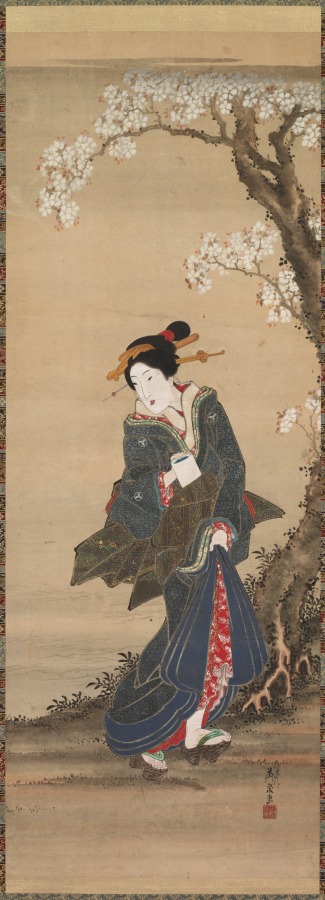 Ikeda Eisen (Japanese, 1790–1848) — Courtesan
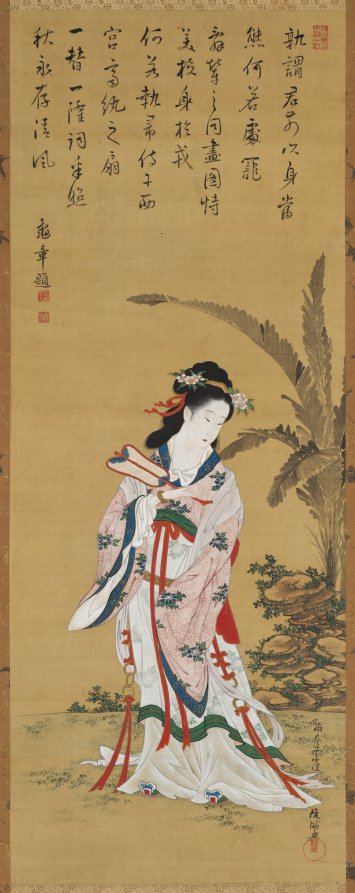 Kubo Shunman (Japanese, 1757–1820) — Chinese Beauty
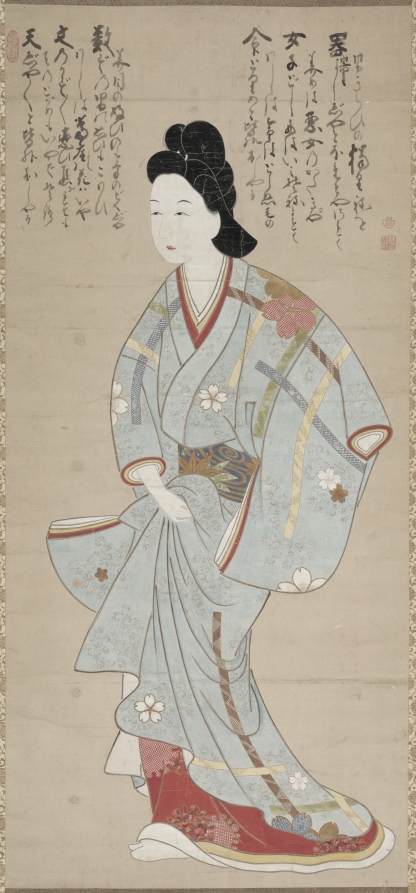 Hakuin Ekaku (Japanese, 1685–1768) — Figure of a Woman
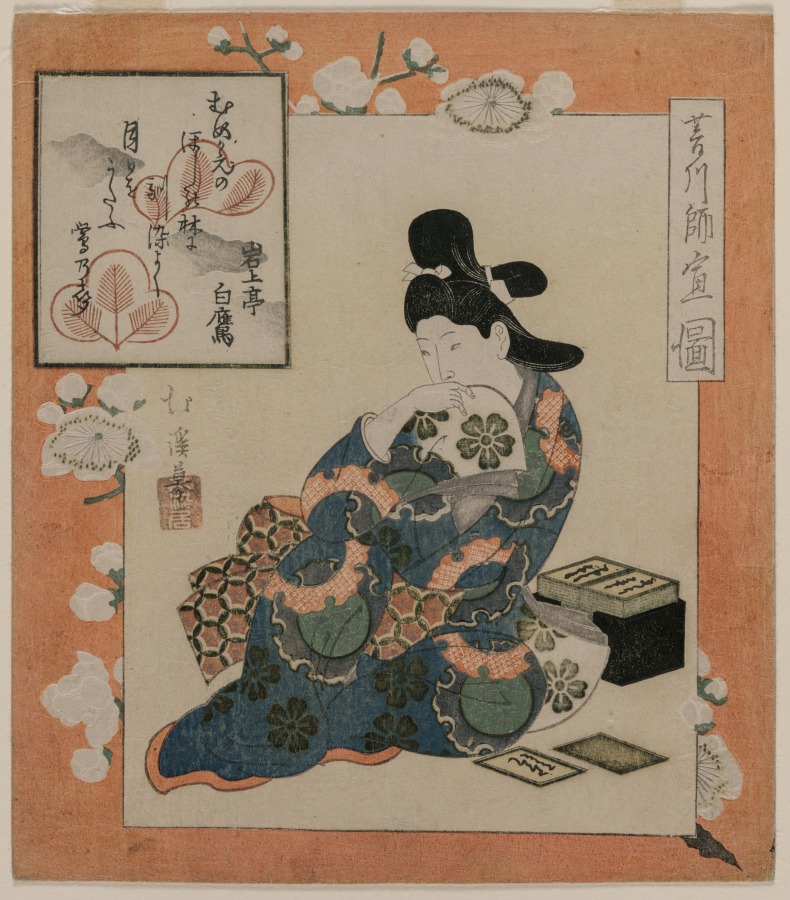 Totoya Hokkei (Japanese, 1780–1850) — A Picture by Hishikawa
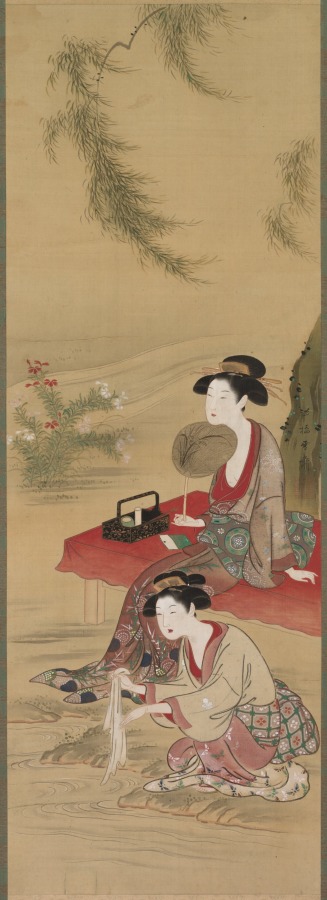 Tsukioka Sessai (Japanese, d. 1839) — Beneath the Willow
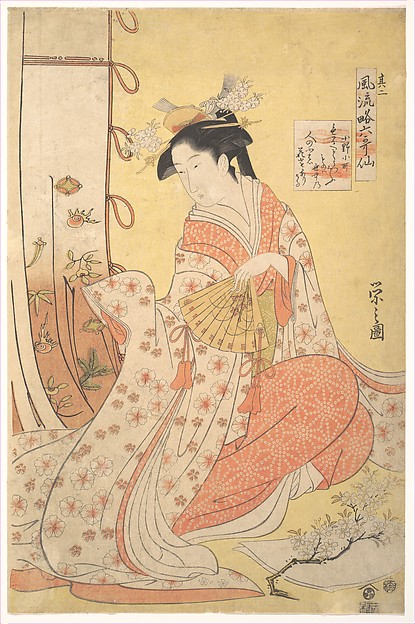 Chōbunsai Eishi — 鳥文斎栄之画 「風流略六哥仙 其の二」小野小町|Ono no Komachi: Nu
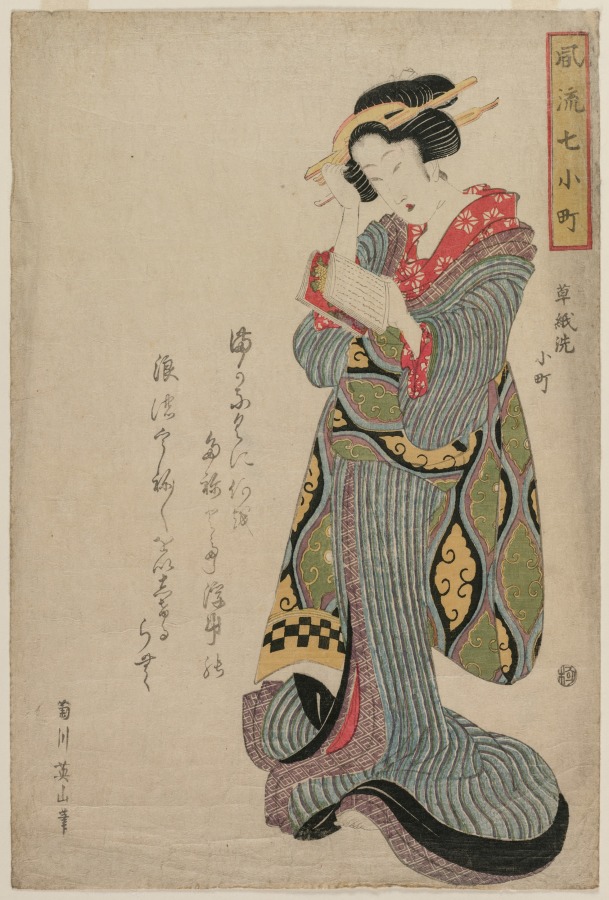 Kikukawa Eizan (Japanese, 1787–1867) — Komachi Washes the Bo
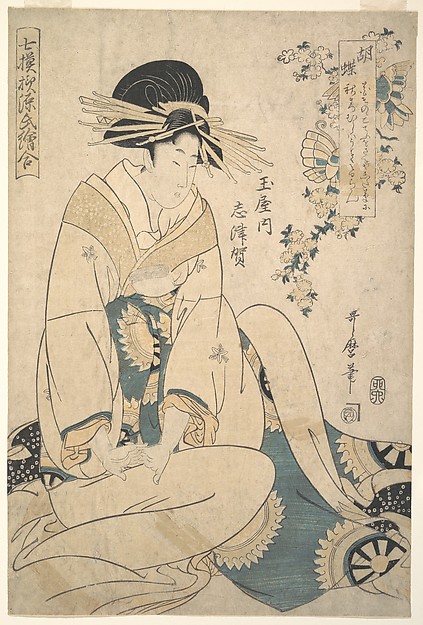 Kitagawa Utamaro — 玉屋内 志津賀|A Courtesan
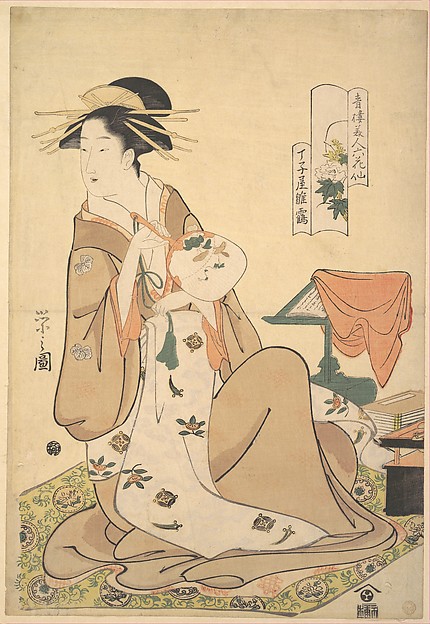 Chōbunsai Eishi
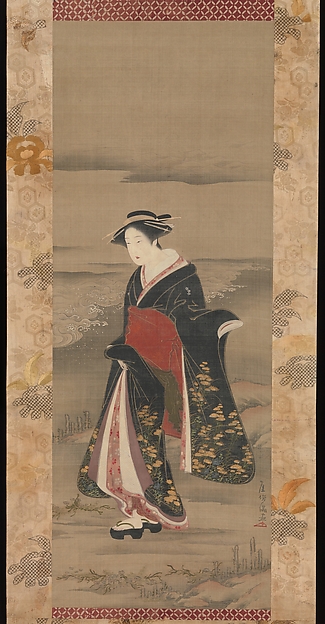 Kubo Shunman
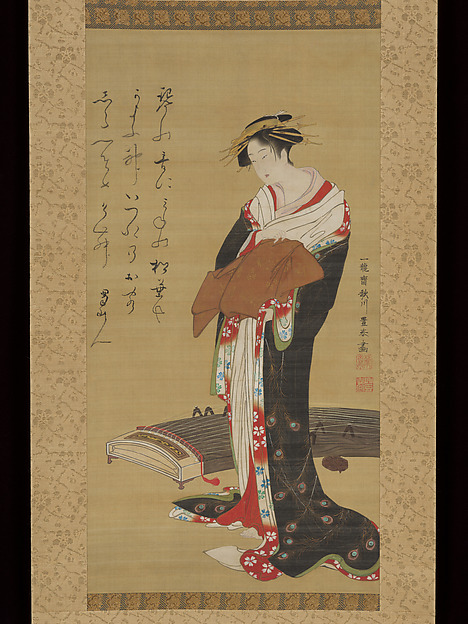 Utagawa Toyoharu|Shokusanjin (Ōta Nanpo) — 歌川豊春筆 蜀山人(大田 南畝)賛
 Torii Kiyonobu — Courtesan and Two Attendants