Francisco José de Goya y Lucientes
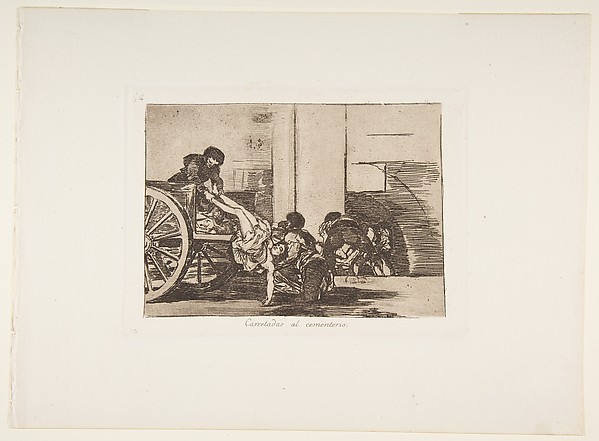
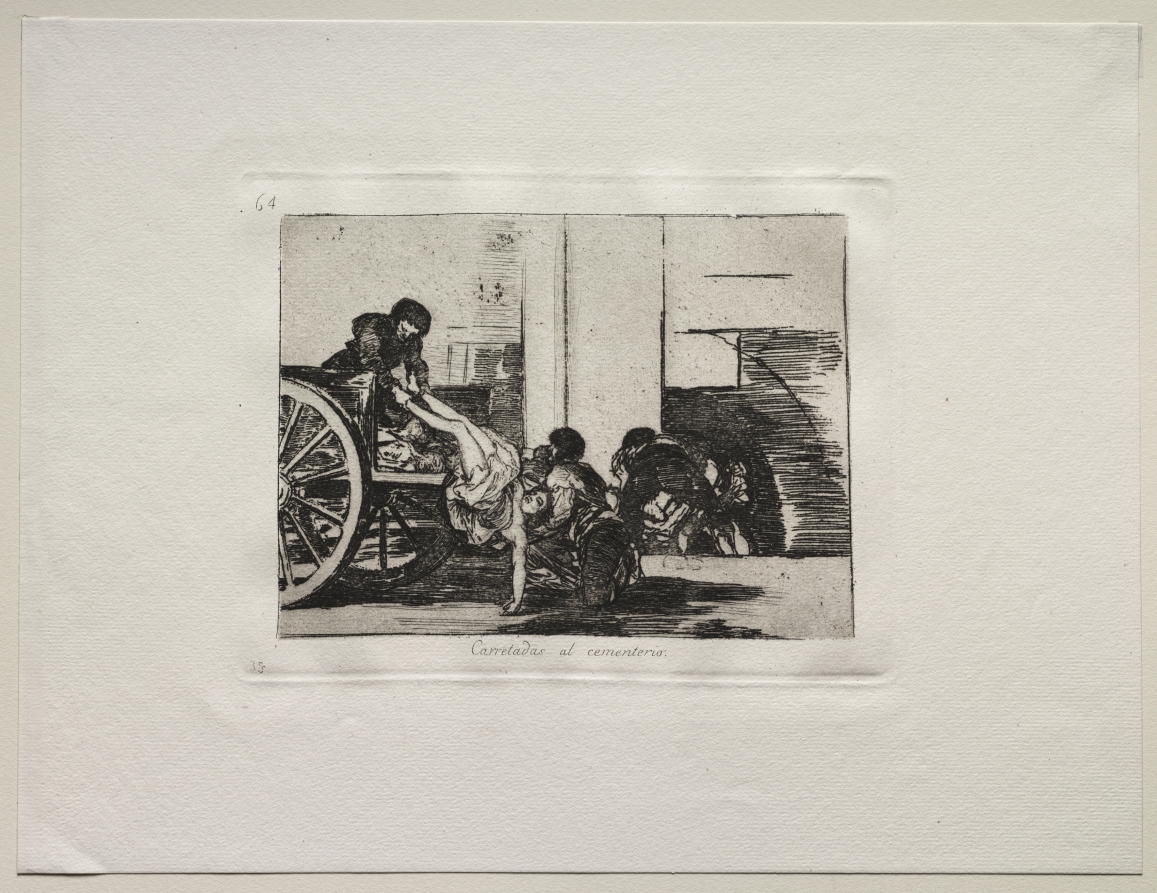
Cartloads to the cemetery, plate 64 from The Disasters of War
1812/15, published 1863
Etching, aquatint and drypoint in warm black on off-white wove paper with gilt edges
12.9 × 18.1 cm (5.1 × 7.1 in)
SEE IT IN PERSON
Not currently on view
In the collection of Art Institute of Chicago, Chicago · as of July 2026
Discussion
FROM THE ART INSTITUTE OF CHICAGO’S CATALOG
The prints in Goya’s Disasters of War , one of the artist’s bleakest series, protest the treatment of civilians during the long Spanish conflict with France, particularly demonstrating the toll on women. The unceremonious manhandling of a female casualty of war makes a troubling focal point for this particularly dark image. The anonymous woman’s dangling white limbs and displaced skirts suggest she may have suffered rape in addition to the other acts of violence that caused her death.
Be the first to share your thoughts.
Sign in to join the discussion.
More by Francisco José de Goya y Lucientes
 The Hanged Monk
 Friar Pedro Wrests the Gun from El Maragato
 Friar Pedro Shoots El Maragato as His Horse Runs Off
 Portrait of Isidoro Maiquez
 Winter Scene
 Friar Pedro Offers Shoes to El Maragato and Prepares to Push
 Friar Pedro Clubs El Maragato with the Butt of the Gun
 Friar Pedro Binds El Maragato with a Rope
More like this
 Goya (Francisco de Goya y Lucientes) — Plate 64 from "The D
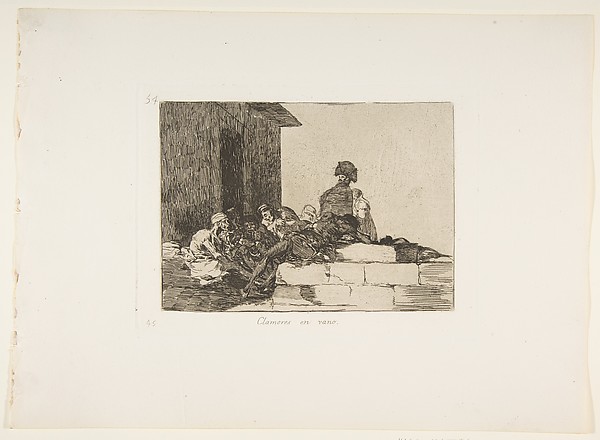 Goya (Francisco de Goya y Lucientes) — Plate 54 from "The Di
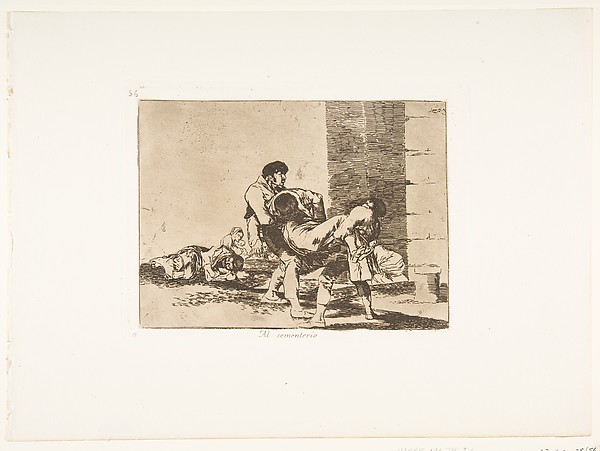 Goya (Francisco de Goya y Lucientes) — Plate 56 from "The Di
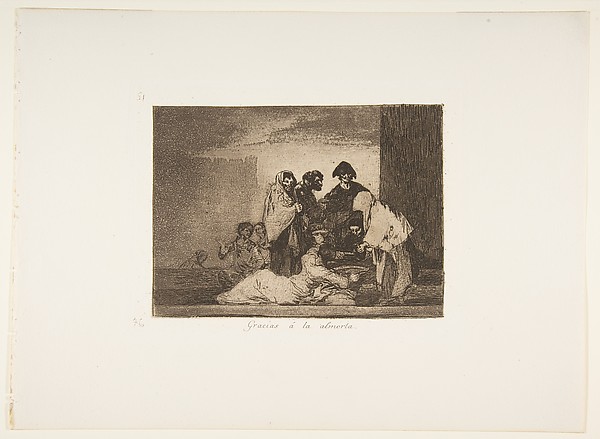 Goya (Francisco de Goya y Lucientes) — Plate 51 from "The Di
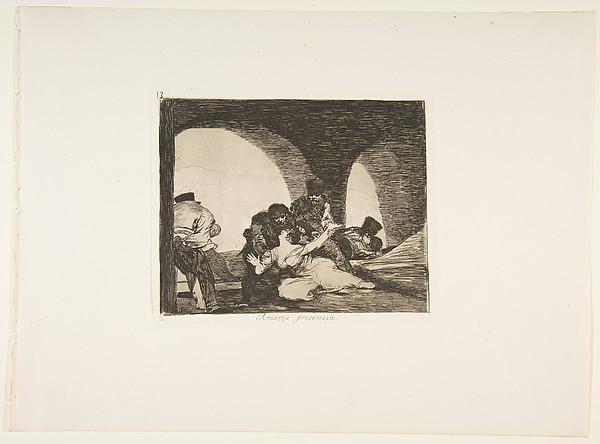 Goya (Francisco de Goya y Lucientes) — Plate 13 from "The Di
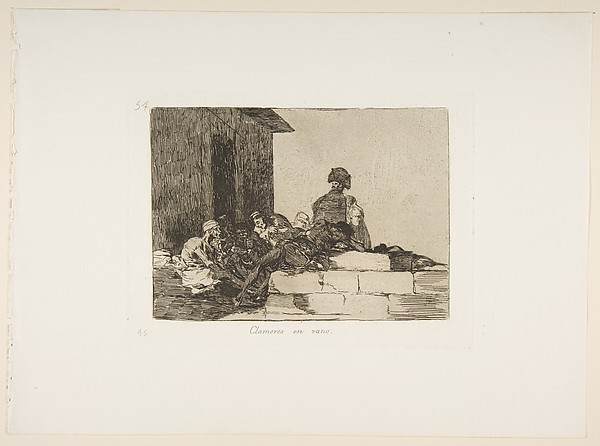 Goya (Francisco de Goya y Lucientes) — Plate 54 from "The Di
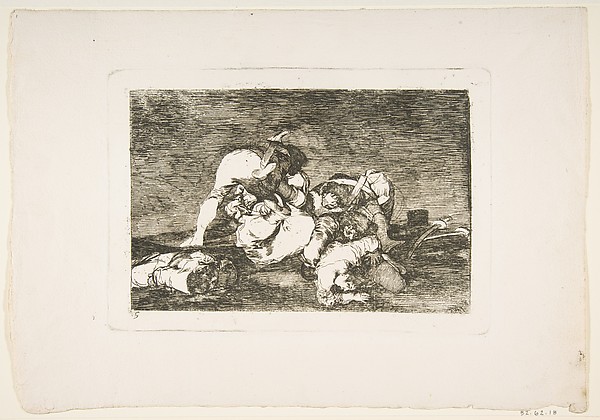 Goya (Francisco de Goya y Lucientes) — Plate 10 from "The Di
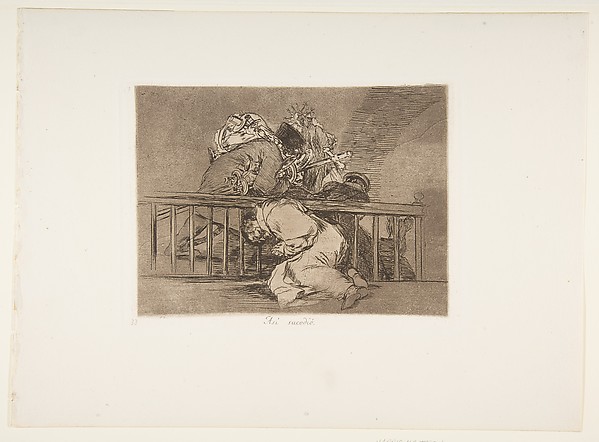 Goya (Francisco de Goya y Lucientes) — Plate 47 from "The Di
 Goya (Francisco de Goya y Lucientes) — Plate 56 from 'The Di
 Goya (Francisco de Goya y Lucientes) — Plate 49 from "The Di
 Francisco de Goya (Spanish, 1746–1828) — The Horrors of War:
 Goya (Francisco de Goya y Lucientes) — Plate 52 from "The Di