Ghost Dance (The Vision of Life)
SEE IT IN PERSON
Not currently on view
In the collection of Art Institute of Chicago, Chicago · as of July 2026
Discussion
FROM THE ART INSTITUTE OF CHICAGO’S CATALOG
The Ghost Dance, or “Messiah Craze” as the press called it, fused elements of Native American religions and Christianity to express ideas about the resurrection and rejuvenation of indigenous cultures. An assertion of Native American pride and empowerment in the late 1880s, these ceremonies drew the attention of ethnographers and aroused the suspicions of United States government and military officials. After the murders of Big Foot and Sitting Bull and the massacre at Wounded Knee in 1890, the Ghost Dance became part of the mythology of the vanishing Indian. In Ralph Blakelock’s murky, deliberately ambiguous composition, the dancing figures appear as ghosts or shadows—insubstantial fragments of a memory or a dream. Indeed, the artist's understanding of such performances was drawn from accounts in newspapers and magazines. He had not traveled to the West since the early 1870s, more than 20 years before painting this work.
Be the first to share your thoughts.
Sign in to join the discussion.
More by Ralph Albert Blakelock

More like this
 William Keith — Landscape
 Jean Baptiste Camille Corot — Souvenir of Italy
 John Constable — Landscape with Cottages
 Théodore Rousseau — Landscape
 Gustave Courbet — Wooded Landscape
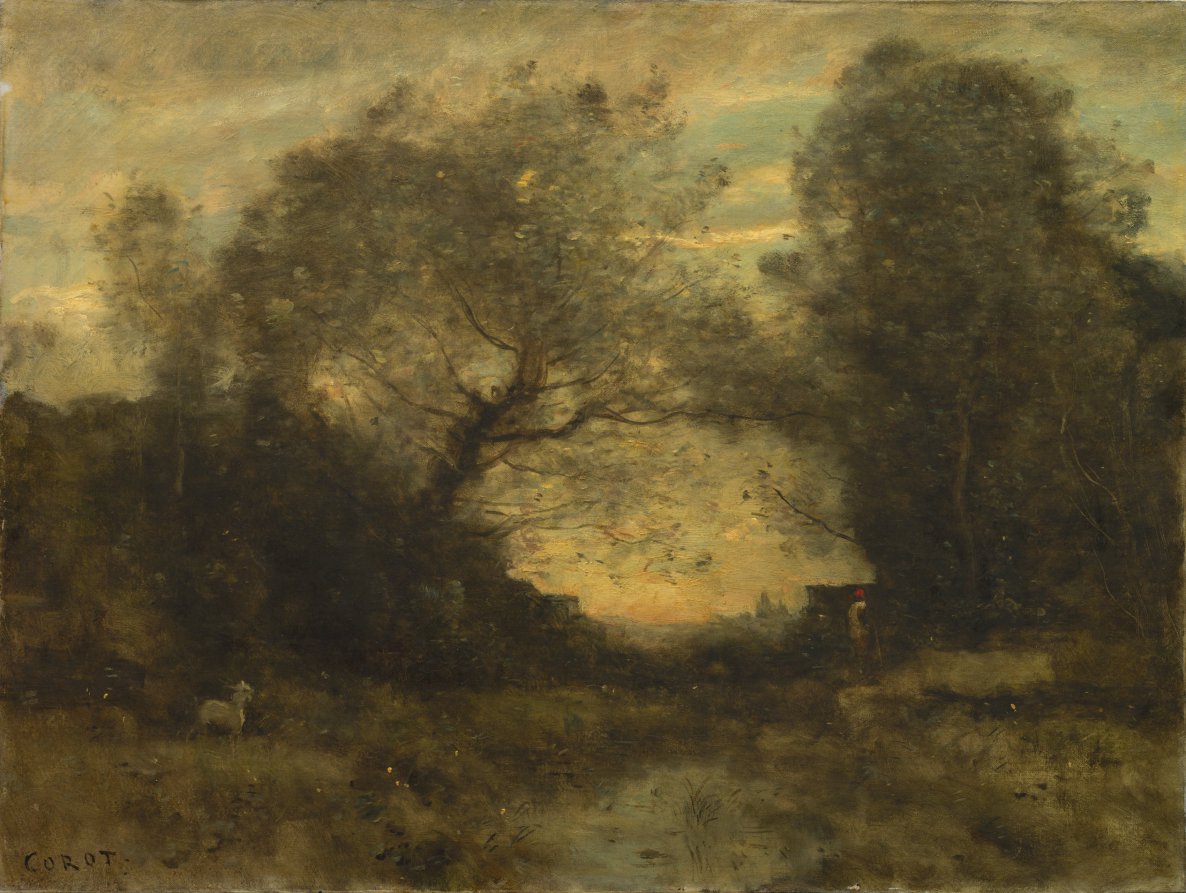 Jean Baptiste Camille Corot (French, 1796–1875) — The Pond a
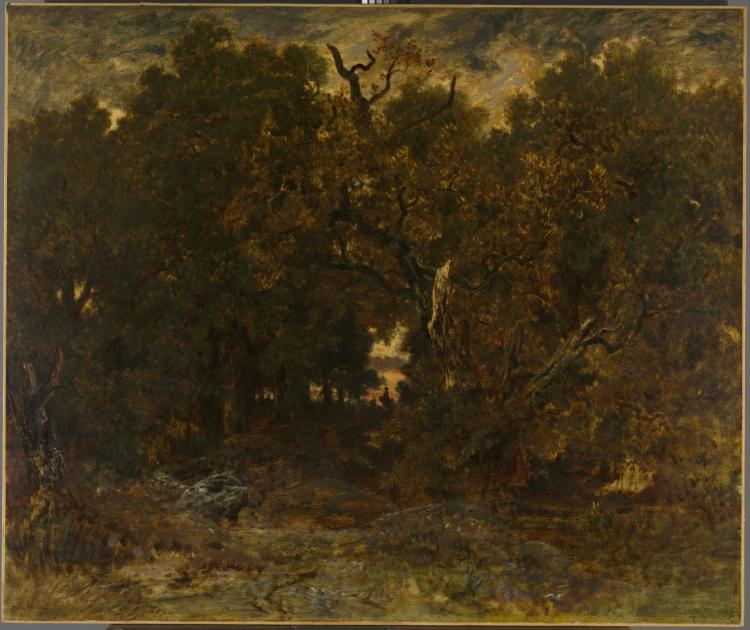 Théodore Rousseau (French, 1812–1867) — Leaving the Forest,
  William Keith — Landscape
 Johannes Glauber — Arcadian Landscape Mercury and Io
 Jean Baptiste Camille Corot — Bathing Nymphs and Child
 Unknown — Wooded Landscape with Cows in Foreground
 Albert Pinkham Ryder — The Essex Canal