FROM THE CLEVELAND MUSEUM OF ART’S CATALOG
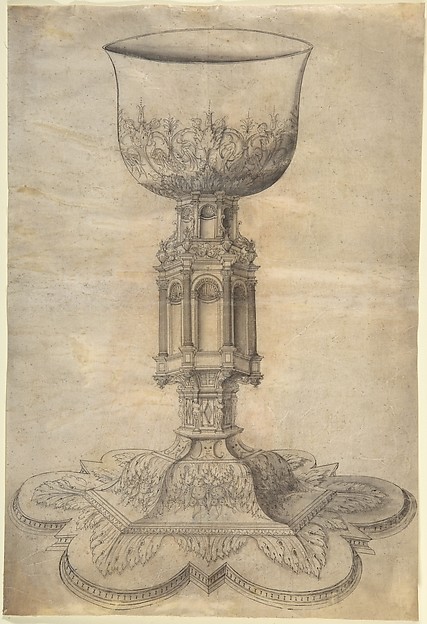
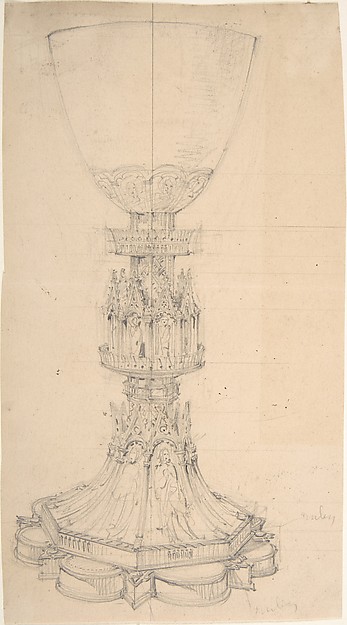
An assistant to influential Renaissance designer Perino del Vaga (1501–1547), Luzio Romano is known primarily through the drawings he made for liturgical objects (objects used for public worship), such as this chalice, likely a goldsmith’s design. The foot is decorated with seraphim—the highest order of angels—and nude children below figures of women and pelicans on the base of the bowl, which together allude to the theological virtue of charity. A pelican piercing its breast to feed its young with its blood is also a symbol of Christ’s sacrifice on the cross, fitting for a vessel meant to hold the eucharistic wine.
Source ↗︎
Be the first to share your thoughts.
 Several Line Borders (verso)
 Architectural Plan (verso)
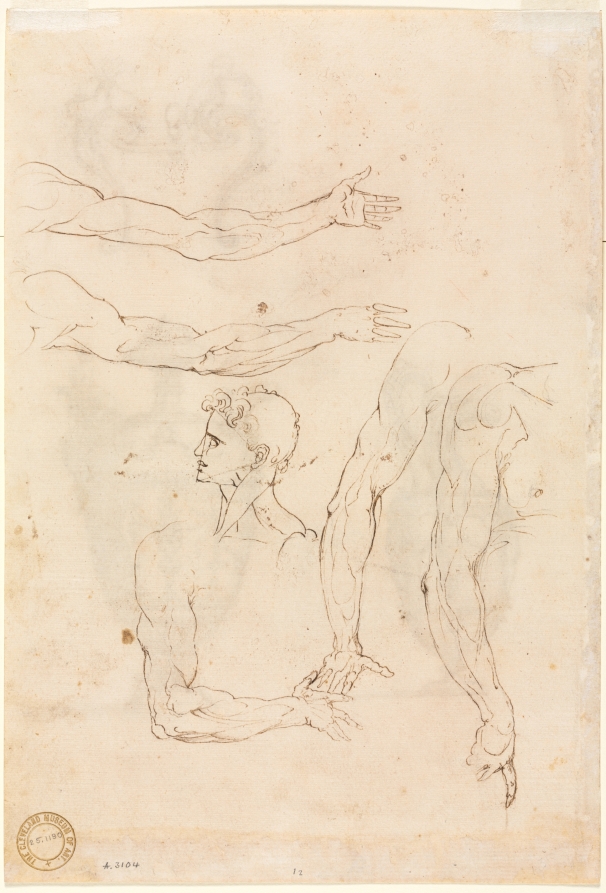 Sketches of Five Arms and a Head (verso)
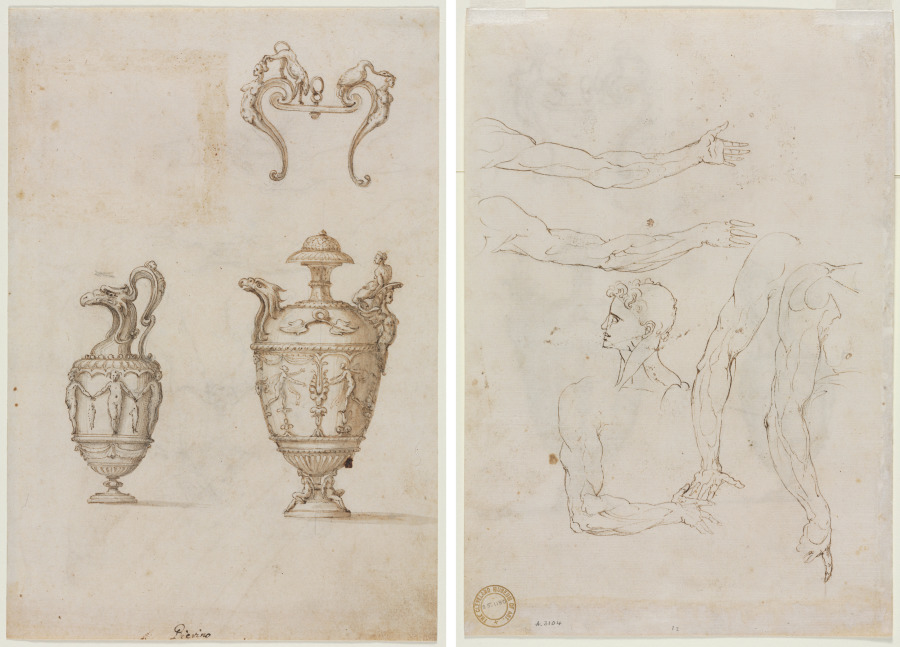 Design for Two Vases and an Ornament (recto); Sketches of Fi
 Border Lines (verso)
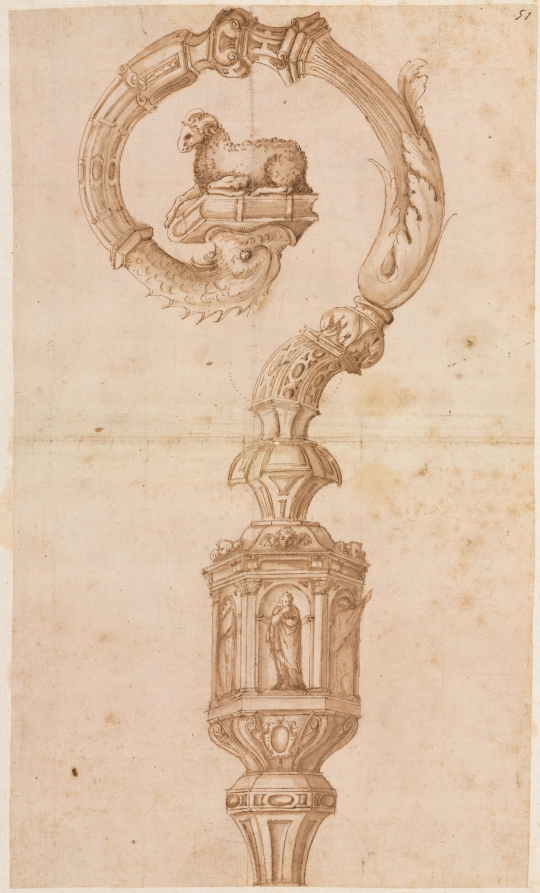 Design for a Crozier
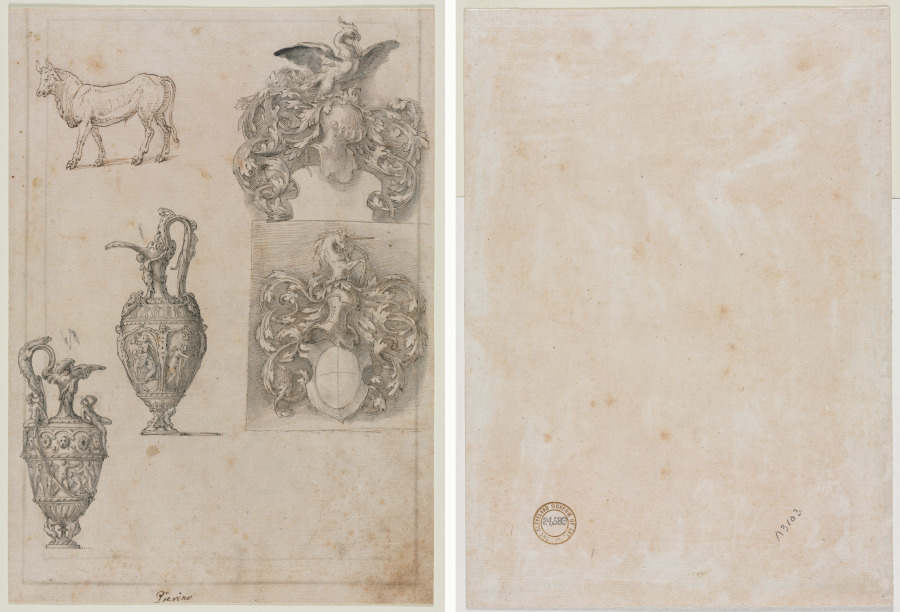 Design for Two Vases, Two Coats of Arms, and a Bull (recto)
 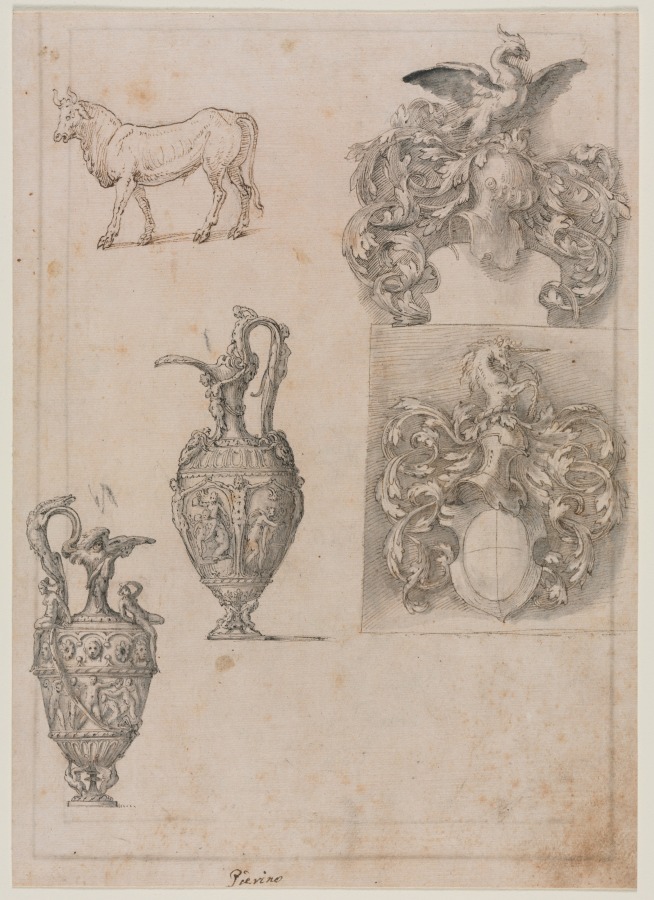 Design for Two Vases, Two Coats of Arms, and a Bull (recto)