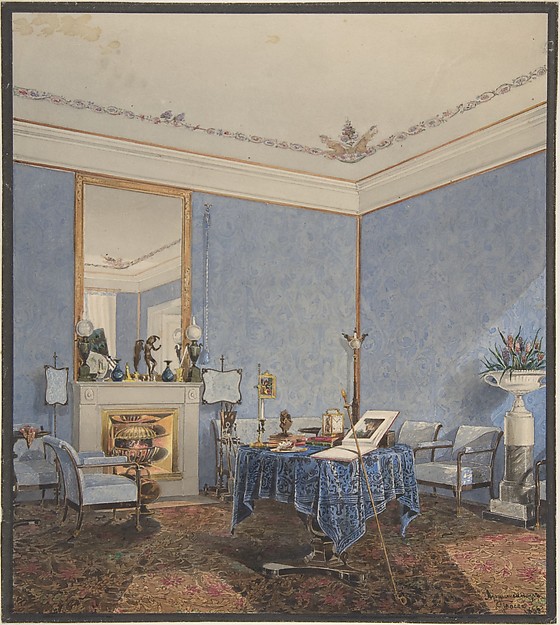
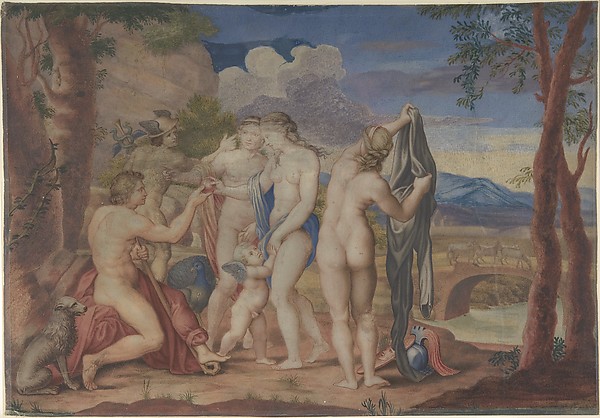
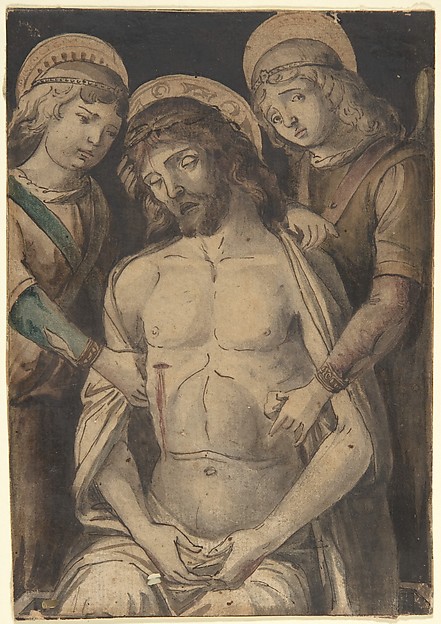
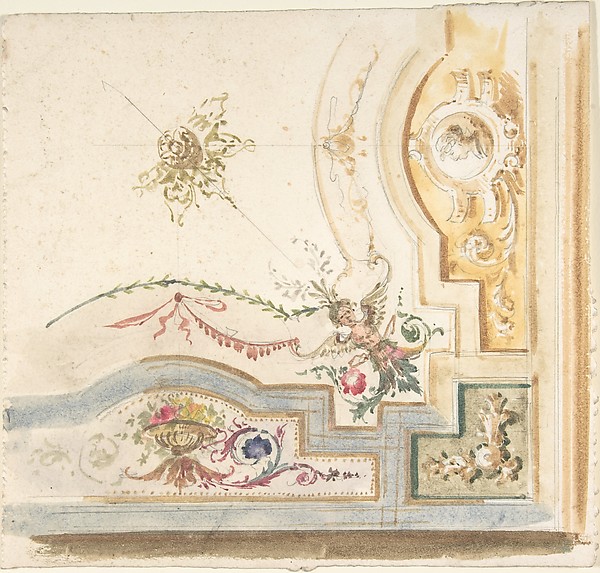
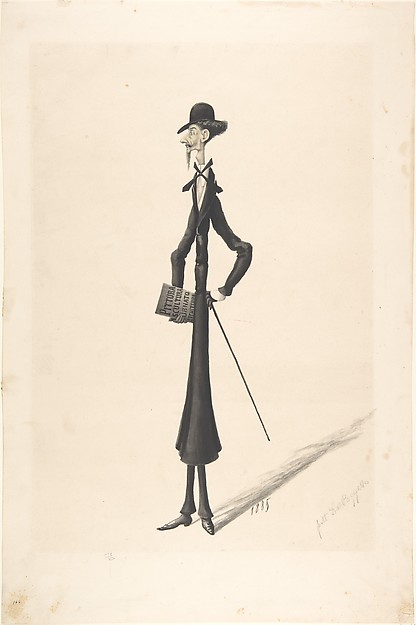
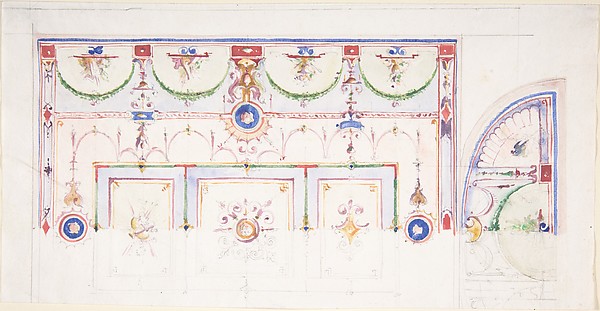
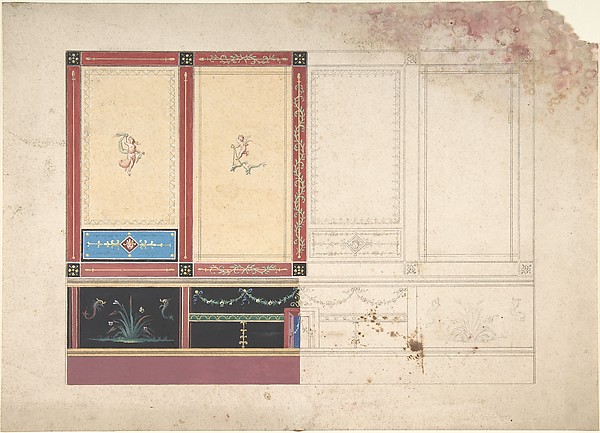
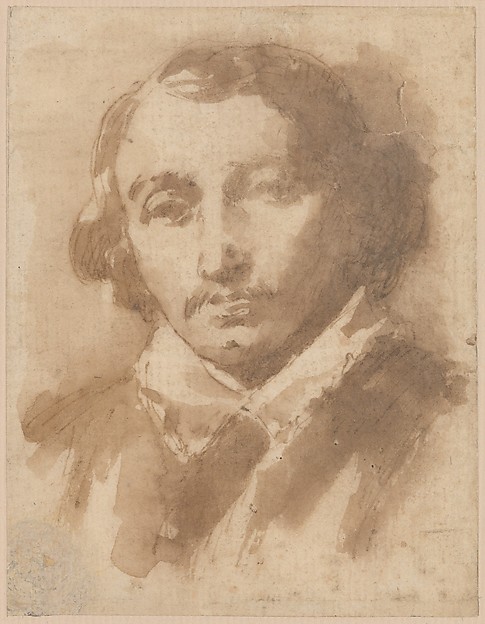
Anonymous, Italian, 19th century
In the collection of The Metropolitan Museum of Art, New York — check current display status with the museum.
Be the first to share your thoughts.
Sign in to join the discussion.
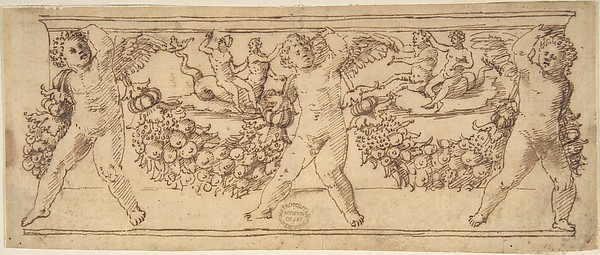 Anonymous, Italian, 16th century — Sarcophagus
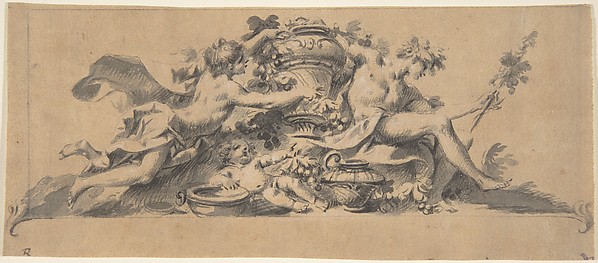 Giovanni Larciani ("Master of the Kress Landscapes") — Desig
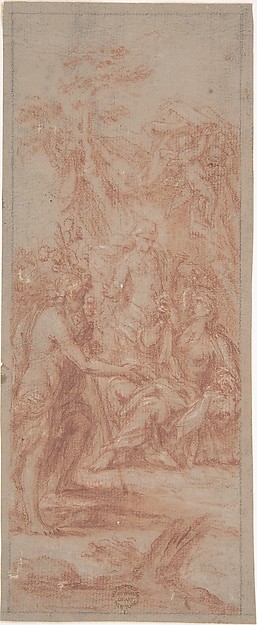 Anonymous, Italian, Roman-Bolognese, 17th century — Bacchus
 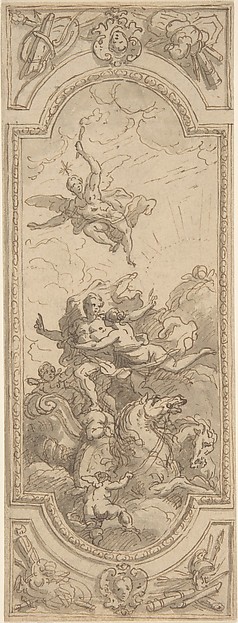 Sir James Thornhill — Design for a Ceiling with an Allegoric
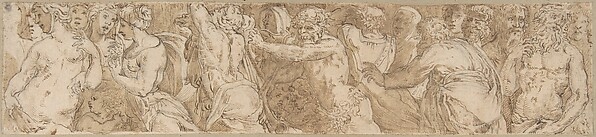 Domenico Beccafumi — Procession (left-hand portion of border
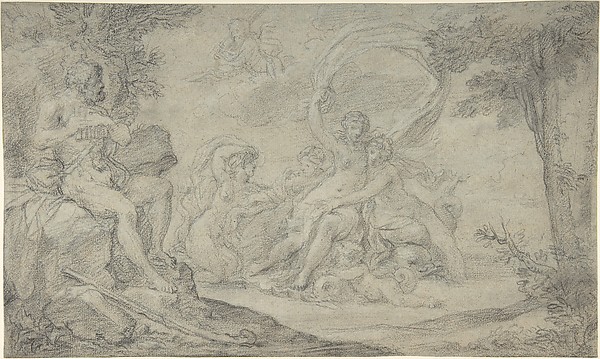 Giovanni Larciani ("Master of the Kress Landscapes") — Polyp
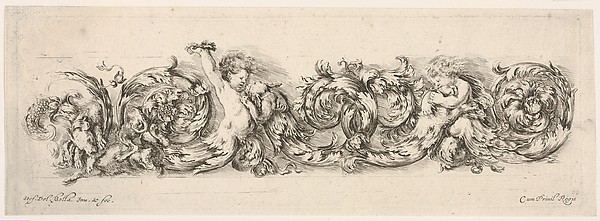 Stefano della Bella — Design for a Frieze with Acanthus Scro
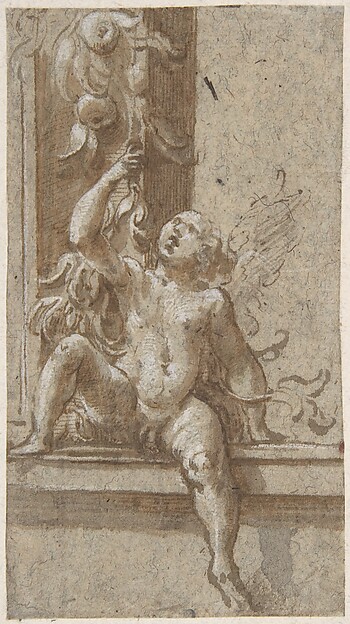 Girolamo Mazzola Bedoli — A Putto Seated on a Frame
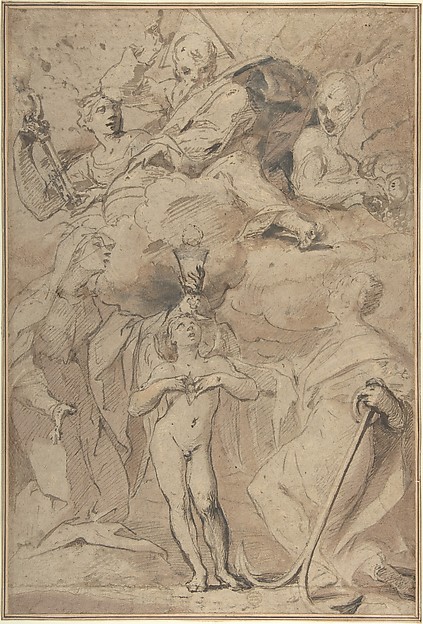 Ludovico Lana — Allegory of Religion (God the Father above,
 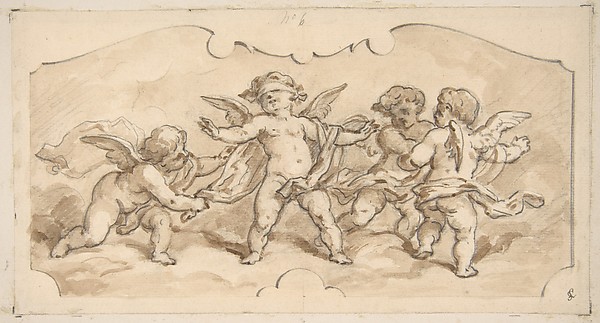 Jules-Edmond-Charles Lachaise|Eugène-Pierre Gourdet — Putti
 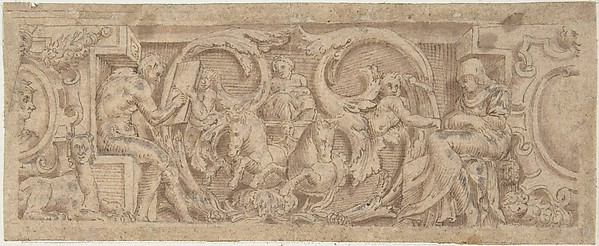 Anonymous, German, 19th century — Figures, Horses, and Sphin
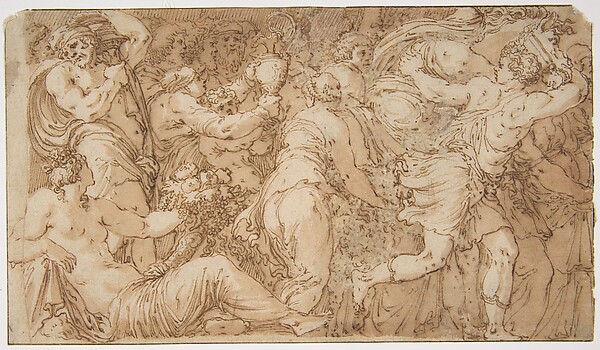 Polidoro da Caravaggio — Festival Procession