FROM THE CLEVELAND MUSEUM OF ART’S CATALOG
The Eleven-Headed Kannon, a deity of mercy and compassion in the Buddhist pantheon, was introduced into Japan in the 600s. By the 700s it had gained in popularity among an increasing number of believers, a condition it enjoyed until the end of the Kamakura period. The modest size and high quality of the materials apparent in this work indicate its use as a private devotional image. An earlier restoration of this painting included the use of an entire silk backing layer rather than silk patches with a paper backing. The tension that resulted between these two layers of silk, one old and the other recent, caused serious cracking to occur in the painting's surface. Moreover, the silk backing had been dyed a dark tone which did not enhance the appearance of the painting, although it did help hide damaged areas in the surface silk. Now two layers of backing paper support the painting, with its carefully fitted silk patches. These are toned slightly differently from the original surface values so that viewers can distinguish between the original and the modern restored areas. The original metal fittings have also been cleaned and reused. Other replacement fittings were deemed inappropria
Source ↗︎
Be the first to share your thoughts.
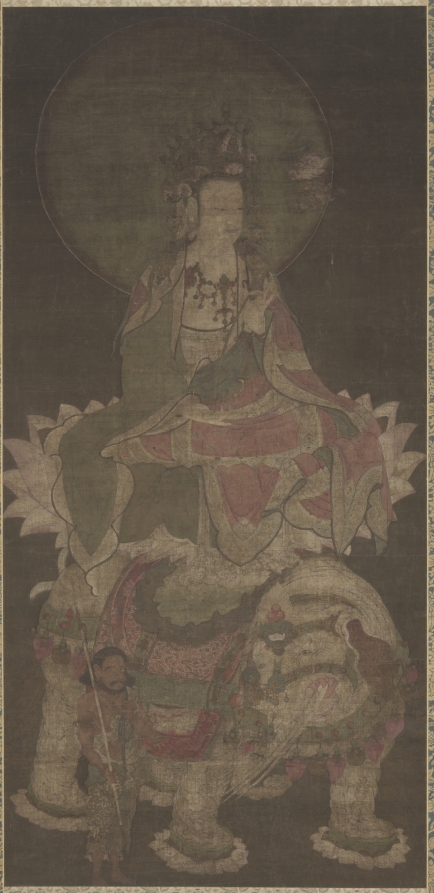 Samantabhadra
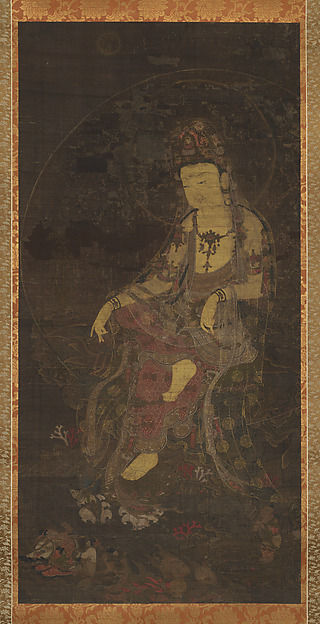 Unidentified artist — 수월관음도 고려|水月觀音圖 高麗|Water-moon Avalokite
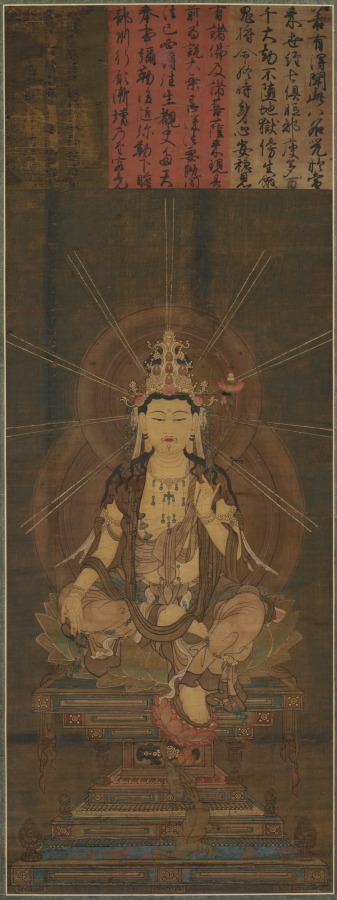 Miroku (Maitreya)
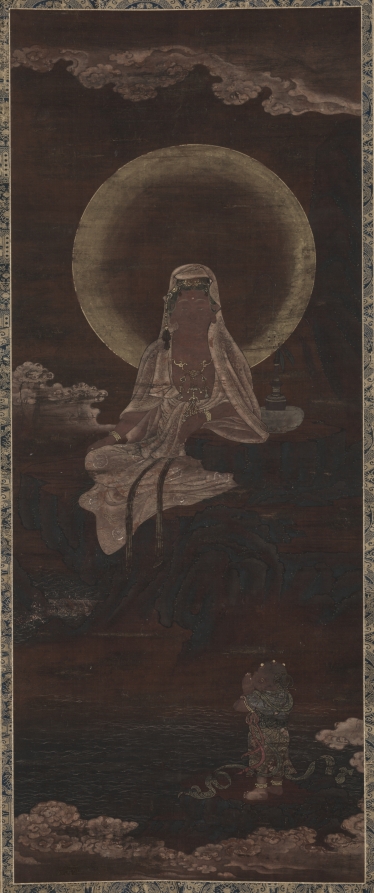 Water-Moon Kannon (Suigetsu Kannon)
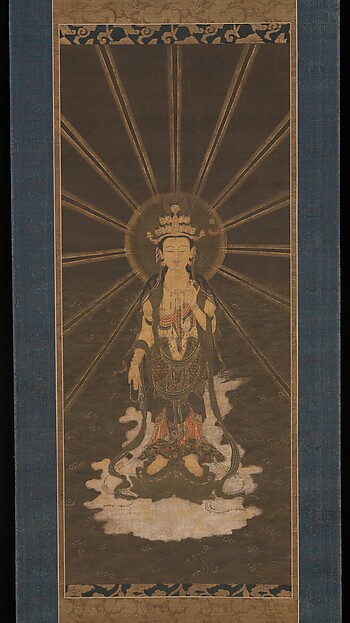 Unidentified artist — 十一面観音来迎図|Descent of Eleven-Headed Kann
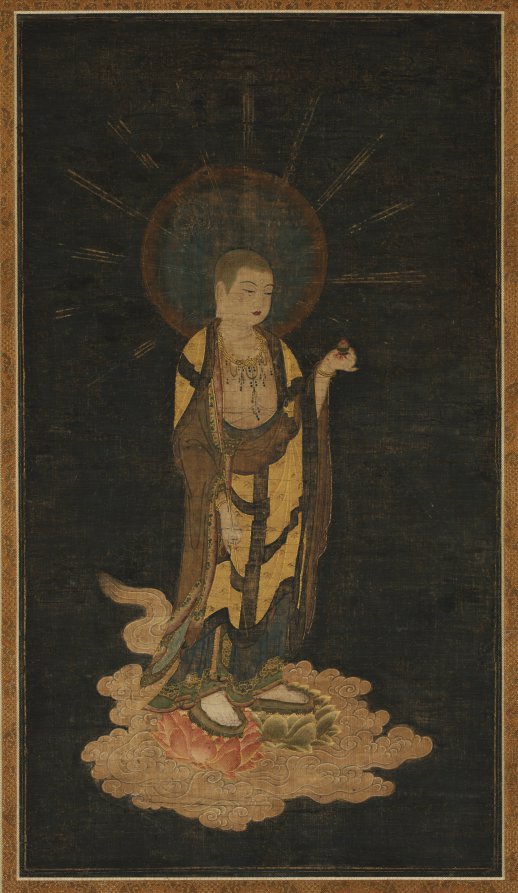 Welcoming Descent of Jizō
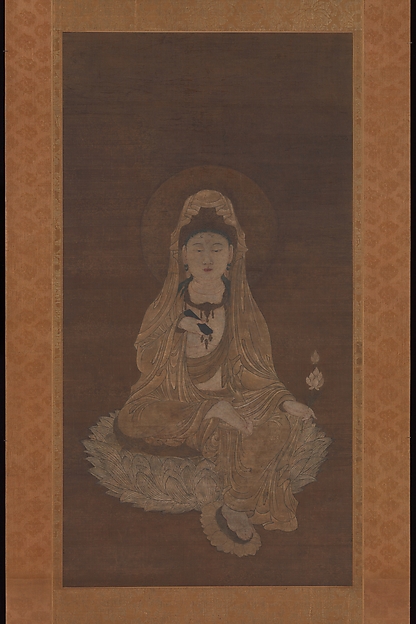 白衣観音図|White-Robed Kannon
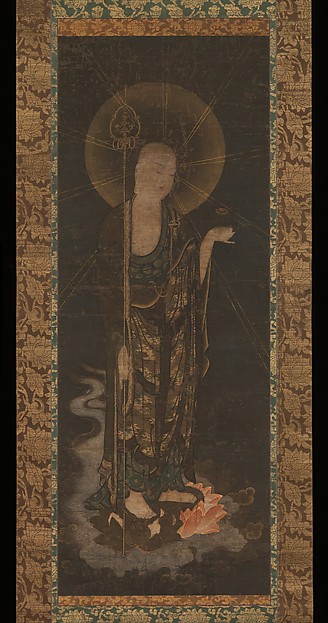 地蔵来迎図|Welcoming Descent of Jizō
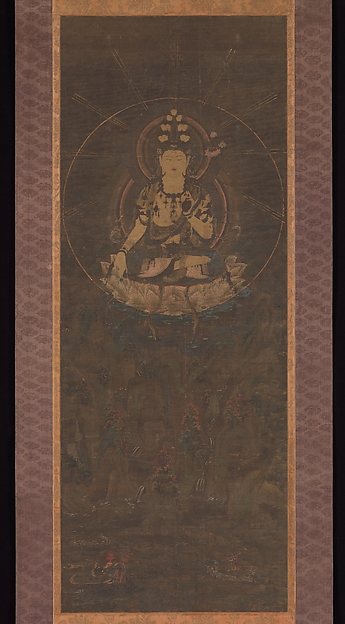 十一面観音影向図|Eleven-Headed Kannon on Mount Fudaraku
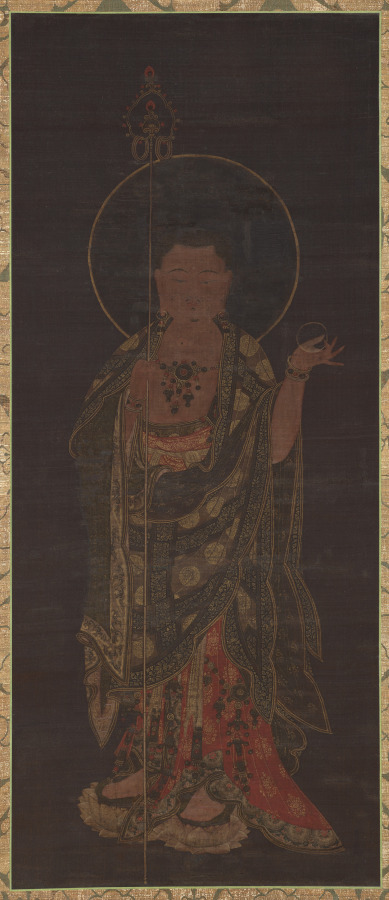 Standing Ksitigarbha
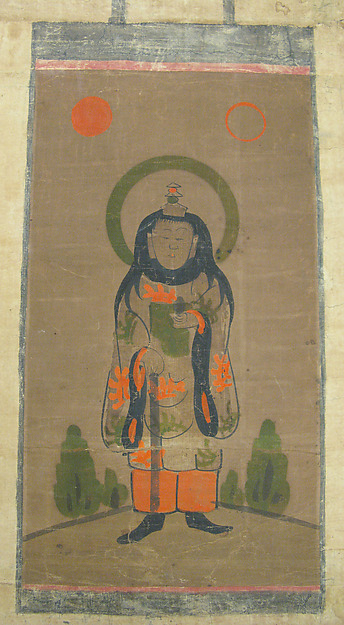 雨宝童子図大津絵|Ōtsu-e of Uhō Dōji
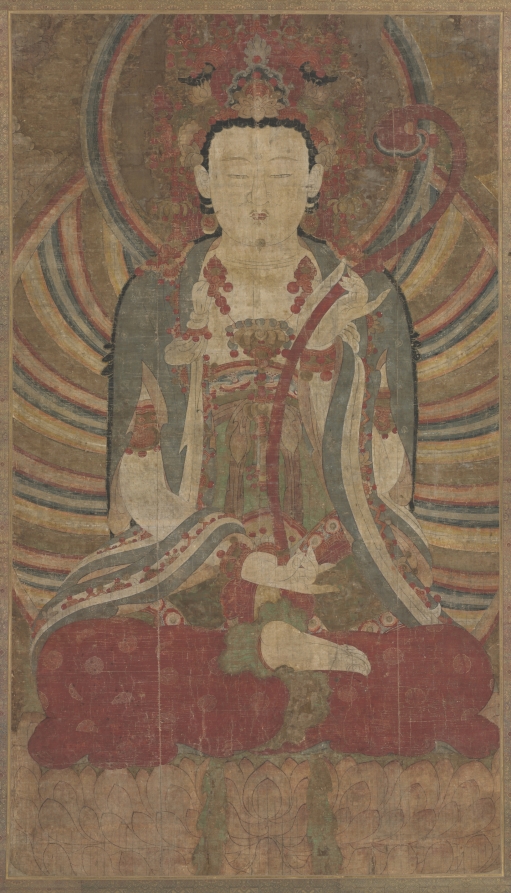 Seated Manjusri