FROM THE CLEVELAND MUSEUM OF ART’S CATALOG
Kannon represents a primary figure of benevolence and compassion in the Buddhist pantheon. Identified early in Buddhist texts as a close attendant to the Buddha, by the 700s Kannon's popularity soared to such an extent in China, Korea, and Japan that the bodhisattva was often worshipped independently. Here at the lower left, Kannon is depicted with the child Zenzai Dōji (Sakskrit: Sudhana), a wealthy boy who, according to the final chapter of the Flower Garland Sutra , visited Kannon's abode Fudaraka (Sanskrit: Potalaka) during a long journey to learn the bodhisattva path.
Source ↗︎
Be the first to share your thoughts.
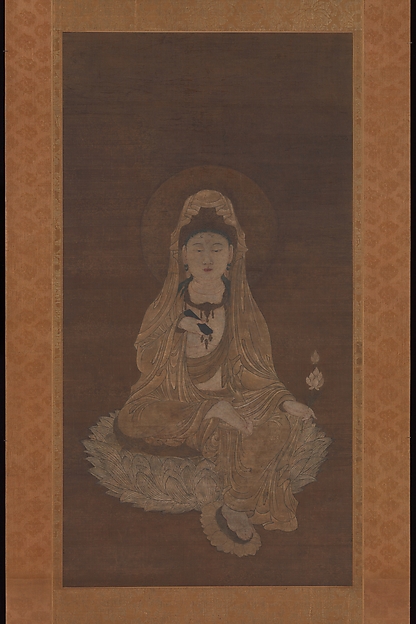 白衣観音図|White-Robed Kannon
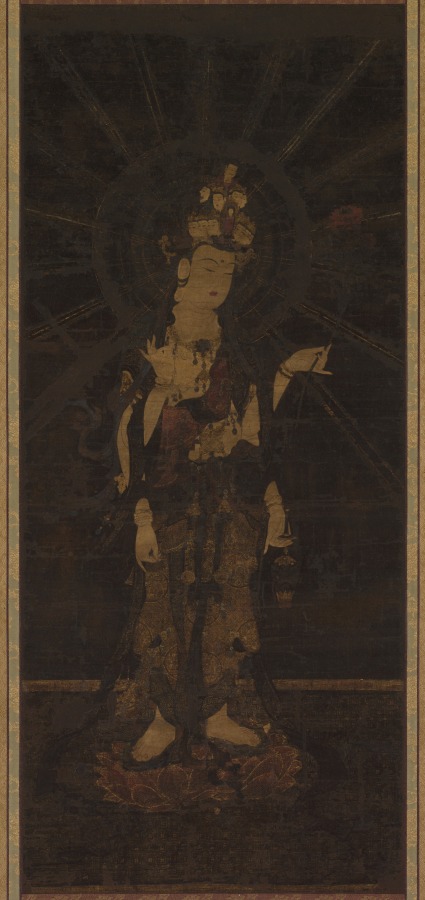 Eleven-Headed Kannon (Jūichimen Kannon)
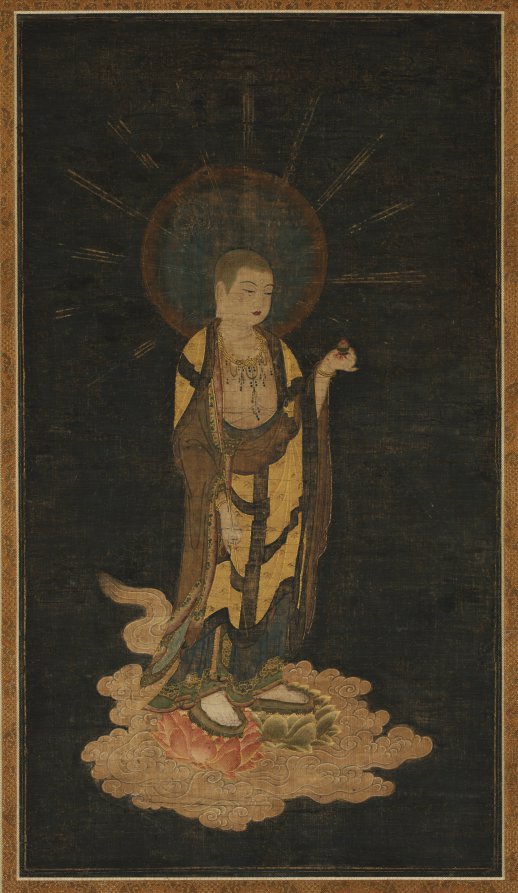 Welcoming Descent of Jizō
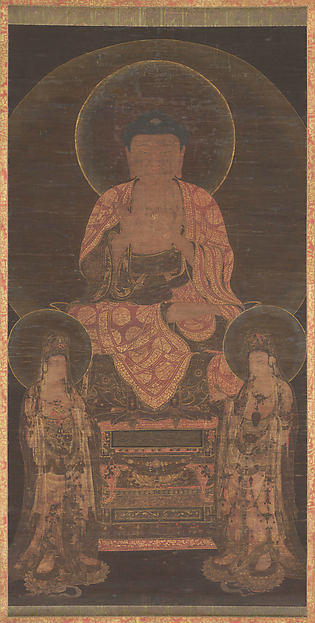 Unidentified artist — 아미타삼존도 고려|阿彌陀三尊圖 高麗|Amitabha triad
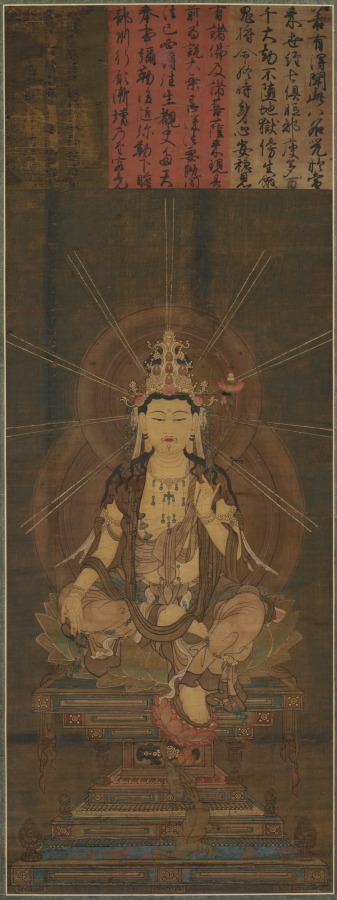 Miroku (Maitreya)
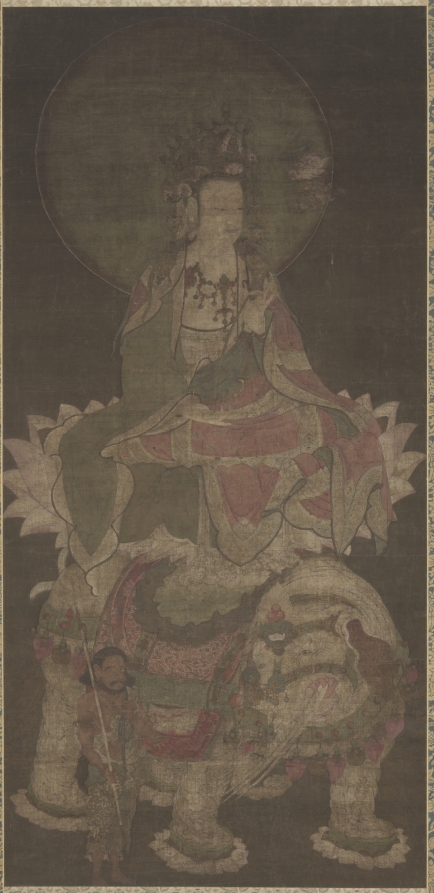 Samantabhadra
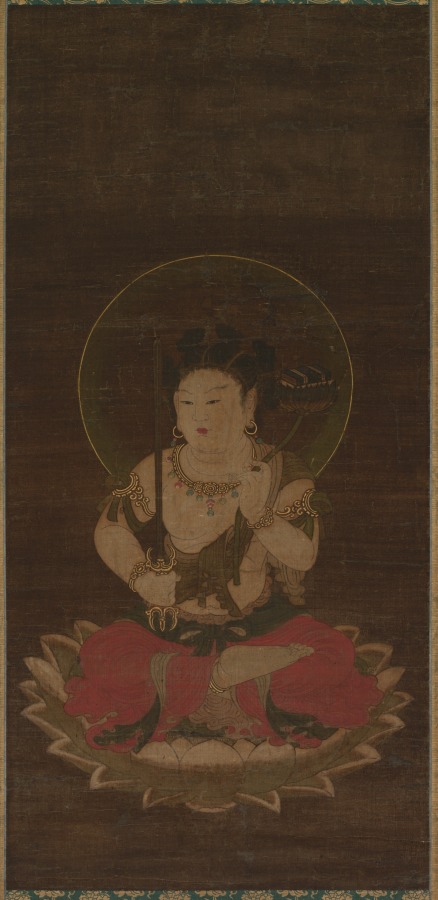 Monju as a Child (Chigo Monju)
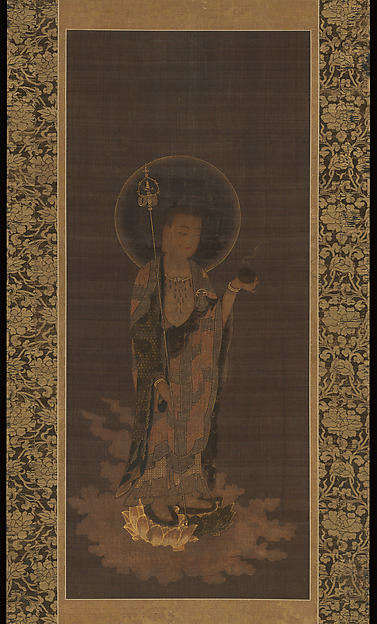 Unidentified artist — 地蔵菩薩来迎図|Welcoming Descent of the Bodhi
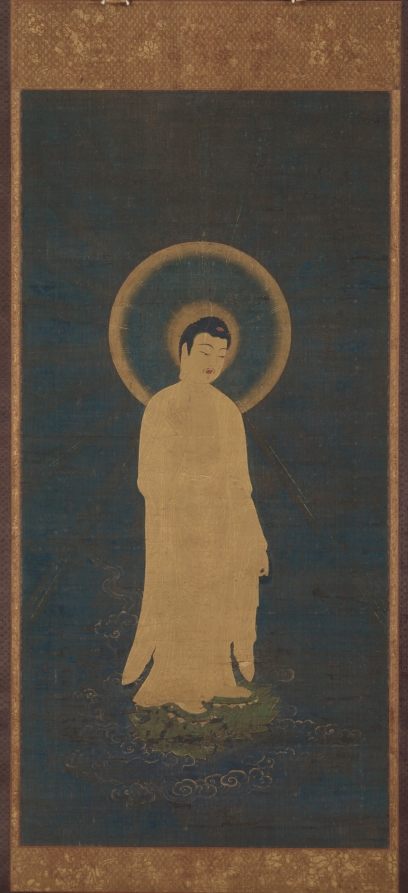 Welcoming Descent of Amida Buddha (Raigō)
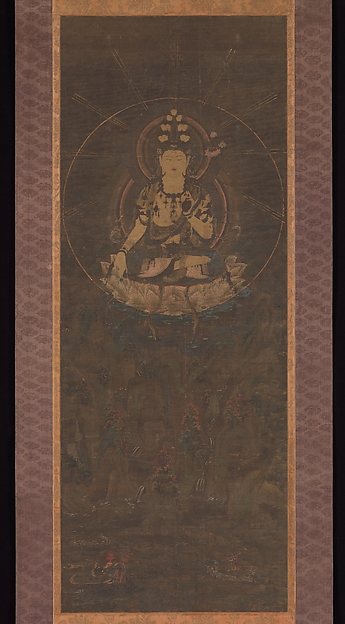 十一面観音影向図|Eleven-Headed Kannon on Mount Fudaraku
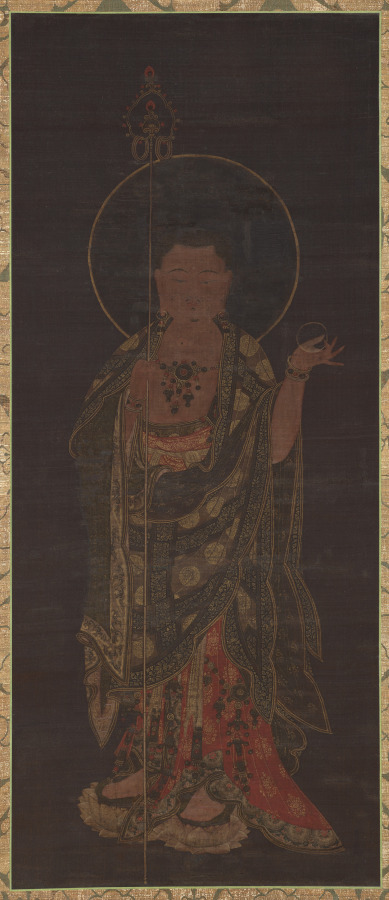 Standing Ksitigarbha
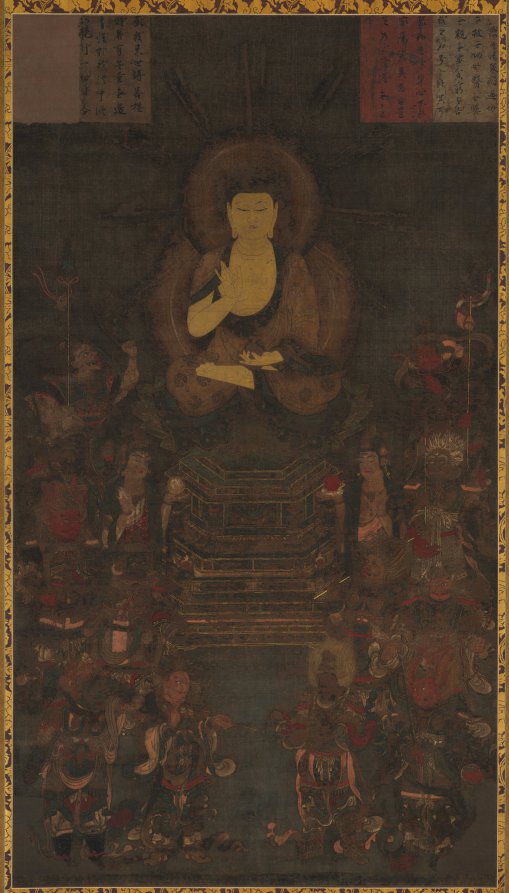 Medicine Master Buddha and the Twelve Divine Generals