In the collection of Cleveland Museum of Art, Cleveland — check current display status with the museum.
FROM THE CLEVELAND MUSEUM OF ART’S CATALOG
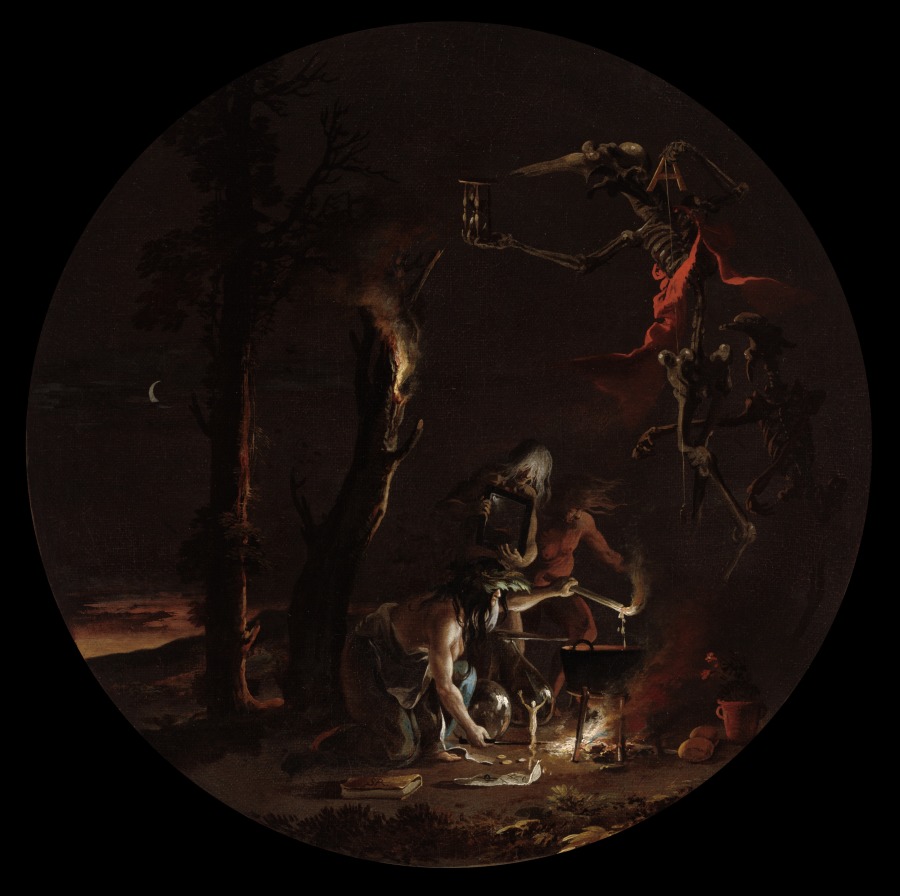
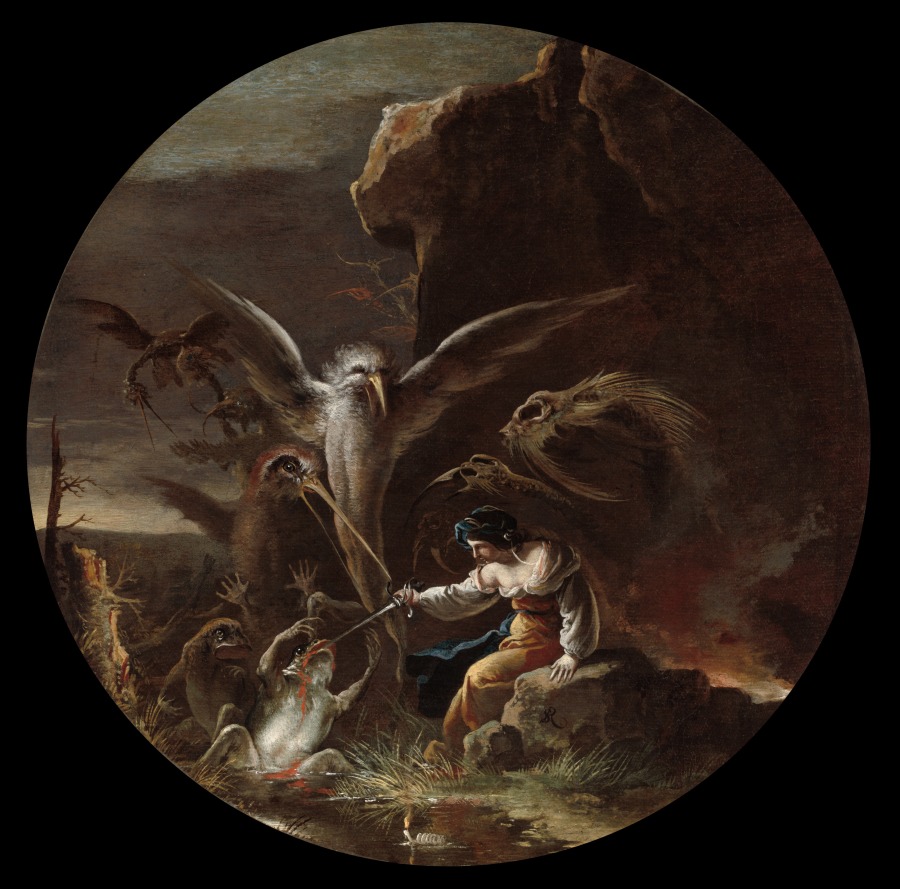
This outrageous and comical sheet stands out as one of the few existing examples of Rosa's representation of bawdy material. While Rosa was not interested in lewd imagery for vulgarity's sake, he certainly enjoyed intellectual jokes that advertised his erudite knowledge. The grotesque face at the right, and the cupids that ride the almost-elephantine phalli at center reference Classical and Renaissance motifs. Heads composed of objects-particularly the famous Testa di Cazzi ("head of penises")-were frequently used as decoration on Renaissance maiolica ceramics. This kind of imagery- like the museum's witchcraft paintings-would have been understood by 17th-century audiences as more than just grotesquerie. The exaggerated and lampooning qualities of this drawing both reference and parody these famous artistic traditions, showing how Rosa frequently used satirical humor to establish his identity as a sharp and sophisticated artist.
Be the first to share your thoughts.
Sign in to join the discussion.
 Giovanni Battista Tiepolo — Design for a Ceiling (recto); Be
 François Lemoyne (French, 1688–1737) — The Stigmatization of
 Francesco Allegrini — Four Horsemen in Battle
 Giovanni Battista Tiepolo — Sheet of Studies: Five Angels (r
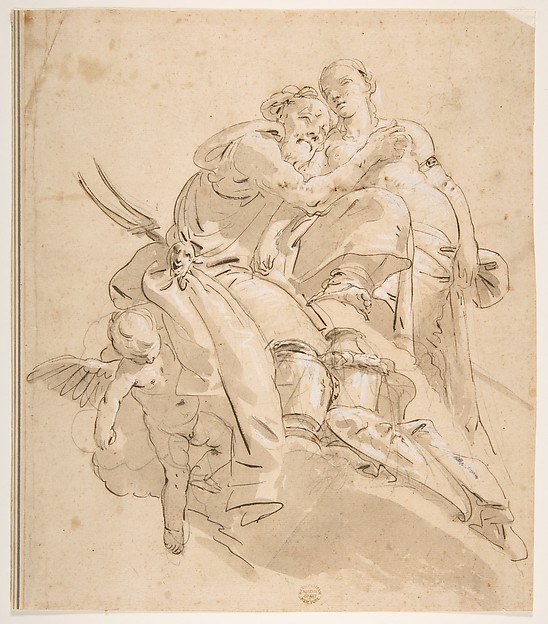 Giovanni Battista Tiepolo — Marine Deity with Attendant Fema
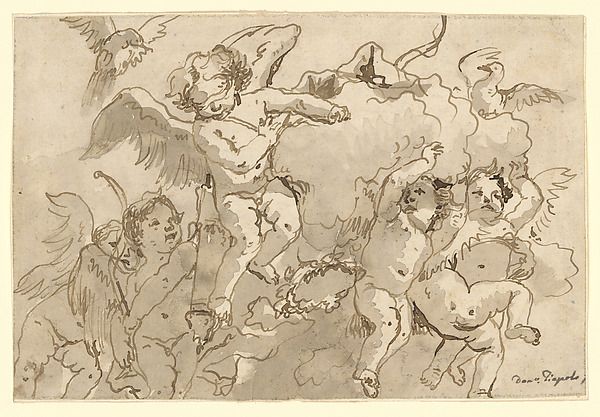 Giovanni Domenico Tiepolo — Cupid Blindfolded in the Clouds,
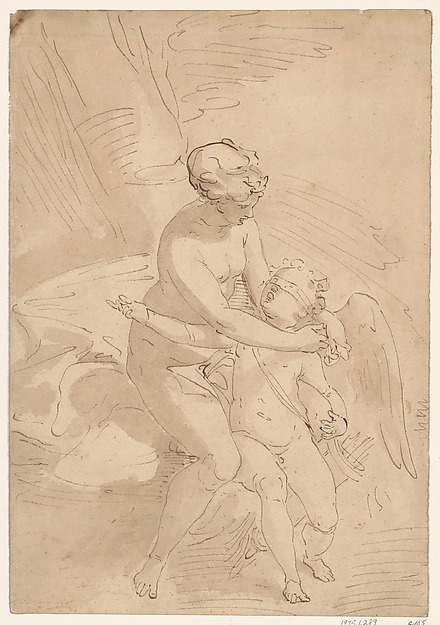 School of Cambiaso|Luca Cambiaso — Venus Blindfolding Cupid
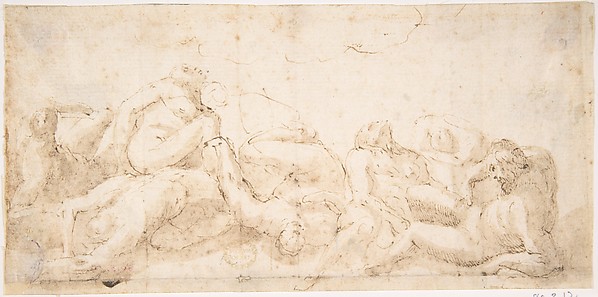 Anonymous, Italian, 17th or 18th century — Group of Entangle
 Giovanni Antonio da Pordenone (Giovanni Antonio de Sacchis)
  François Boucher|Jean Charles François — Preparatory Drawing
 Anonymous, Spanish, School of Seville, 17th century — The Co
 Pierre Mignard — Two Angels, Study for the Val de Grâce