Polycrates' Crucifixion
SEE IT IN PERSON
● On view now — Gallery 209
Art Institute of Chicago, Chicago · verified July 2026
Discussion
FROM THE ART INSTITUTE OF CHICAGO’S CATALOG
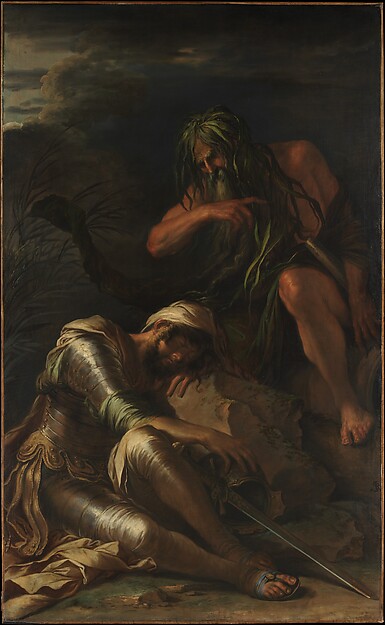
A native of Naples, Salvator Rosa settled in Rome in 1649, producing dramatic works regarded as counterparts to the calm, classical landscapes of his contemporaries Claude Lorrain and Nicolas Poussin . Rosa’s landscapes present nature as wild, filled with striking effects of light, jagged cliffs, and dark grottoes. These qualities underline the eerie mood in his depiction of the death of Polycrates, ruler of the Greek island of Samos. Together with its companion piece Polycrates and the Fisherman , it illustrates the king’s inability to escape the ups and downs of fortune to which all humans are subject.
Be the first to share your thoughts.
Sign in to join the discussion.
More by Salvator Rosa

More like this
 Giovanni Battista Tiepolo (Italian, 1696–1770) — Study for "
 Salvator Rosa (Italian, 1615–1673) — Scenes of Witchcraft: N
 Jacob Symonsz Pynas — The Meeting of Jacob and Esau
 Petrus van Hattich — Nymphs in a Cave with Antique Ruins
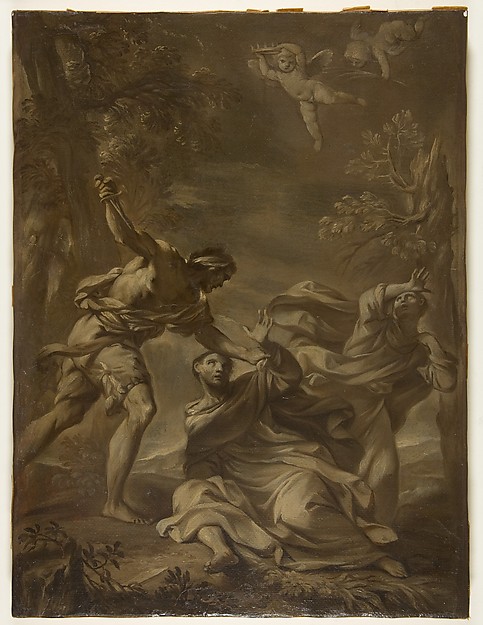 Felice Torelli — Death of Saint Peter Martyr
 Pieter Bodding van Laer — A Shepherd and Washerwomen at a Sp
 Alessandro Magnasco — Carthusian Monks in a Landscape
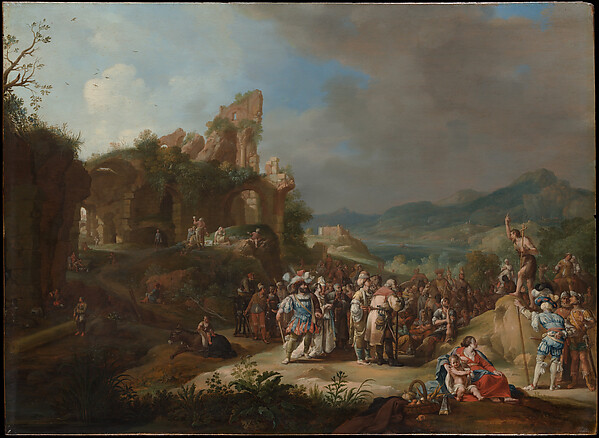 Bartholomeus Breenbergh — The Preaching of John the Baptist
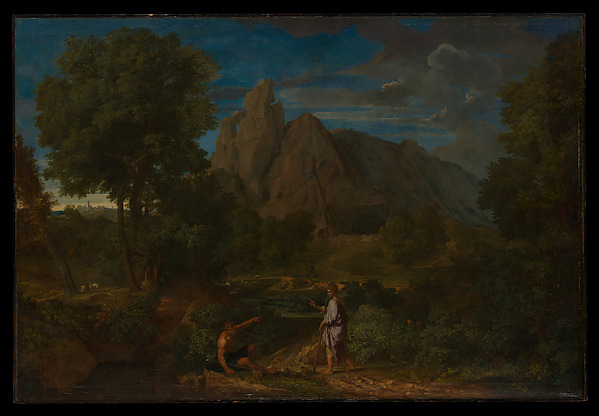 Francisque Millet — Mercury and Battus
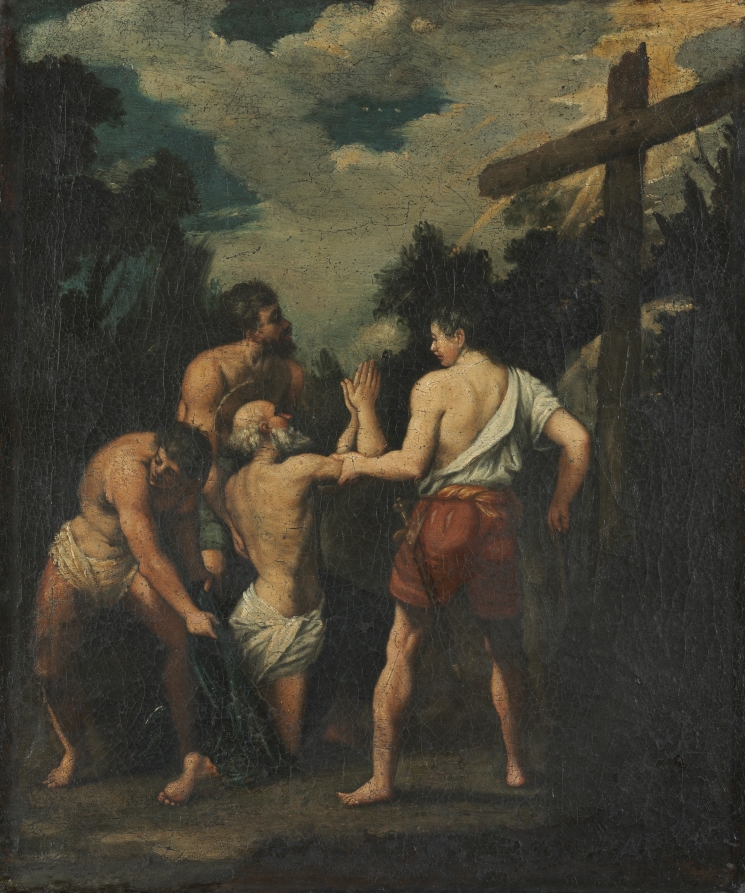 Guido Reni (Italian, 1575–1642) — Martyrdom of Saint Andrew
 Sebastiano Ricci — The Baptism of Christ
 Joseph Goupy (British, 1686–before.1770) — Jacob's Dream