Hangiri (Noh Costume)
Meiji period (1868–1912), 1875/1900
Silk and gold-leaf-paper strips, warp-float faced 7:1 satin weave with plain interlacing of secondary binding warps and supplementary patterning wefts; stiffening: reeds covered with paper, plain weave; lining: silk, plain weave; ties: silk over cotton, plain weave over plain weave; edges: couched with silk
105.8 × 75 cm (41.7 × 29.5 in)
SEE IT IN PERSON
Not currently on view
In the collection of Art Institute of Chicago, Chicago · as of July 2026
Discussion
Be the first to share your thoughts.
Sign in to join the discussion.
More by Japan


More like this
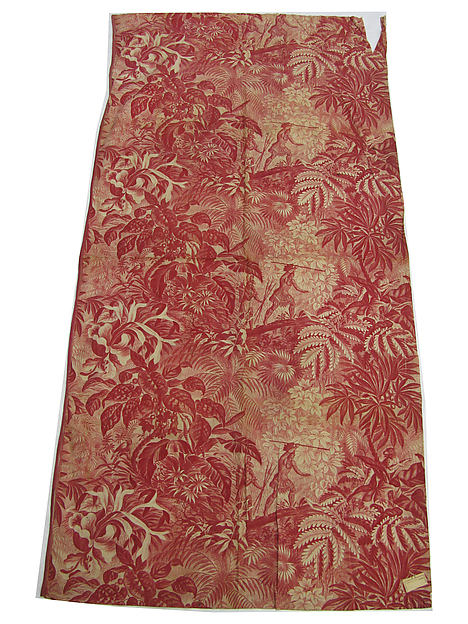 Jungle scene
 China — Fragment (Dressing Fabric)
 Italy — Fragment
 Manchu — Man's Jifu (Semiformal Court Robe)
 Probably Central Asia, possibly Turkmenistan, Turkoman — Cha
 France — Square Shawl
 Han-Chinese — Woman's Waitao (Semiformal Domestic Surcoat)
 Jean Revel — Chasuble
 Samuel Snider — Coverlet
 Italy — Portion of a Chasuble
 Italy — Panel
 India — Two Panels (Joined)