FROM THE CLEVELAND MUSEUM OF ART’S CATALOG
Here, a person steps out to the engawa , a wood-floored corridor that runs along the outer edge of a house, to greet a visitor as the individual’s companions look on. A strong breeze blows the sleeves of their robes and the translucent blinds enclosing their sitting room. The group’s wealth and high status is signified by the two swords the visitor carries and everyone’s intricately patterned garments. A raised blind lets the viewer peek in to see a black lacquer box decorated with designs in gold powder and a ceramic incense burner on a hexagonal lacquer tray positioned carefully in the room’s display alcove, or toko .
Source ↗︎
Be the first to share your thoughts.
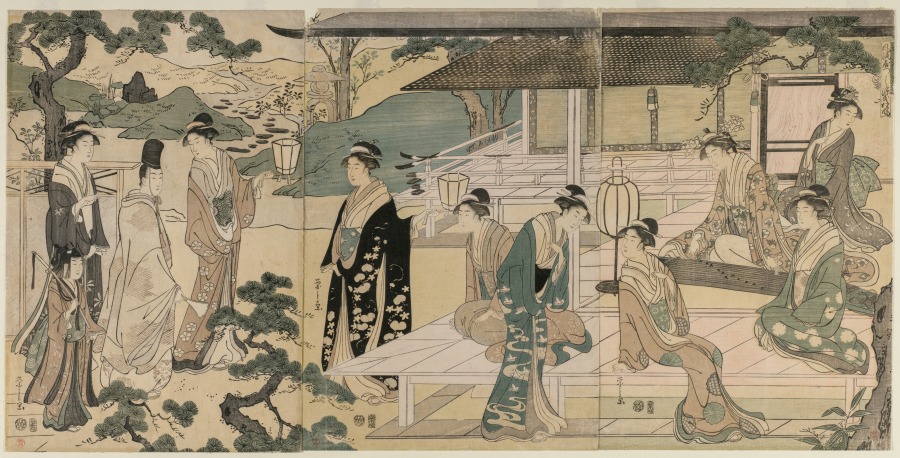 Chōbunsai Eishi (Japanese, 1756–1829) — The Matsukaze Chapte
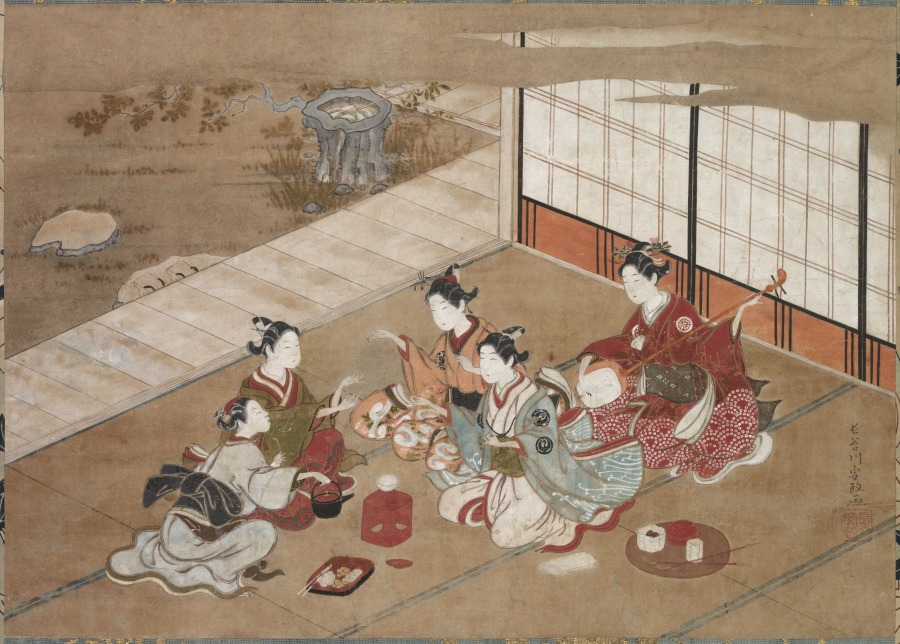 Hasegawa Yasumasa (Japanese) — Playing the "Hand Game"
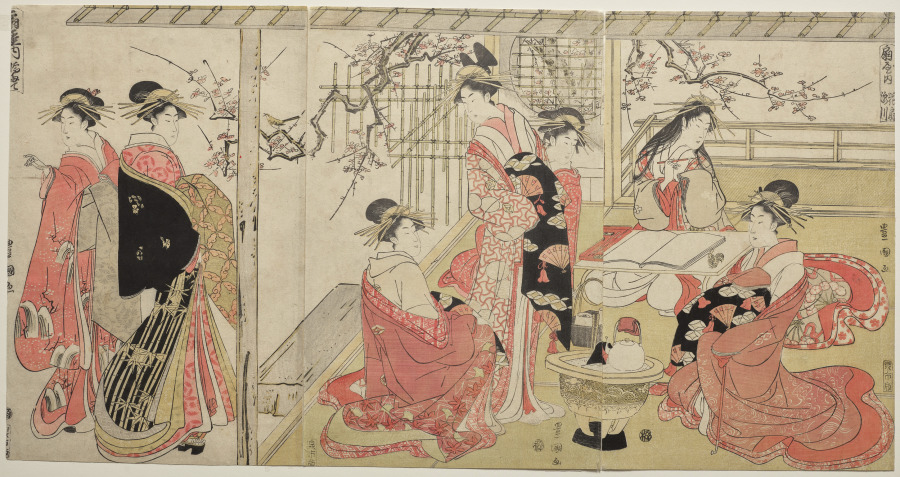 Utagawa Toyokuni (Japanese, 1769–1825) — Courtesans of the Ō
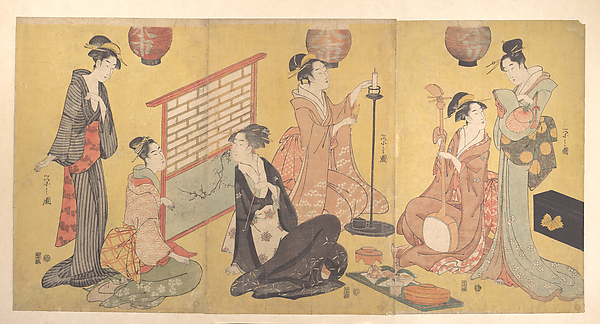 Chōbunsai Eishi
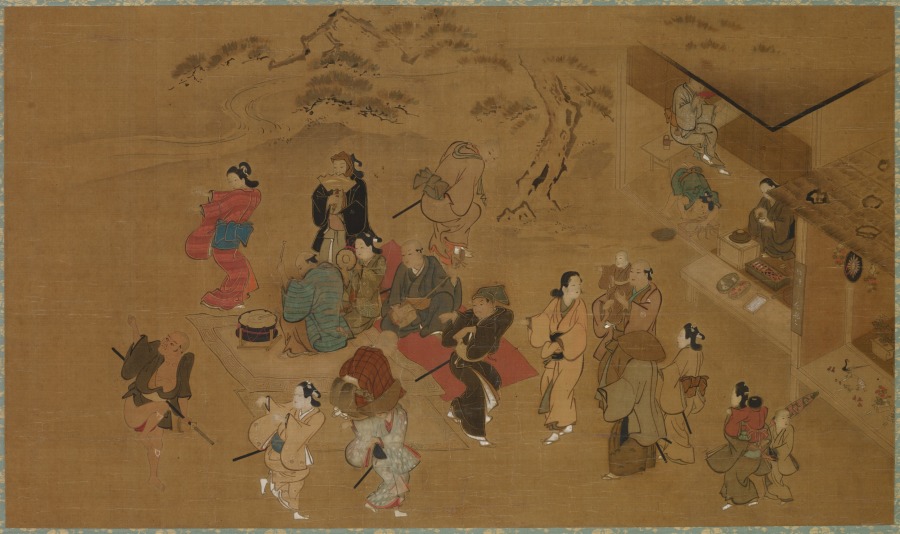 Hishikawa Moronobu (Japanese, c. 1618–1694) — Spring Dance S
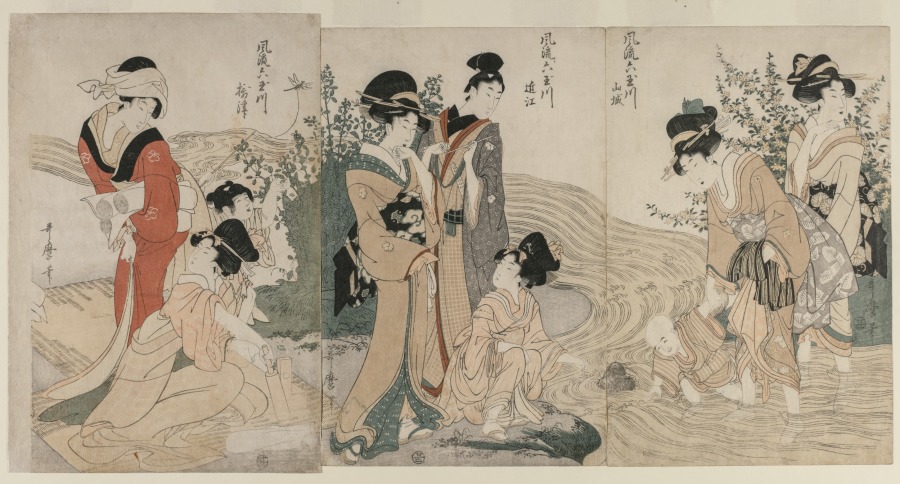 Kitagawa Utamaro (Japanese, c. 1754–1806) — Musashi, Omi, Ya
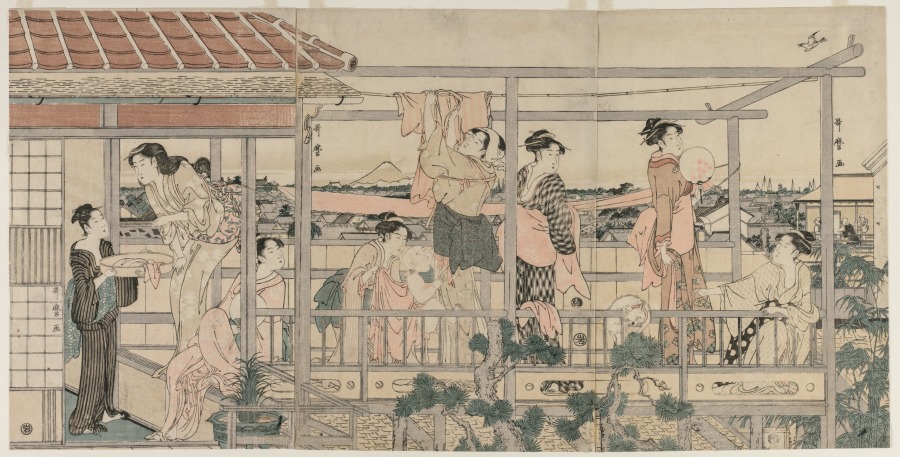 Kitagawa Utamaro (Japanese, c. 1754–1806) — Women Hanging La
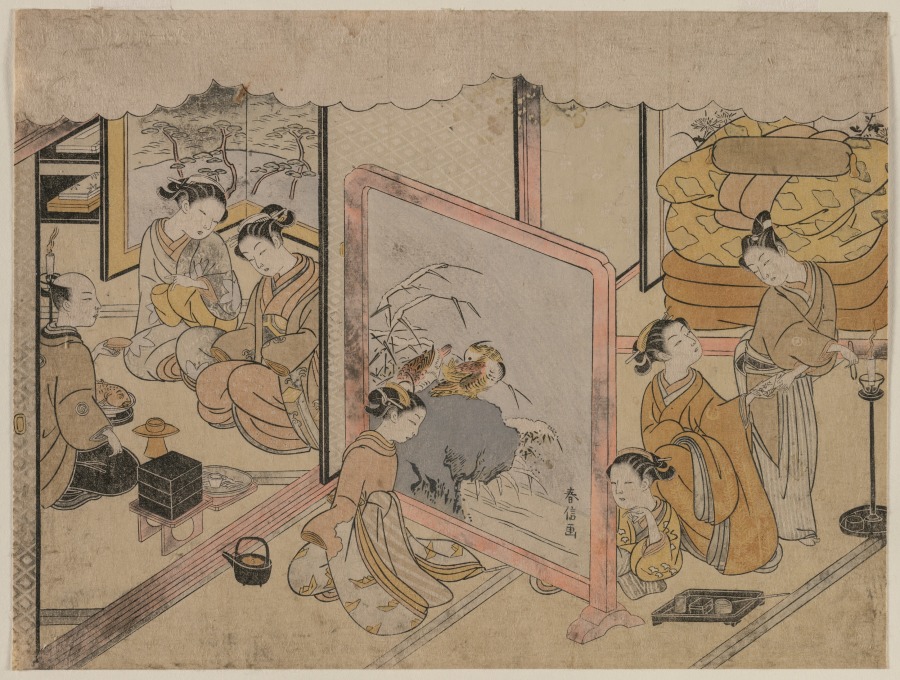 Suzuki Harunobu (Japanese, 1724–1770) — Drinking a Cup of Wi
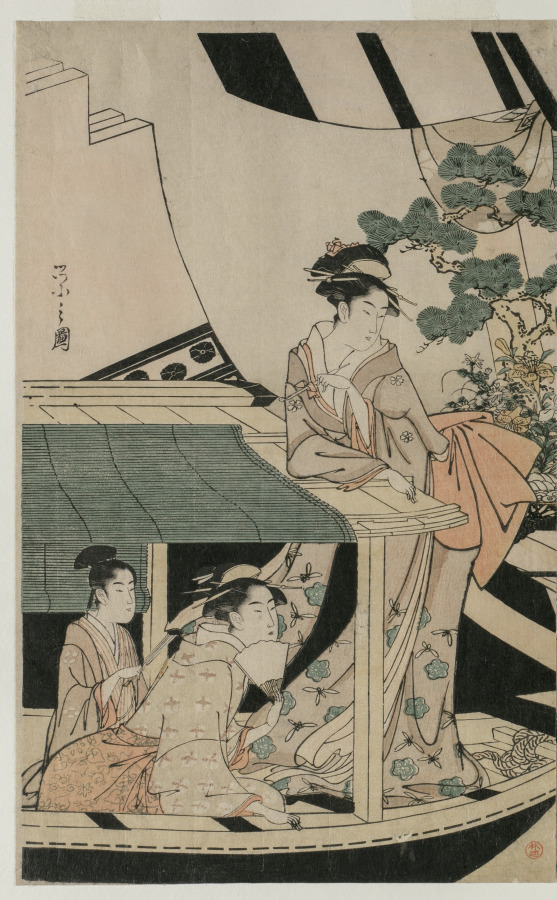 Chōbunsai Eishi (Japanese, 1756–1829) — Party on the Pleasur
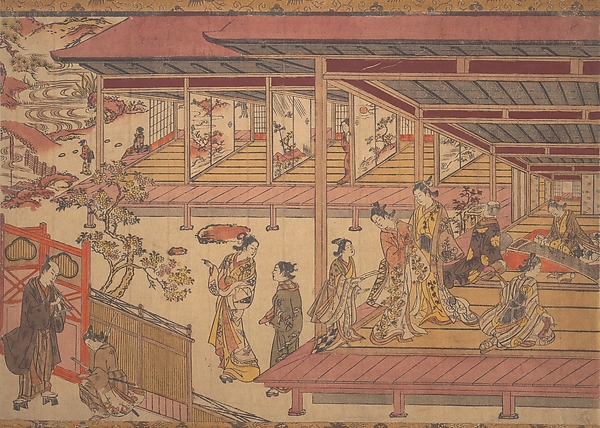 Okumura Masanobu
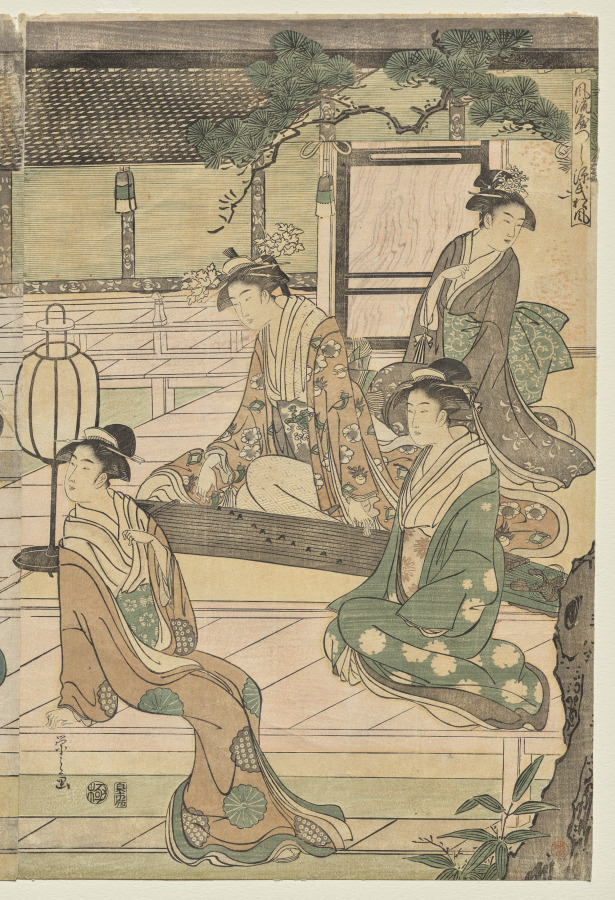 Chōbunsai Eishi (Japanese, 1756–1829) — The Matsukaze Chapte
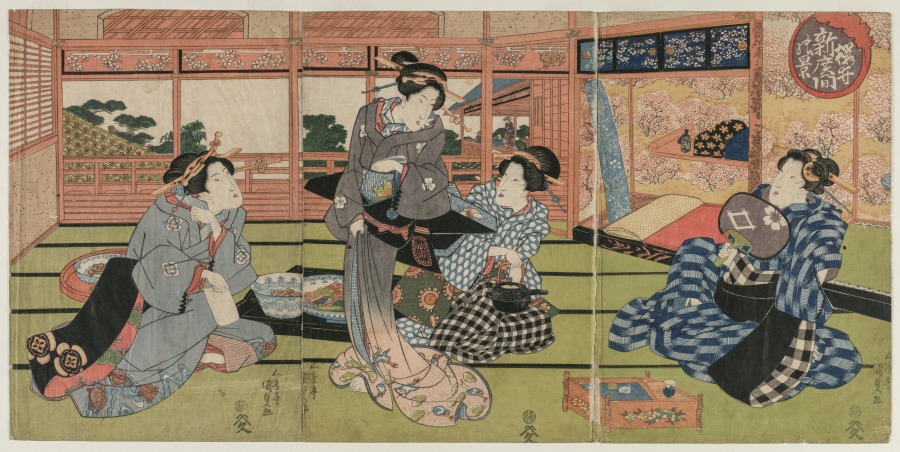 Utagawa Kunisada (Japanese, 1786–1865) — A View of the Large