In the collection of Cleveland Museum of Art, Cleveland — check current display status with the museum.
FROM THE CLEVELAND MUSEUM OF ART’S CATALOG
Gauguin discovered an exotic, primitive culture in Brittany, a rugged region on the Atlantic coast in northwestern France. He then sought to translate into expressive forms the picturesque costumes, customs, and special spirituality of the peasants. The unusual point of view, the stylization of the frothing water, and the cropped cow at the lower left all betray the influence of Japanese woodblock prints, which became popular in France from the early 1860s. The twelve lithographs in this set, printed from zinc plates rather than stones, were Gauguin's first attempts at printmaking. To heighten the decorative effect, the lithographs were printed onto large sheets of bright yellow paper.
Be the first to share your thoughts.
Sign in to join the discussion.
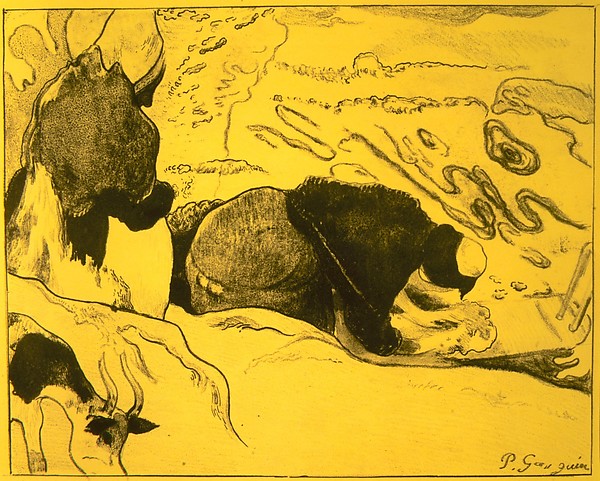 Paul Gauguin — Washerwomen, from the Volpini Suite: Dessins
 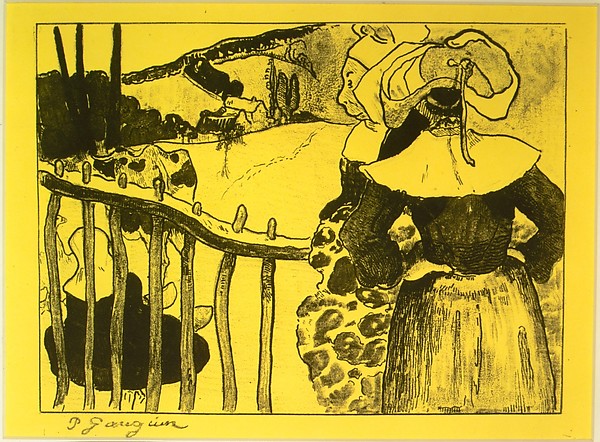 Paul Gauguin — Bretonnes à la Barrière, from the Volpini Sui
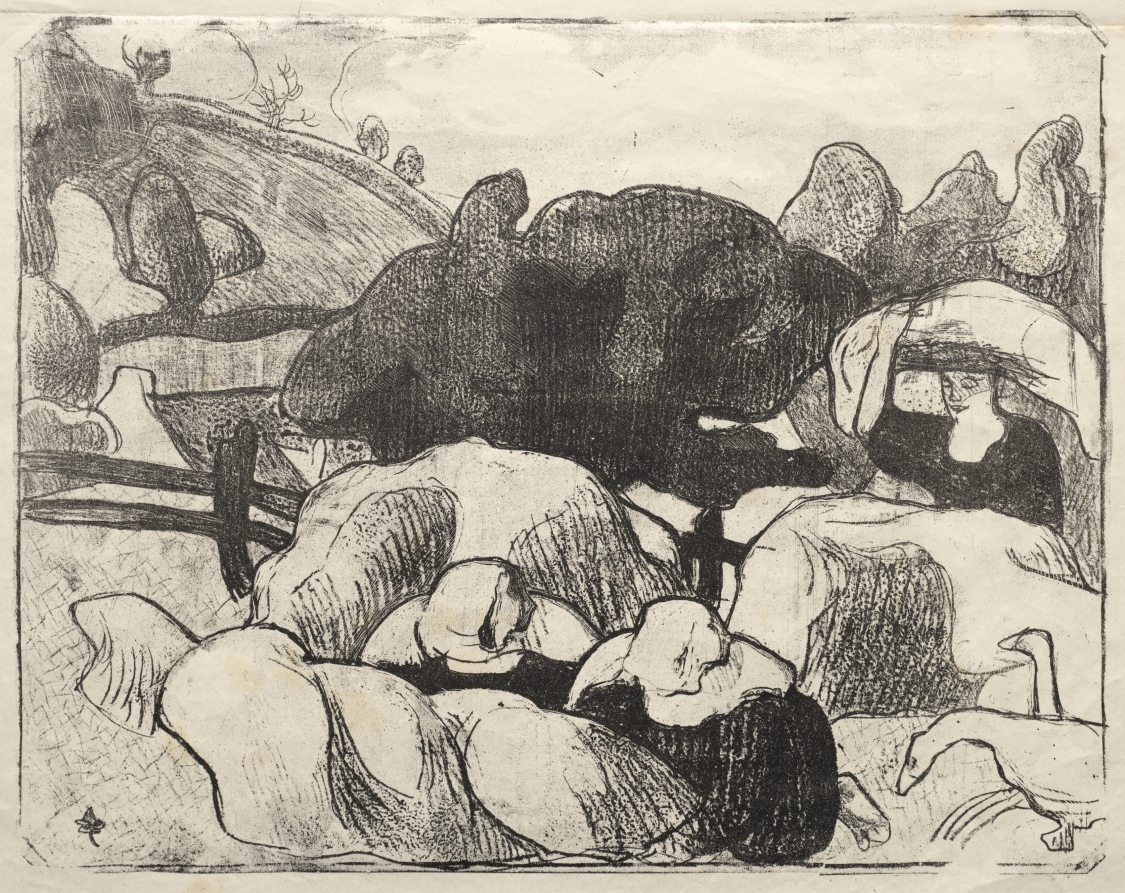 Émile Bernard (French, 1868–1941) — Les Bretonneries: Breton
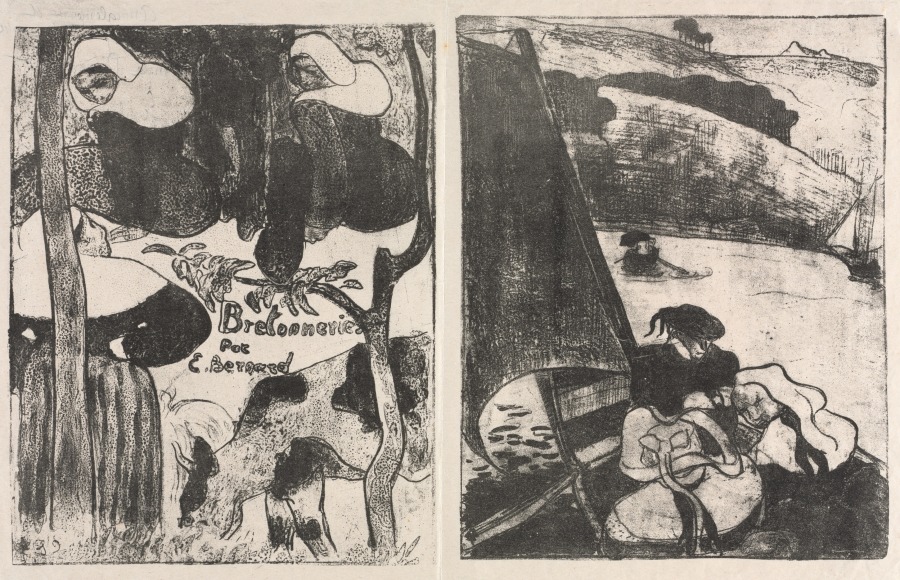 Émile Bernard (French, 1868–1941) — Les Bretonneries: Title
 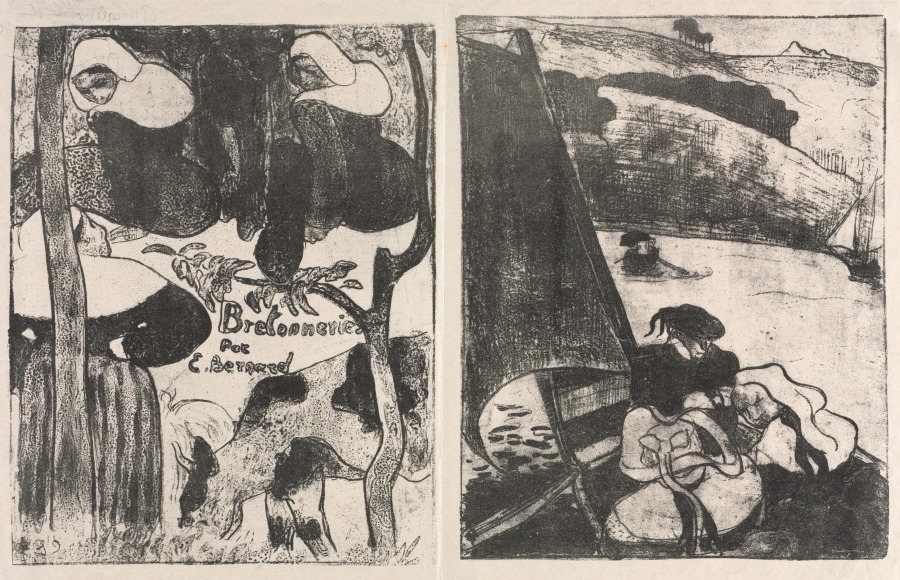 Émile Bernard (French, 1868–1941) — Les Bretonneries
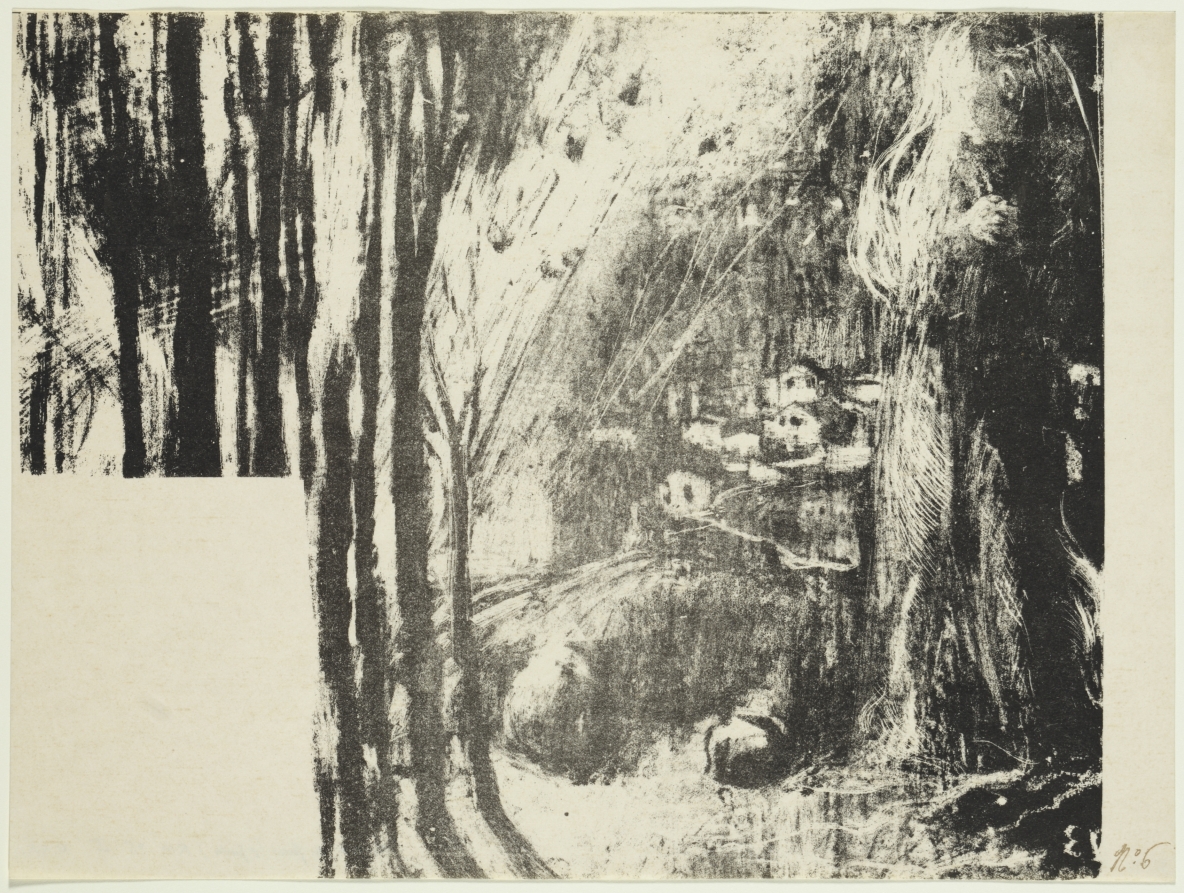 Édouard Vuillard (French, 1868–1940) — Beyond Human Forces (
 Paul Gauguin — The Universe Is Created
 Paul Gauguin — Bathers in Brittany, from the Volpini Suite:
 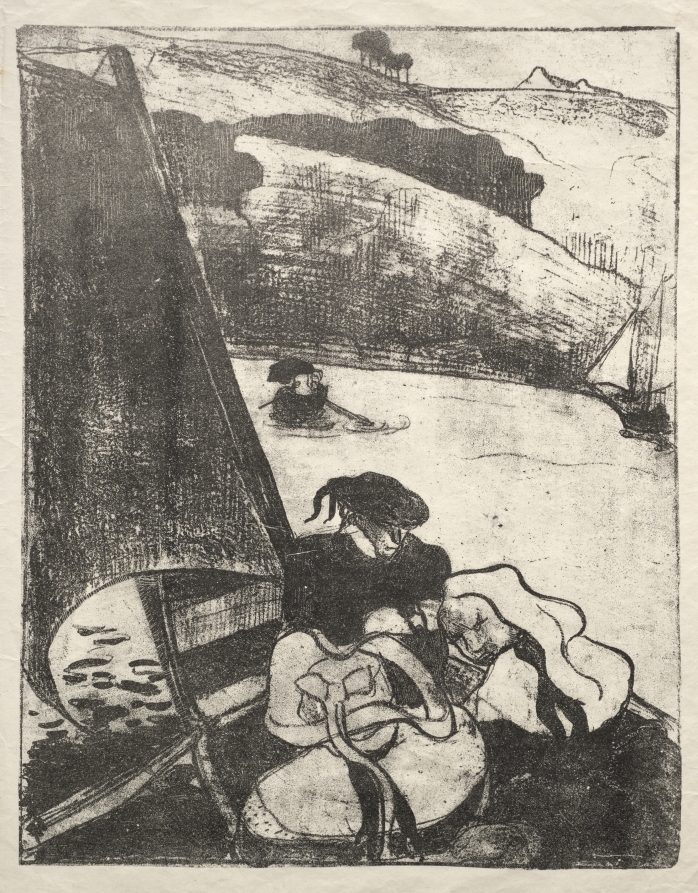 Émile Bernard (French, 1868–1941) — Les Bretonneries: The Re
 Paul Gauguin — The Universe Is Created
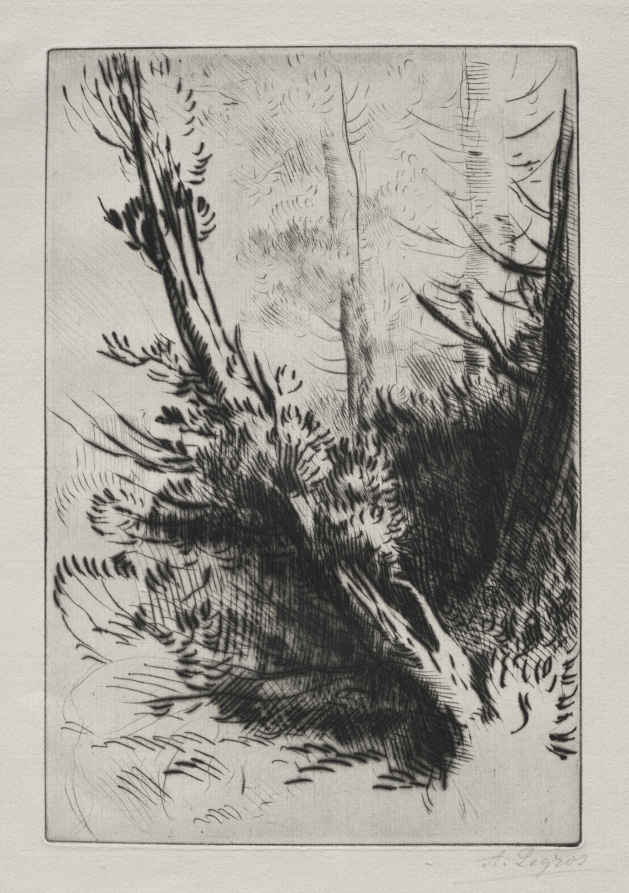 Alphonse Legros (French, 1837–1911) — In the Woods
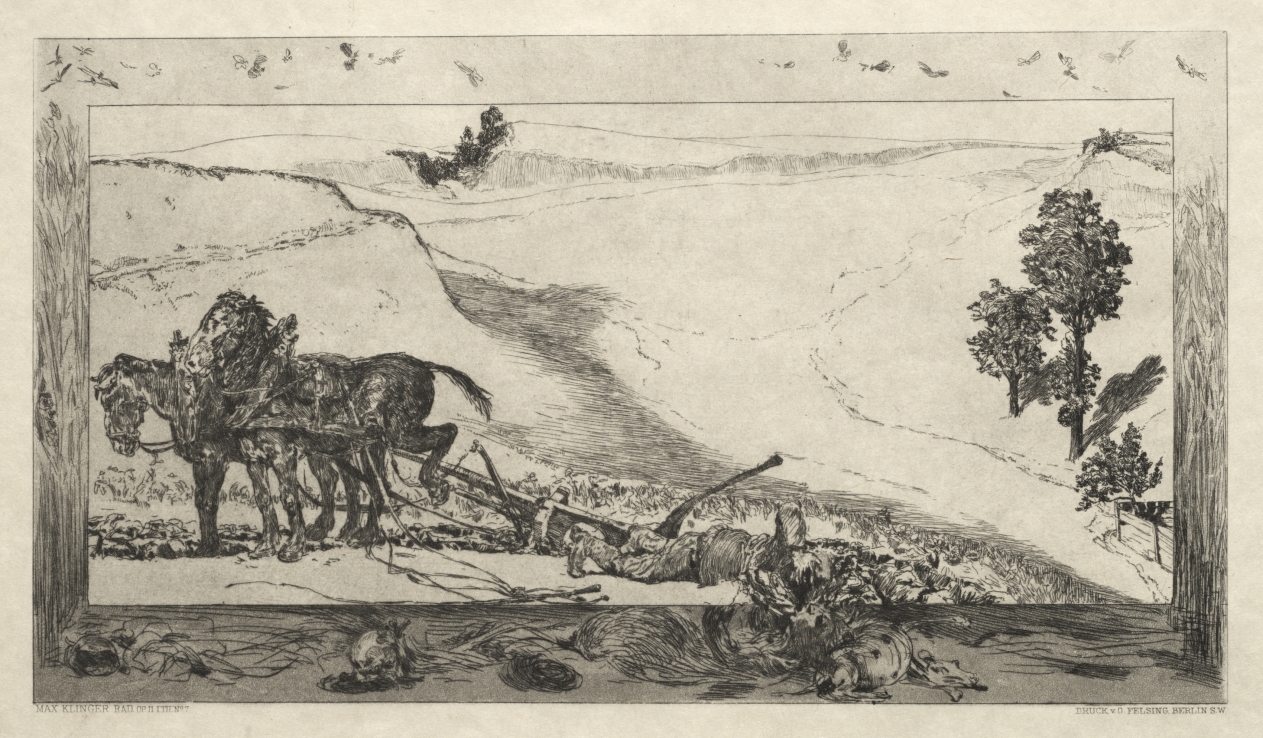 Max Klinger (German, 1857–1920) — Vom Tode I (Opus II, 1889)


